 flip
flipHoneyed Resinated Wine for Libation
Honeyed Resinated Wine for Libation
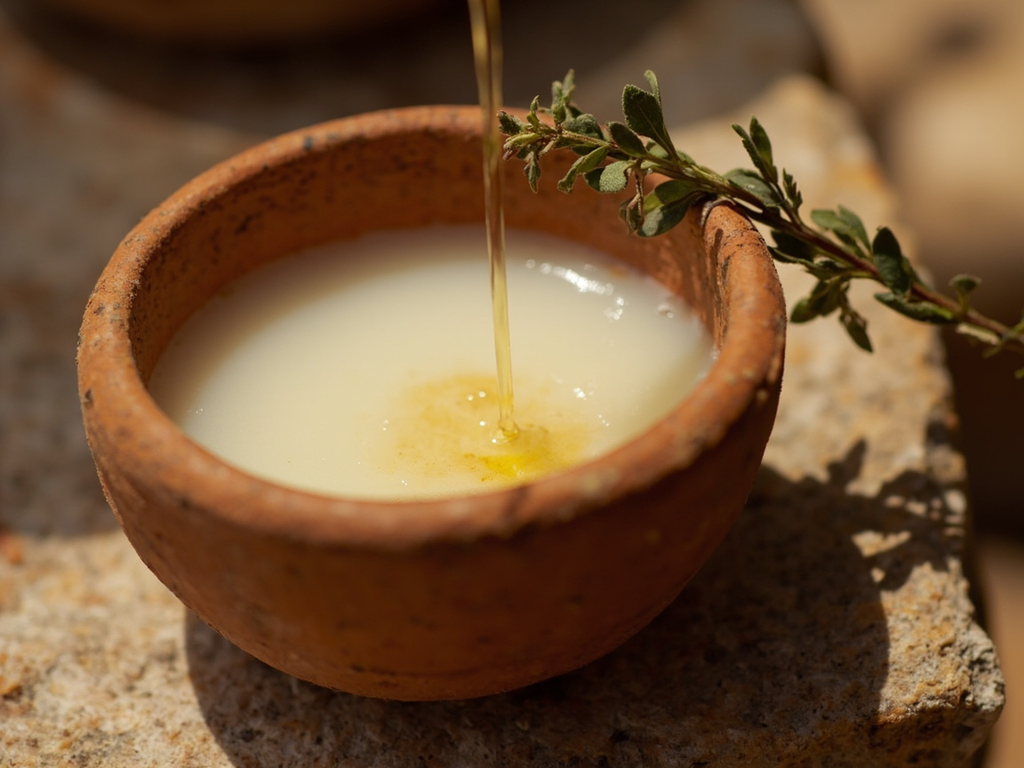
Why this dish? Wine jars were among the offerings poured for Anat during sacrifices. Wine flows abundantly in Ugaritic divine banquets; pouring a libation was an invitation for the goddess to join the feast. This perfumed wine evokes the cup presented to her.
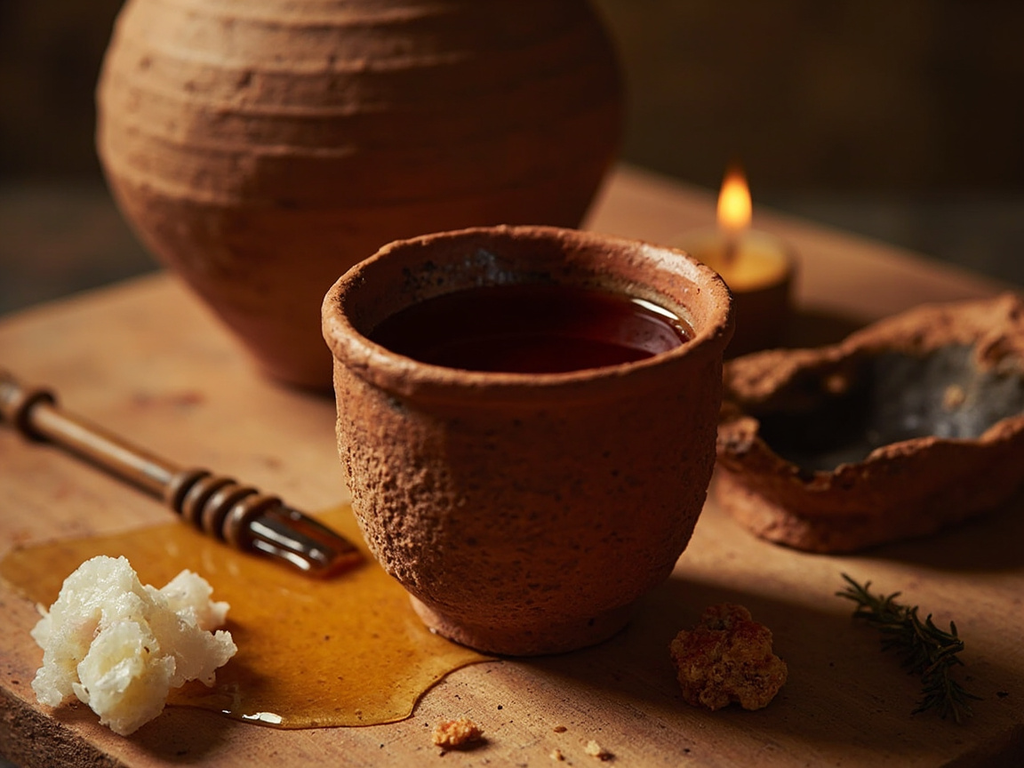
A red wine warmed and perfumed with honey and pine resin (mastic), as ancient wine was flavored before being poured as a libation to the gods.
Pour, mortal, and do not tremble. The wine for the gods is not the wine of taverns: it is thickened with honey to soften the harshness, bound with the resinous breath of the pines of Sapanu. First you spill a portion on the ground—that is my cup, I drink it with you unseen. Then you bring the rest to your lips and feel war turn to warmth in your chest. Drink slowly: even a furious goddess likes to be honored with patience.
- •Red wine — one jar (base)
- •Honey — to taste (sweetness)
- •Terebinth resin or mastic — a fragment (sacred fragrance)
- •Water — to cut (ancient wine was drunk diluted)
Honeyed Resinated Wine for Libation
A red wine warmed and perfumed with honey and pine resin (mastic), as ancient wine was flavored before being poured as a libation to the gods.
Why this dish? Wine jars were among the offerings poured for Anat during sacrifices. Wine flows abundantly in Ugaritic divine banquets; pouring a libation was an invitation for the goddess to join the feast. This perfumed wine evokes the cup presented to her.
Pour, mortal, and do not tremble. The wine for the gods is not the wine of taverns: it is thickened with honey to soften the harshness, bound with the resinous breath of the pines of Sapanu. First you spill a portion on the ground—that is my cup, I drink it with you unseen. Then you bring the rest to your lips and feel war turn to warmth in your chest. Drink slowly: even a furious goddess likes to be honored with patience.
Ingredients (period version)
- Red wine — one jar (base)
- Honey — to taste (sweetness)
- Terebinth resin or mastic — a fragment (sacred fragrance)
- Water — to cut (ancient wine was drunk diluted)
Ingredients
- Full-bodied red wine — 75 cl (base)
- Honey — 3 tbsp (sweetness)
- Mastic tears (mastiha) or food-grade pine resin — 1 small pinch, crushed (resinated flavor)
- Water — 15 cl (dilution (optional))
- Bay leaf — 1 (aromatic note)
Method
- Finely crush the mastic tears with a spoonful of honey to disperse them.
- Gently heat the wine with honey and bay leaf without boiling.
- Stir in the mastic-honey mixture and infuse over very low heat for 10 minutes.
- Dilute with a little water to taste (ancients rarely drank wine neat).
- Strain and serve warm in clay cups; symbolically pour a few drops as an offering before drinking.
How it was made : Ancient wine was stored in resin-sealed jars, giving it a resinous taste still present in Greek retsina. It was flavored with honey, herbs, and spices, and almost always drunk diluted with water. Libation—pouring a portion for the deity—accompanied every sacrifice.
The contemporary twist : Serve in glazed terracotta goblets, under the name 'Cup of the Warrior Virgin', with a drop poured on the ground as a playful ritual nod.
Sources : Patrick McGovern, Ancient Wine: The Search for the Origins of Viniculture · Textes rituels d'Ougarit (listes d'offrandes et libations)
Anat · Charactorium