 flip
flipRoasted Bull's Thigh for Baal's Banquet
Roasted Bull's Thigh for Baal's Banquet
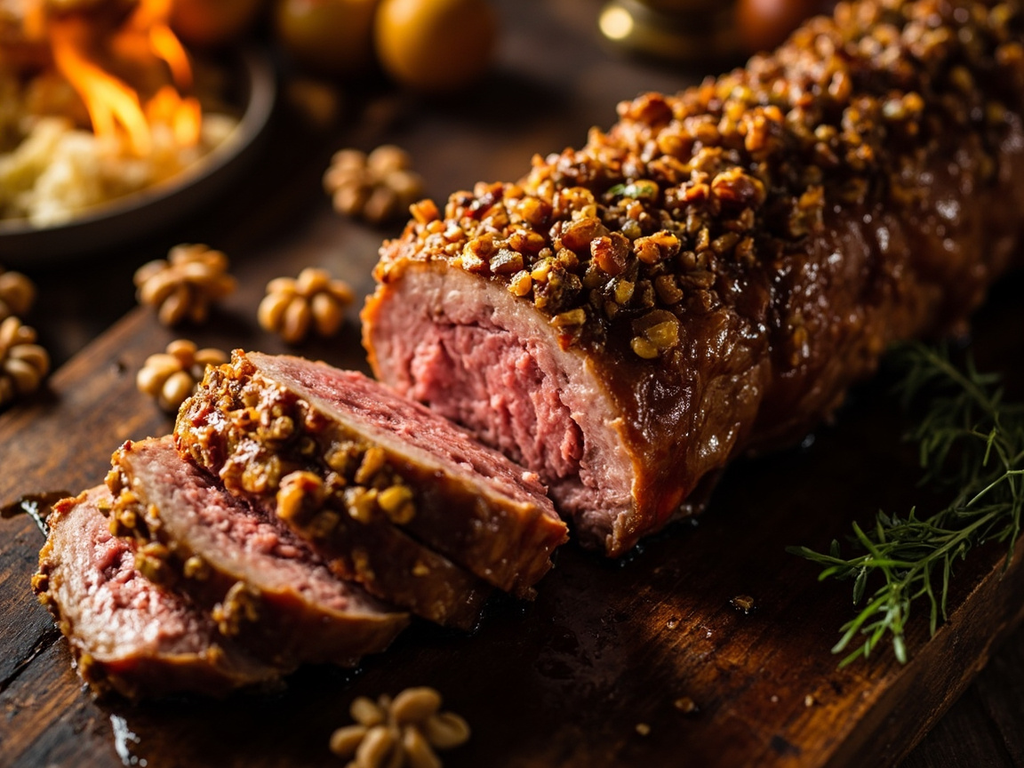
Why this dish? The Ugaritic texts from Ras Shamra describe Anat feasting alongside her brother Baal, where fat bulls and rams are served. A warrior and carnivorous goddess, she is associated with great ritual slaughters and meat feasts: the roasted bull's thigh is the dish of the gods par excellence, her portion of glory after battle.
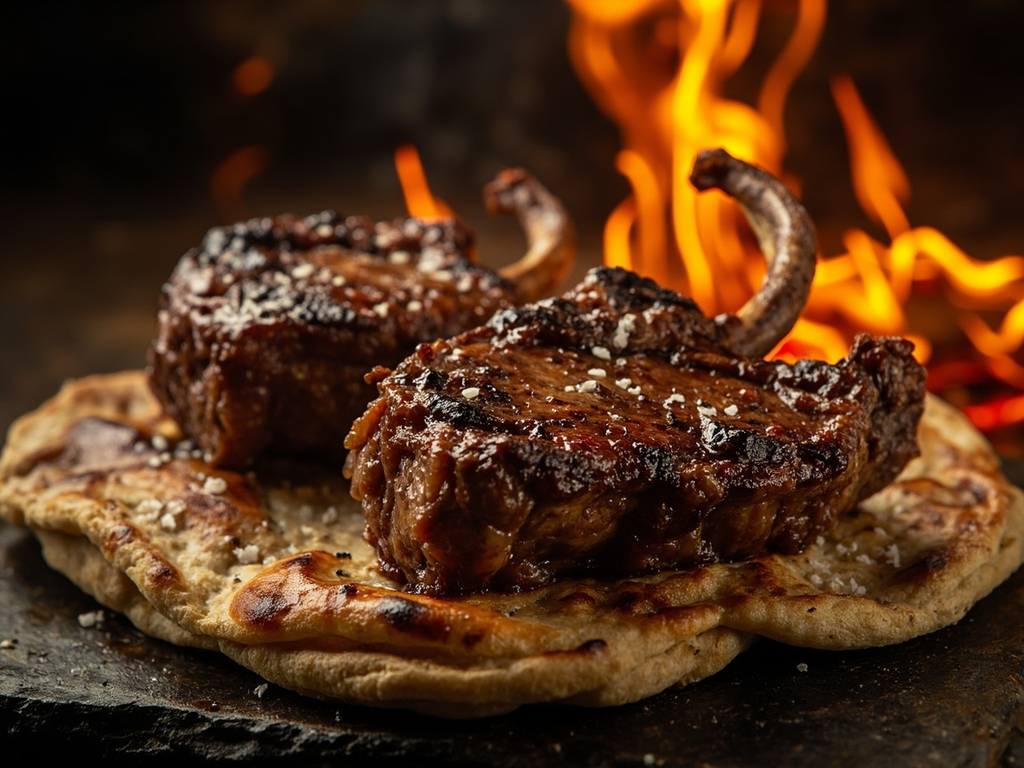
A thick cut of beef rubbed with olive oil, salt, and coriander, roasted slowly near the embers as the noble portion of the sacrificed bull was roasted on Mount Sapanu.
Approach, mortal, and watch the blood smoke on the altar—this is how I love my feasts. When my brother Baal triumphed, I waded through the fray up to my thighs and hungered like a lioness. The fattest bull is chosen, anointed with clear oil and sea salt, and brought near the fire without haste, turned until the flesh sings. The smoking portion rises to the gods; the rest is torn with bare hands, and the wine flows. Eat like a warrior, or do not eat.
- •Bull's thigh or shoulder — one thick piece (noble meat of the sacrifice)
- •Olive oil — generous (anointing and cooking)
- •Sea salt — by hand (seasoning and preservation)
- •Coriander seeds — a handful crushed (Levantine fragrance)
- •Garlic — a few cloves (aromatic)
Roasted Bull's Thigh for Baal's Banquet
A thick cut of beef rubbed with olive oil, salt, and coriander, roasted slowly near the embers as the noble portion of the sacrificed bull was roasted on Mount Sapanu.
Why this dish? The Ugaritic texts from Ras Shamra describe Anat feasting alongside her brother Baal, where fat bulls and rams are served. A warrior and carnivorous goddess, she is associated with great ritual slaughters and meat feasts: the roasted bull's thigh is the dish of the gods par excellence, her portion of glory after battle.
Approach, mortal, and watch the blood smoke on the altar—this is how I love my feasts. When my brother Baal triumphed, I waded through the fray up to my thighs and hungered like a lioness. The fattest bull is chosen, anointed with clear oil and sea salt, and brought near the fire without haste, turned until the flesh sings. The smoking portion rises to the gods; the rest is torn with bare hands, and the wine flows. Eat like a warrior, or do not eat.
Ingredients (period version)
- Bull's thigh or shoulder — one thick piece (noble meat of the sacrifice)
- Olive oil — generous (anointing and cooking)
- Sea salt — by hand (seasoning and preservation)
- Coriander seeds — a handful crushed (Levantine fragrance)
- Garlic — a few cloves (aromatic)
Ingredients
- Beef roast (chuck or rump) — 1 kg (centerpiece)
- Extra virgin olive oil — 4 tbsp (marinade and cooking)
- Coarse salt — 2 tsp (seasoning)
- Coriander seeds — 1 tbsp crushed (fragrance)
- Garlic — 4 cloves sliced (aromatic)
- Ground cumin — 1 tsp (depth)
Method
- Remove meat 1 hour before to bring to room temperature.
- Mix oil, garlic, crushed coriander, cumin, and salt; rub all over the meat and marinate 30 minutes.
- Sear the roast on all sides in a very hot pan to form a crust.
- Finish in the oven at 160°C (320°F): about 40-50 minutes for medium-rare (internal temperature 55-58°C).
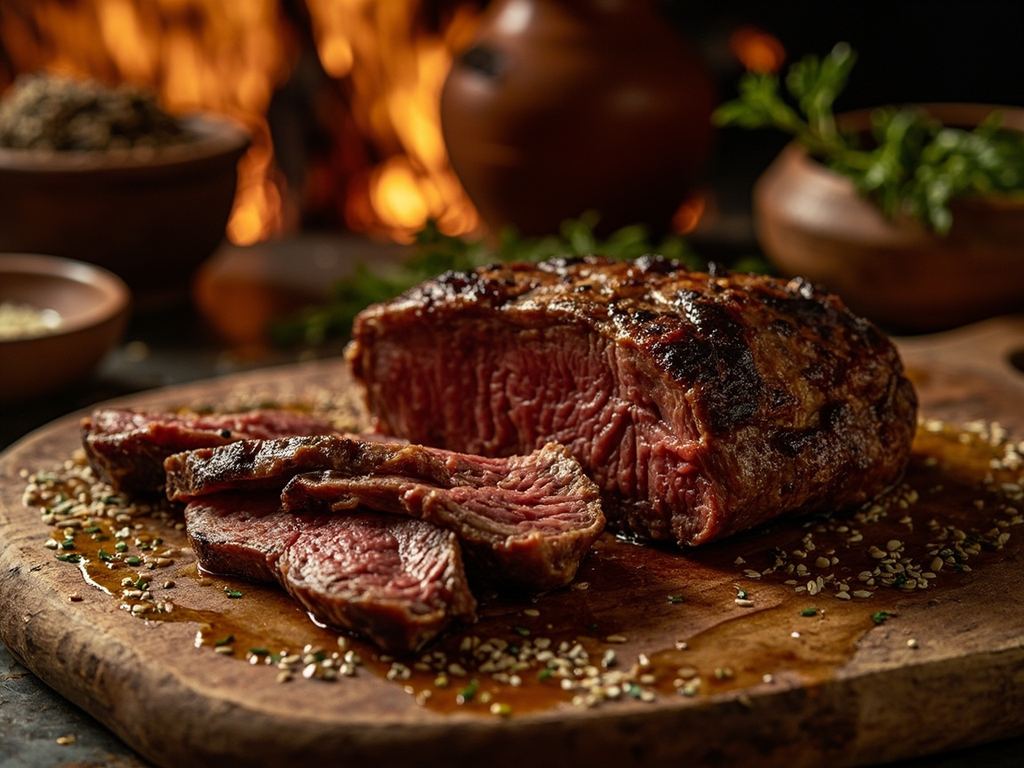
- Rest 10 minutes under foil before slicing thickly, drizzled with cooking juices and a splash of oil.
How it was made : In Ugarit, beef was a luxury reserved for feasts and sacrifices. The animal was ritually slaughtered, a portion burned for the deity (the smoke 'feeding' the gods), and the rest roasted on a spit or over embers and shared among palace guests. Tablets mention hundreds of heads of cattle for royal banquets.
The contemporary twist : Serve the sliced meat on an olive wood board, sprinkled with fleur de sel and Levantine lemon zest, under the name 'The Portion of Anat'.
Sources : Textes mythologiques d'Ougarit (cycle de Baal), trad. A. Caquot, M. Sznycer, A. Herdner · Marguerite Yon, La cité d'Ougarit sur le tell de Ras Shamra
Anat · Charactorium