 flip
flipErwtensoep, Amsterdam's split pea soup
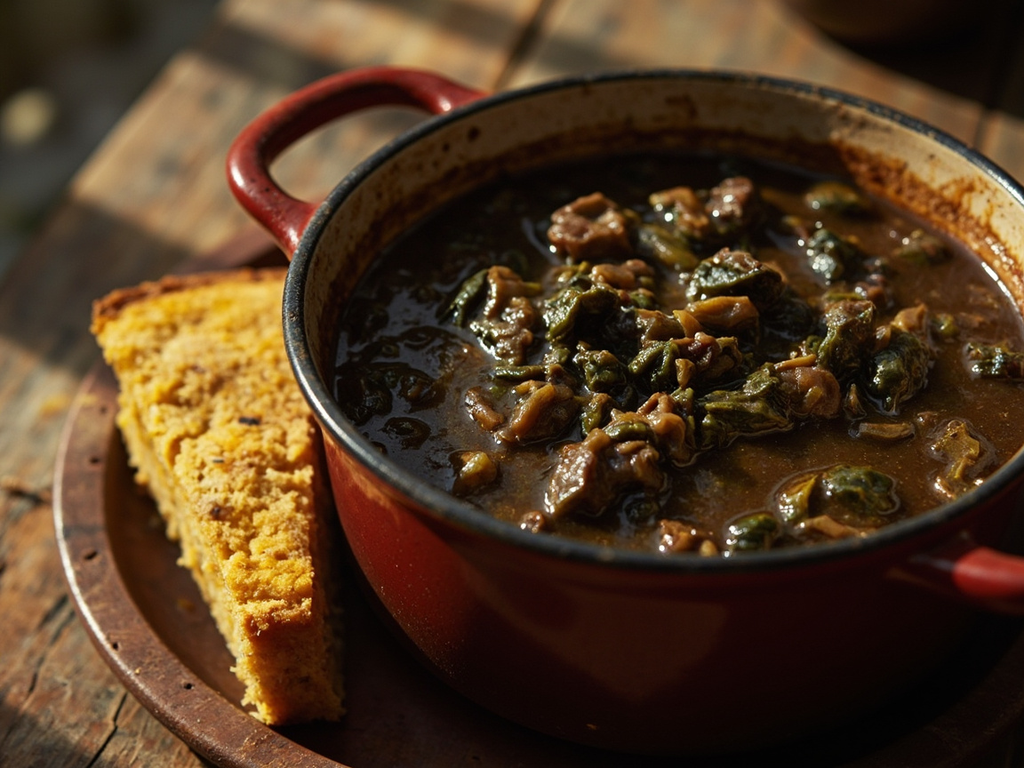
Erwtensoep, Amsterdam's split pea soup
Why this dish? In the late 1960s, Dworkin lived in Amsterdam in great poverty. Erwtensoep, the Dutch national soup — thick, cheap, made to get through winter — is exactly the kind of frugal, hearty dish that kept body and soul together when you had almost nothing.
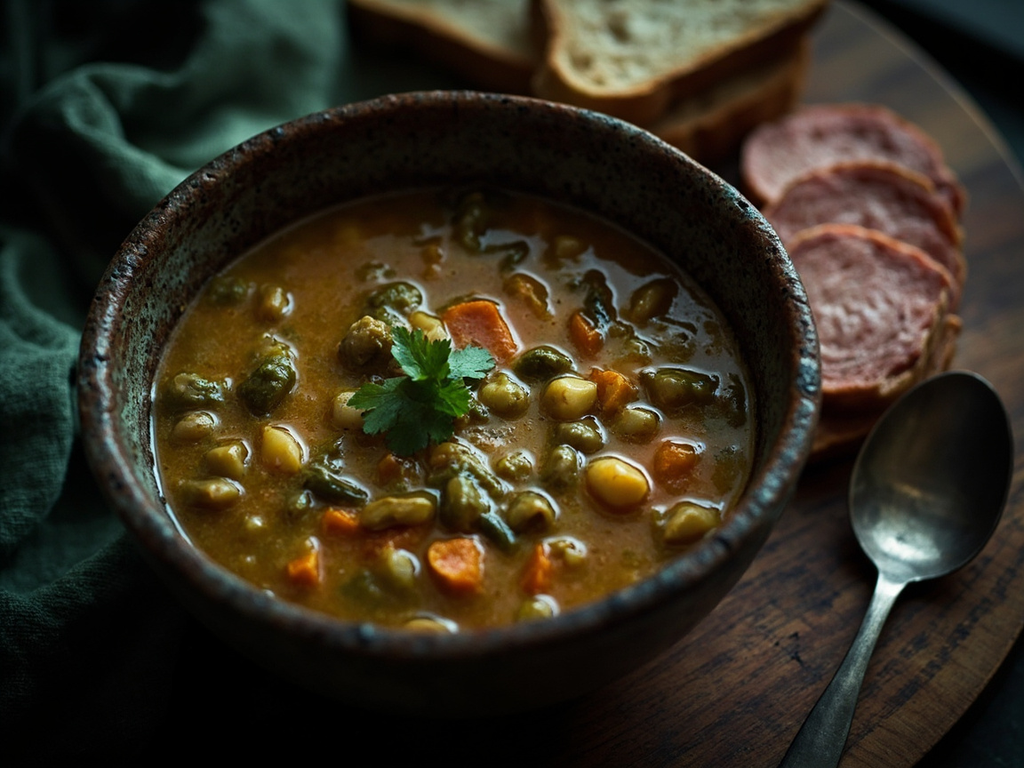
A split pea soup so thick they say a spoon should stand up in it. One pot, root vegetables, a bit of meat for flavor: you eat it for days and it's better reheated.
Listen to me. When I was in Amsterdam, I didn't have a penny, and this soup kept me going. You throw the peas in the water, you let them boil until it becomes a thick mush, and you don't wait for it to look pretty — you wait for it to fill you up. The next day it's even better, and that's what counts when every coin is counted. You don't eat for show. You eat to be able to keep working.
- •Green split peas — a large cup (soup base)
- •Pork shank or rind — one piece (flavor and richness, cheap)
- •Onion, leek, celeriac — what you have (aromatic base)
- •Carrot — a few (sweetness)
- •Potatoes — two or three (thickener and body)
- •Smoked sausage — one (poor man's garnish)
Erwtensoep, Amsterdam's split pea soup
A split pea soup so thick they say a spoon should stand up in it. One pot, root vegetables, a bit of meat for flavor: you eat it for days and it's better reheated.
Why this dish? In the late 1960s, Dworkin lived in Amsterdam in great poverty. Erwtensoep, the Dutch national soup — thick, cheap, made to get through winter — is exactly the kind of frugal, hearty dish that kept body and soul together when you had almost nothing.
Listen to me. When I was in Amsterdam, I didn't have a penny, and this soup kept me going. You throw the peas in the water, you let them boil until it becomes a thick mush, and you don't wait for it to look pretty — you wait for it to fill you up. The next day it's even better, and that's what counts when every coin is counted. You don't eat for show. You eat to be able to keep working.
Ingredients (period version)
- Green split peas — a large cup (soup base)
- Pork shank or rind — one piece (flavor and richness, cheap)
- Onion, leek, celeriac — what you have (aromatic base)
- Carrot — a few (sweetness)
- Potatoes — two or three (thickener and body)
- Smoked sausage — one (poor man's garnish)
Ingredients
- Dried green split peas — 400 g (soup base)
- Smoked pork shank (or bacon lardons) — 400 g (umami flavor and richness)
- Onion — 1 large (aromatic base)
- Leek — 1 (aromatic base)
- Celeriac — 1/4 (typical flavor)
- Carrots — 2 (sweetness)
- Potatoes — 2 medium (natural thickener)
- Smoked sausage (rookworst) — 1 (garnish)
- Water — 2 L (cooking liquid)
Method
- Rinse the split peas. Put them in a large pot with the water and the smoked shank.
- Bring to a boil, skim, then lower the heat and simmer covered for 1 hour.
- Add onion, leek, celeriac, carrots, and potatoes cut into chunks. Continue for 45 minutes.
- Remove the shank, shred the meat, return it to the soup. Mash roughly to thicken.
- Slice the smoked sausage and heat in the soup for 10 minutes. Season with salt and pepper.
- Serve piping hot with rye bread. The soup thickens further as it cools: that's normal and intended.
How it was made : Erwtensoep (or snert) has been documented in the Netherlands for centuries as a popular winter dish, cooked in a single cauldron over the fire. The traditional rule is that it should be thick enough for a spoon to stand upright. It was made in large quantities because it improves after resting for a day or two.
The contemporary twist : Serve in a thick bowl with a slice of rye bread spread with mustard and a sprig of mint — a subtle nod without distracting from the essentials.
Andrea Dworkin · Charactorium