 flip
flipPotato knish
Potato knish
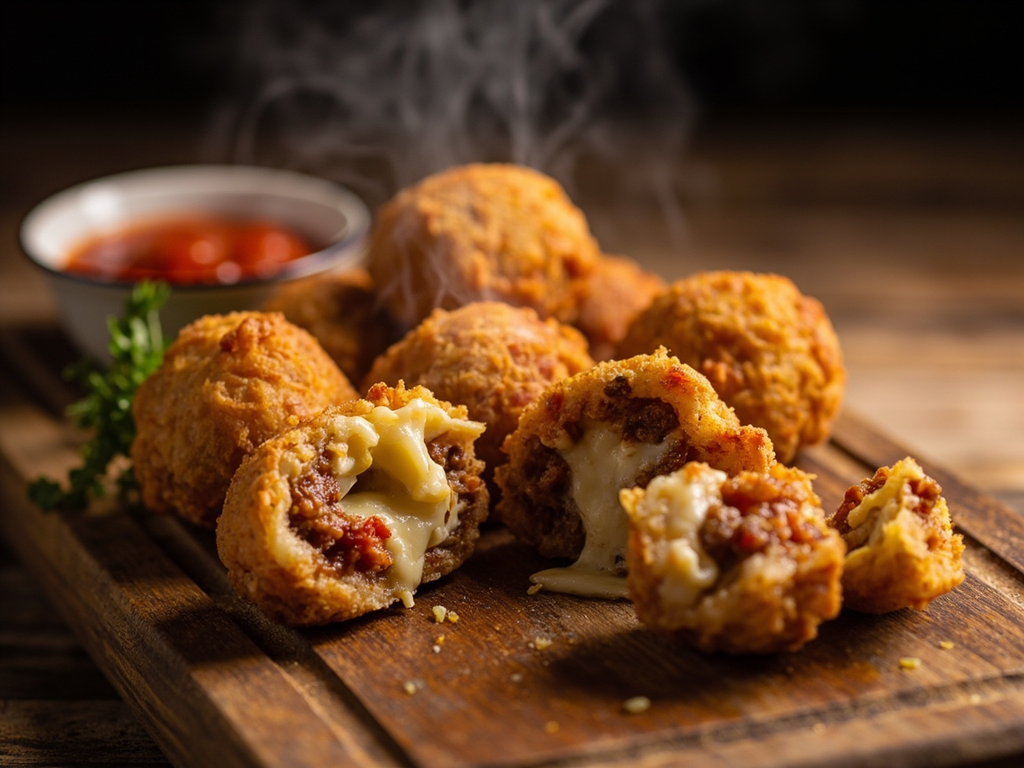
Why this dish? Dworkin lived and campaigned in New York, a city of protests and podiums. The knish — a pastry pocket filled with mashed potato — was the typical street snack in Jewish neighborhoods of New York, sold on sidewalks: food you grab between fights, hot in your hand.
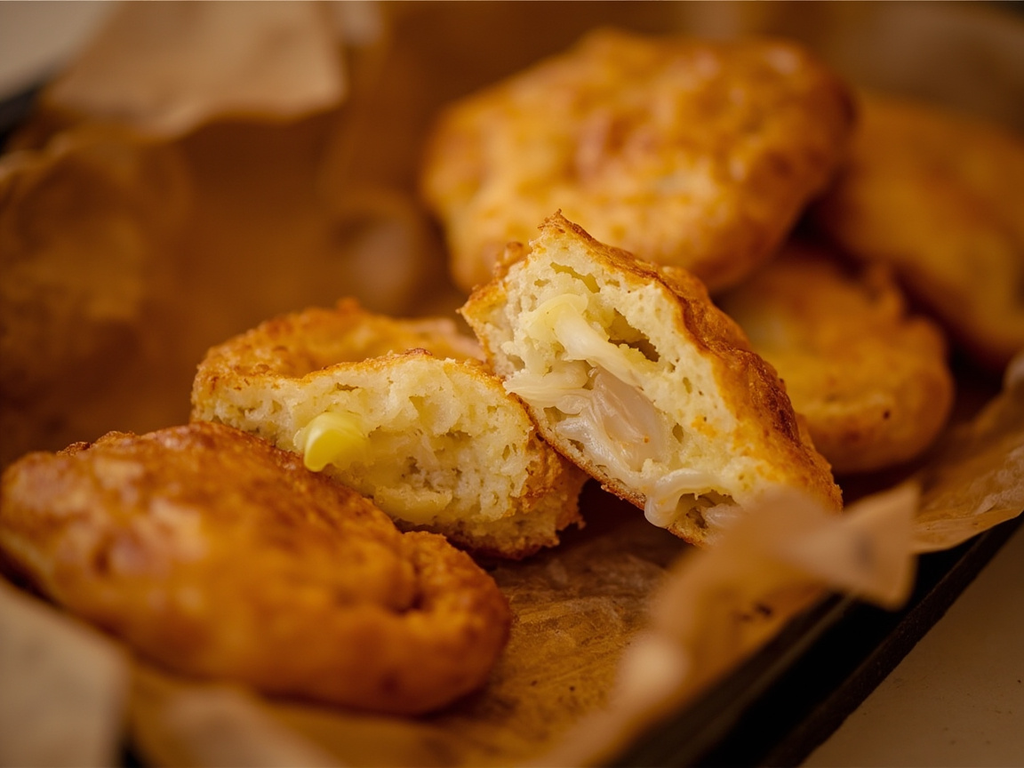
A small pastry of thin dough filled with mashed potatoes and caramelized onions. Eaten standing up, in a paper napkin, without a plate or utensils.
You're at a protest all day, you shout until your voice gives out, and at some point you have to eat something. The knish, you buy it on the street corner, burning hot, you hold it in your hand and you walk. Inside, nothing but potato and onion cooked down long and slow — the food of people who never had much but learned to make it good. You bite into it, you don't need a table or manners. You go back to fight.
- •Flour — as needed (dough)
- •Oil — a drizzle (dough softness)
- •Egg — one (dough binder)
- •Potatoes — several (filling)
- •Onions — a lot (filling flavor)
- •Schmaltz or oil — generously (onion softness)
Potato knish
A small pastry of thin dough filled with mashed potatoes and caramelized onions. Eaten standing up, in a paper napkin, without a plate or utensils.
Why this dish? Dworkin lived and campaigned in New York, a city of protests and podiums. The knish — a pastry pocket filled with mashed potato — was the typical street snack in Jewish neighborhoods of New York, sold on sidewalks: food you grab between fights, hot in your hand.
You're at a protest all day, you shout until your voice gives out, and at some point you have to eat something. The knish, you buy it on the street corner, burning hot, you hold it in your hand and you walk. Inside, nothing but potato and onion cooked down long and slow — the food of people who never had much but learned to make it good. You bite into it, you don't need a table or manners. You go back to fight.
Ingredients (period version)
- Flour — as needed (dough)
- Oil — a drizzle (dough softness)
- Egg — one (dough binder)
- Potatoes — several (filling)
- Onions — a lot (filling flavor)
- Schmaltz or oil — generously (onion softness)
Ingredients
- Flour — 250 g (dough)
- Neutral oil — 5 tbsp (softness)
- Egg — 1 (binder)
- Warm water — 80 ml (dough)
- Mashing potatoes — 600 g (filling)
- Onions — 2 large (flavor)
- Schmaltz or oil — 3 tbsp (softness)
- Salt and pepper — to taste (seasoning)
- Egg yolk (wash) — 1 (golden finish)
Method
- Dough: mix flour, salt, oil, egg, and warm water until a soft dough forms. Cover and let rest 30 minutes.
- Filling: boil potatoes in salted water, mash them. Fry sliced onions in schmaltz until golden, mix into the mashed potatoes. Season generously with salt and pepper.
- Roll out the dough very thinly into a large rectangle. Place a log of filling along one long edge.
- Roll tightly, then pinch the dough every 8 cm to form packets; cut and seal each knish by folding the dough underneath.
- Brush with egg yolk, place on a baking sheet.
- Bake at 190°C for 35 to 40 minutes until golden brown. Eat hot, in your hand.
How it was made : The knish, of Eastern European origin (Yiddish knysh), became a street food staple in Jewish New York in the early 20th century, sold by pushcart vendors and in specialty shops on the Lower East Side. The potato-onion version was the most popular because it was the cheapest.
The contemporary twist : A dollop of strong mustard on the side and a sprinkle of crispy fried onions on top: the sidewalk knish as unapologetic street food.
Andrea Dworkin · Charactorium