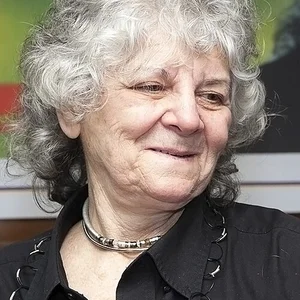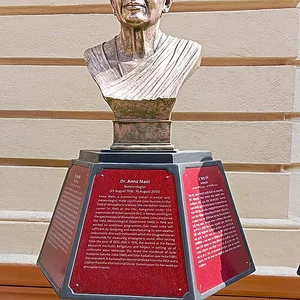

Anna Mani (1918-2001) was an Indian physicist and meteorologist. A pioneer of meteorology in India, she designed instruments to measure solar radiation, ozone, and wind, contributing to her country's scientific growth after independence.
Frequently asked questions
Key Facts
- Born on August 23, 1918, in Peermade, in the princely state of Travancore (British India)
- Studied physics in Madras, then trained in meteorological instrumentation at Imperial College London (1945-1948)
- Joined the India Meteorological Department, where she developed and standardized measuring instruments
- Carried out pioneering work on solar radiation, atmospheric ozone, and the potential of wind energy in India
- Became deputy director general of the India Meteorological Department before retiring in 1976; died on August 16, 2001
Works & Achievements
Five scientific papers written in the laboratory of C. V. Raman, Anna Mani's first major contributions to physics.
Standardization of around a hundred measuring devices, giving India its independence from foreign imports.
Creation of a set of stations measuring solar energy across India, an essential database for climate and energy.
Development of ozonesondes and ozone measurements, placing India among the countries monitoring the composition of the atmosphere.
Installation of meteorological equipment at the equatorial launch site of Thumba, linking meteorology and the emerging space programme.
Reference handbook gathering the solar radiation data collected under her direction.
A work mapping the solar energy received across the country, still used for energy and climate studies.
Anecdotes
For her eighth birthday, little Anna refuses the traditional gift given to the girls in her family: a pair of diamond earrings. Instead, she asks for a complete set of the Encyclopædia Britannica. An insatiable reader from a very young age, she is said to have read nearly every Malayalam book in her town's library before the age of eight, and the English-language works before she turned twelve.
A brilliant physics student, Anna Mani works in Bangalore in the laboratory of Nobel laureate C. V. Raman, where she studies the optical properties of diamonds and rubies. She publishes five scientific papers and writes her doctoral thesis, but the university denies her the title of doctor because she did not hold an official master's degree.
Rather than importing costly equipment from abroad, Anna Mani decides that an independent India must manufacture its own meteorological instruments. She oversees the standardization of around a hundred devices — anemometers, radiation sensors, probes — thereby building the scientific self-reliance of her young country.
A recognized specialist in solar radiation, she sets up a network of stations across India that measure the Sun's energy received at ground level. These data, compiled in her reference handbooks, are still used today to study the climate and solar energy of the subcontinent.
Shaped by the independence movement and by Gandhi, Anna Mani wore khadi, the hand-spun and hand-woven cotton that became the symbol of the struggle against British rule. Throughout her life, she remained known for her simplicity, her rigor, and her refusal of the conventions imposed on women.
Primary Sources
Reference compendium gathering the solar radiation measurements collected by the network of Indian stations, intended for engineers and researchers working on climate and solar energy.
Scientific synthesis mapping the distribution of solar energy received across India, based on decades of instrumental observations.
A series of five communications describing the light spectra and absorption properties of diamonds and rubies, the fruit of doctoral research carried out in Bangalore.
Key Places
Hill village in southern India where Anna Mani was born in 1918, into a Syrian Christian family connected to cardamom cultivation.
City where she pursued her higher studies in physics and chemistry at Pachaiyappa's College, earning her bachelor's degree in 1939.
Institute where she carried out her spectroscopy research on diamonds and rubies under the direction of Nobel laureate C. V. Raman.
British institution where she specialized, from 1945, in meteorological instruments.
National weather service she joined in 1948, where she organized instrument manufacturing and rose to become deputy director general.
Capital of Kerala, near the Thumba rocket launch site where she installed instruments, and where she died in 2001.
Typical Objects
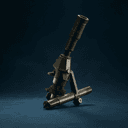
Instrument that measures the energy of solar radiation received on a surface. Anna Mani refined its use and manufacture for India's network of stations.
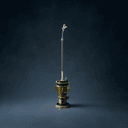
Sensor carried aloft by a balloon to measure the concentration of ozone in the atmosphere. Anna Mani developed ozone measurement in India.
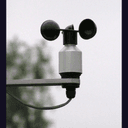
Device that measures wind speed. It is one of the many instruments she standardized to make India self-reliant.
📷 CC BY 3.0 · Wikimedia Commons ↗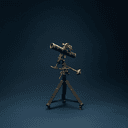
Instrument that breaks light apart to analyze its colors. Anna Mani used it to study diamonds and rubies in C. V. Raman's laboratory.
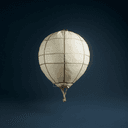
Gas-filled balloon carrying sensors into the upper layers of the air to measure temperature, pressure and humidity.
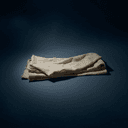
Cotton spun and woven by hand, a symbol of the Indian independence movement. Anna Mani wore it throughout her life out of conviction.
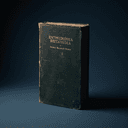
Vast multi-volume encyclopedia that she asked for as a child instead of jewelry. It symbolizes her thirst for knowledge.
School Curriculum
Vocabulary & Tags
Key Vocabulary
Daily Life
Morning
An early riser and methodical, Anna Mani began her day with reading, her lifelong passion. She would then head to her laboratory or her office at the meteorological service, where she rigorously checked the calibration of the instruments.
Afternoon
Her afternoons were spent designing and testing measuring devices, analyzing readings of radiation, wind, or ozone, and training young scientists. Demanding by nature, she had little tolerance for sloppiness in her work.
Evening
In the evening, she returned to her books, her scientific correspondence, and music. Remaining unmarried, she devoted her free time to reading, travel, and nature, which she loved to observe.
Food
A native of Kerala, she shared in the cuisine of southern India, based on rice, vegetables, coconut, and spices such as the cardamom grown on the family lands. She led a frugal life, with no taste for luxury.
Clothing
True to the spirit of the independence movement, she wore *khadi* saris—that hand-spun and hand-woven cotton—in a simple, unadorned style that reflected her personality.
Housing
She lived in modest accommodations as her postings required, in Pune and then in southern India. Her interiors were above all filled with books and work documents.
Historical Timeline
Period Vocabulary
Liens externes & ressources
Références
Œuvres
Recherches de spectroscopie sur les diamants et les rubis
vers 1942-1945
Fabrication indienne d'instruments météorologiques
années 1950-1960
Réseau national de mesure du rayonnement solaire
années 1950-1970
Programme de mesure de l'ozone atmosphérique
années 1960
Instrumentation de la station de fusées de Thumba
années 1960
The Handbook for Solar Radiation Data for India
1980
Solar Radiation over India
1981