 flip
flipFava Bean Potage with Garden Herbs
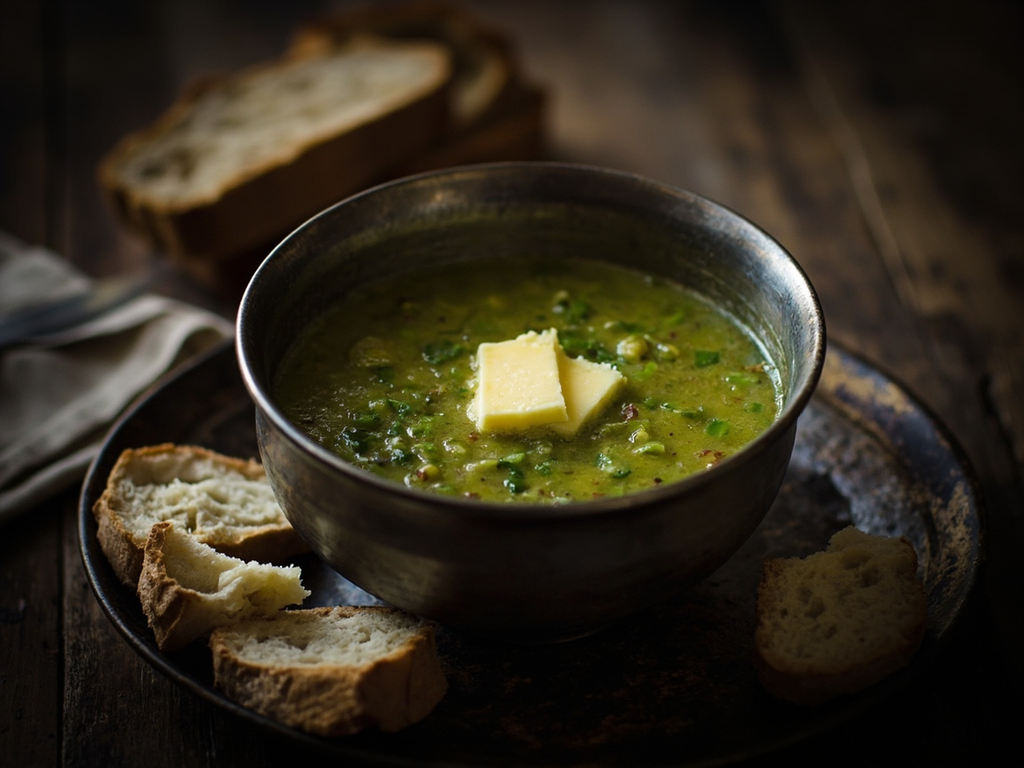
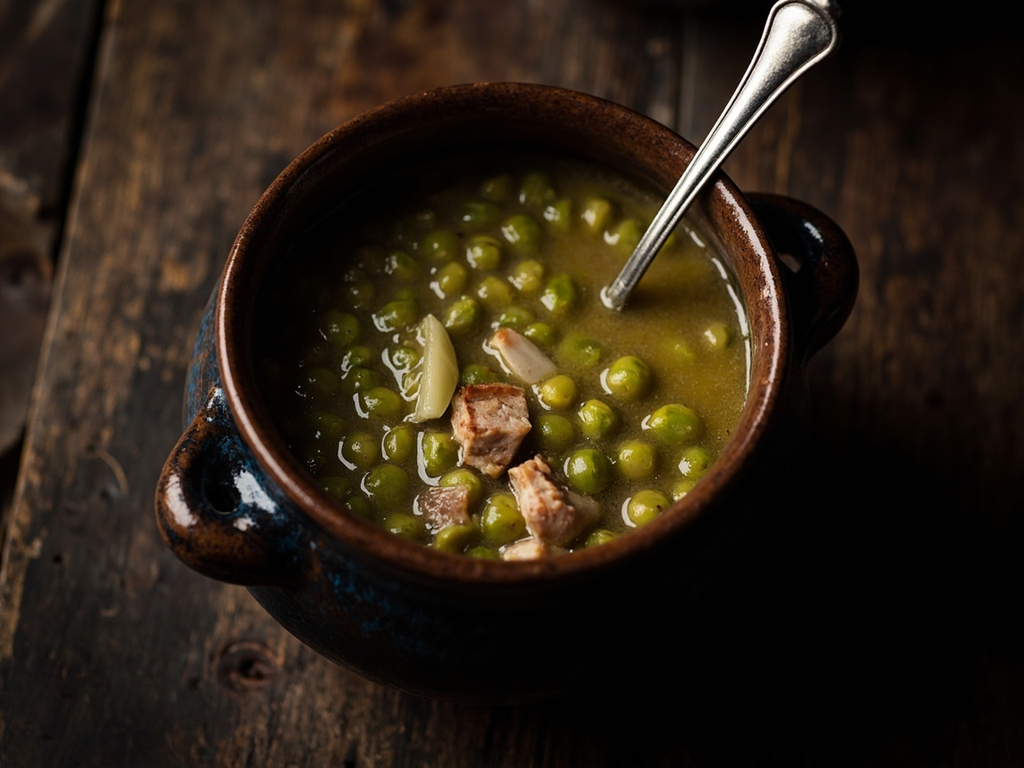
Fava Bean Potage with Garden Herbs
Why this dish? Brown bread and legumes dominated the daily fare of modest Provençal households; this fava bean potage perfumed with fennel and sage is exactly the dish that simmered each day near the mortar, using the garden herbs that also served as remedies.
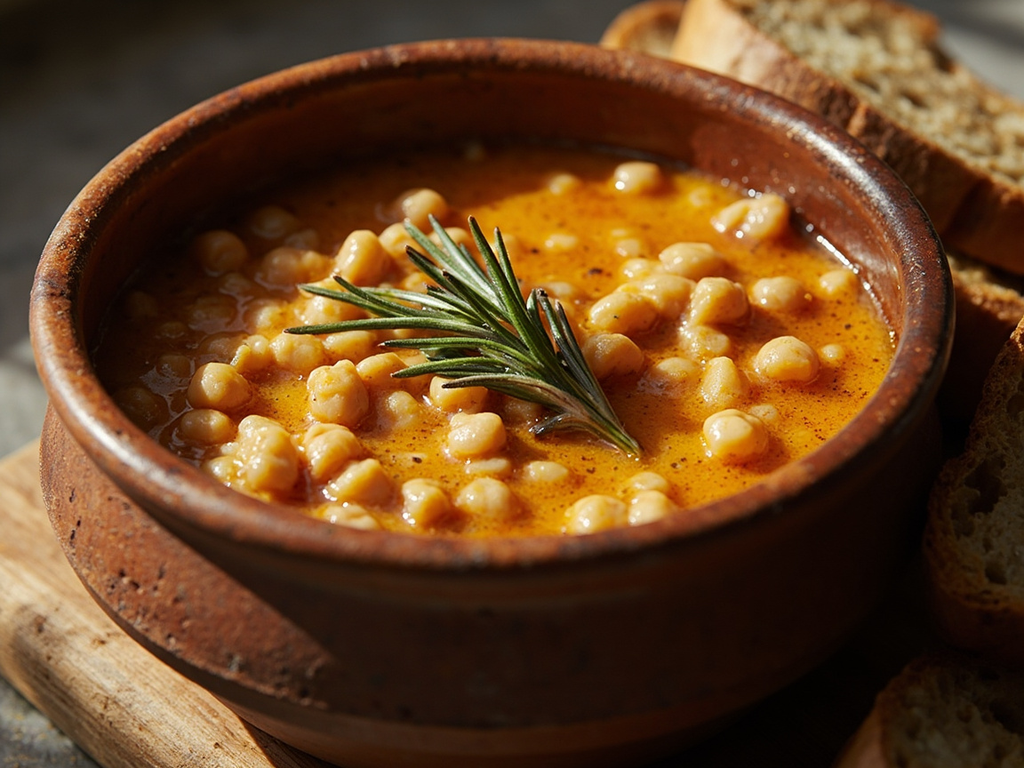
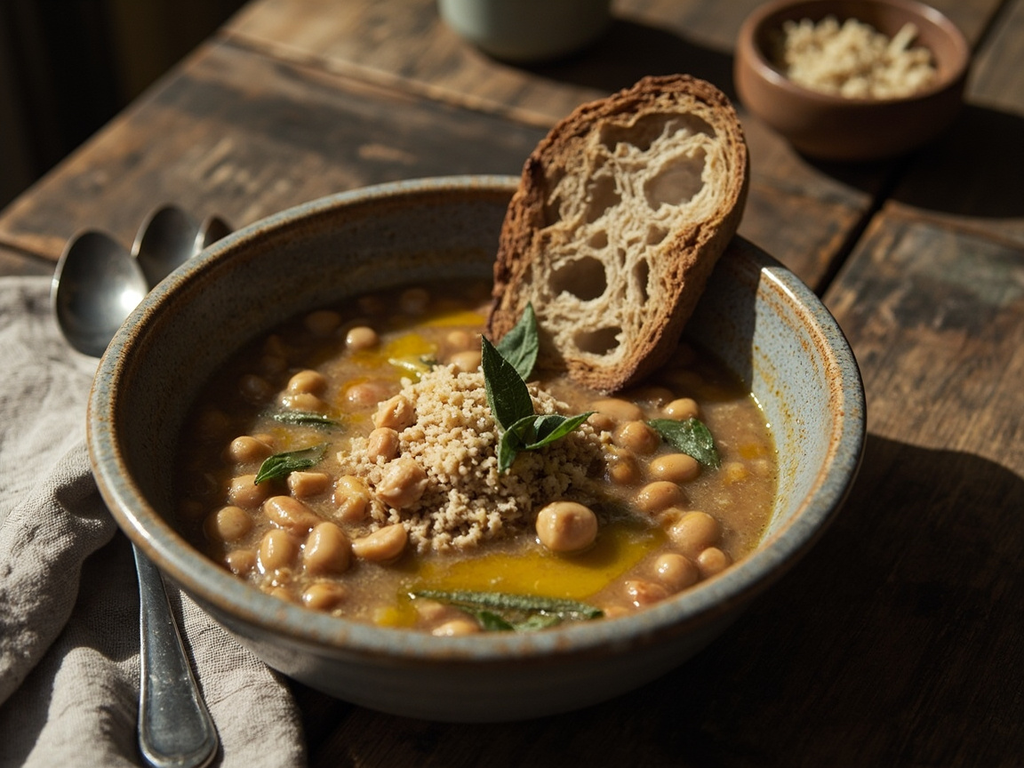
A thick soup of dried fava beans long-cooked with leeks, fennel, and sage, thickened with stale brown bread and drizzled with oil. The staple meal, simple and nourishing, for days without celebration.
Now then, come close to my hearth: you must first soak the beans the night before, otherwise they remain hard as stones. I set them to cook over a low fire with a leek, a sprig of fennel, and three sage leaves picked from my garden — the same ones I grind in my mortar for my remedies. When the flesh falls apart, I crumble in brown bread to thicken, and I pour a thread of oil over the top. It's little enough, but it stays with you all day, believe me.
- •Dried fava beans — two handfuls per person (nourishing base)
- •Leek — one (aromatic)
- •Fennel (bulb and stalk) — one branch (signature flavor)
- •Fresh sage — a few leaves (medicinal and culinary herb)
- •Stale brown bread — one crust (thickener)
- •Olive oil — a drizzle (fat)
- •Salt — to taste (seasoning)
Fava Bean Potage with Garden Herbs
A thick soup of dried fava beans long-cooked with leeks, fennel, and sage, thickened with stale brown bread and drizzled with oil. The staple meal, simple and nourishing, for days without celebration.
Why this dish? Brown bread and legumes dominated the daily fare of modest Provençal households; this fava bean potage perfumed with fennel and sage is exactly the dish that simmered each day near the mortar, using the garden herbs that also served as remedies.
Now then, come close to my hearth: you must first soak the beans the night before, otherwise they remain hard as stones. I set them to cook over a low fire with a leek, a sprig of fennel, and three sage leaves picked from my garden — the same ones I grind in my mortar for my remedies. When the flesh falls apart, I crumble in brown bread to thicken, and I pour a thread of oil over the top. It's little enough, but it stays with you all day, believe me.
Ingredients (period version)
- Dried fava beans — two handfuls per person (nourishing base)
- Leek — one (aromatic)
- Fennel (bulb and stalk) — one branch (signature flavor)
- Fresh sage — a few leaves (medicinal and culinary herb)
- Stale brown bread — one crust (thickener)
- Olive oil — a drizzle (fat)
- Salt — to taste (seasoning)
Ingredients
- Dried split fava beans — 250 g (base)
- Leek — 1, sliced (aromatic)
- Fennel bulb — 1/2, diced (signature flavor)
- Fresh sage — 4 leaves (herb)
- Stale whole wheat country bread — 2 slices (thickener)
- Olive oil — 3 tbsp (fat)
- Salt — 1 tsp (seasoning)
Method
- Soak the fava beans in cold water for 12 hours, then drain.
- In a pot, sweat the leek and fennel in a little oil.
- Add the beans, sage, and 1.5 L water; simmer for 1 hour 30 minutes until the beans fall apart.
- Crumble the stale bread into the soup and whisk to thicken.
- Season with salt, serve hot with a drizzle of raw olive oil.
How it was made : In modest early modern households, dried legumes were the year's protein reserve. They were soaked and then cooked for hours over the wood fire, and potages were thickened with stale bread rather than butter, a costly commodity. Garden herbs served both as seasoning and domestic pharmacy.
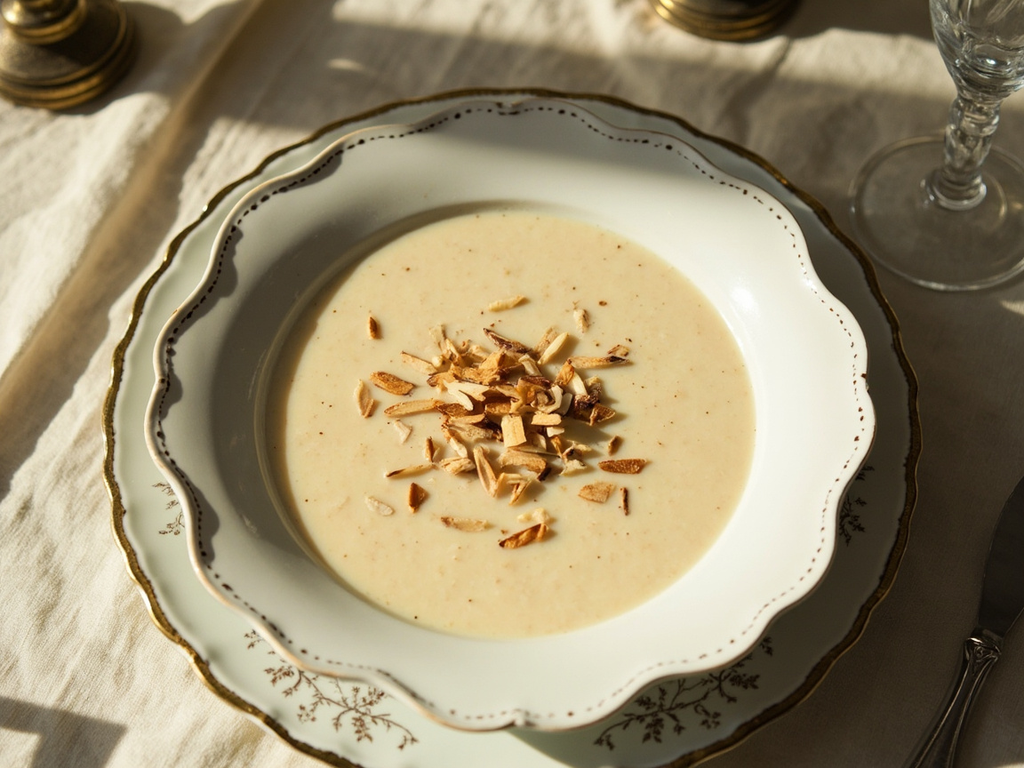
The contemporary twist : Serve as a velouté blended smooth, topped with crispy toasted bread chips and fennel flowers to evoke the herbal garden.
Sources : Olivier de Serres, Le Théâtre d'agriculture et mesnage des champs, 1600 · Le Mesnagier de Paris (dried legume potages), manuscript tradition revived in the 16th-17th c.
Anne Ponsarde · Charactorium