 flip
flipPsári sti skára — Grilled Fish with Oregano
Psári sti skára — Grilled Fish with Oregano
Why this dish? Spetses is an island; the Aegean Sea feeds its inhabitants daily. Daughter and wife of shipowners, Bouboulina lived by the rhythm of fishing boats returning to port. Grilled fish, doused with oil and lemon juice, perfumed with wild oregano, was the everyday fare of wealthy island families on the lean days of the Orthodox calendar.
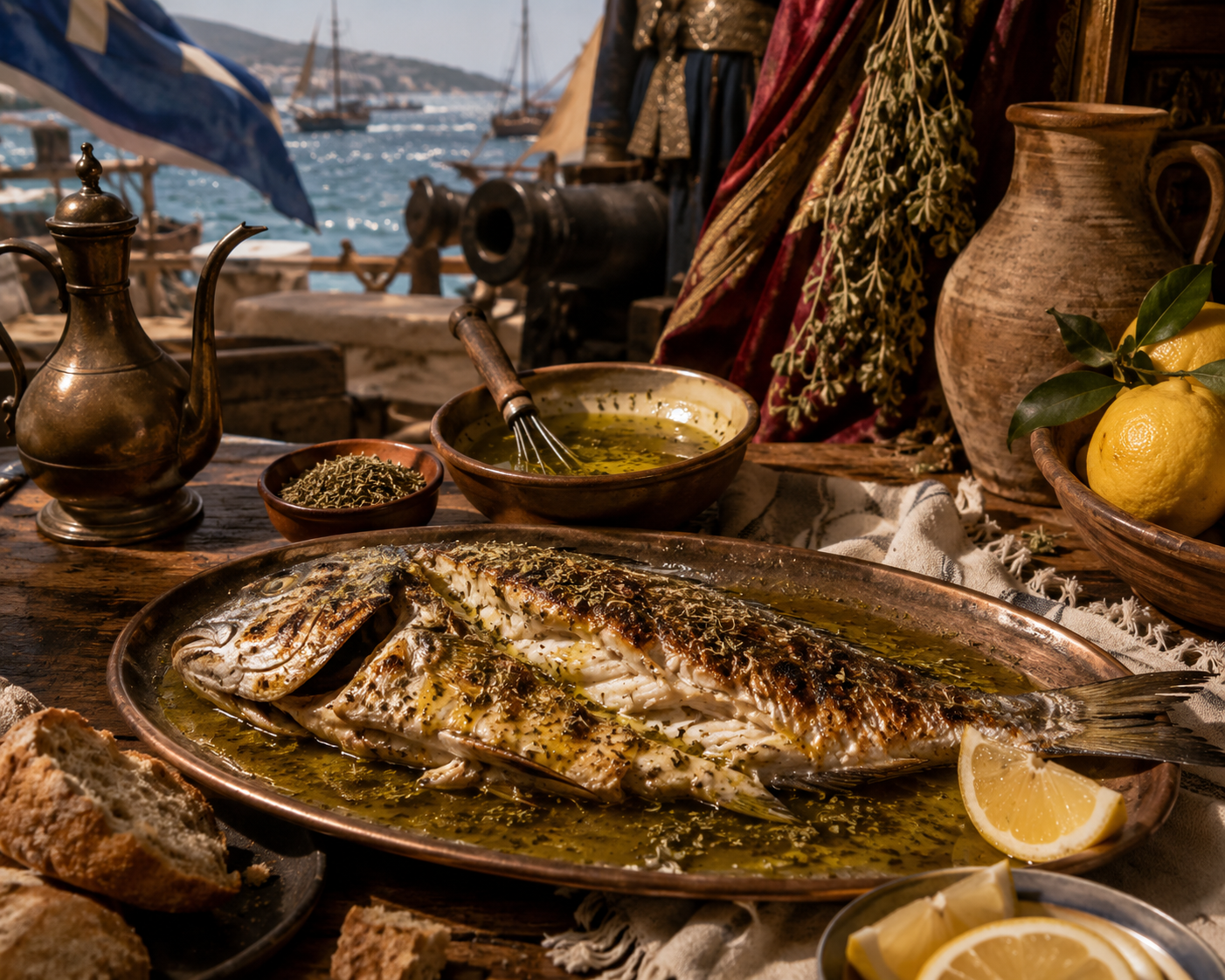
A whole Aegean fish, simply grilled over embers, split open, then drowned in ladolémono — the emulsion of olive oil and lemon — and sprinkled with oregano. Greek cuisine in its purest simplicity: a good product, fire, three seasonings.
Here, on Spetses, the sea is our garden. At dawn, I watched the caiques return and chose the fish still quivering, sea bream or red mullet depending on the net's luck. We placed it on the embers, simply, and while it grilled I whisked oil and lemon together — my ladolémono. A cloud of oregano picked from the hill, and that's it: whoever complicates fish has never had fish worthy of the name.
- •Whole Aegean fish (sea bream, red mullet, sar) — one per guest (heart of the dish)
- •Olive oil — generously (seasoning and cooking)
- •Lemon — as much as you like (acidity)
- •Dried wild oregano — a good pinch (signature aroma)
- •Sea salt — to taste (seasoning)
Psári sti skára — Grilled Fish with Oregano
A whole Aegean fish, simply grilled over embers, split open, then drowned in ladolémono — the emulsion of olive oil and lemon — and sprinkled with oregano. Greek cuisine in its purest simplicity: a good product, fire, three seasonings.
Why this dish? Spetses is an island; the Aegean Sea feeds its inhabitants daily. Daughter and wife of shipowners, Bouboulina lived by the rhythm of fishing boats returning to port. Grilled fish, doused with oil and lemon juice, perfumed with wild oregano, was the everyday fare of wealthy island families on the lean days of the Orthodox calendar.
Here, on Spetses, the sea is our garden. At dawn, I watched the caiques return and chose the fish still quivering, sea bream or red mullet depending on the net's luck. We placed it on the embers, simply, and while it grilled I whisked oil and lemon together — my ladolémono. A cloud of oregano picked from the hill, and that's it: whoever complicates fish has never had fish worthy of the name.
Ingredients (period version)
- Whole Aegean fish (sea bream, red mullet, sar) — one per guest (heart of the dish)
- Olive oil — generously (seasoning and cooking)
- Lemon — as much as you like (acidity)
- Dried wild oregano — a good pinch (signature aroma)
- Sea salt — to taste (seasoning)
Ingredients
- Whole sea bream or sea bass, gutted and scaled — 2 (600 g each) (heart of the dish)
- Extra virgin olive oil — 6 tbsp (ladolémono)
- Lemon juice — 2 lemons (acidity)
- Dried oregano — 2 tsp (aroma)
- Salt and pepper — to taste (seasoning)
- Lemon wedges — for serving (service)
Method
- Salt the inside and outside of the fish; let rest 10 minutes.
- Prepare the ladolémono: vigorously whisk the olive oil, lemon juice, oregano, salt, and pepper until emulsified.
- Grill the fish over embers or a very hot plancha, 5–7 minutes per side, until the skin is golden and the flesh opaque.
- Place on a platter, open along the backbone, and generously drizzle with the still-warm ladolémono.
- Serve immediately with lemon wedges and paximádi to soak up the juices.
How it was made : On the islands, fish was grilled over olive wood or vine cuttings. Ladolémono (oil + lemon) is the basic emulsion of all Greek maritime cuisine, and mountain oregano (rígani) is the king of herbs, picked and dried in bunches hung from the rafters.
The contemporary twist : Serve the deboned fillet on a slate tile, ladolémono whipped into a light foam with a siphon, candied lemon zest — the island meze in bistronomic form.
Sources : Diane Kochilas, The Glorious Foods of Greece · Aglaia Kremezi, The Foods of Greece
Laskarina Bouboulina · Charactorium