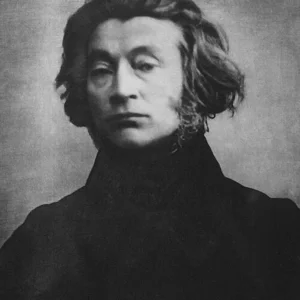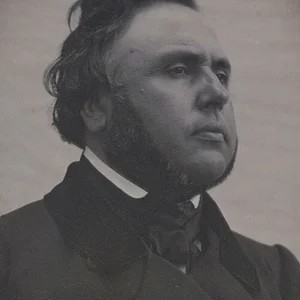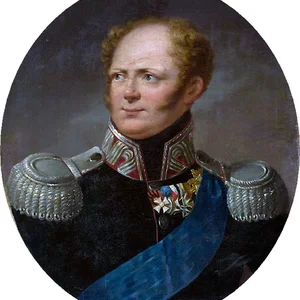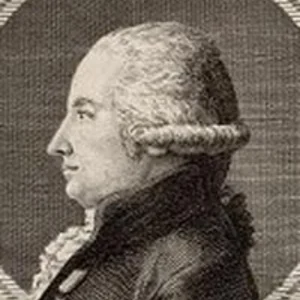

French aristocrat (1756-1808), senator of the First Empire and grand officer of the Legion of Honor. Born into a great noble family, he navigated the transition from the Ancien Régime to the Napoleonic institutions.
Antoine-César de Choiseul-Praslin(1756 — 1808)
Antoine-César de Choiseul-Praslin
France
7 min read
Frequently asked questions
Key Facts
- Born in 1756 into the noble Choiseul-Praslin family
- Appointed senator of the First Empire under Napoleon Bonaparte
- Elevated to the rank of grand officer of the Empire
- Died in 1808, before the fall of the Empire
- Represents the old-regime nobility that rallied to the imperial institutions
Works & Achievements
As a member of the Conservative Senate, he took part in the vote that made Bonaparte First Consul for Life — a decisive step toward the restoration of strong personal rule in France.
He participated in the historic vote that transformed the Consular Republic into a hereditary Empire and conferred upon Napoleon Bonaparte the title of Emperor of the French, completing the restoration of a monarchical system.
His regular attendance in the Senate over eight years was in itself a major political contribution: as a former nobleman who had rallied to the new regime, he lent the Napoleonic government the symbolic endorsement of a lineage whose prestige stretched back several centuries.
Anecdotes
Antoine-César de Choiseul-Praslin belonged to one of the most illustrious dynasties of the Ancien Régime: his cousin César-Gabriel de Choiseul had served as Foreign Minister under Louis XV, making the name Choiseul-Praslin synonymous with distinguished service to the monarchical state. This prestigious lineage earned him immediate recognition from Napoleon, who was actively seeking to win over such families in order to legitimize his regime.
Born in 1756, he was thirty-three years old when the Bastille fell. Like many aristocrats of his generation, he had to navigate the years of the Terror — a period when bearing a noble name was enough to attract suspicion. His ability to survive those turbulent years and emerge as an imperial senator speaks to the complexity of individual paths through the Revolution.
His appointment to the Conservative Senate perfectly illustrates the policy known as the 'ralliement' pursued by Bonaparte: by bringing former nobles into the heart of imperial institutions, the First Consul — and later Emperor — sought to reconcile the France of the Ancien Régime with the new France. Choiseul-Praslin thus stood among those 'living bridges' between two worlds that Napoleon knew how to use to great effect.
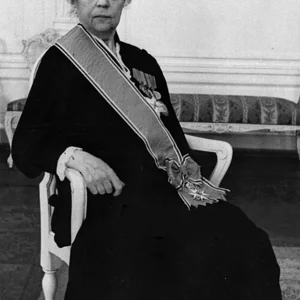
As a Grand Officer of the Legion of Honor, he was among the first recipients of this order, created in 1802. At the great imperial ceremonies — at Les Invalides or the Tuileries — he wore the broad red sash with its five-pointed enameled cross, symbol of a new France that now honored merit and service as much as birth.
Primary Sources
Choiseul-Praslin (Antoine-César de), senator, grand officer of the Legion of Honor, born in 1756. Listed among the members of the Conservative Senate since the founding of that institution by the Constitution of the Year VIII.
Antoine-César de Choiseul-Praslin, senator of the Empire, promoted to the rank of grand officer of the Legion of Honor in recognition of his services rendered to the French nation and to the person of His Majesty the Emperor.
Senator Choiseul-Praslin took part in the vote on the organic senatus-consultum of 28 Floréal, Year XII, by which the government of the Republic was entrusted to a hereditary Emperor, and Napoleon Bonaparte was declared Emperor of the French.
By virtue of Article 16 of the Constitution, the First Consul appoints from among the citizens most distinguished by their services and learning the first members of the Conservative Senate, among whom figures the citizen Choiseul-Praslin.
Key Places
Seat of the Conservative Senate from 1799, where Antoine-César de Choiseul-Praslin sat regularly. This palace, formerly the residence of Marie de Medici, had become the center of legislative power under the Consulate and the Empire.
The aristocratic quarter on the Left Bank of Paris where great noble families resided under the Ancien Régime, and later imperial dignitaries. The grand private mansions of this neighborhood formed the heart of social and political life under the Empire.
The ancestral estates of the Choiseul-Praslin family in Champagne, the duchy having been created in 1762 for César-Gabriel de Choiseul. These domains represented the continuity of the noble lineage through the upheavals of the Revolution.
The royal residence where the Choiseul-Praslin family held a prominent position at court under Louis XV and Louis XVI. Antoine-César spent his youth there in the immediate circle of the royal family.
Typical Objects

Official costume embroidered with gold palm leaves on a green background, worn during solemn sessions of the Conservative Senate at the Palais du Luxembourg. This distinctive garment visually signaled the senator's rank during imperial ceremonies.

Broad watered-silk red ribbon bearing the enameled five-pointed star cross, insignia of the rank of Grand Officer. This ceremonial decoration was worn as a sash during the great imperial ceremonies.

Enclosed four-wheeled coach, suspended on springs, drawn by four horses and bearing a coat of arms on the doors, allowing dignitaries to travel between Paris and their provincial estates. An ostentatious display of wealth and rank.

Documents certifying the antiquity of the family lineage and ownership of ancestral estates, carefully preserved throughout the revolutionary years. Under the Empire, these archives legitimized social standing within the new imperial hierarchy.

Letters written with a quill pen on laid paper, exchanged with ministries, prefects, and fellow senators. Senators of the Empire were integrated into a vast network of governance built on handwritten correspondence.

Oil painting depicting the senator in his official costume, commissioned from a painter of the French school. These portraits were displayed in the reception rooms of private mansions to assert the family's rank and demonstrate loyalty to the Emperor.
School Curriculum
Vocabulary & Tags
Key Vocabulary
Daily Life
Morning
The senator began his day by reading the *Moniteur universel*, the sole official newspaper publishing decrees, military bulletins, and government news. He would then receive his private secretary to dictate administrative correspondence before heading to Senate sessions on meeting days.
Afternoon
On session afternoons, his berline carriage took him to the Palais du Luxembourg, where he joined fellow senators to deliberate on the *sénatus-consultes* submitted by the imperial government. Outside sessions, he held audiences for petitioners seeking support or recommendations from the administration.
Evening
Evenings were devoted to dinners in the salons of the Faubourg Saint-Germain, where old and new nobility mingled in an atmosphere of political conversation, chamber music, and parlor games. These social gatherings formed an informal network of influence essential to the smooth functioning of the imperial regime.
Food
The table of a grand officer of the Empire reflected the luxury recovered after the privations of the Revolution: soups, roasted meats, game in season, and fine wines from Burgundy or Bordeaux. Dinner, the main meal served in the late afternoon, could last several hours during official receptions.
Clothing
In ceremonial dress at the Senate, he wore the regulation gold-embroidered green coat with the grand red sash of the Legion of Honor across his chest. In daily life, men's fashion under the Empire called for a lapelled frock coat, knee breeches or full-length trousers, a carefully knotted white cravat, and buckled shoes.
Housing
He resided in a private mansion in the Faubourg Saint-Germain, its décor blending the mahogany and gilded-bronze furniture characteristic of the Empire style with tapestries and paintings inherited from the *Ancien Régime*. The family estate in Champagne served as a summer residence.
Historical Timeline
Period Vocabulary
Liens externes & ressources
Références
Œuvres
Vote du sénatus-consulte instituant le Consulat à vie
4 août 1802
Vote du sénatus-consulte instituant l'Empire héréditaire
18 mai 1804
Service au Sénat conservateur (1800-1808)
1800-1808