 flip
flipGenoese Olive Oil Focaccia
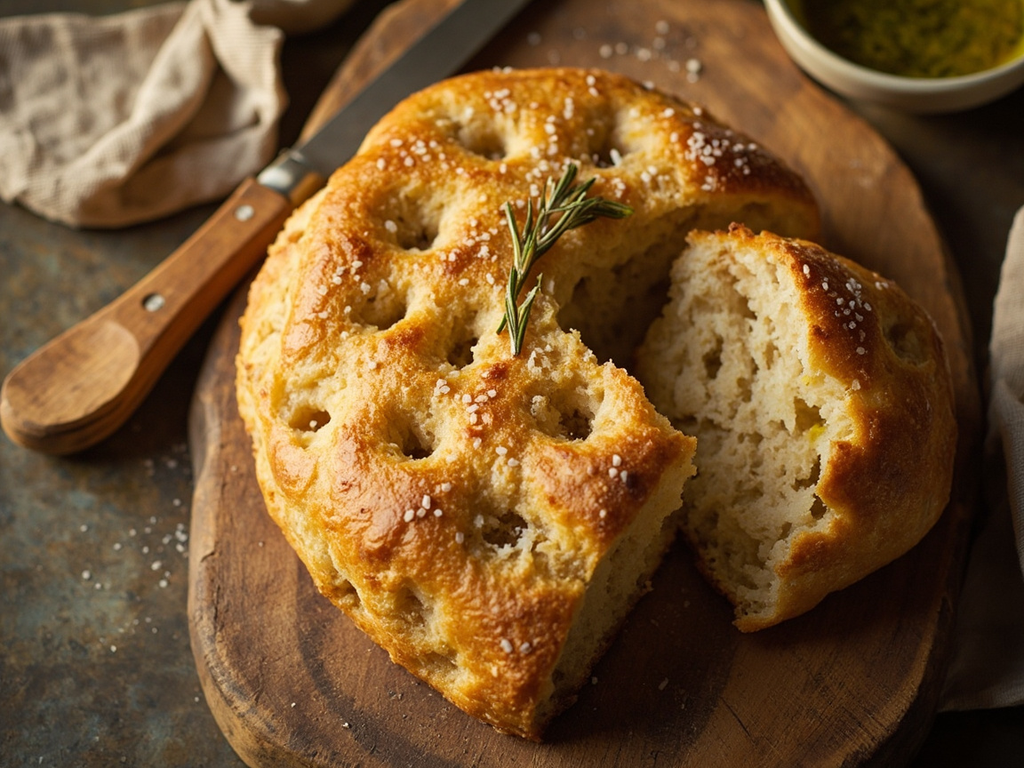
Genoese Olive Oil Focaccia
Why this dish? During his Italian years, Van Dyck stayed long in Genoa, where he painted the local aristocracy. There he acquired a Mediterranean taste for olive oil, which contrasted with the butter and lard of Flanders. Focaccia, the bread of sailors and travelers, accompanied the long roads between Genoa, Rome and the North.
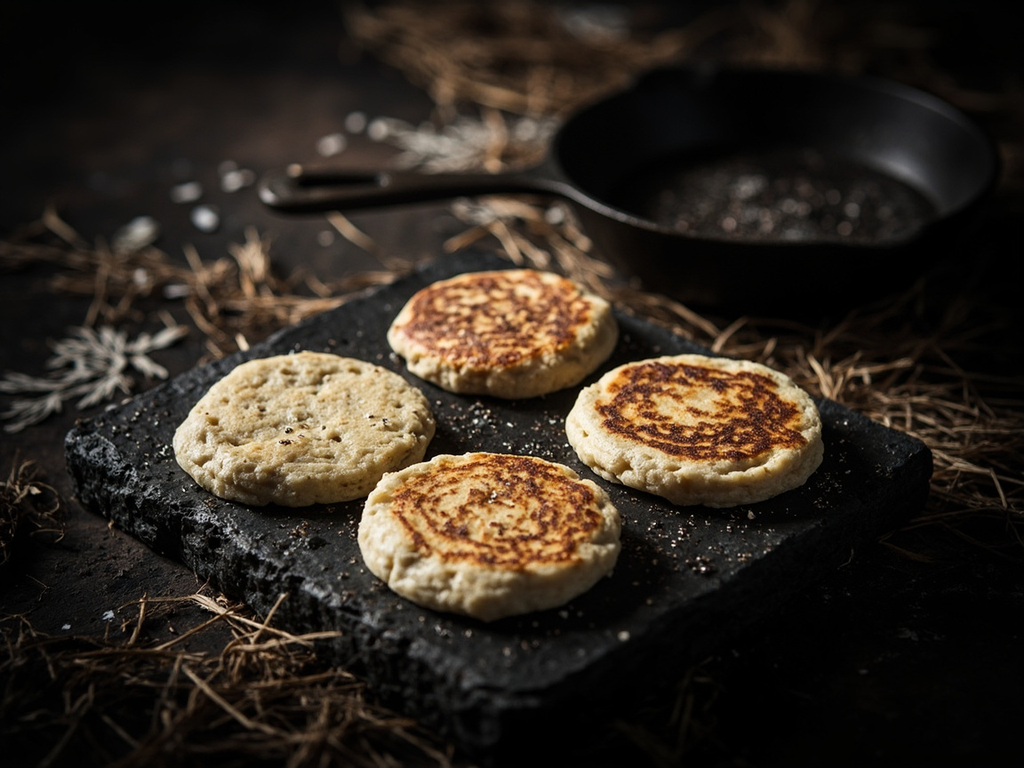
A soft flatbread, dimpled where olive oil pools, perfumed with a little rosemary and coarse salt. Simple, salty, nourishing: the bread to carry and keep on the road.
Ah, Genoa! It was there, among the palaces I adorned with portraits, that I first tasted that olive oil, so green and fragrant, far from our melted butter of the North. They bake this flatbread, poked with fingertips to lodge oil and coarse salt, and it travels well. I often carried it on the road to Rome: a hunk, some cheese, and one lasts the day.
- •Wheat flour — as needed (base)
- •Sourdough or beer yeast — a little (fermentation)
- •Ligurian olive oil — generous (Mediterranean signature)
- •Warm water — as needed (hydration)
- •Coarse salt — on surface (seasoning)
- •Rosemary — a few sprigs (perfume)
Genoese Olive Oil Focaccia
A soft flatbread, dimpled where olive oil pools, perfumed with a little rosemary and coarse salt. Simple, salty, nourishing: the bread to carry and keep on the road.
Why this dish? During his Italian years, Van Dyck stayed long in Genoa, where he painted the local aristocracy. There he acquired a Mediterranean taste for olive oil, which contrasted with the butter and lard of Flanders. Focaccia, the bread of sailors and travelers, accompanied the long roads between Genoa, Rome and the North.
Ah, Genoa! It was there, among the palaces I adorned with portraits, that I first tasted that olive oil, so green and fragrant, far from our melted butter of the North. They bake this flatbread, poked with fingertips to lodge oil and coarse salt, and it travels well. I often carried it on the road to Rome: a hunk, some cheese, and one lasts the day.
Ingredients (period version)
- Wheat flour — as needed (base)
- Sourdough or beer yeast — a little (fermentation)
- Ligurian olive oil — generous (Mediterranean signature)
- Warm water — as needed (hydration)
- Coarse salt — on surface (seasoning)
- Rosemary — a few sprigs (perfume)
Ingredients
- Wheat flour (T55 or T65) — 500 g (base)
- Dry active yeast — 7 g (fermentation)
- Extra virgin olive oil — 6 tbsp (+ for surface) (Mediterranean signature)
- Warm water — 330 ml (hydration)
- Fine salt — 10 g (dough)
- Fleur de sel / coarse salt — for finishing (crust)
- Fresh rosemary — 2 sprigs (perfume)
Method
- Dissolve yeast in warm water, add flour, fine salt and 3 tbsp oil; knead into a soft dough.
- Let rise covered for 1 to 1.5 hours until doubled.
- Spread the dough on an oiled baking sheet, let rest 30 min.
- With fingertips, dimple the entire surface, drizzle with olive oil, sprinkle with coarse salt and rosemary.
- Bake at 220°C for 18-20 min until golden.
- Drizzle with a final splash of oil upon removal; enjoy warm or cold, on the road.
How it was made : Ligurian focaccia is long documented in Genoa, a merchant city where olive oil reigned. An inexpensive, preserving bread, it fed sailors, merchants and travelers. The contrast between oil-based (South) and butter/lard-based (North) cuisine is a well-attested historical reality that Van Dyck, as a traveler, experienced.
The contemporary twist : Serve it on a sharing board with a small bowl of new olive oil for dipping, 'Ligurian artist's studio' style.
Sources : Documented tradition of Genoese focaccia (Liguria) · History of the culinary divide oil (South) / butter (North) in early modern Europe
Anthony van Dyck · Charactorium