 flip
flipOatcakes: Traveller's Oat Griddle Cakes
Oatcakes: Traveller's Oat Griddle Cakes
Why this dish? Oatbread explicitly featured on Smith's table. Dry and sturdy, these cakes kept for weeks and accompanied long journeys — from Kirkcaldy to Glasgow, from Edinburgh to Oxford where he was a student at Balliol College.
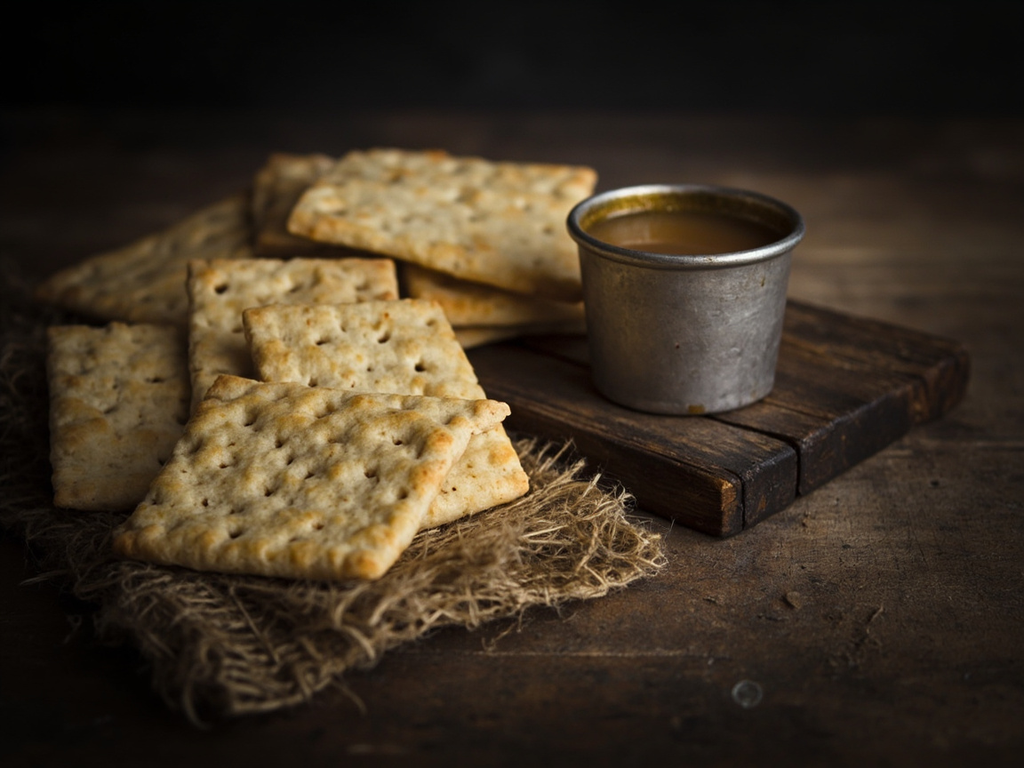
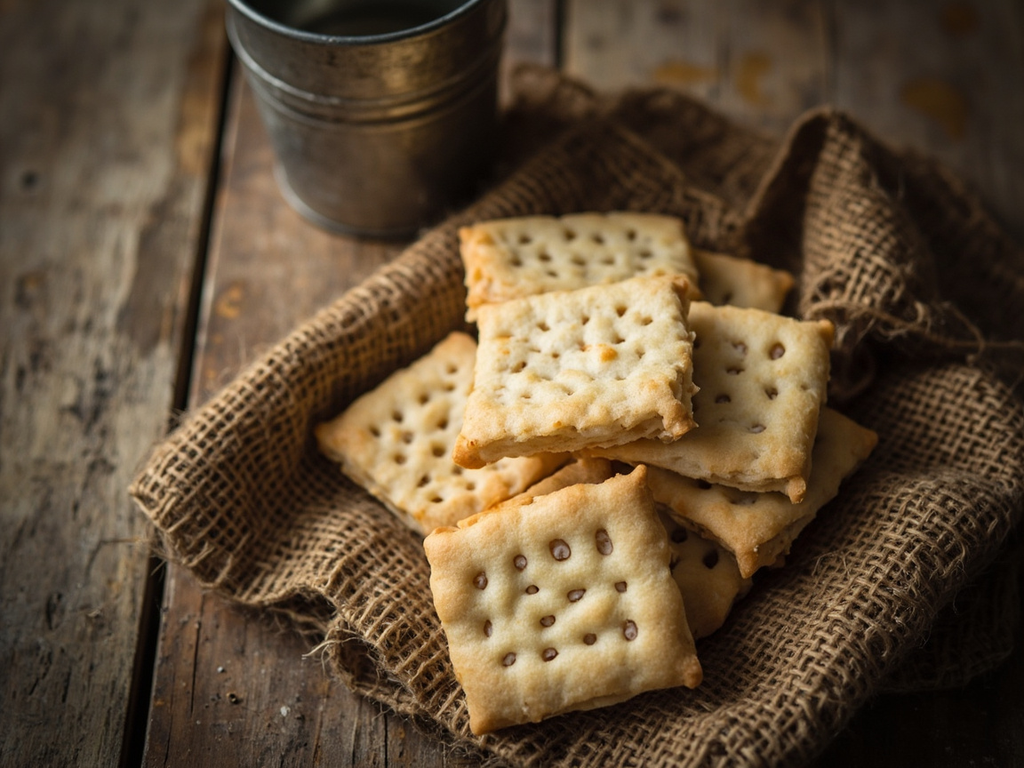
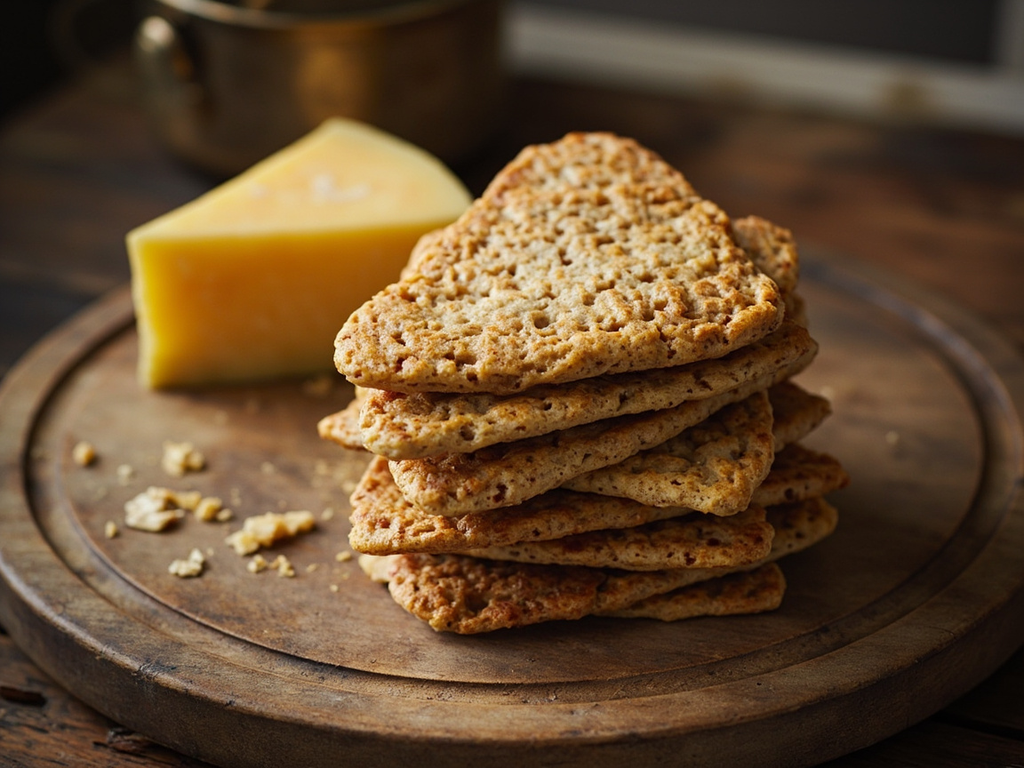
Thin oatcakes baked on a griddle, unleavened, crisp and long-lasting. They are eaten with cheese, butter, or dipped in broth. The bread of Scots who had neither the wheat nor the oven of the South.
The prudent traveller always carries a few in his satchel. Mix the oatmeal with a little hot water and a knob of fat, no more — knead quickly, for the dough does not wait. Roll it out thin as a leaf, bake it on the hot griddle, and finish it standing before the fire to dry and harden. Thus prepared, it will sustain you for eight days on the road without losing any of its virtue: no bread is more faithful to the poor or to the scholar on his way.
- •Medium oatmeal — two measures (base)
- •Mutton fat or butter — a knob (binder)
- •Hot water — as needed for dough (hydration)
- •Salt — a pinch (seasoning)
Oatcakes: Traveller's Oat Griddle Cakes
Thin oatcakes baked on a griddle, unleavened, crisp and long-lasting. They are eaten with cheese, butter, or dipped in broth. The bread of Scots who had neither the wheat nor the oven of the South.
Why this dish? Oatbread explicitly featured on Smith's table. Dry and sturdy, these cakes kept for weeks and accompanied long journeys — from Kirkcaldy to Glasgow, from Edinburgh to Oxford where he was a student at Balliol College.
The prudent traveller always carries a few in his satchel. Mix the oatmeal with a little hot water and a knob of fat, no more — knead quickly, for the dough does not wait. Roll it out thin as a leaf, bake it on the hot griddle, and finish it standing before the fire to dry and harden. Thus prepared, it will sustain you for eight days on the road without losing any of its virtue: no bread is more faithful to the poor or to the scholar on his way.
Ingredients (period version)
- Medium oatmeal — two measures (base)
- Mutton fat or butter — a knob (binder)
- Hot water — as needed for dough (hydration)
- Salt — a pinch (seasoning)
Ingredients
- Oat flour (or finely blitzed oats) — 200 g (base)
- Melted butter — 20 g (binder)
- Hot water — 60 to 80 ml (hydration)
- Fine salt — 1/2 tsp (seasoning)
- Oat flour for dusting — a little (shaping)
Method
- Mix the oat flour and salt, then incorporate the melted butter.
- Add hot water gradually until a soft, non-sticky dough forms; work quickly.
- Roll out thinly on an oat-floured surface, cut into triangles (farls).
- Cook on a dry griddle or frying pan over medium heat for 4 to 5 minutes each side, until the edges curl.
- Let dry and harden near a heat source; store in a dry place.
How it was made : Oatcakes were cooked on a 'girdle' (a cast-iron plate suspended over the fire), then finished standing against a hot stone or an iron toaster to dehydrate. Dry, they kept for weeks in a chest — hence their role as travel provisions and winter stores.
The contemporary twist : Serve them as an appetizer with aged Scottish cheddar and a drizzle of heather honey: the classic cheese-oat pairing, on a sharing board.
Sources : F. Marian McNeill, The Scots Kitchen (1929)
Adam Smith · Charactorium