The Scientific Revolution
From Copernicus to Newton, the minds who overturned our understanding of the universe and founded modern science.
100 characters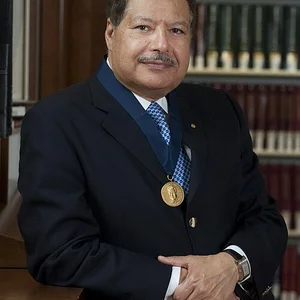
100 characters
Aristarchus
Greek astronomer and mathematician of Antiquity, born on the island of Samos. He was the first to propose a heliocentric model placing the Sun, rather than the Earth, at the center of the known world.
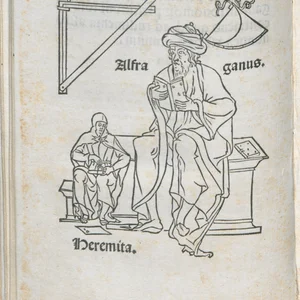
Al-Farghani
800 — 870
Al-Farghani was a 9th-century astronomer and mathematician, born in the region of Ferghana (present-day Uzbekistan). Under the patronage of the Abbasid caliphs in Baghdad, he wrote works that summarized and transmitted Ptolemaic astronomy to medieval Europe.
Ambroise Paré
1510 — 1590
French surgeon and anatomist (1510-1590) who revolutionized Renaissance surgery by abandoning brutal medieval practices. He laid the foundations of modern surgery through his anatomical innovations and more humane techniques.
Andreas Vesalius
1515 — 1564
Flemish anatomist of the 16th century, Vesalius revolutionized the study of the human body through systematic dissection and direct observation. He is the author of De Humani Corporis Fabrica (1543), a founding work of modern anatomy that challenged the anatomical errors inherited from Galen.
Domenico Maria Novara
1454 — 1504
Italian Renaissance astronomer and mathematician, professor at the University of Bologna. He was the teacher and collaborator of Nicolaus Copernicus, with whom he carried out decisive astronomical observations.
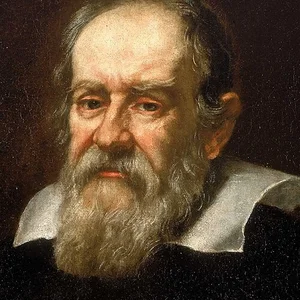
Galileo
1564 — 1642
Italian physicist, astronomer, and philosopher (1564–1642), Galileo revolutionized science by combining experimental observation with mathematics. Inventor of the astronomical telescope and champion of the heliocentric model, he laid the foundations of modern physics despite being tried by the Inquisition.
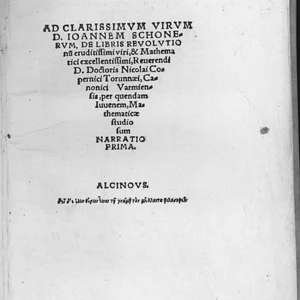
Georg Joachim Rheticus
1514 — 1574
Austrian mathematician and astronomer of the Renaissance. Copernicus's only disciple, he published the Narratio prima in 1540, the first printed account of the heliocentric system, and persuaded his master to publish De revolutionibus.
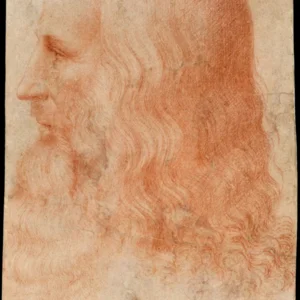
Leonardo da Vinci
1452 — 1519
Italian Renaissance painter, sculptor, architect, and engineer (1452–1519), Leonardo da Vinci embodies the ideal of the universal man. Creator of the Mona Lisa and The Last Supper, he revolutionized art through perspective and scientific observation, while pursuing research in anatomy, botany, and engineering.
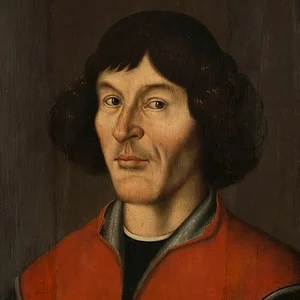
Nicolas Copernicus
1473 — 1543
Polish Renaissance astronomer, mathematician, and canon (1473–1543). He revolutionized our understanding of the universe by proposing the heliocentric model, placing the Sun at the center of the solar system rather than the Earth. His major work, De revolutionibus orbium coelestium, published shortly before his death, marks the beginning of the Scientific Revolution.
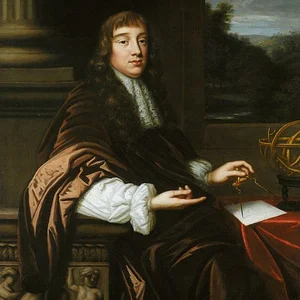
Robert Hooke
1635 — 1703
Robert Hooke was a 17th-century English polymath and scientist, a pioneer of microscopy. His work *Micrographia* (1665) revealed the microscopic world, and he introduced the term “cell.” He also formulated the law of elasticity that bears his name.
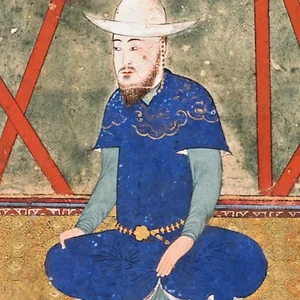
Ulugh Beg
1394 — 1449
Ulugh Beg, grandson of Tamerlane, was one of the greatest astronomers of the medieval Islamic world. As Timurid ruler of Samarkand, he turned his court into a thriving intellectual center, building an observatory whose star tables rivaled those of antiquity.
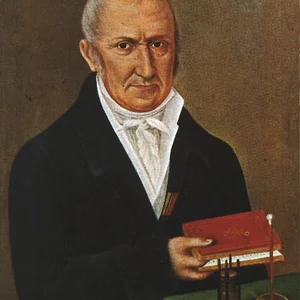
Alessandro Volta
1745 — 1827
Italian physicist (1745–1827), Alessandro Volta invented the electric battery in 1800, the first source of direct current in history. His work on electricity revolutionized experimental physics and paved the way for electrochemistry.
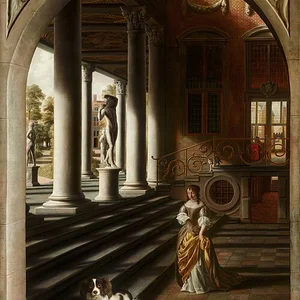
Anne Conway
1631 — 1679
Anne Conway was an English philosopher of the 17th century. Self-taught, she developed a vitalist metaphysics set out in her posthumous work “The Principles of the Most Ancient and Modern Philosophy.” Her thought notably influenced Leibniz and his concept of the monad.
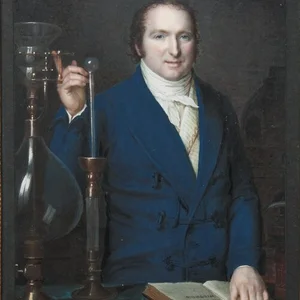
Antoine François de Fourcroy
1755 — 1809
French chemist and statesman, a collaborator of Lavoisier in the reform of chemical nomenclature. A member of the National Convention, he played a major role in reorganizing scientific education during the Revolution.
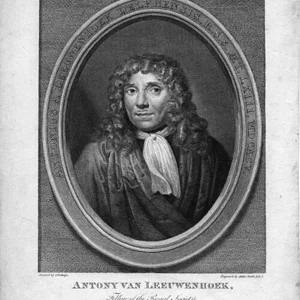
Antoni van Leeuwenhoek
A self-taught Dutch draper and scholar, Antoni van Leeuwenhoek (1632-1723) perfected the microscope and was the first to observe micro-organisms. His observations laid the foundations of microbiology.
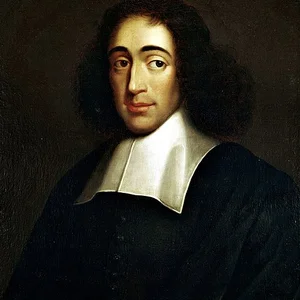
Baruch Spinoza
1632 — 1677
A 17th-century Dutch philosopher, Spinoza developed an original metaphysical system built on the concept of a single substance (God or Nature). His major work, the Ethics, offers a new conception of freedom and the relationship between mind and body.
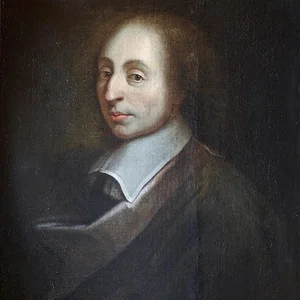
Blaise Pascal
1623 — 1662
French mathematician, physicist, philosopher and writer (1623–1662), Blaise Pascal revolutionized mathematics by founding probability theory and left a lasting mark on Christian philosophy through his exploration of doubt and faith. A major figure of the 17th century, he combined scientific rigor with metaphysical inquiry.
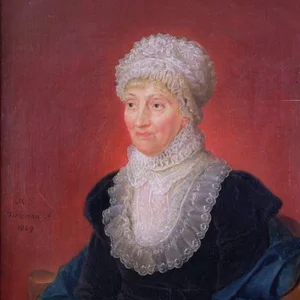
Caroline Herschel
1750 — 1848
A pioneering astronomer from Hanover, Caroline Herschel discovered eight comets and helped map the sky alongside her brother William. She was the first woman to receive the Gold Medal of the Royal Astronomical Society, in 1828.
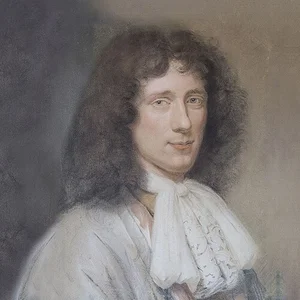
Christiaan Huygens
1629 — 1695
Dutch mathematician, physicist, and astronomer (1629–1695), Huygens invented the pendulum clock and developed the wave theory of light. He discovered Titan, Saturn's largest moon, and formulated the laws of elastic collision.
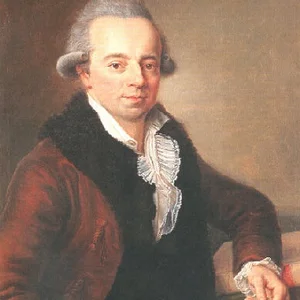
Daniel Bernoulli
1700 — 1782
Swiss mathematician and physicist (1700–1782), son of Johann Bernoulli. He is famous for his principle of hydrodynamics, which establishes the relationship between the velocity and pressure of fluids — the foundation of modern aerodynamics.
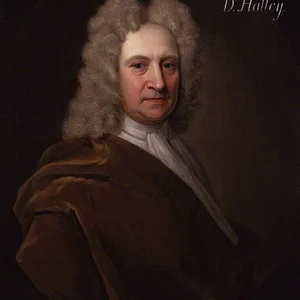
Edmond Halley
1656 — 1742
An English astronomer and scientist of the 17th–18th century, he is famous for calculating the orbit of the comet that bears his name and predicting its return. A friend and patron of Newton, he played an essential role in the publication of the Principia Mathematica.
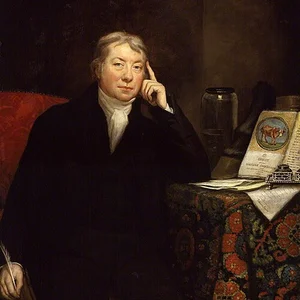
Edward Jenner
1749 — 1823
English physician and scientist (1749-1823), pioneer of vaccination. In 1796, he developed the first vaccine in history by inoculating cowpox to protect against human smallpox.
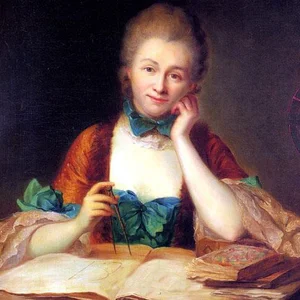
Émilie du Châtelet
1706 — 1749
Émilie du Châtelet (1706-1749) was a French physicist and mathematician of the Enlightenment. She translated and annotated Newton's Principia Mathematica, a work that remained the standard French reference until the 19th century. Voltaire's companion, she demonstrated that kinetic energy is proportional to the square of velocity.
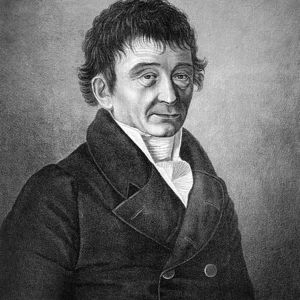
Ernst Chladni
1756 — 1827
German physicist and musician, considered the father of modern acoustics. He revealed the vibration modes of plates through the figures that bear his name.
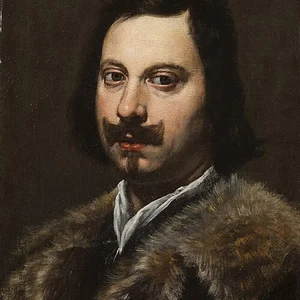
Evangelista Torricelli
1608 — 1647
Italian physicist and mathematician of the 17th century, student of Galileo. He invented the mercury barometer in 1643 and demonstrated the existence of atmospheric pressure, paving the way for modern experimental physics.
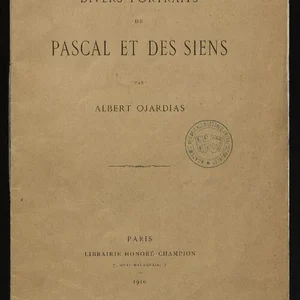
Florin Périer
1605 — 1672
Florin Périer (c. 1605-1672) was a magistrate and jurist from the Auvergne region, a councillor at the cour des aides (tax court) of Clermont. The brother-in-law of Blaise Pascal, in 1648 he carried out the Puy de Dôme experiment, which demonstrated the weight of air.
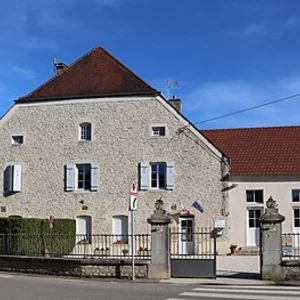
Fontenelle
1657 — 1757
A French writer and scholar of the 17th–18th century, Fontenelle popularized science for the general public. Known for his Conversations on the Plurality of Worlds and his role as perpetual secretary of the Académie des sciences, he embodies the spirit of the Enlightenment.
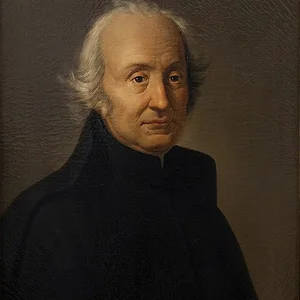
Giuseppe Piazzi
1746 — 1826
Giuseppe Piazzi was an Italian astronomer and mathematician, a priest of the Theatine order. He is famous for discovering Ceres in 1801, the first asteroid (now classified as a dwarf planet) in the belt located between Mars and Jupiter.
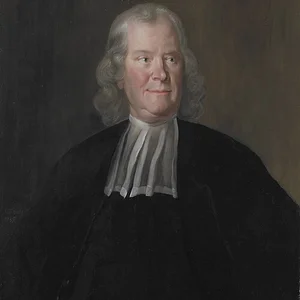
Herman Boerhaave
1668 — 1738
Dutch physician, botanist and chemist, professor at the University of Leiden. Considered the founder of modern clinical teaching and one of the greatest physicians of his era, he trained students who came from all over Europe.
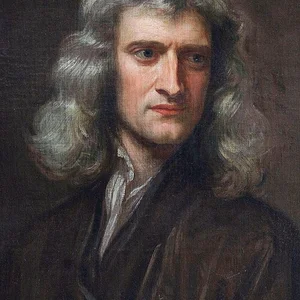
Isaac Newton
1643 — 1727
English mathematician, physicist and astronomer (1643–1727), Isaac Newton is one of the greatest scientists in history. He revolutionized science by formulating the laws of motion and universal gravitation, and by developing calculus.

Johann Siegesbeck
Eighteenth-century German physician and botanist, director of the Saint Petersburg botanical garden. He is best known for his fierce opposition to Carl von Linné's sexual system of plant classification.
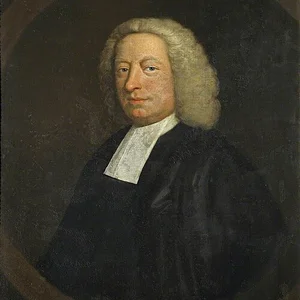
John Colson
1680 — 1760
John Colson was an eighteenth-century British mathematician, Lucasian Professor of Mathematics at the University of Cambridge. He is best known for translating Newton's treatise on fluxions into English.
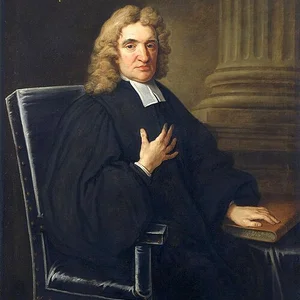
John Flamsteed
1646 — 1720
John Flamsteed was an English astronomer, the first Astronomer Royal of England, appointed by Charles II in 1675. He led the founding of the Greenwich Observatory and compiled a star catalogue of unprecedented precision, recording nearly 3,000 stars.
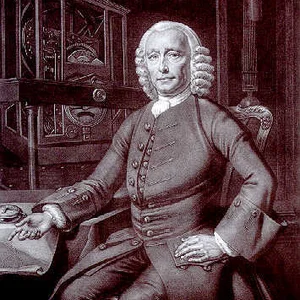
John Harrison
1693 — 1776
A self-taught British clockmaker (1693–1776), John Harrison solved one of the greatest scientific challenges of his era: the precise determination of longitude at sea. His marine chronometer H4 (1759) revolutionized navigation and saved countless lives.
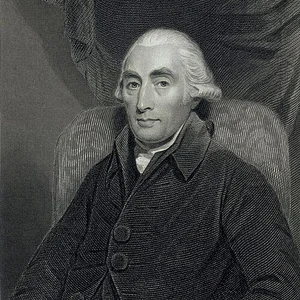
Joseph Black
1728 — 1799
Joseph Black (1728-1799) was a Scottish chemist and physicist, a major figure of the Enlightenment. He discovered “fixed air” (carbon dioxide) and formulated the concepts of latent heat and specific heat, laying the foundations of thermodynamics.
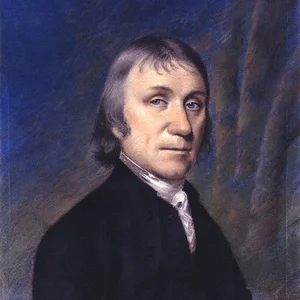
Joseph Priestley
1733 — 1804
Eighteenth-century English chemist, theologian and philosopher, famous for isolating oxygen in 1774. A dissenting minister, he was also a liberal thinker forced into exile in the United States.
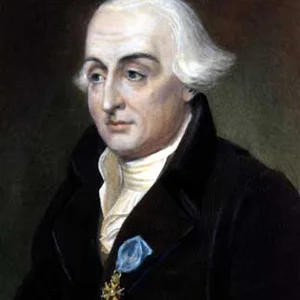
Joseph-Louis Lagrange
1736 — 1813
Franco-Sardinian mathematician and astronomer (1736–1813), considered one of the greatest mathematicians of the 18th century. He revolutionized mechanics with his analytical formulation and founded the calculus of variations.
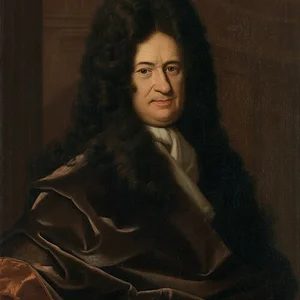
Leibniz
1646 — 1716
A German philosopher and mathematician of the 17th century, Leibniz contributed to the scientific revolution by developing infinitesimal calculus and proposing an original philosophy grounded in monadology. He shaped modern thought through his theory of pre-established harmony and his metaphysical optimism.
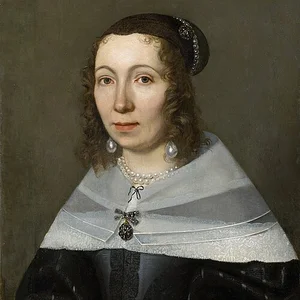
Maria Sibylla Merian
1647 — 1717
A German naturalist and artist of the 17th century, Maria Sibylla Merian was a pioneer in the study of insects and their metamorphosis. She led an expedition to Suriname (1699–1701) to observe and illustrate tropical flora and fauna, at a time when women rarely had access to the sciences.
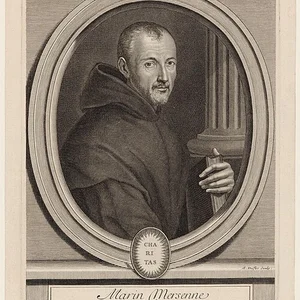
Marin Mersenne
1588 — 1648
Marin Mersenne was a French Minim friar, mathematician, and physicist of the 17th century. The driving force behind a vast scholarly network across Europe, he was a forerunner of the scientific academy and a pioneer of acoustics.
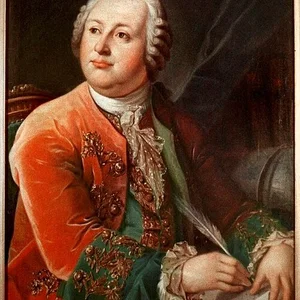
Mikhail Lomonosov
1711 — 1765
An 18th-century Russian scholar — chemist, physicist, and astronomer. A pioneer of Russian science, he formulated a principle of conservation of matter and helped found Moscow University.
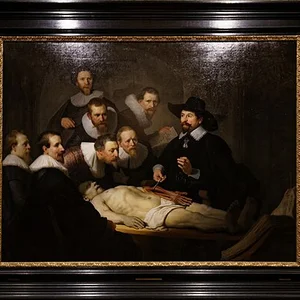
Nicolas Tulp
A Dutch physician and anatomist of the 17th century, Nicolas Tulp is famous for his public anatomy lessons in Amsterdam. He was immortalized by Rembrandt's painting *The Anatomy Lesson of Dr. Nicolaes Tulp* (1632).
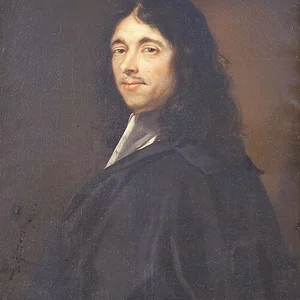
Pierre de Fermat
1607 — 1665
A French mathematician and magistrate of the 17th century, Pierre de Fermat left a lasting mark on the history of mathematics through his fundamental contributions to number theory, analytic geometry, and probability theory. Although he worked primarily as a counselor in the Parliament of Toulouse, his mathematical work inspired generations of mathematicians to come.
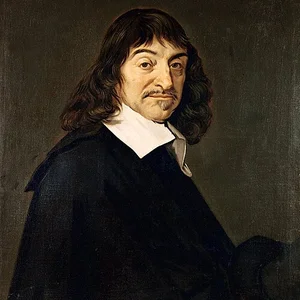
René Descartes
1596 — 1650
French philosopher and mathematician of the 17th century, founder of modern philosophy and rationalism. Known for his method of systematic doubt and his famous principle "I think, therefore I am." He revolutionized mathematics by creating analytic geometry.
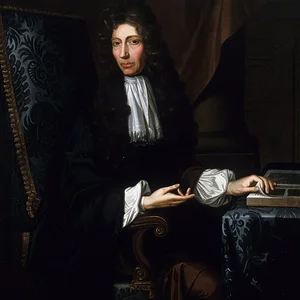
Robert Boyle
1627 — 1691
Irish physicist and chemist of the 17th century, regarded as one of the founders of modern chemistry and of the experimental method. He is famous for the law that bears his name on the compressibility of gases and for his work 'The Sceptical Chymist'.
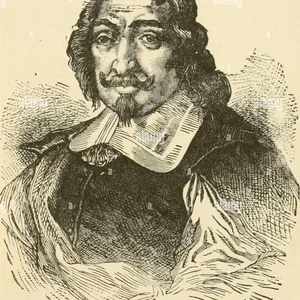
Roberval
1602 — 1675
French mathematician and physicist (1602–1675), professor at the Collège Royal de France. He is renowned for inventing the balance scale that bears his name, and for his pioneering work in geometry and mechanics.
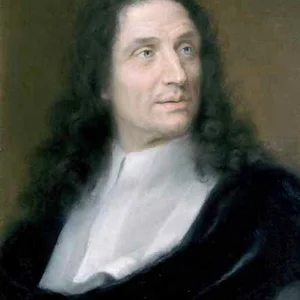
Vincenzo Viviani
1622 — 1703
Vincenzo Viviani was an Italian mathematician and physicist, the last disciple and assistant of Galileo. He worked to preserve and publish his master's scientific legacy and contributed to geometry and the study of motion.
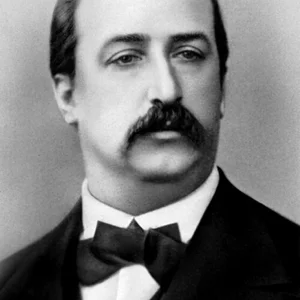
Alexander Borodin
1833 — 1887
A 19th-century Russian composer and member of The Five, he was also a renowned chemist. He pursued scientific and musical careers side by side, leaving behind the unfinished opera *Prince Igor*.
André-Marie Ampère
1775 — 1836
French physicist and mathematician, Ampère is the founder of electrodynamics. He established the mathematical laws governing the interactions between electric currents and magnetic fields. The international unit of electric current, the ampere, bears his name.
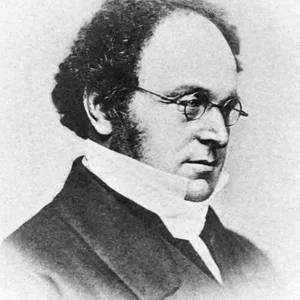
Augustus De Morgan
1806 — 1871
Augustus De Morgan was a 19th-century British mathematician and logician. A pioneer of modern formal logic, he helped found the algebra of logic and gave his name to De Morgan's laws, which are fundamental to logic and set theory.
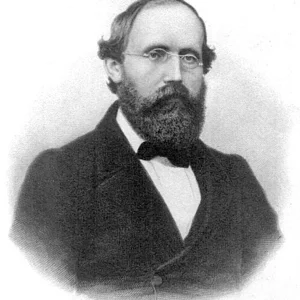
Bernhard Riemann
1826 — 1866
A 19th-century German mathematician, Riemann revolutionized geometry by developing Riemannian geometry, the mathematical foundation of Einstein's general relativity. His work on complex functions and the Riemann hypothesis remains among the most influential in modern mathematics.
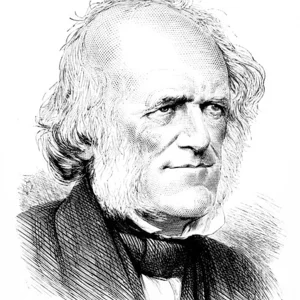
Charles Lyell
1797 — 1875
Charles Lyell was a 19th-century British geologist and a major figure in modern geology. His work 'Principles of Geology' popularized uniformitarianism, the idea that present-day geological processes explain the formation of the Earth over very long stretches of time. He had a profound influence on Charles Darwin.
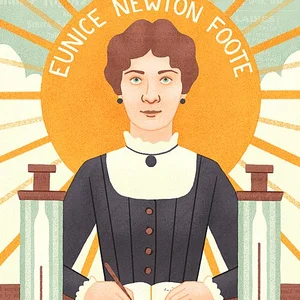
Eunice Newton Foote
1819 — 1888
An American scientist, Eunice Newton Foote demonstrated as early as 1856 the ability of carbon dioxide to trap heat, anticipating the understanding of the greenhouse effect. An activist as well, she was a forgotten pioneer of climate science.
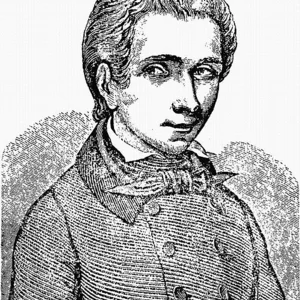
Évariste Galois
1811 — 1832
French mathematician (1811–1832), a precocious genius who died in a duel at the age of 20. He founded group theory and proved the impossibility of solving by radicals equations of degree higher than 4.
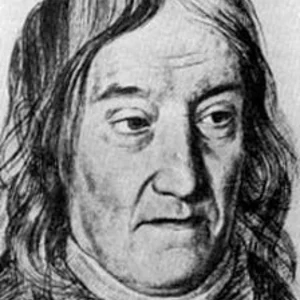
Farkas Bolyai
1775 — 1856
Farkas Bolyai was a Hungarian mathematician, known for his work on the foundations of geometry. He was the father of János Bolyai, one of the founders of non-Euclidean geometry, whom he encouraged despite his own reservations.
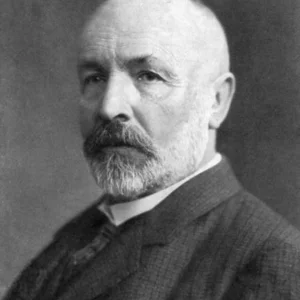
Georg Cantor
1845 — 1918
German mathematician (1845–1918), founder of set theory. He proved the existence of multiple sizes of infinity and introduced transfinite numbers, revolutionizing the foundations of mathematics.
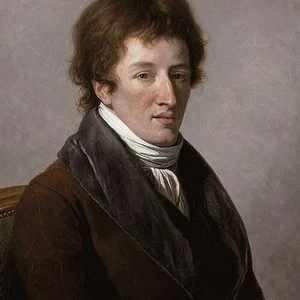
Georges Cuvier
1769 — 1832
French naturalist and anatomist (1769–1832), Georges Cuvier is the founder of paleontology and comparative anatomy. He established the catastrophism theory to explain species extinctions and classified the animal kingdom into four phyla.
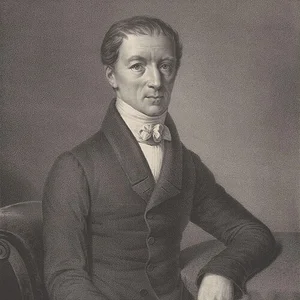
Gottfried Reinhold Treviranus
1776 — 1837
A German naturalist and physician, he was one of the first to use the term “biology” to describe the science of living things. His major work sought to unify the study of living beings into a coherent discipline.
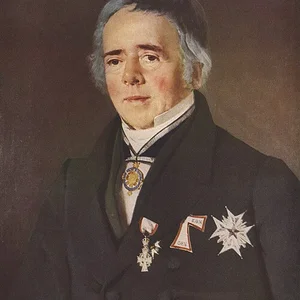
Hans Christian Ørsted
1777 — 1851
A Danish physicist and chemist, Hans Christian Ørsted discovered in 1820 that an electric current deflects a compass needle, revealing the link between electricity and magnetism. He thus founded electromagnetism and was the first to isolate metallic aluminium.
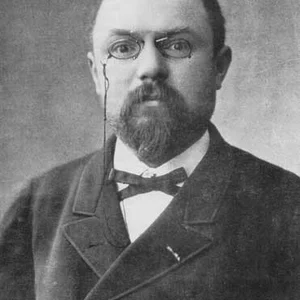
Henri Poincaré
1854 — 1912
French mathematician, physicist and philosopher (1854-1912), considered the last universal genius of science. He founded algebraic topology, laid the foundations of special relativity, and discovered deterministic chaos.
Henrietta Leavitt
1868 — 1921
Henrietta Swan Leavitt (1868-1921) was an American astronomer who discovered the period-luminosity relationship of Cepheid stars, giving humanity a tool to measure distances across the universe. Working as a "human computer" at the Harvard Observatory, she transformed astronomy despite the discrimination she faced because of her gender.
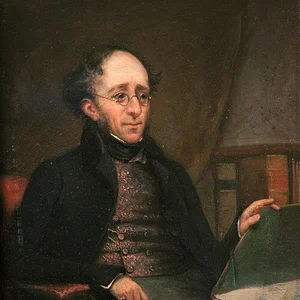
Henry de la Beche
British geologist, pioneer of geological mapping. In 1835 he founded the British Geological Survey, the world's first national geological survey, and worked to establish geology as a scientific discipline in its own right.
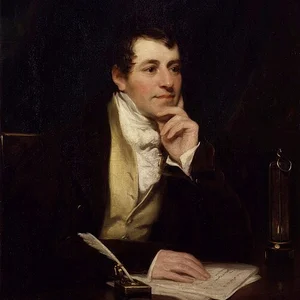
Humphry Davy
1778 — 1829
Humphry Davy was a British chemist and a pioneer of electrochemistry. He isolated several elements using electrolysis and invented the safety lamp for miners.
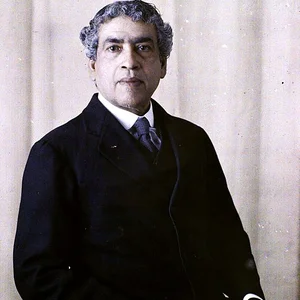
Jagadish Chandra Bose
1858 — 1937
Indian physicist and botanist (1858-1937), a pioneer in the study of radio waves and plant physiology. He demonstrated that plants react to stimuli and invented instruments of remarkable precision.
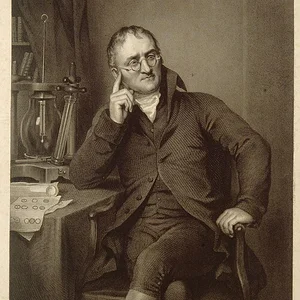
John Dalton
1766 — 1844
John Dalton was a British chemist, physicist and meteorologist. He is regarded as the father of modern atomic theory, according to which matter is made up of indivisible atoms specific to each element. He also described colour blindness, a condition he himself had.
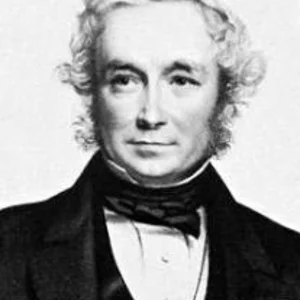
John Stevens Henslow
1796 — 1861
British botanist and geologist, professor at the University of Cambridge. As Charles Darwin's mentor, he recommended the young naturalist for the voyage of HMS Beagle, which gave rise to the theory of evolution.
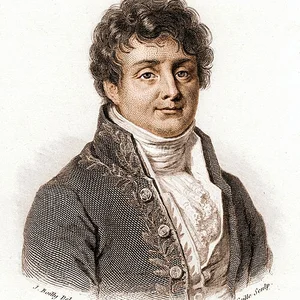
Joseph Fourier
1768 — 1830
French mathematician and physicist (1768–1830), Fourier is renowned for his work on heat propagation and mathematical analysis. He developed the decomposition of functions into trigonometric series, known as the Fourier series.
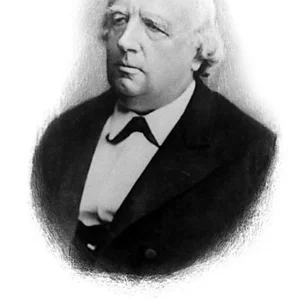
Karl Weierstrass
1815 — 1897
Karl Weierstrass was a German mathematician regarded as the “father of modern analysis.” He placed analysis on rigorous foundations by formalizing the notions of limit and continuity.
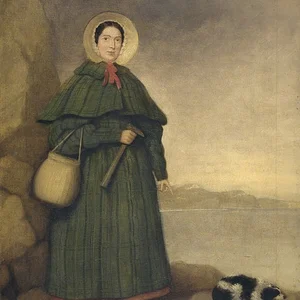
Mary Anning
1799 — 1843
Mary Anning was a self-taught English paleontologist who, from childhood, collected fossils along the cliffs of Lyme Regis. She discovered the first complete skeletons of an ichthyosaur and a plesiosaur, revolutionizing the understanding of extinct species. Despite her major contributions, she was long excluded from scientific circles because of her sex and her modest background.
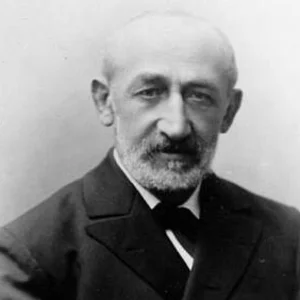
Paul Gordan
1837 — 1912
Paul Gordan was a 19th-century German mathematician, famous for his work on invariant theory. Nicknamed the “king of invariant theory,” he left his mark on algebra through his mastery of calculations.
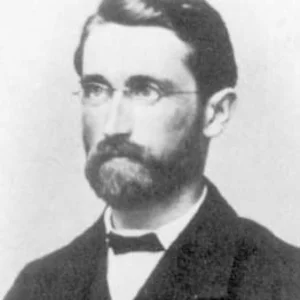
Richard Dedekind
1831 — 1916
German mathematician, a student of Gauss and Dirichlet, he profoundly renewed algebra and number theory. We owe to him a rigorous construction of the real numbers and the notion of an ideal.
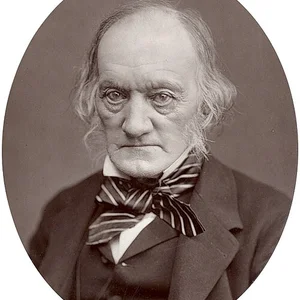
Richard Owen
1804 — 1892
Richard Owen was a 19th-century British palaeontologist and anatomist. He coined the term “Dinosauria” (dinosaurs) in 1842 and was the founder of the Natural History Museum in London. A famous opponent of Darwin's theories on evolution.
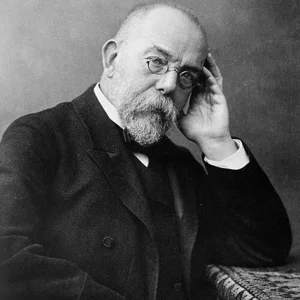
Robert Koch
1843 — 1910
German physician and microbiologist (1843–1910), pioneer of modern bacteriology. He identified the agents responsible for tuberculosis, cholera, and anthrax, revolutionizing the understanding of infectious diseases.
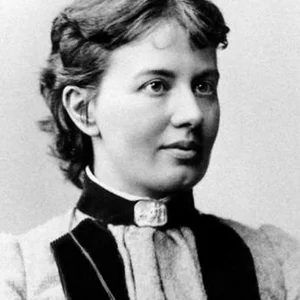
Sofia Kovalevskaya
1850 — 1891
Sofia Kovalevskaya (1850–1891) was the first woman to earn a doctorate in mathematics in Europe and the first female professor of mathematics at a modern university. A pioneer in analysis and mechanics, she broke through the barriers of the male academic world to establish herself as a leading mathematician.
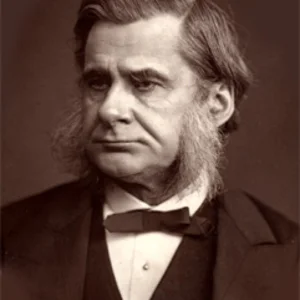
Thomas Henry Huxley
1825 — 1895
A British biologist and palaeontologist, and a fervent defender of Charles Darwin's theory of evolution — which earned him the nickname “Darwin's bulldog.” A renowned comparative anatomist, he was one of the foremost popularizers of science in the 19th century.
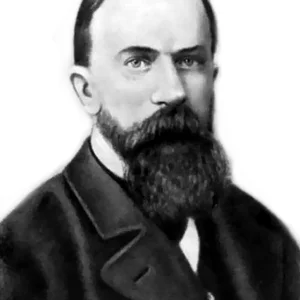
Vladimir Kovalevski
1842 — 1883
Vladimir Kovalevski was a Russian paleontologist, considered one of the founders of evolutionary paleontology. He notably studied the evolution of hoofed mammals from fossils, drawing on the theories of Darwin.
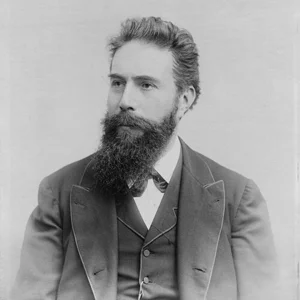
Wilhelm Röntgen
1845 — 1923
A German physicist, in 1895 he discovered an unknown radiation that he named “X-rays.” This discovery revolutionized medicine and physics. He received the very first Nobel Prize in Physics in 1901.
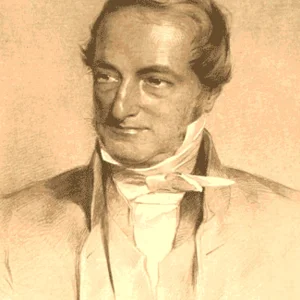
William Conybeare
1787 — 1857
William Conybeare was a 19th-century British geologist and palaeontologist. A pioneer in the study of fossil marine reptiles, he notably described the plesiosaur and contributed to the rise of stratigraphic geology.
Ahmed Zewail
1946 — 2016
Egyptian-American chemist and pioneer of femtochemistry, he revolutionized the observation of chemical reactions by filming the movement of atoms at the femtosecond timescale. Winner of the Nobel Prize in Chemistry in 1999, he is regarded as the father of ultrafast chemistry.
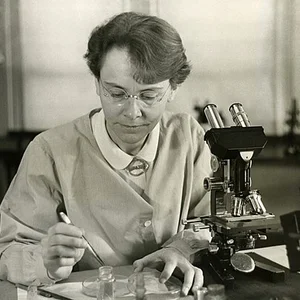
Barbara McClintock
1902 — 1992
Barbara McClintock is a pioneering American geneticist who discovered transposable elements, known as "jumping genes," in maize as early as the 1940s. Long overlooked by the scientific community, she received the Nobel Prize in Physiology or Medicine in 1983, the only woman to have received it unshared in that discipline.
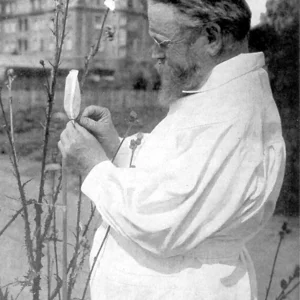
Carl Correns
1864 — 1933
A German botanist and geneticist, he was one of three researchers who, in 1900, rediscovered Gregor Mendel's laws of heredity, which had been forgotten since 1865. His work on plants helped to found modern genetics.
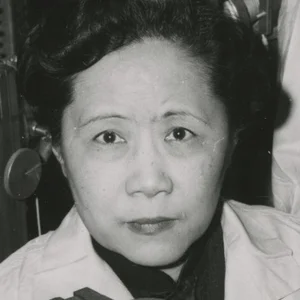
Chien-Shiung Wu
1912 — 1997
Chien-Shiung Wu was a Chinese-American experimental physicist, nicknamed "the First Lady of Physics." Her 1956 experiment disproved the law of conservation of parity, upending particle physics. Unjustly passed over for the Nobel Prize awarded to Lee and Yang for that discovery, she remains one of the most important figures in twentieth-century physics.
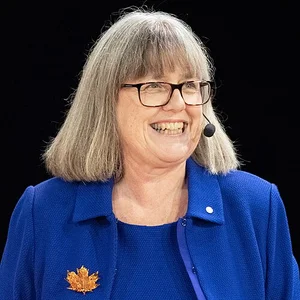
Donna Strickland
1959 — ?
Donna Strickland is a Canadian physicist and pioneer in the field of ultra-intense lasers. In 1985, she co-developed with Gérard Mourou the technique of chirped pulse amplification (CPA), revolutionizing laser physics. In 2018, she received the Nobel Prize in Physics, becoming only the third woman ever to receive this distinction.
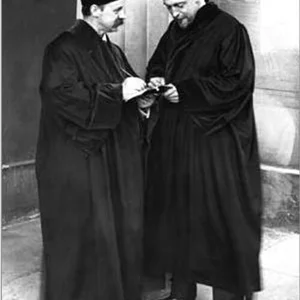
Ejnar Hertzsprung
1873 — 1967
A Danish astronomer, he co-discovered the relationship between the brightness and temperature of stars. His work gave rise to the Hertzsprung-Russell diagram, a fundamental tool of modern astrophysics.
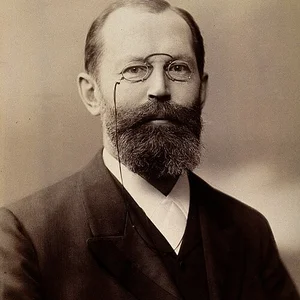
Emil Fischer
1852 — 1919
Emil Fischer (1852-1919) was a German chemist regarded as one of the founders of modern organic chemistry. His work on sugars, purines, and proteins earned him the Nobel Prize in Chemistry in 1902.
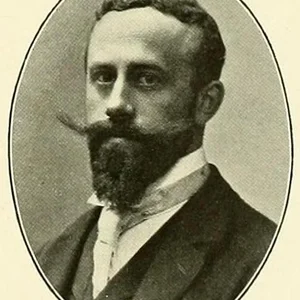
Erich von Tschermak
1871 — 1962
Erich von Tschermak-Seysenegg was an Austrian agronomist and botanist. He was one of three scientists who, in 1900, independently rediscovered the laws of heredity set out by Gregor Mendel, contributing to the birth of modern genetics.
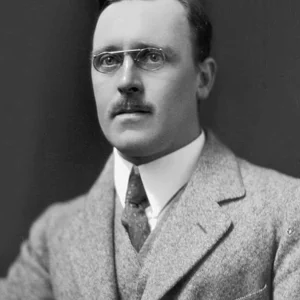
Ernest Marsden
1889 — 1970
English–New Zealand physicist and collaborator of Ernest Rutherford. In 1909, together with Hans Geiger, he carried out the famous experiment scattering alpha particles off a gold foil, which revealed the existence of the atomic nucleus.
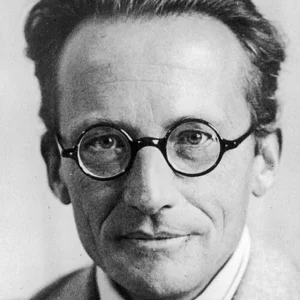
Erwin Schrödinger
1887 — 1961
Austrian physicist (1887–1961), Nobel Prize in Physics 1933. He formulated the wave equation that bears his name, a cornerstone of quantum mechanics, and devised the famous Schrödinger's cat thought experiment.
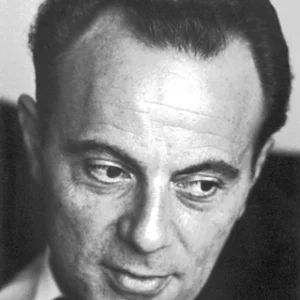
François Jacob
1920 — 2013
François Jacob (1920-2013) was a French biologist and geneticist. Together with Jacques Monod, he uncovered the mechanism of gene regulation, which earned him the Nobel Prize in Physiology or Medicine in 1965.
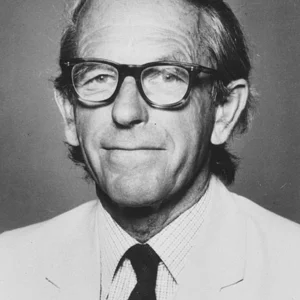
Frederick Sanger
1918 — 2013
Frederick Sanger (1918-2013) was a British biochemist, one of the very few scientists to have received the Nobel Prize in Chemistry twice. He developed fundamental methods for determining the sequence of proteins and then of DNA.
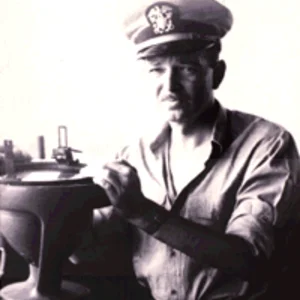
Harry Hess
1906 — 1969
American geologist and geophysicist, and a naval officer during World War II. He is one of the founders of the theory of seafloor spreading, a decisive step toward plate tectonics.
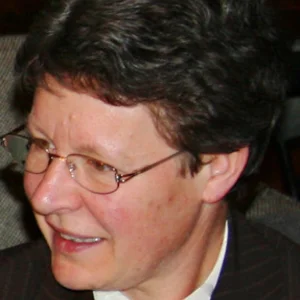
Jocelyn Bell Burnell
1943 — ?
British astrophysicist born in 1943, Jocelyn Bell discovered pulsars in 1967 — neutron stars emitting regular radio signals — during her doctoral thesis. Her thesis supervisor received the Nobel Prize for this discovery, sparking a lasting controversy over the recognition of women in science.
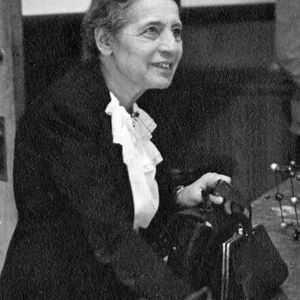
Lise Meitner
1878 — 1968
Austro-Swedish physicist
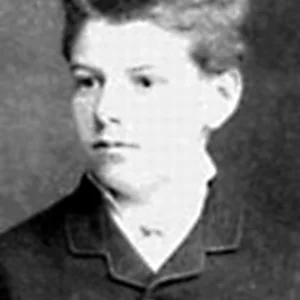
Louis Bachelier
1870 — 1946
Louis Bachelier was a French mathematician who pioneered the modern theory of probability applied to finance. His 1900 thesis on stock market speculation introduced Brownian motion before Einstein, founding the field of financial mathematics.
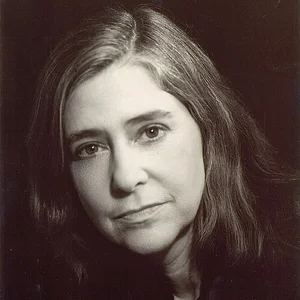
Margaret Hamilton
1936 — ?
Margaret Hamilton is a pioneering American computer scientist and engineer in the field of software engineering. She led the team that developed the onboard navigation software for the Apollo missions, directly contributing to the 1969 Moon landing. She is considered one of the founders of software engineering as a discipline.
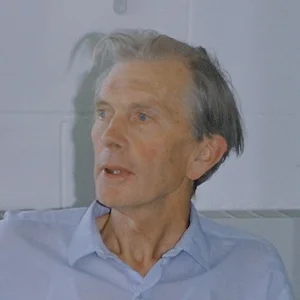
Martin Ryle
1918 — 1984
British astronomer and pioneer of radio astronomy. He developed the aperture synthesis technique that made it possible to map the sky with great precision, and was awarded the Nobel Prize in Physics in 1974.
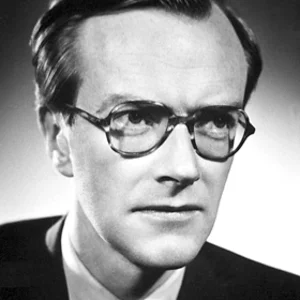
Maurice Wilkins
1916 — 2004
British biophysicist of New Zealand origin. His X-ray diffraction work on DNA contributed to the discovery of the double-helix structure, which earned him the Nobel Prize in Medicine in 1962 alongside James Watson and Francis Crick.
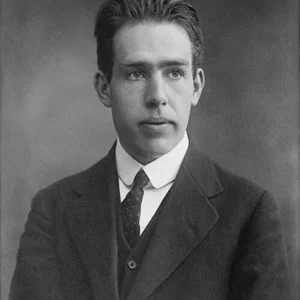
Niels Bohr
Danish physicist (1885–1962), pioneer of quantum mechanics. He proposed a revolutionary model of the atom and received the Nobel Prize in Physics in 1922.
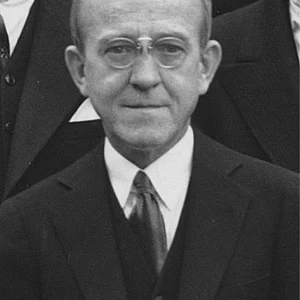
Oswald Avery
1877 — 1955
American-Canadian physician and researcher in microbiology and immunology. In 1944, together with Colin MacLeod and Maclyn McCarty, he demonstrated that DNA is the carrier of heredity, laying one of the foundations of molecular genetics.
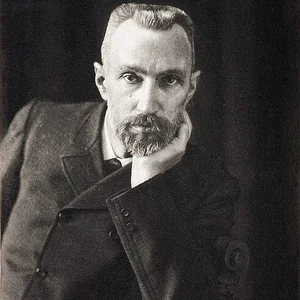
Pierre Curie
1859 — 1906
French physicist (1859–1906), he discovered piezoelectricity with his brother Jacques in 1880, then conducted groundbreaking research on radioactivity alongside Marie Curie. A Nobel Prize laureate in Physics in 1903, he is one of the founding fathers of modern physics.