 flip
flipAndalusian gazpacho
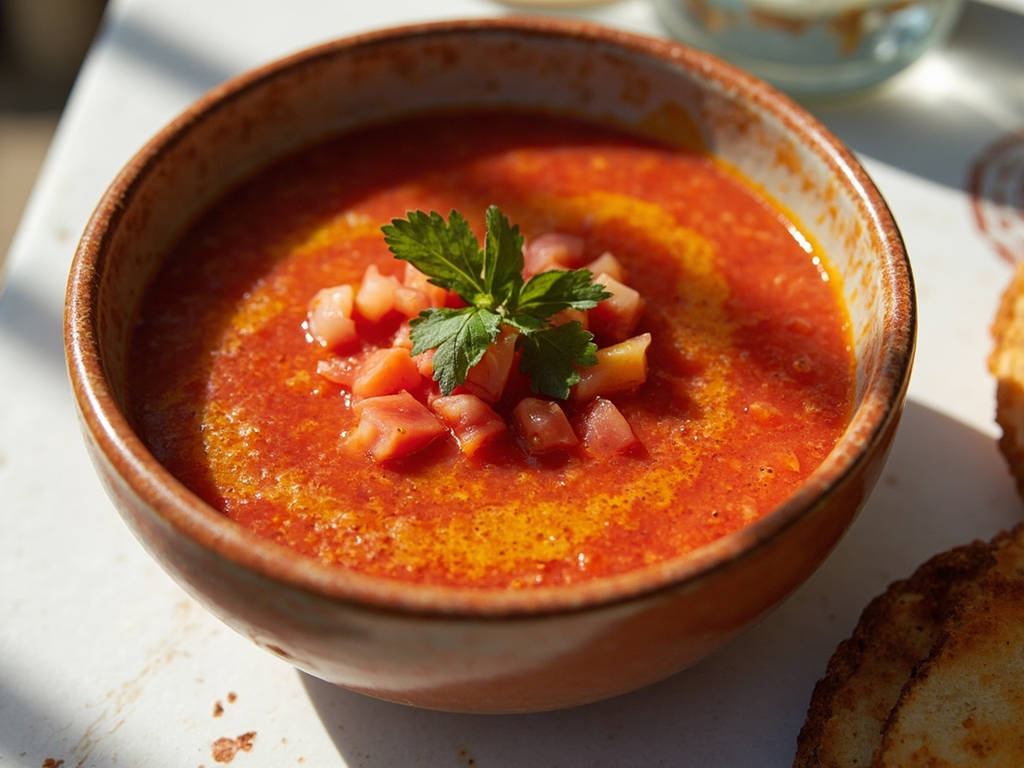
Andalusian gazpacho
Why this dish? Machado was born in Seville in 1875 and spent his childhood there in the patio of the Palace of las Dueñas. Gazpacho is the quintessential Andalusian refreshment, the liquid memory of the luminous South he left for the gray plateaus of Castile.
A cold summer soup bound with bread and oil, sharpened with vinegar, drunk from a bowl against the Andalusian heat. The taste of Sevillian childhood: garlic, soaked bread, olive oil, and the freshness of the garden.
When I close my eyes, I see the patio of Seville again and the light that whitens the walls. There, in summer, you do not eat the heat, you drink it: soaked bread, garlic pounded in a mortar, a drizzle of oil, a tear of vinegar, and well water from the well, very cool. We drank it from the bowl, straight from the lips—and all of the South was in that coolness.
- •Soaked stale bread — a good amount of crumb (binding)
- •Garlic — one clove (base)
- •Olive oil — generous (emulsion)
- •Wine vinegar — a splash (acidity)
- •Ripe tomatoes — in season (freshness, color)
- •Cucumber and green bell pepper — a little (freshness)
- •Well water, salt — to taste (liquid)
Andalusian gazpacho
A cold summer soup bound with bread and oil, sharpened with vinegar, drunk from a bowl against the Andalusian heat. The taste of Sevillian childhood: garlic, soaked bread, olive oil, and the freshness of the garden.
Why this dish? Machado was born in Seville in 1875 and spent his childhood there in the patio of the Palace of las Dueñas. Gazpacho is the quintessential Andalusian refreshment, the liquid memory of the luminous South he left for the gray plateaus of Castile.
When I close my eyes, I see the patio of Seville again and the light that whitens the walls. There, in summer, you do not eat the heat, you drink it: soaked bread, garlic pounded in a mortar, a drizzle of oil, a tear of vinegar, and well water from the well, very cool. We drank it from the bowl, straight from the lips—and all of the South was in that coolness.
Ingredients (period version)
- Soaked stale bread — a good amount of crumb (binding)
- Garlic — one clove (base)
- Olive oil — generous (emulsion)
- Wine vinegar — a splash (acidity)
- Ripe tomatoes — in season (freshness, color)
- Cucumber and green bell pepper — a little (freshness)
- Well water, salt — to taste (liquid)
Ingredients
- Very ripe tomatoes — 1 kg (base)
- Stale bread — 80 g, soaked (binding)
- Cucumber — 1/2 (freshness)
- Green bell pepper — 1/2 (freshness)
- Garlic — 1 clove (base)
- Extra virgin olive oil — 6 tbsp (emulsion)
- Sherry vinegar — 2 tbsp (acidity)
- Salt, very cold water — to taste (seasoning)
Method
- Soak the bread in a little water.
- Blend tomatoes, cucumber, bell pepper, garlic, and drained bread until smooth.
- Add vinegar and salt, then drizzle in the oil while blending to emulsify.
- Thin with a little very cold water to desired consistency; strain for extra smoothness.
- Chill for at least 2 hours and serve ice-cold, in a bowl or glass.
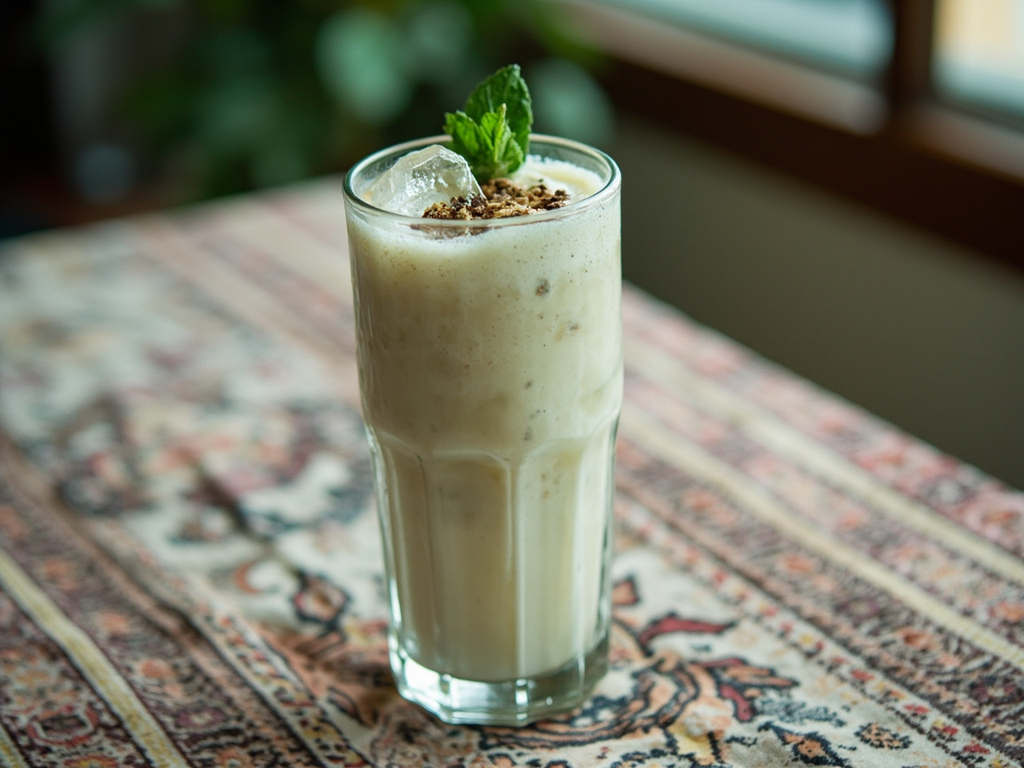
How it was made : Before the arrival of the tomato, the ancient gazpacho was white—bread, garlic, oil, vinegar, and water, pounded in a mortar (the ancestor of salmorejo and ajoblanco). The red tomato version became established in Andalusia during the 19th century, in Machado's childhood.
The contemporary twist : Served in small aperitif glasses, topped with a drizzle of olive oil and tiny cucumber dice.
Sources : Emilia Pardo Bazán, La cocina española antigua, 1913 · Ángel Muro, El Practicón, 1894
Antonio Machado · Charactorium