 flip
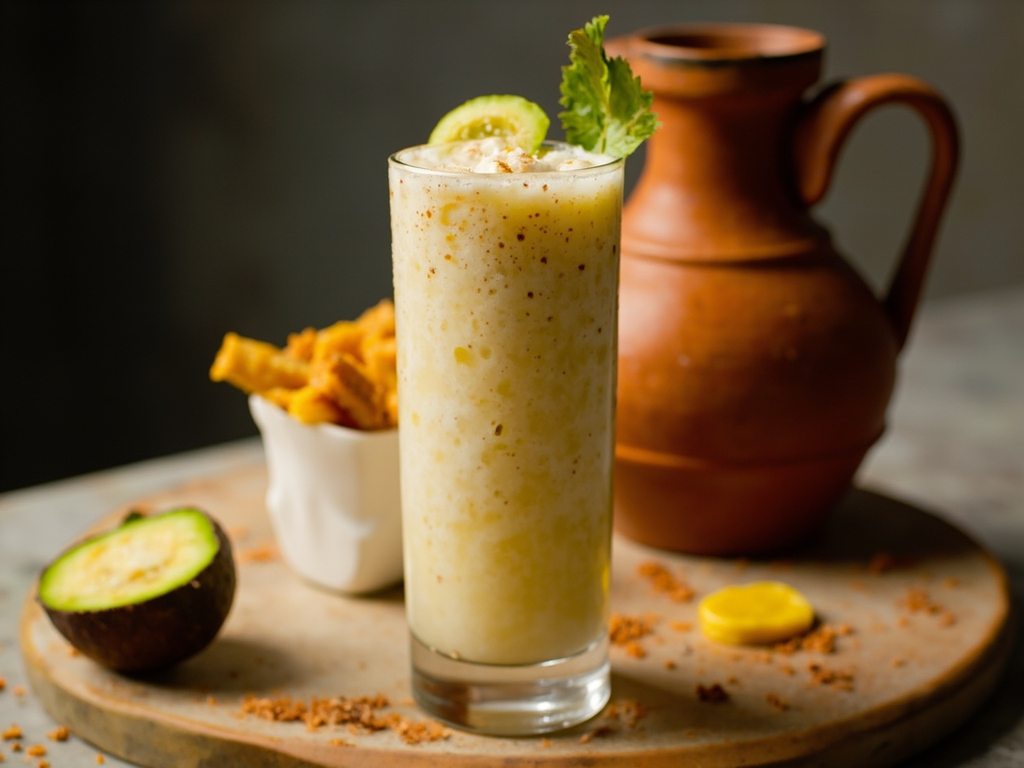
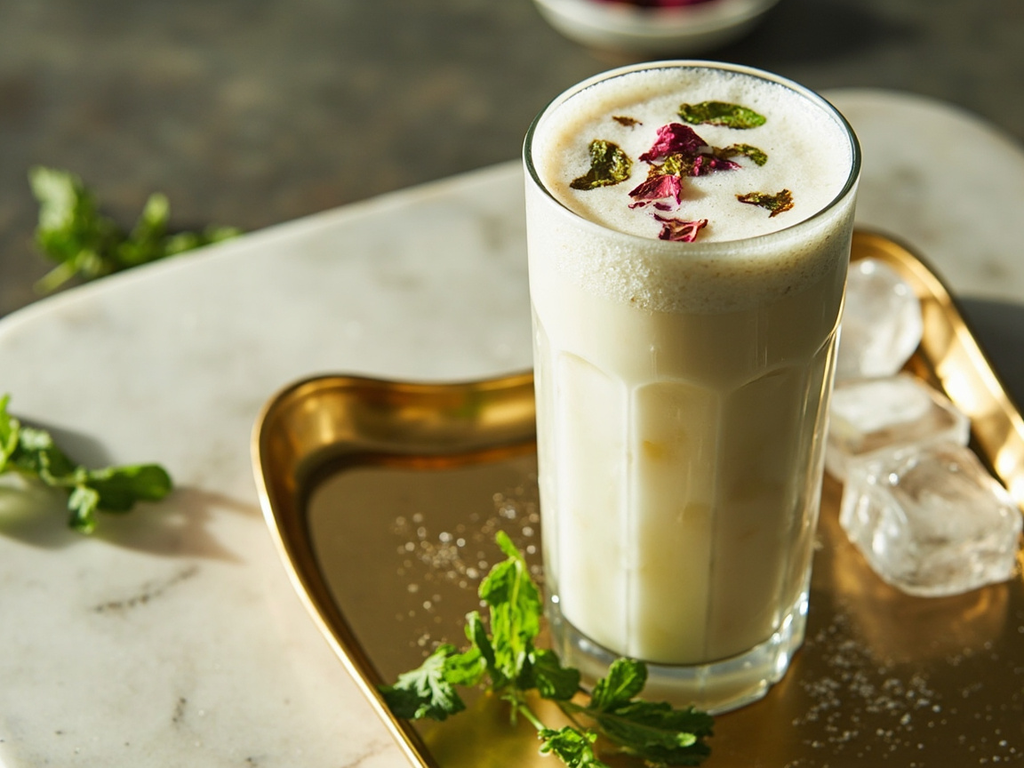
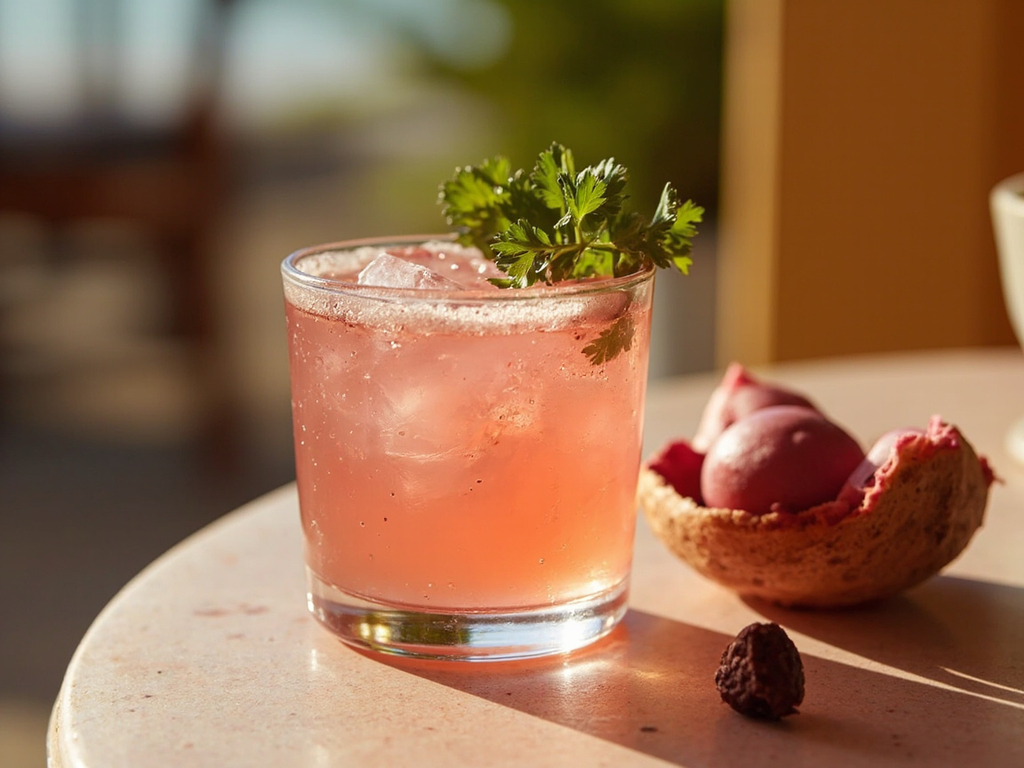
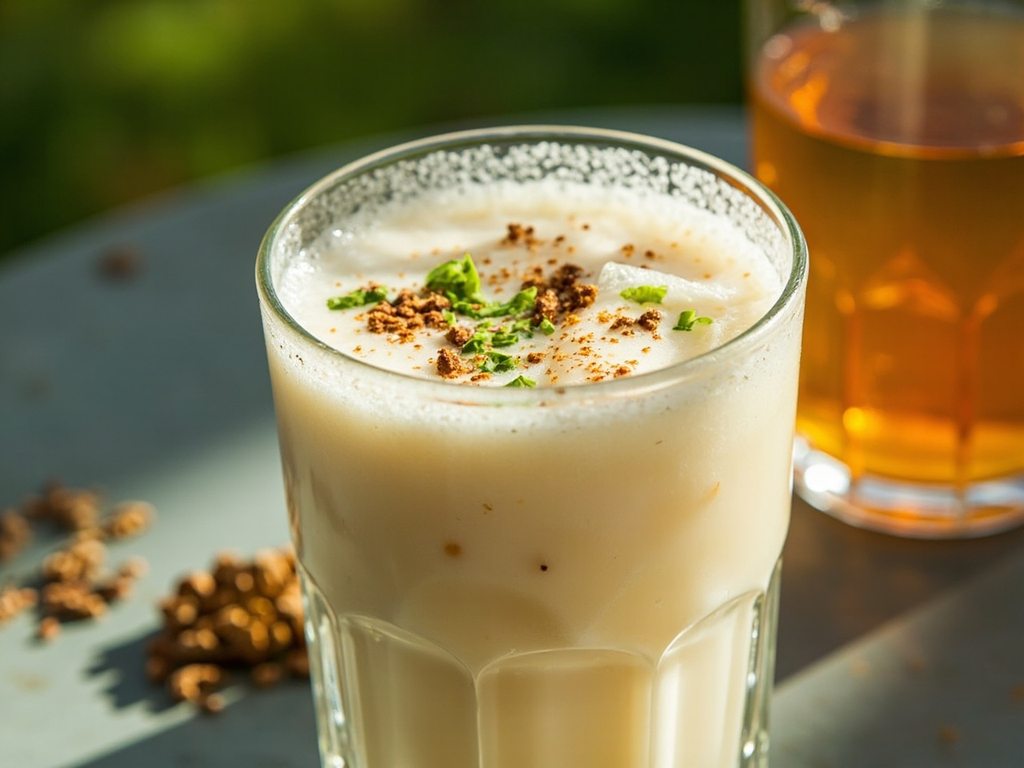
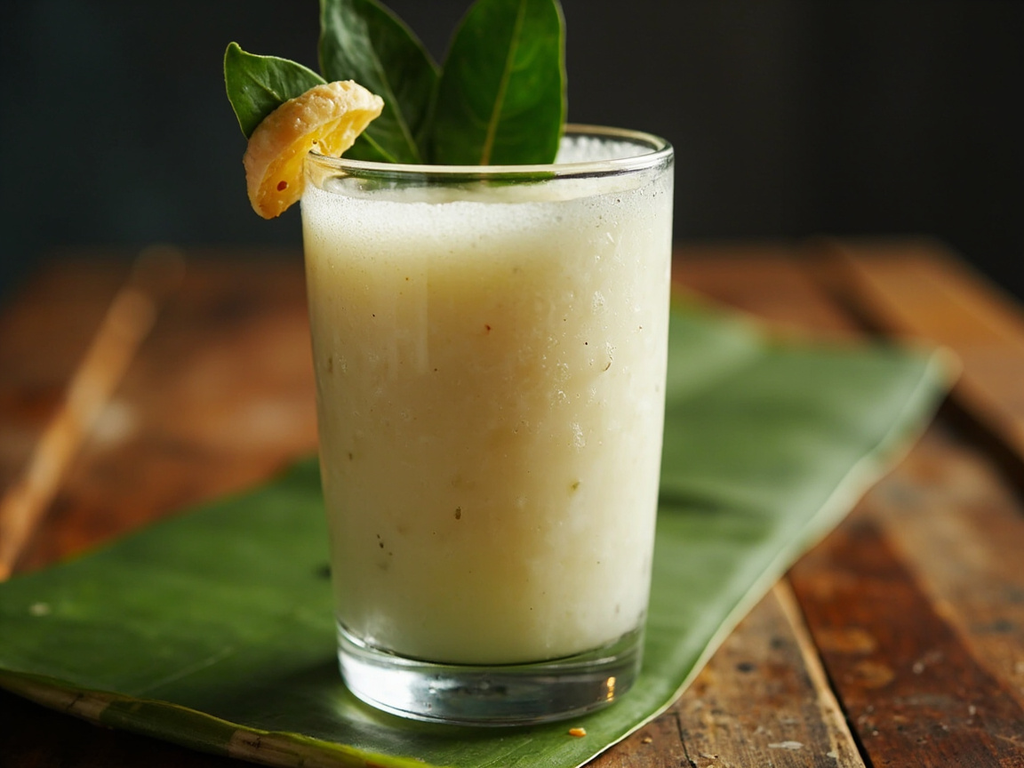
flipSambharam — spiced buttermilk with ginger and curry leaves
Sambharam — spiced buttermilk with ginger and curry leaves
Why this dish? In the humid Kerala heat that Roy describes so well, sambharam is the everyday drink: a diluted, salted and spiced buttermilk, drunk to cool down or to close the meal on the banana leaf. It is the liquid "small thing" of daily Kerala life.
Yogurt beaten with water, salted, flavoured with shallot, ginger, green chilli and crushed curry leaves. Served very cold, it quenches thirst and aids digestion — the Kerala equivalent of a living flavoured water.
When the sun weighs on the paddy fields and sweat beads, you don't drink just anything: you drink sambharam. You beat the curd with well water, you crush a curry leaf into it, a sliver of ginger, and you barely salt it. It sets you right better than any speech. At home, the glass passed from hand to hand under the veranda; it was the drink of ordinary people, and it's precisely for those people that I write.
- •Fresh curd (dahi) — one bowl (fermented base)
- •Fresh well water — twice the curd (dilution)
- •Ginger — a small piece (flavour)
- •Shallot — one, crushed (aroma)
- •Green chilli — one, slit (mild heat)
- •Curry leaves — a few (signature aroma)
- •Salt — a pinch (seasoning)
Sambharam — spiced buttermilk with ginger and curry leaves
Yogurt beaten with water, salted, flavoured with shallot, ginger, green chilli and crushed curry leaves. Served very cold, it quenches thirst and aids digestion — the Kerala equivalent of a living flavoured water.
Why this dish? In the humid Kerala heat that Roy describes so well, sambharam is the everyday drink: a diluted, salted and spiced buttermilk, drunk to cool down or to close the meal on the banana leaf. It is the liquid "small thing" of daily Kerala life.
When the sun weighs on the paddy fields and sweat beads, you don't drink just anything: you drink sambharam. You beat the curd with well water, you crush a curry leaf into it, a sliver of ginger, and you barely salt it. It sets you right better than any speech. At home, the glass passed from hand to hand under the veranda; it was the drink of ordinary people, and it's precisely for those people that I write.
Ingredients (period version)
- Fresh curd (dahi) — one bowl (fermented base)
- Fresh well water — twice the curd (dilution)
- Ginger — a small piece (flavour)
- Shallot — one, crushed (aroma)
- Green chilli — one, slit (mild heat)
- Curry leaves — a few (signature aroma)
- Salt — a pinch (seasoning)
Ingredients
- Plain yogurt — 200 g (fermented base)
- Cold water — 400 ml (dilution)
- Grated ginger — 1/2 tsp (flavour)
- Shallot — 1, finely chopped (aroma)
- Green chilli — 1/2, deseeded and minced (mild heat)
- Curry leaves — 6, crushed (signature aroma)
- Salt — 1/4 tsp (seasoning)
Method
- Whisk the yogurt with the water until frothy and smooth.
- Crush the ginger, shallot, green chilli and curry leaves in a mortar to release the aromas.
- Stir this paste into the buttermilk and add salt.
- Let it infuse in the fridge for 10 minutes, then strain if a smooth drink is preferred.
- Serve very cold, stirred well.
How it was made : Sambharam (also called moru vellam) was prepared daily in Kerala homes from leftover homemade curd. Without refrigeration, well water kept it cool; its slight acidity and salt replenished what the heat made you lose. It is the South Indian version of salted lassi.
The contemporary twist : Serve in a frosted glass with a sprig of fried curry leaves floating on top and a ginger-infused ice cube.
Sources : Ammini Ramachandran, Grains, Greens and Grated Coconuts · Domestic culinary traditions of Kerala (moru vellam / sambharam)
Arundhati Roy · Charactorium