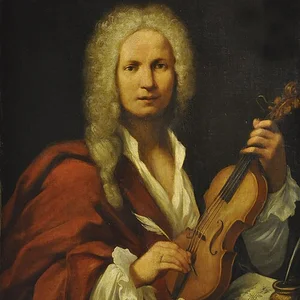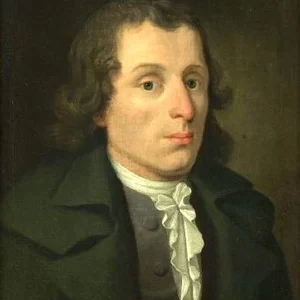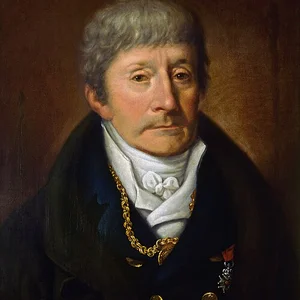

Antonio Salieri (1750-1825) was an Italian composer active at the court of Vienna, where he served as imperial Kapellmeister. A major figure of classical opera, he was also a renowned teacher who trained Beethoven, Schubert, and Liszt.
Antonio Salieri(1750 — 1825)
Antonio Salieri
république de Venise, empire d'Autriche
6 min read
Frequently asked questions
Key Facts
- Born in 1750 in Legnago (Republic of Venice), died in 1825 in Vienna
- Appointed Kapellmeister of the imperial court of Vienna in 1788
- Composed the opera Tarare in 1787 to a libretto by Beaumarchais, his greatest success
- Trained great musicians: Beethoven, Schubert, and Liszt were among his pupils
- His supposed rivalry with Mozart, popularized by legend and the play Amadeus, has no historical basis
Works & Achievements
Lyric tragedy premiered in Paris, at first partly credited to Gluck to ensure its success, before Salieri claimed full authorship.
Opera with a libretto by Beaumarchais, a huge Parisian success blending music with social criticism of privilege, on the eve of the Revolution.
A reworked Italian version of *Tarare*, with a libretto by Da Ponte; it became one of Salieri's greatest operatic successes across Europe.
An acclaimed Viennese comic opera, one of the first Italian operas to bring a fantastical, magical theme to the stage.
A short musical comedy created for Joseph II, an amusing satire of the world of opera, performed the same evening as a work by Mozart.
A sacred work that Salieri composed for his own funeral; it was indeed performed at his death in 1825.
Anecdotes
Antonio Salieri was one of the most sought-after music teachers in Vienna, and his pupils include three of the greatest names in music: Ludwig van Beethoven, Franz Schubert, and Franz Liszt. Remarkably, he often taught gifted but poor students for free.
At his death in 1825, the legend of a murderous rivalry with Mozart was already circulating. But this rumor — which inspired the play and film 'Amadeus' — was never proven: no serious source confirms that Salieri poisoned Mozart, and the two men even collaborated on a joint cantata in 1785.
Salieri arrived in Vienna at only 16, an orphan, taken under the wing of the composer Florian Gassmann, who introduced him to the court. He rose through every rank until he became imperial Kapellmeister in 1788, the most prestigious musical post in the Habsburg Empire.
His opera 'Tarare' (1787), with a libretto by Beaumarchais — the author of 'The Marriage of Figaro' — was a triumph in Paris. Salieri was one of the few Italian composers to succeed equally well in Vienna and Paris, two musical capitals with very different tastes.
In 1788, the young Mozart wrote in a letter that Salieri enthusiastically attended a performance of 'The Magic Flute', applauding every number. Far from the image of a jealous enemy, the documents show fairly cordial professional relations between the two musicians.
Primary Sources
Salieri listened and watched with the greatest attention, and from the overture to the very last chorus, there was not a single number that did not draw from him a bravo or a bello.
The music of an opera is but its clothing; the poem is its body. I sought a musician whose genius could bend to my vision: I found Salieri.
I visited him on his deathbed; with deep emotion he told me that he could, in all good conscience, swear he had never done anything against Mozart, and that this absurd rumour had tormented him.
Key Places
A town in the Republic of Venice where Salieri was born in 1750. It was there that he received his first violin and harpsichord lessons from his older brother.
Capital of the Habsburg Empire, where Salieri lived, worked, and died. There he served as imperial Kapellmeister and was one of the central figures of musical life.
The Habsburg residence where Salieri carried out his duties as imperial Kapellmeister. There he directed the sacred music and the official ceremonies of the court.
Salieri triumphed here with his operas 'Les Danaïdes' (1784) and 'Tarare' (1787), set to French librettos. He was one of the few Italians to conquer the Paris Opera.
Salieri composed 'L'Europa riconosciuta' for the inauguration of this famous theater in 1778. His music thus opened one of the greatest opera houses in the world.
Typical Objects

A keyboard instrument with plucked strings, used by Salieri to compose and accompany. Over the course of his life, it was gradually supplanted by the pianoforte.

Sheets of paper ruled with staves on which Salieri notated his operas and masses with a quill. These manuscripts were then copied by hand for the musicians.

To conduct the court orchestra, the chapel master beat time, often with a roll of paper or from the harpsichord. The modern baton did not yet exist.

Ceremonial attire worn by the imperial chapel master during ceremonies at the Viennese court. A fitted coat, waistcoat, and silk breeches attested to his official rank.

The ancestor of the modern piano, capable of playing loud (forte) and soft (piano), it rose to prominence during Salieri's lifetime. He used it to teach pupils such as Beethoven and Schubert.

A small printed booklet containing the sung text of an opera, distributed to the audience. Salieri worked from librettos by poets such as Da Ponte and Beaumarchais.
School Curriculum
Vocabulary & Tags
Key Vocabulary
Daily Life
Morning
Salieri rose early and devoted his mornings to composition, pen in hand at his harpsichord or fortepiano. As imperial chapel master, he also prepared the sacred music intended for the court's religious services.
Afternoon
The afternoon was often given over to teaching: he received his pupils, among them Beethoven, Schubert and the young Liszt, having them practise counterpoint and singing. He also oversaw the rehearsals of the imperial orchestra.
Evening
In the evening, Salieri conducted or attended opera performances in the Viennese theatres. He also frequented the salons of high society, where music held a central place.
Food
In Vienna, his table reflected the cuisine of Central Europe and Italy: breads, roasted meats, soups and pastries. Salieri was especially fond of sweets, a taste widespread in the Austrian capital renowned for its cakes.
Clothing
Like every man of the court, he wore the dress of the 18th century: a fitted coat, waistcoat, silk breeches, stockings and buckled shoes. For imperial ceremonies, he donned more richly embroidered attire befitting his rank.
Housing
Salieri lived in a comfortable bourgeois apartment in the centre of Vienna, near the Hofburg and the theatres. His home housed his instruments, his music library and the space needed to give his lessons.