 flip
flipRoasted lamb with Chalkidiki wine and honey
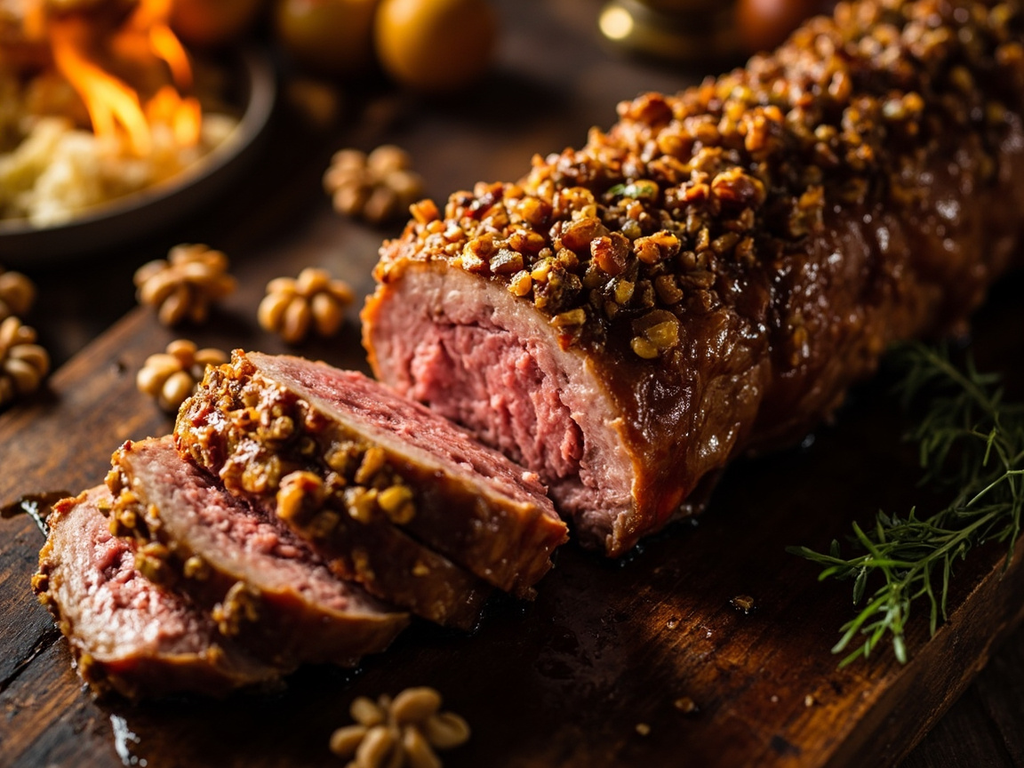
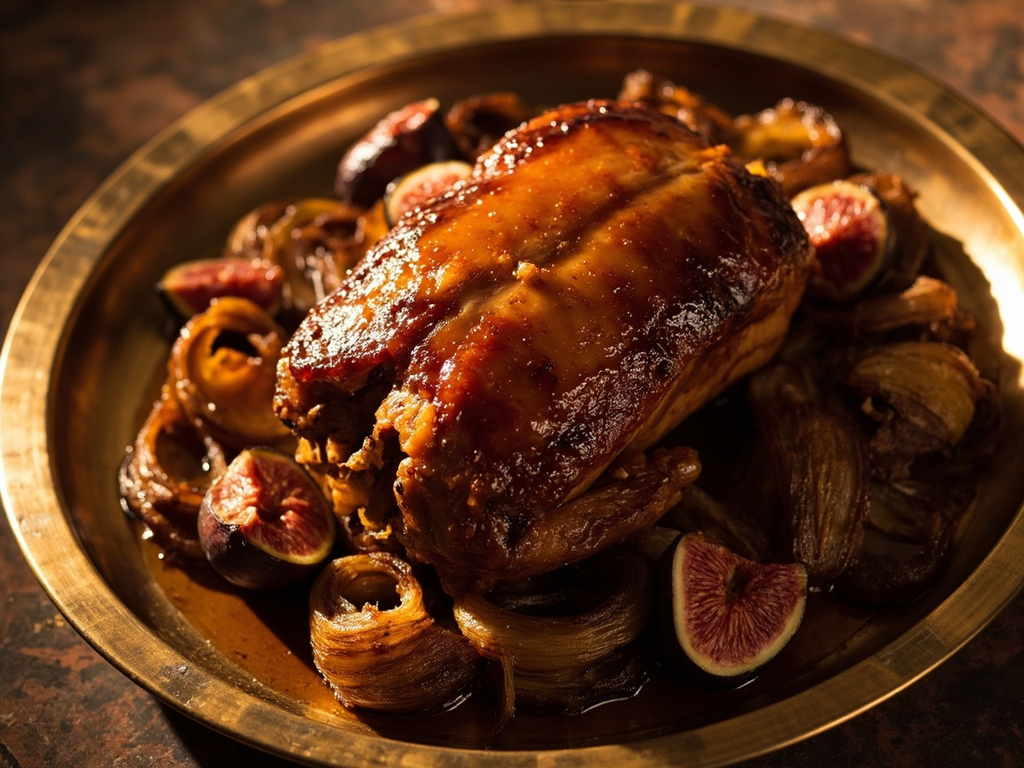
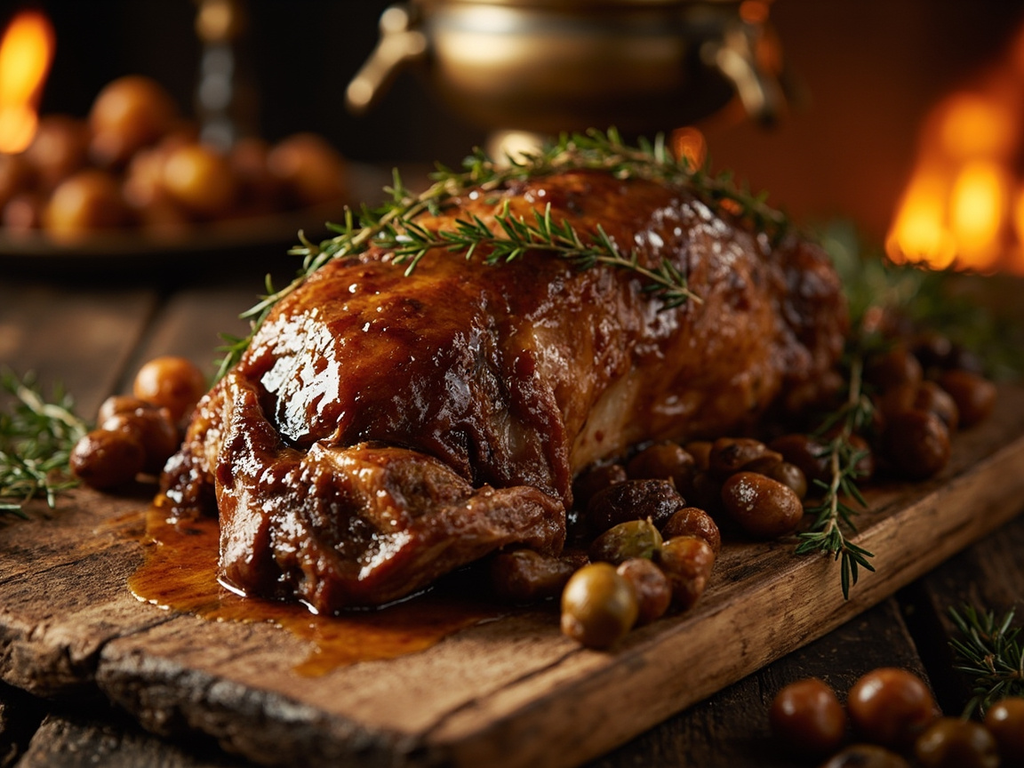
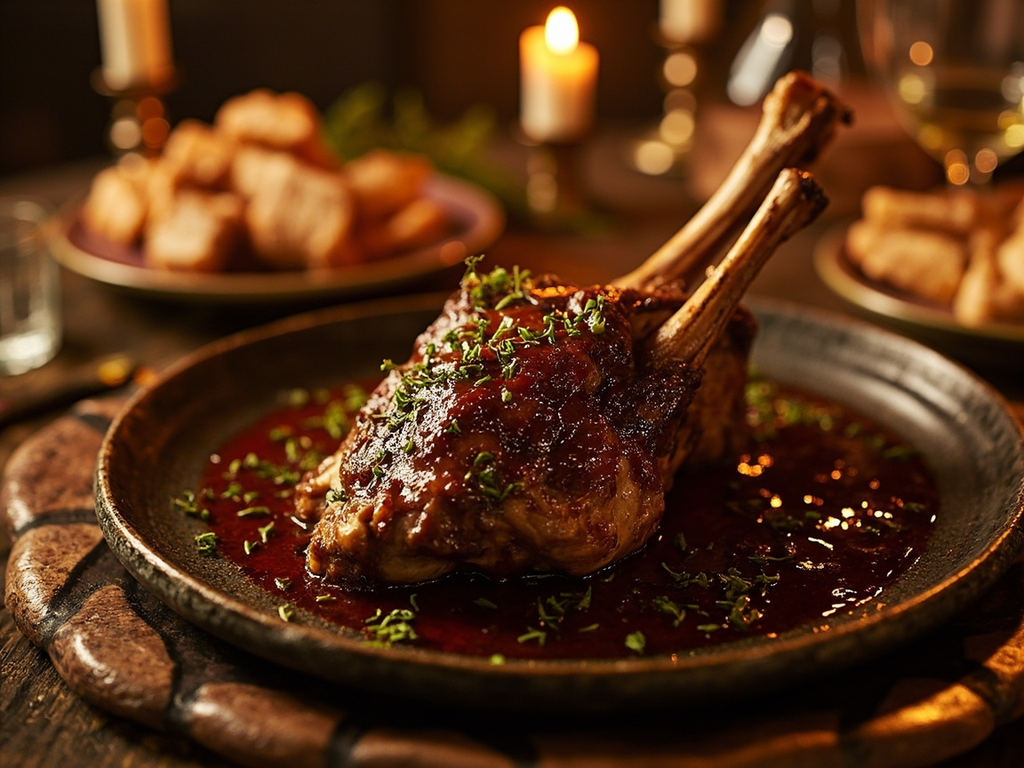
Roasted lamb with Chalkidiki wine and honey
Why this dish? As official painter to Alexander the Great, Apelles shared the lavish banquets of Pella, where roasted meat and fine wines from Chalkidiki flowed freely — far from the frugal barley cake of the Ionian cities.
A lamb shoulder rubbed with herbs and honey, slow-roasted and basted with Chalkidiki wine. The meat table of the Macedonian kings, generous and fragrant.
At Pella, they do not eat as in Colophon, believe me. The king loves roasted meat, and I was often seated near the hearth while the lamb turned, waiting for Alexander to come see his portrait progress. Rub the meat with herbs from the hills, salt, and a little honey, then baste it constantly with that dark wine from Chalkidiki until the skin takes the color of the amber I grind for my varnishes. It is a king's dish — and I have had, stranger, the privilege of painting kings.
- •Lamb shoulder — one piece (centerpiece)
- •Red wine from Chalkidiki — a good cup (basting and sauce)
- •Honey — two spoonfuls (lacquer and sweetness)
- •Wild thyme and oregano — a good pinch (fragrance)
- •Olive oil — a drizzle (cooking)
- •Sea salt — as needed (seasoning)
Roasted lamb with Chalkidiki wine and honey
A lamb shoulder rubbed with herbs and honey, slow-roasted and basted with Chalkidiki wine. The meat table of the Macedonian kings, generous and fragrant.
Why this dish? As official painter to Alexander the Great, Apelles shared the lavish banquets of Pella, where roasted meat and fine wines from Chalkidiki flowed freely — far from the frugal barley cake of the Ionian cities.
At Pella, they do not eat as in Colophon, believe me. The king loves roasted meat, and I was often seated near the hearth while the lamb turned, waiting for Alexander to come see his portrait progress. Rub the meat with herbs from the hills, salt, and a little honey, then baste it constantly with that dark wine from Chalkidiki until the skin takes the color of the amber I grind for my varnishes. It is a king's dish — and I have had, stranger, the privilege of painting kings.
Ingredients (period version)
- Lamb shoulder — one piece (centerpiece)
- Red wine from Chalkidiki — a good cup (basting and sauce)
- Honey — two spoonfuls (lacquer and sweetness)
- Wild thyme and oregano — a good pinch (fragrance)
- Olive oil — a drizzle (cooking)
- Sea salt — as needed (seasoning)
Ingredients
- Lamb shoulder — 1.2 kg (centerpiece)
- Full-bodied red wine — 250 ml (basting and sauce)
- Honey — 2 tbsp (lacquer and sweetness)
- Fresh thyme — 4 sprigs (fragrance)
- Dried oregano — 1 tsp (fragrance)
- Olive oil — 2 tbsp (cooking)
- Salt and cracked pepper — to taste (seasoning)
Method
- Preheat the oven to 160°C.
- Rub the lamb shoulder with oil, salt, pepper, thyme, and oregano, then place in a roasting pan.
- Mix the honey with half the wine and brush over the meat.
- Roast for 2.5 to 3 hours, basting every 30 minutes with the pan juices and remaining wine, until the meat is tender and the surface is nicely lacquered.
- Let rest for 10 minutes, then deglaze the pan over high heat to make a short, glossy sauce to spoon over the meat.
How it was made : Macedonian banquets were famous for their abundance of roasted meat — pork, lamb, game — much more meat-heavy than the frugal meals of the southern Greek cities. Wines from the region (Mende, Chalkidiki) were prized, often sweetened with honey. Meat was roasted on spits or over embers; honey served both as seasoning and preservative.
The contemporary twist : Present the whole shoulder on a large board, scattered with fresh herbs, and name the dish "Alexander's Table" for your guests.
Apelles · Charactorium