 flip
flipDamascus Dates Confit in Honey (dulcia domestica)
Damascus Dates Confit in Honey (dulcia domestica)
Why this dish? The date is the fruit of Apollodorus's Syria: Damascus and its oases abounded in them. Stuffed with dried fruits, rolled in honey and salt, they kept and accompanied him from the East to Rome—a taste of home at the edge of the Empire.
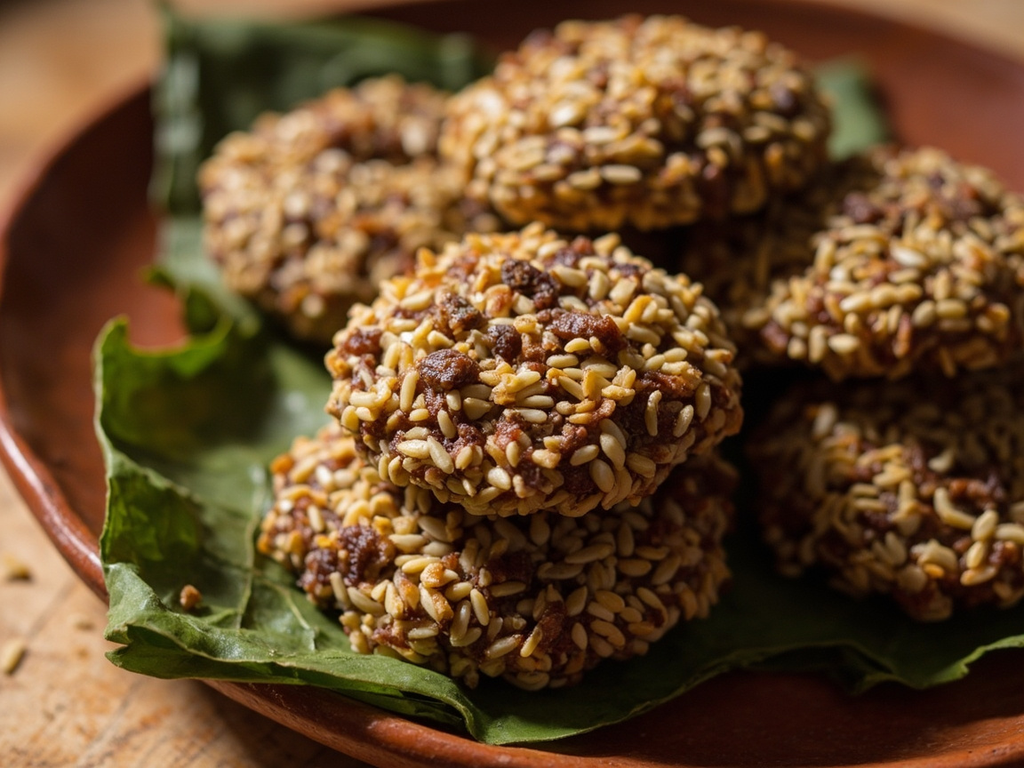
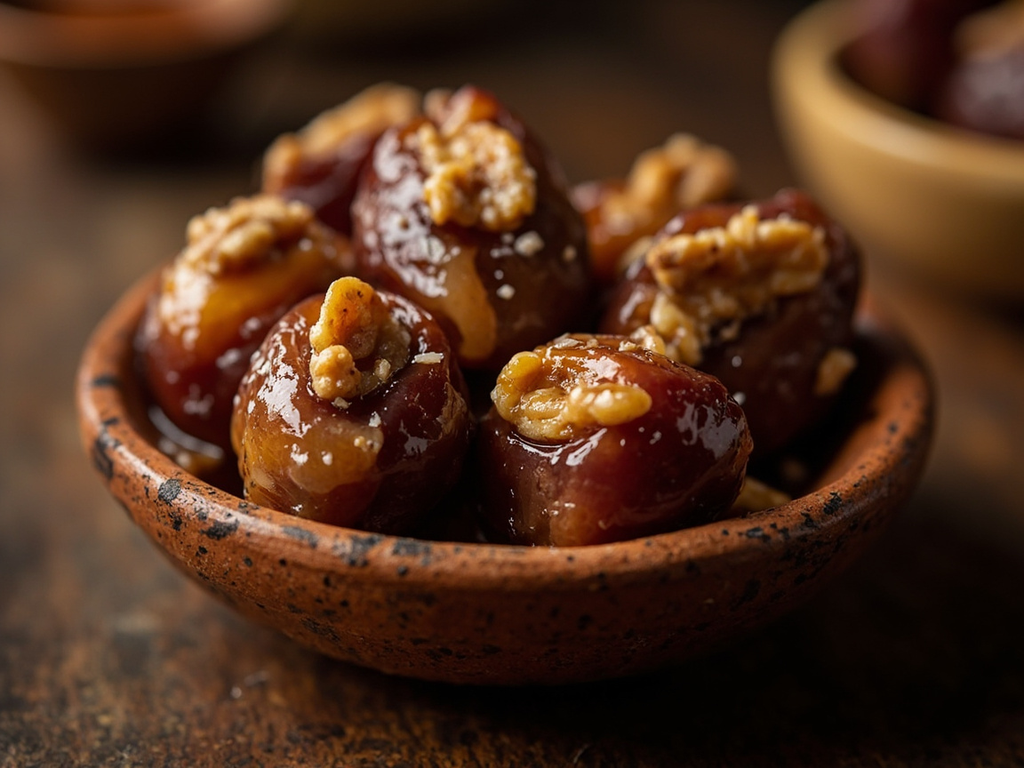
Pitted dates, stuffed with walnuts and pine nuts, peppered, then confit in hot honey with a touch of salt. A dense sweet that keeps and closes the meal—or comforts the traveler.
Back home in Syria, the date is queen; we have it on every table, from the palm to the counter. I open it, I replace the pit with a walnut or pine nuts—as one fills a formwork before pouring—, I roll it all in salt, then I confit it in hot honey. The salt bites, the honey coats, the pepper awakens: this is how, in Rome, I bring my country into the mensa secunda. Keep them cool, they will endure whatever journey you wish to make them take.
- •Dates — a handful (base fruit)
- •Walnuts and pine nuts — enough to stuff (filling)
- •Pepper — a turn (contrast)
- •Salt — a pinch (salty contrast)
- •Honey — as needed (confiture)
Damascus Dates Confit in Honey (dulcia domestica)
Pitted dates, stuffed with walnuts and pine nuts, peppered, then confit in hot honey with a touch of salt. A dense sweet that keeps and closes the meal—or comforts the traveler.
Why this dish? The date is the fruit of Apollodorus's Syria: Damascus and its oases abounded in them. Stuffed with dried fruits, rolled in honey and salt, they kept and accompanied him from the East to Rome—a taste of home at the edge of the Empire.
Back home in Syria, the date is queen; we have it on every table, from the palm to the counter. I open it, I replace the pit with a walnut or pine nuts—as one fills a formwork before pouring—, I roll it all in salt, then I confit it in hot honey. The salt bites, the honey coats, the pepper awakens: this is how, in Rome, I bring my country into the mensa secunda. Keep them cool, they will endure whatever journey you wish to make them take.
Ingredients (period version)
- Dates — a handful (base fruit)
- Walnuts and pine nuts — enough to stuff (filling)
- Pepper — a turn (contrast)
- Salt — a pinch (salty contrast)
- Honey — as needed (confiture)
Ingredients
- Large Medjool dates — 12 (base fruit)
- Walnut halves and pine nuts — 12 pieces + 2 tbsp (filling)
- Ground black pepper — 1 pinch (contrast)
- Fine salt — 1 pinch (salty contrast)
- Liquid honey — 4 tbsp (confiture)
Method
- Slit each date lengthwise and remove the pit.
- Stuff the inside with a piece of walnut and a few pine nuts, close lightly.
- Briefly roll the stuffed dates in a little salt mixed with a pinch of pepper.
- Warm the honey in a small pan, place the dates in it and let them confit for 3-4 minutes, turning them.
- Drain and let cool on an oiled plate. They keep for several days in an airtight container.
How it was made : Apicius describes "dulcia domestica": pitted dates, stuffed with walnuts, pine nuts, or pepper, salted, then cooked in honey. Sweet, salty, and peppery coexisted without fuss on the Roman table, where the boundary between dessert and main course did not exist as ours does.
The contemporary twist : A pinch of fleur de sel and a few toasted pine nuts at serving time: the 'architect's date', neatly aligned like the voussoirs of an arch.
Sources : Apicius, De re coquinaria, Book VII ("Dulcia domestica")
Apollodorus of Damascus · Charactorium