 flip
flipEpityrum — marinated olive spread
Epityrum — marinated olive spread
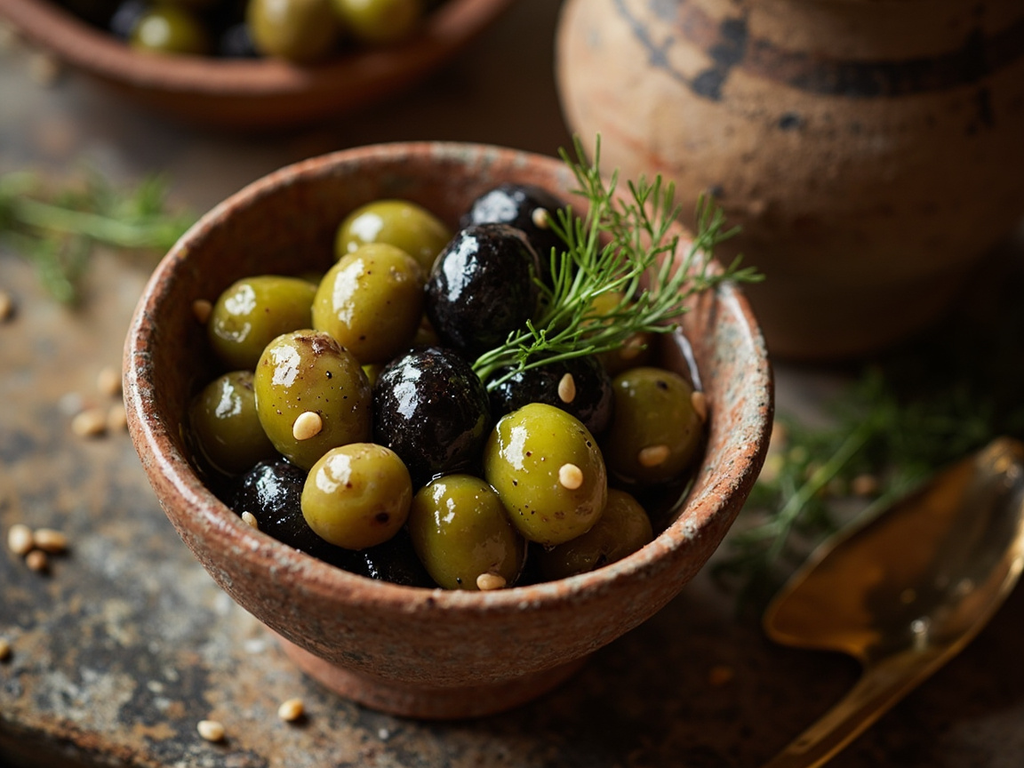
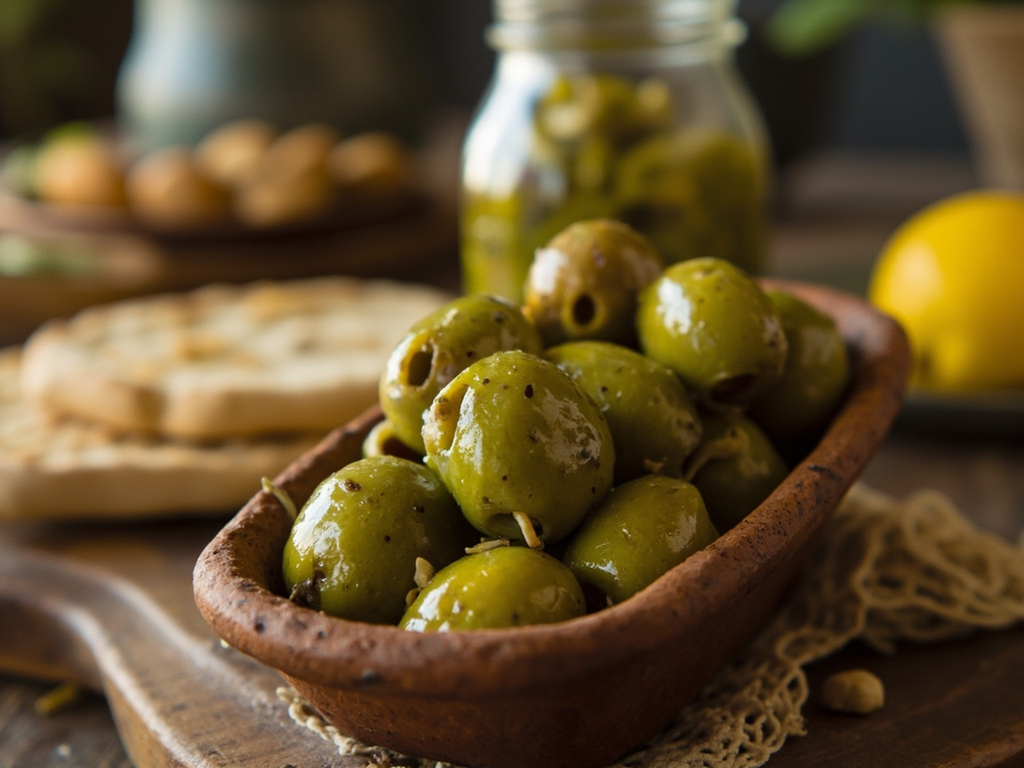
Why this dish? Marinated olives appear explicitly among the dishes on Agrippina's table. Epityrum, a conserve of crushed olives with herbs, accompanied both daily bread and grand feasts, and kept for weeks — precious in a world without refrigeration.
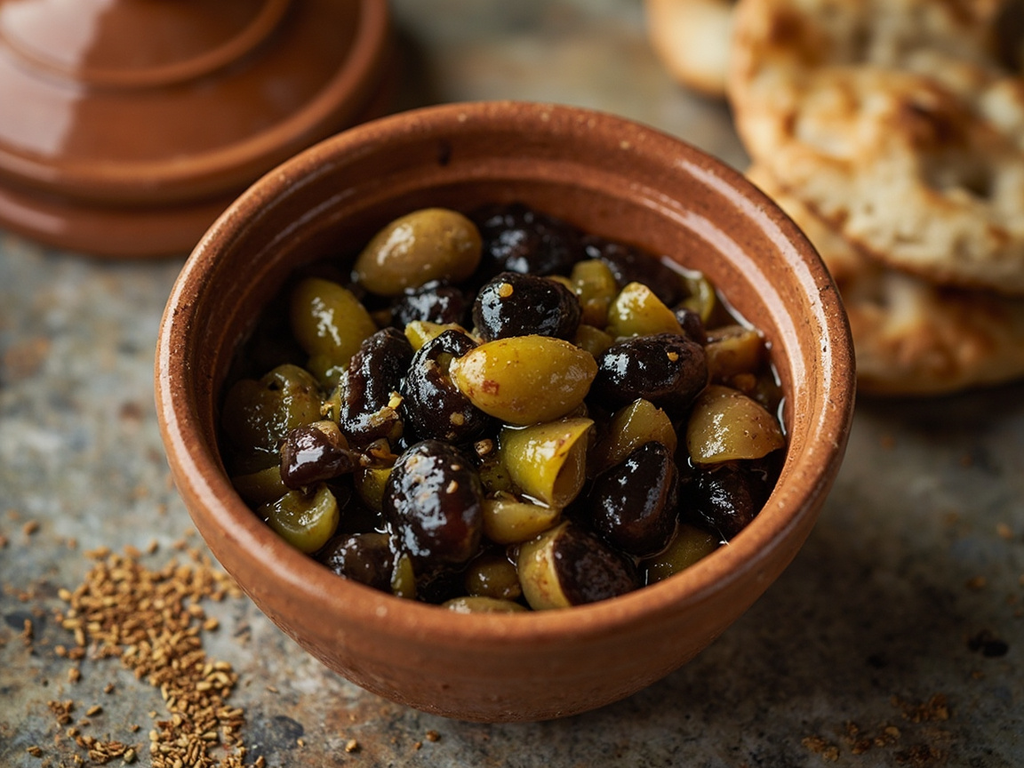
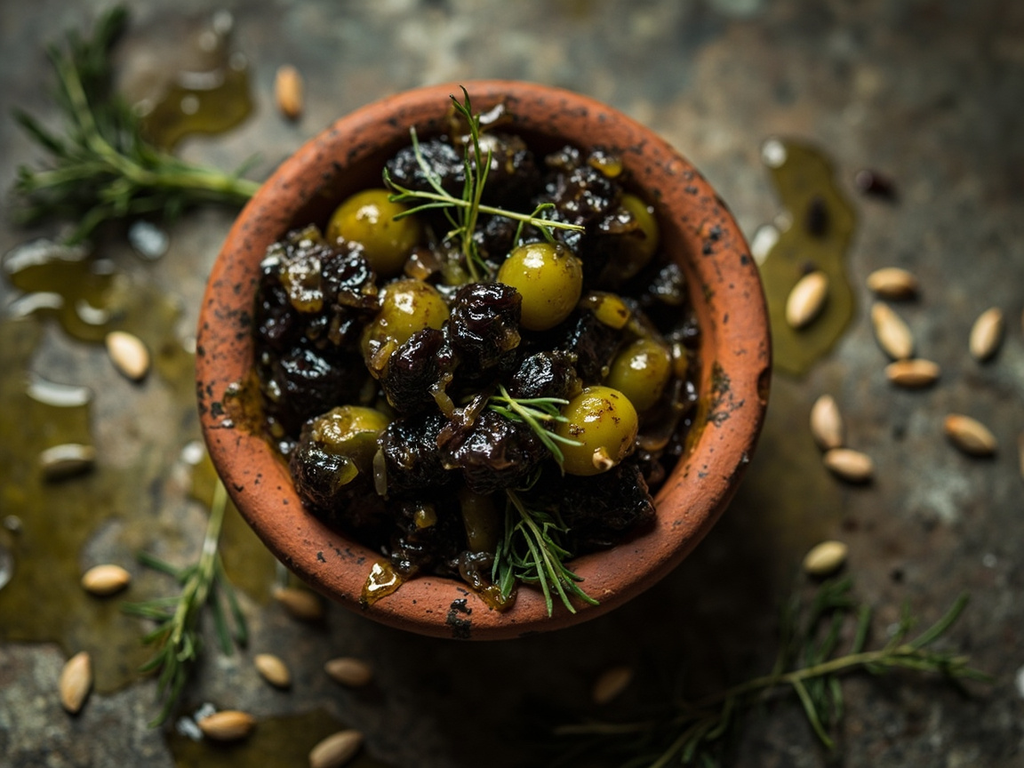
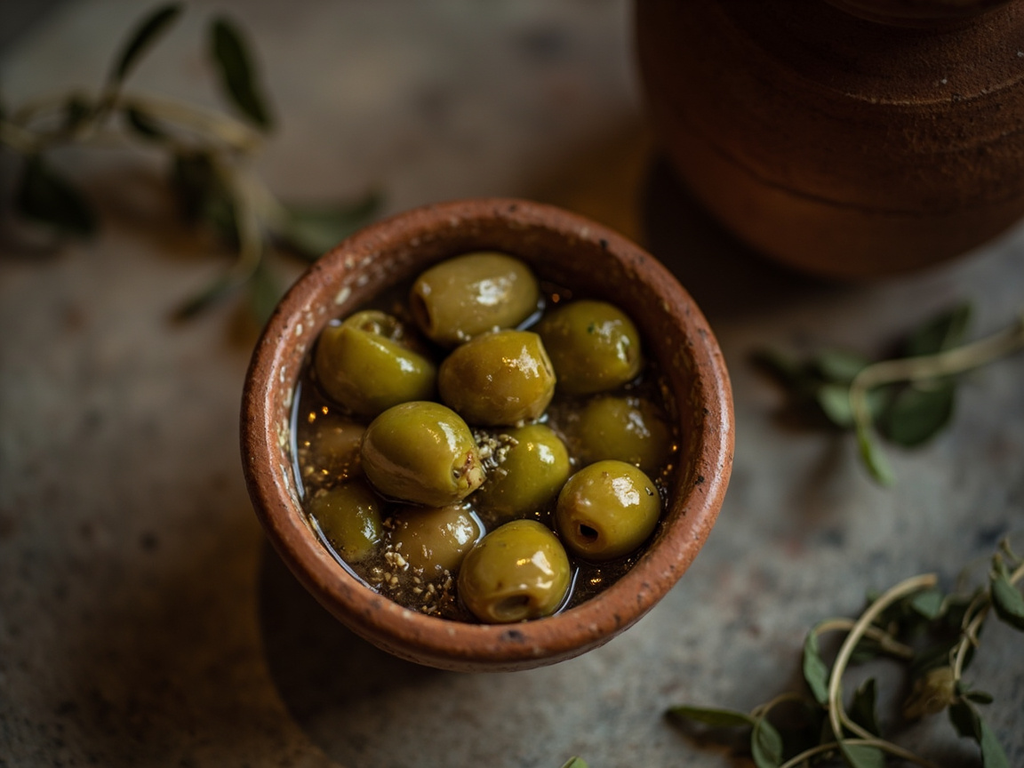
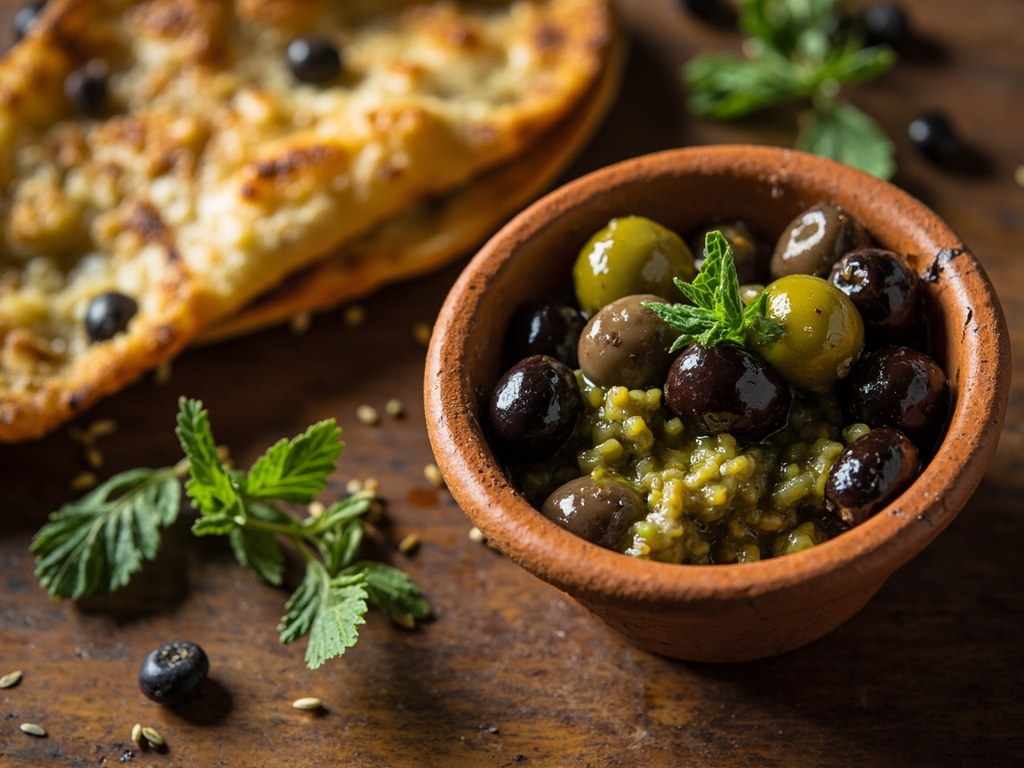
Green and black olives chopped with aromatic herbs, vinegar, and olive oil. A rustic paste, salty and bitter, brightened by acidity, spread on bread or served at the start of the meal.
Here is a dish my ancestors already knew in the time of the Republic, before Rome gorged itself on gold. We grind green and black olives together, add rue, mint, and fennel, a little vinegar and the oil from our hills. It is sharp, it is honest — as one must be to endure on the Palatine. I like it because it keeps: in the palace, one can never be too careful about what comes from the stores, and what lasts long can be tasted without fear of poison.
- •Green and black olives — two handfuls (base)
- •Rue (herb) — a few leaves (aromatic bitterness)
- •Fresh mint and fennel — a bunch (herbs)
- •Vinegar — a dash (acidity, preservation)
- •Olive oil — generous (fat binder)
Epityrum — marinated olive spread
Green and black olives chopped with aromatic herbs, vinegar, and olive oil. A rustic paste, salty and bitter, brightened by acidity, spread on bread or served at the start of the meal.
Why this dish? Marinated olives appear explicitly among the dishes on Agrippina's table. Epityrum, a conserve of crushed olives with herbs, accompanied both daily bread and grand feasts, and kept for weeks — precious in a world without refrigeration.
Here is a dish my ancestors already knew in the time of the Republic, before Rome gorged itself on gold. We grind green and black olives together, add rue, mint, and fennel, a little vinegar and the oil from our hills. It is sharp, it is honest — as one must be to endure on the Palatine. I like it because it keeps: in the palace, one can never be too careful about what comes from the stores, and what lasts long can be tasted without fear of poison.
Ingredients (period version)
- Green and black olives — two handfuls (base)
- Rue (herb) — a few leaves (aromatic bitterness)
- Fresh mint and fennel — a bunch (herbs)
- Vinegar — a dash (acidity, preservation)
- Olive oil — generous (fat binder)
Ingredients
- Pitted green olives — 100 g (base)
- Pitted black olives — 100 g (base)
- Fresh mint — 6 leaves (herb (replaces rue, toxic raw))
- Fennel seeds — 1/2 tsp (anise aroma)
- Cumin seeds — 1/4 tsp (mild spice)
- White wine vinegar — 1 tbsp (acidity)
- Extra virgin olive oil — 3 tbsp (binder)
Method
- Coarsely chop the olives with a knife or in a mortar (rustic texture, not a smooth purée).
- Add the chopped mint, fennel seeds, and cumin.
- Pour in the vinegar and olive oil, then mix.
- Let rest at least 1 hour in the fridge before serving with grilled flatbread.
How it was made : The recipe for epityrum comes to us from Cato the Elder (De agricultura, 2nd century BC): olives crushed with oil, vinegar, coriander, cumin, fennel, rue, and mint. Safety note: rue, a common Roman herb, is toxic and photosensitizing raw — it is omitted or replaced today.
The contemporary twist : Served in a small wooden box — an ironic echo of Agrippina's "poison box," here filled with a perfectly harmless dish.
Sources : Cato the Elder, De agricultura, 119 (epityrum recipe)
Agrippina the Younger · Charactorium