 flip
flipTravel Provisions Between Cities
Travel Provisions Between Cities
Why this dish? Apollonius's life was a journey between the poles of Hellenistic learning: born at Perge in Pamphylia, educated in Alexandria, honored at Pergamon and Ephesus. On these roads of land and sea, one carried only what keeps: twice-baked barley bread, brined olives, dry cheese, and salted fish.
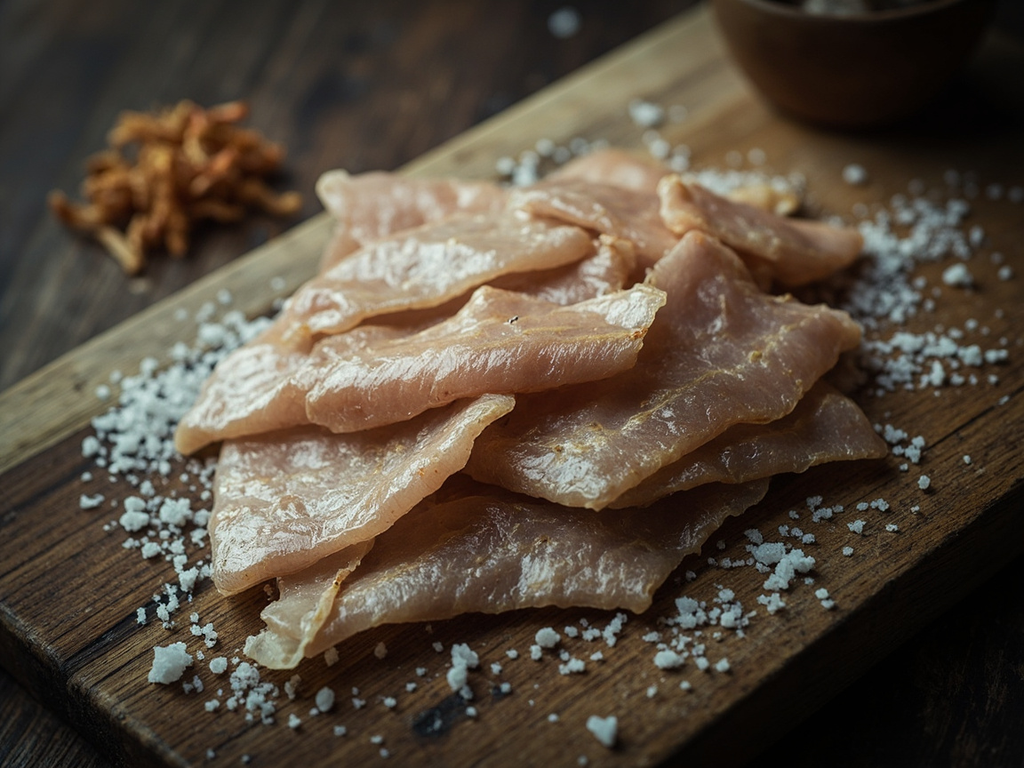
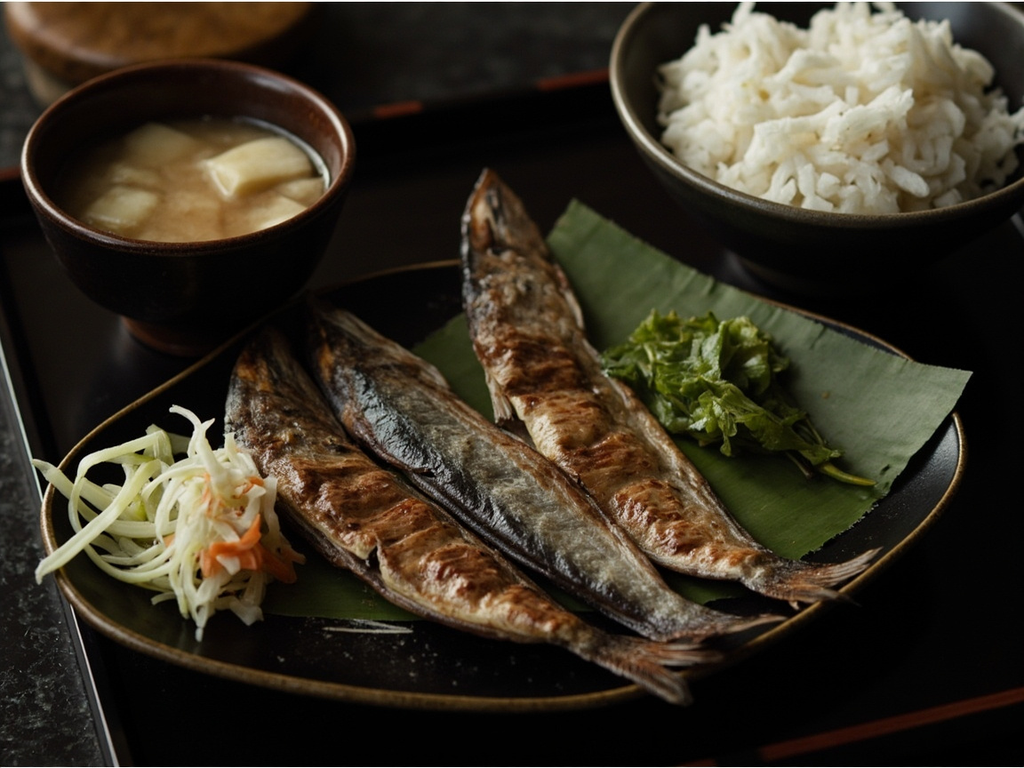
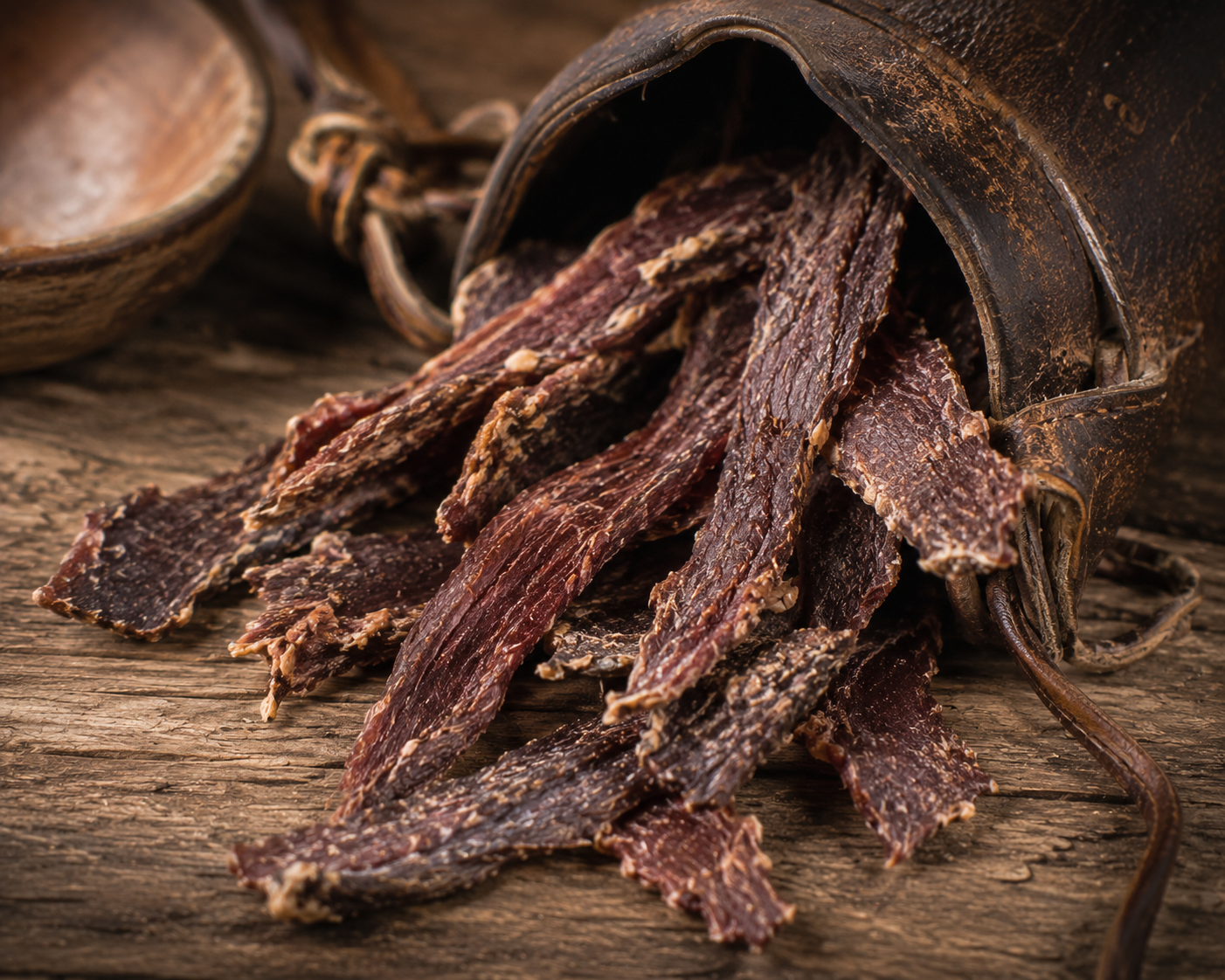
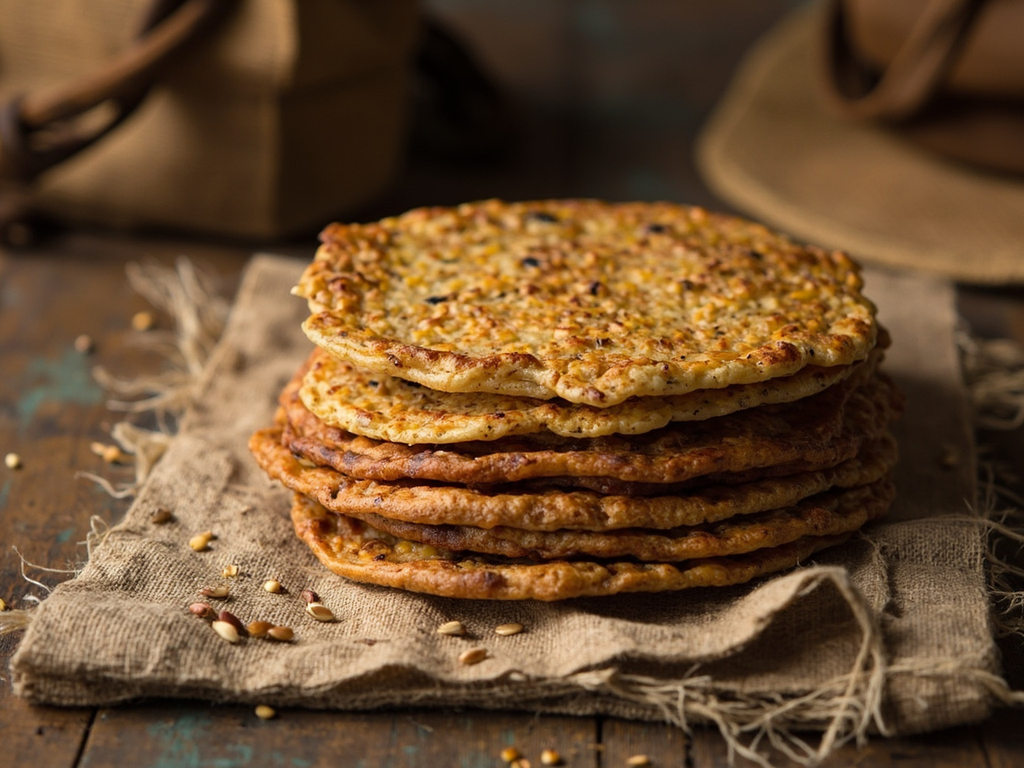
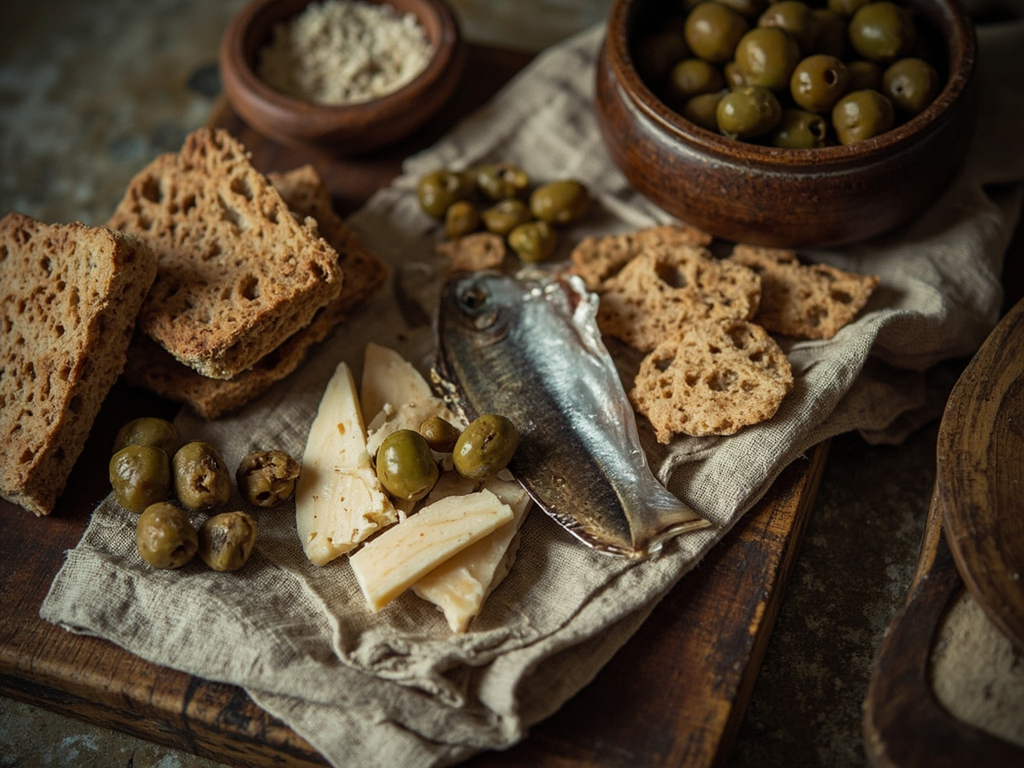
An assortment of provisions that travel without spoiling: twice-baked barley bread (the ancestor of the rusk), brined olives, dry cheese, and strips of salted fish. The geometer's basket on the move.
Whoever travels as I do the distance from one city to another learns a simple truth: one must carry what time does not spoil. The bread I bake twice, until it is hard as stone — thus hardened, it will cross the sea without molding, and you will soften it in water or wine when the time comes. Add to it brined olives, cheese left to dry, a little salted fish: that is enough to hold you between Perge and Alexandria. Sobriety on a journey is sister to rigor in a demonstration.
- •Twice-baked barley bread (paximadia) — several flatbreads (storable starch)
- •Brined olives — a store (salty, keeps well)
- •Dried hard sheep cheese — a piece (preserved protein)
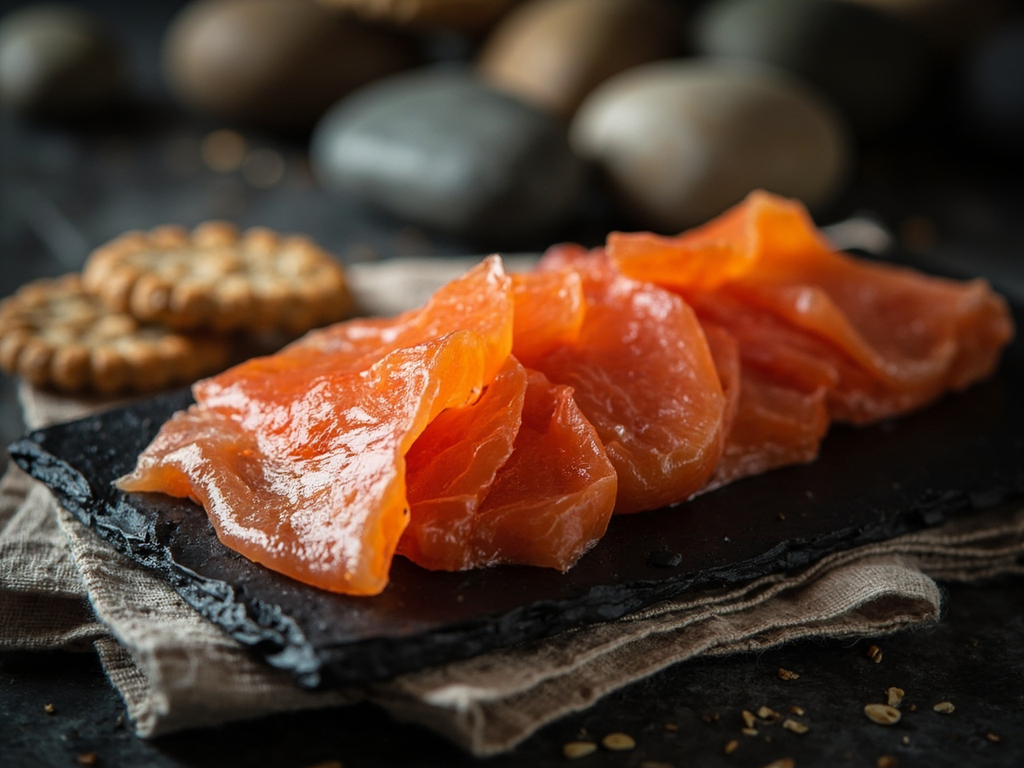
- •Salted dried fish — a few strips (umami, preservation)
- •Olive oil — a small flask (to pour at mealtime)
Travel Provisions Between Cities
An assortment of provisions that travel without spoiling: twice-baked barley bread (the ancestor of the rusk), brined olives, dry cheese, and strips of salted fish. The geometer's basket on the move.
Why this dish? Apollonius's life was a journey between the poles of Hellenistic learning: born at Perge in Pamphylia, educated in Alexandria, honored at Pergamon and Ephesus. On these roads of land and sea, one carried only what keeps: twice-baked barley bread, brined olives, dry cheese, and salted fish.
Whoever travels as I do the distance from one city to another learns a simple truth: one must carry what time does not spoil. The bread I bake twice, until it is hard as stone — thus hardened, it will cross the sea without molding, and you will soften it in water or wine when the time comes. Add to it brined olives, cheese left to dry, a little salted fish: that is enough to hold you between Perge and Alexandria. Sobriety on a journey is sister to rigor in a demonstration.
Ingredients (period version)
- Twice-baked barley bread (paximadia) — several flatbreads (storable starch)
- Brined olives — a store (salty, keeps well)
- Dried hard sheep cheese — a piece (preserved protein)
- Salted dried fish — a few strips (umami, preservation)
- Olive oil — a small flask (to pour at mealtime)
Ingredients
- Barley bread or whole wheat rusks (paximadia) — 4-6 pieces (starch)
- Brined olives — 150 g (salty)
- Dry sheep cheese (pecorino, kefalotyri) — 100 g (protein)
- Salted anchovies or mackerel — 60 g (salty umami)
- Olive oil — as desired (to pour on rehydrated bread)
Method
- If starting from fresh barley bread, slice it and return to a low oven (120°C) until completely dry and hard: this is paximadi, which keeps for weeks.
- When ready to eat, moisten the bread with a little water then drizzle with olive oil to soften it.
- Arrange around it the drained olives, shards of dry cheese, and strips of salted fish.
- Assemble a simple travel plate, no cooking, as one would open a bundle on a ship's deck.
How it was made : Paximadion (twice-baked bread) was the ration of the Greek sailor, soldier, and traveler: dehydrated, it resisted for months and was rehydrated with water, wine, or oil. Brined olives, dry cheeses, and salted fish formed the core of ancient preserved provisions.
The contemporary twist : Present everything tied in a cloth bundle in ancient style, and dip the paximadi in a little wine rather than water, as the sailors of the Aegean did.
Apollonius of Perga · Charactorium