 flip
The emmer serpent doomed to the fire
The emmer serpent doomed to the fire
Why this dish? The priests of Heliopolis and Karnak fashioned effigies of Apophis — in wax, papyrus, sometimes dough — to trample, pierce and throw them into the fire during the daily rite of "overthrowing Apophis." This serpent bread reenacts that gesture: it is kneaded only to be broken, as they broke the great serpent's power each dawn.
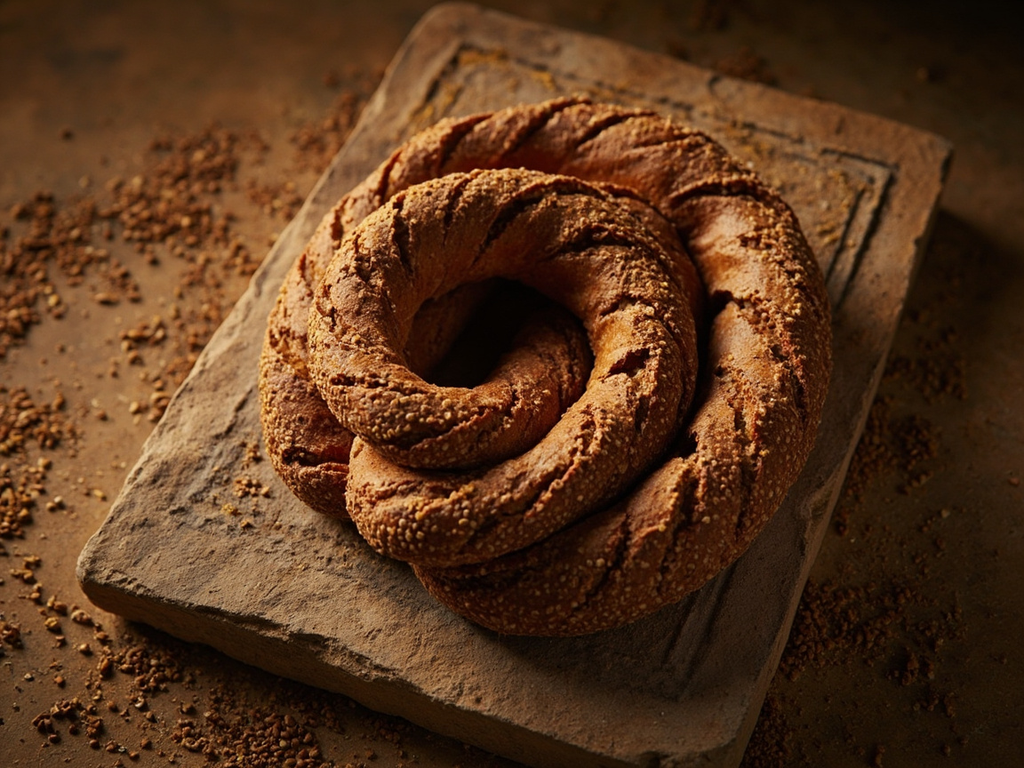
A serpent shaped from dark emmer dough, seasoned with bitter cumin and salt, fashioned to be presented then ritually broken and shared. Far from being a festive dish, it is a bread of conjuration, deliberately harsh, in the image of Isfet — disorder — that they sought to annihilate.
I, the Coiled One in darkness, sneer as I watch you knead my image into your coarse flour. Your priest rolls me between his fingers, incises me with his flint knife, and delivers me to the flame — each morning he thinks he has vanquished me, and each night I rise again from the flood. Put the bitterest cumin in me, scribe: let my dough-flesh taste of the chaos you dread. Break me then, and eat; you shall know the flavor of him whom Ra cannot kill.
- •Emmer flour — two generous handfuls (dough base, dark color)
- •Warm Nile water — as needed (binding)
- •Ground cumin — a firm pinch (ritual bitterness)
- •Salt — a pinch (seasoning)
- •Natural barley leaven — a little (light fermentation (optional))
The emmer serpent doomed to the fire
A serpent shaped from dark emmer dough, seasoned with bitter cumin and salt, fashioned to be presented then ritually broken and shared. Far from being a festive dish, it is a bread of conjuration, deliberately harsh, in the image of Isfet — disorder — that they sought to annihilate.
Why this dish? The priests of Heliopolis and Karnak fashioned effigies of Apophis — in wax, papyrus, sometimes dough — to trample, pierce and throw them into the fire during the daily rite of "overthrowing Apophis." This serpent bread reenacts that gesture: it is kneaded only to be broken, as they broke the great serpent's power each dawn.
I, the Coiled One in darkness, sneer as I watch you knead my image into your coarse flour. Your priest rolls me between his fingers, incises me with his flint knife, and delivers me to the flame — each morning he thinks he has vanquished me, and each night I rise again from the flood. Put the bitterest cumin in me, scribe: let my dough-flesh taste of the chaos you dread. Break me then, and eat; you shall know the flavor of him whom Ra cannot kill.
Ingredients (period version)
- Emmer flour — two generous handfuls (dough base, dark color)
- Warm Nile water — as needed (binding)
- Ground cumin — a firm pinch (ritual bitterness)
- Salt — a pinch (seasoning)
- Natural barley leaven — a little (light fermentation (optional))
Ingredients
- Spelt or einkorn flour — 250 g (replaces emmer)
- Warm water — about 150 ml (binding)
- Ground cumin — 1 tsp (bitterness)
- Salt — 1 tsp (seasoning)
- Sourdough or yeast (optional) — 1 tbsp sourdough (light rise)
- Whole cumin seeds — 1 tsp (scale decoration)
Method
- Mix the flour, salt and ground cumin, then gradually add water until a firm, non-sticky dough forms.
- Knead for 10 minutes; let rest for 1 hour under a cloth (a little longer if using sourdough).
- Roll the dough into a long rope, taper one end for the tail and flatten the other for the head; coil into a spiral.
- Score scales with a knife tip and press in cumin seeds for the eyes.
- Bake for 20-25 minutes in a hot oven (220 °C) on a stone or baking sheet, until the crust darkens.
- Present the serpent, then break it solemnly before sharing: the gesture matters as much as the taste.
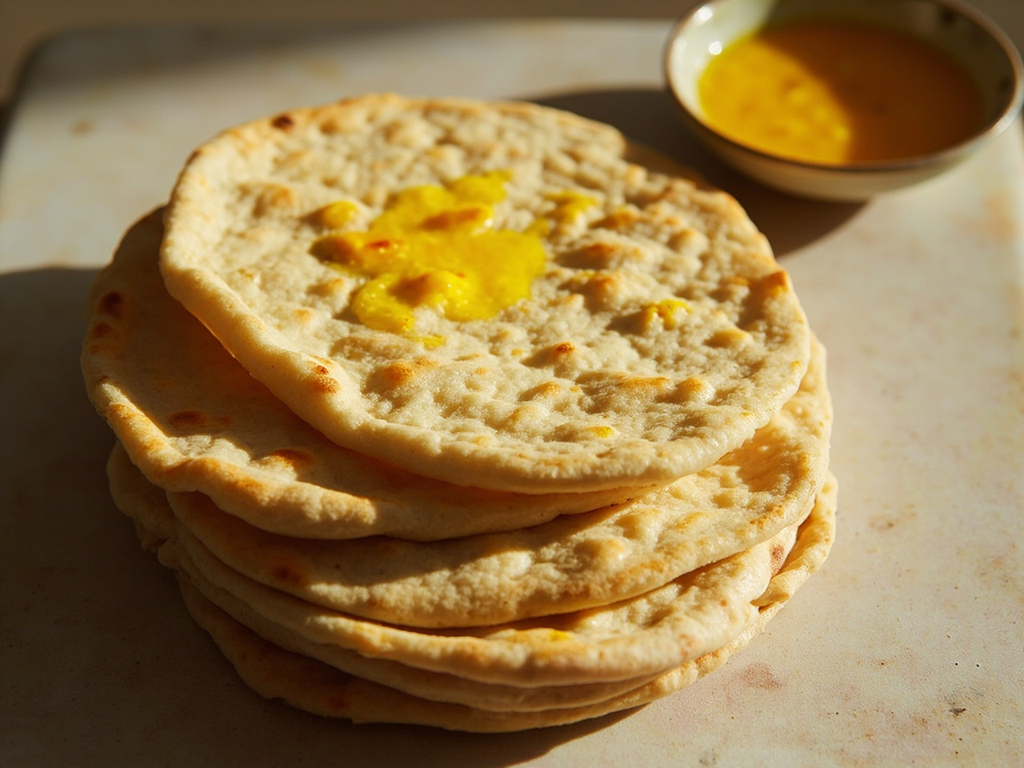
How it was made : The Bremner-Rhind Papyrus preserves a "Book of Overthrowing Apophis": it prescribes making figures of the serpent — often in wax, sometimes drawn or modeled — to be spat upon, trampled and burned. Emmer dough, the basis of Egyptian bread, lent itself to modeling; domestic ovens baked on stone or against the walls of heated jars.
The contemporary twist : For a school workshop: have each person model their own small serpent, then arrange all the breads in a circle around a "solar disk" of turmeric-golden bread — order encircling chaos.
Sources : Papyrus Bremner-Rhind, "Book of Overthrowing Apophis" (British Museum EA 10188) · Delwen Samuel, archaeobotanical research on ancient Egyptian bread and beer
Apophis · Charactorium