 flip
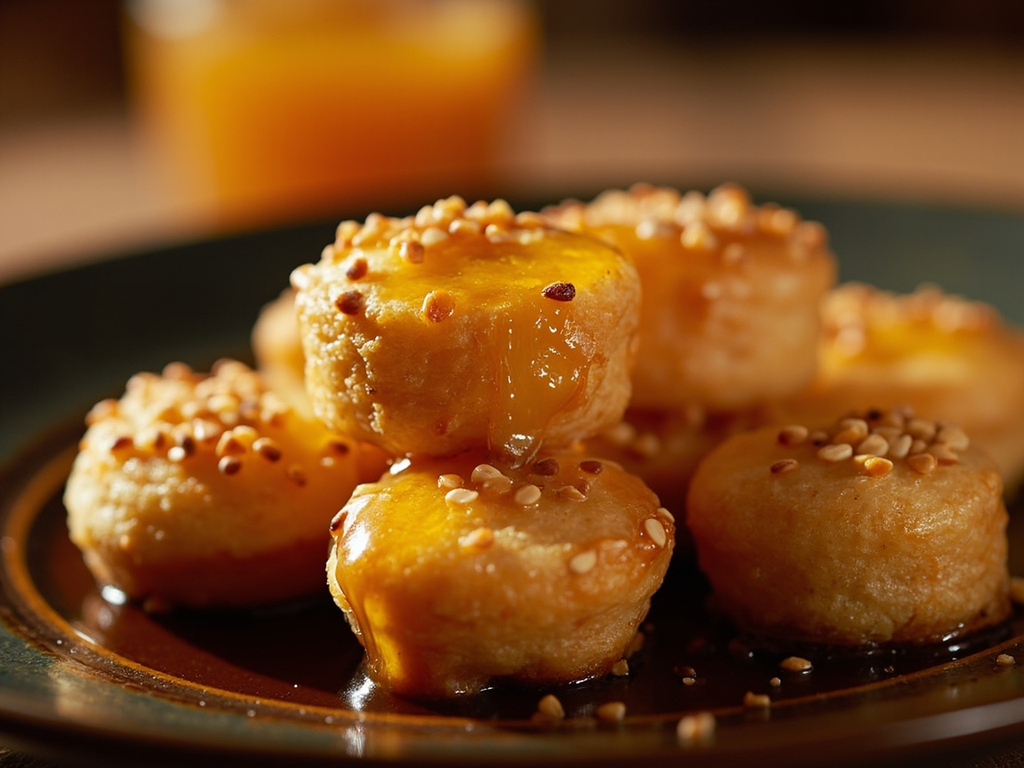
flipHoney and sesame itria (Olympian paste)
Honey and sesame itria (Olympian paste)
Why this dish? When Ares sits among the Twelve at the table of Olympus, they serve neither broth nor bivouac flatbread, but nectar and ambrosia — and, for men who wish to honor the gods, honey and sesame cakes placed on the altar or shared at the end of the banquet. Honey, the food that 'makes immortal', and the sesame of Greek weddings evoke this divine feast in which even the brutal god of war takes part.
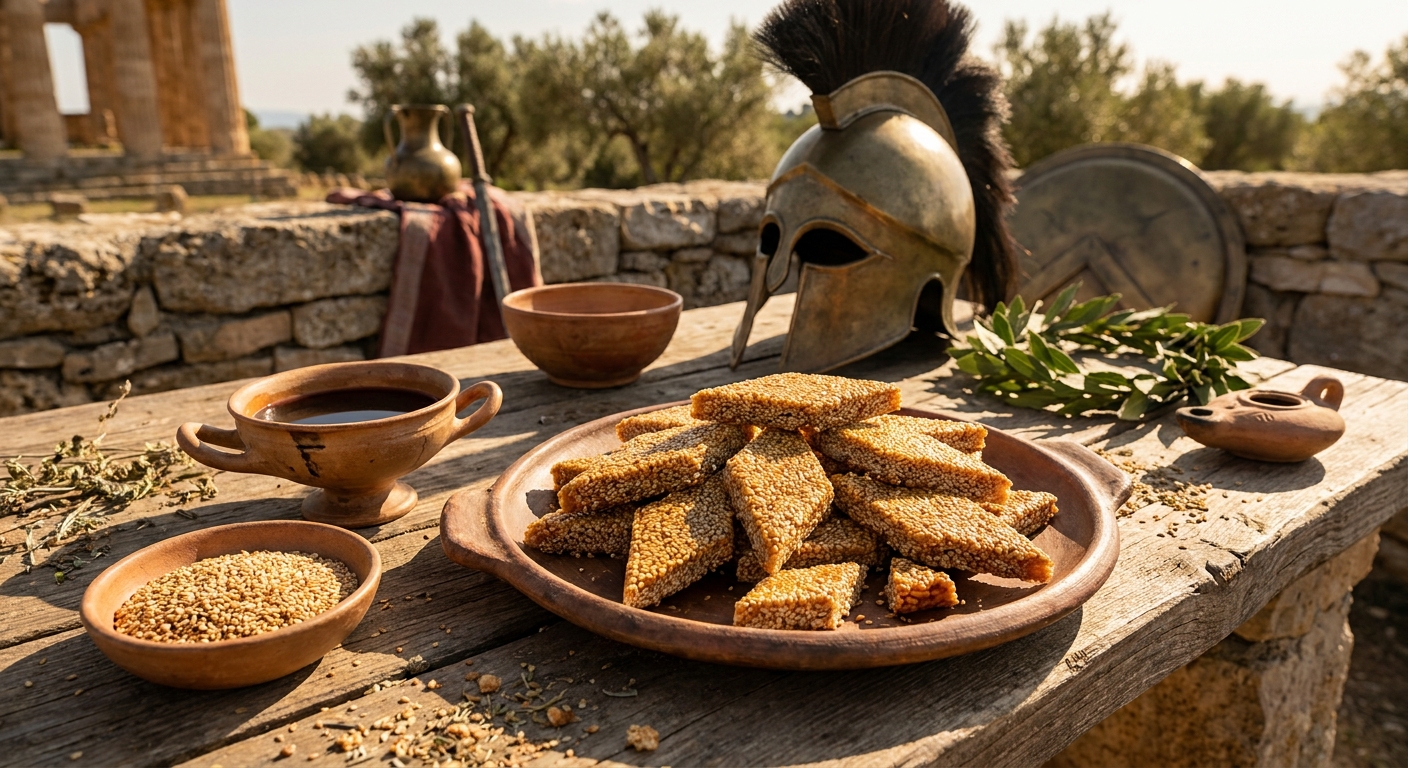
Crisp sesame seeds bound with warm fragrant honey, ancestor of pasteli. A golden sweet for the symposion and joyful offerings.
Even a god of iron sometimes sits down among laughter. When I leave the dust of the fields and ascend to Olympus, they do not serve mortal broth there: honey flows, golden, the one that makes flesh immortal. Heat this honey until it sings, throw in the toasted sesame that you have popped over the fire, mix with a lively hand, and let it harden on a cold stone. Offer some to the gods before tasting — even I know that after blood, a little sweetness is needed.
- •Honey — abundant (binder and sweetness)
- •Sesame seeds — two measures (crisp heart)
- •Toasted flour (optional) — a handful (thickener)
Honey and sesame itria (Olympian paste)
Crisp sesame seeds bound with warm fragrant honey, ancestor of pasteli. A golden sweet for the symposion and joyful offerings.
Why this dish? When Ares sits among the Twelve at the table of Olympus, they serve neither broth nor bivouac flatbread, but nectar and ambrosia — and, for men who wish to honor the gods, honey and sesame cakes placed on the altar or shared at the end of the banquet. Honey, the food that 'makes immortal', and the sesame of Greek weddings evoke this divine feast in which even the brutal god of war takes part.
Even a god of iron sometimes sits down among laughter. When I leave the dust of the fields and ascend to Olympus, they do not serve mortal broth there: honey flows, golden, the one that makes flesh immortal. Heat this honey until it sings, throw in the toasted sesame that you have popped over the fire, mix with a lively hand, and let it harden on a cold stone. Offer some to the gods before tasting — even I know that after blood, a little sweetness is needed.
Ingredients (period version)
- Honey — abundant (binder and sweetness)
- Sesame seeds — two measures (crisp heart)
- Toasted flour (optional) — a handful (thickener)
Ingredients
- Sesame seeds — 200 g (main ingredient)
- Honey (thyme or floral) — 150 g (golden binder)
- Orange blossom water or zest (optional, nod to tradition) — a few drops (aroma)
- Pinch of salt — 1 pinch (balance sweetness)
Method
- Toast the sesame seeds dry over medium heat until golden, stirring constantly.
- In a saucepan, heat the honey with the pinch of salt until it bubbles, about 5 minutes.
- Off the heat, fold in the hot sesame and mix vigorously.
- Spread the mixture on an oiled sheet or cold slab to 0.5 cm thick, and press down.
- Let harden, then cut into diamonds before completely cool.
How it was made : The ancient Greeks knew itrion, a fine preparation of sesame and honey mentioned as early as the Archaic period, and sesame particularly bound wedding cakes. Without cane sugar (unknown in the ancient Mediterranean), honey was the only sweetener: it was heated to caramelize and coat seeds, dried fruits and flours. These sweets concluded the meal during the tragēmata and served as sweet offerings to the gods.
The contemporary twist : Cut into small 'shield' diamonds and dust with a veil of black sesame seeds for contrast, serve with a sweet wine.
Sources : Athenaeus of Naucratis, The Deipnosophists · A. Dalby & S. Grainger, The Classical Cookbook (1996)
Ares · Charactorium