 flip
flipThe hoplite's barley maza on campaign
The hoplite's barley maza on campaign
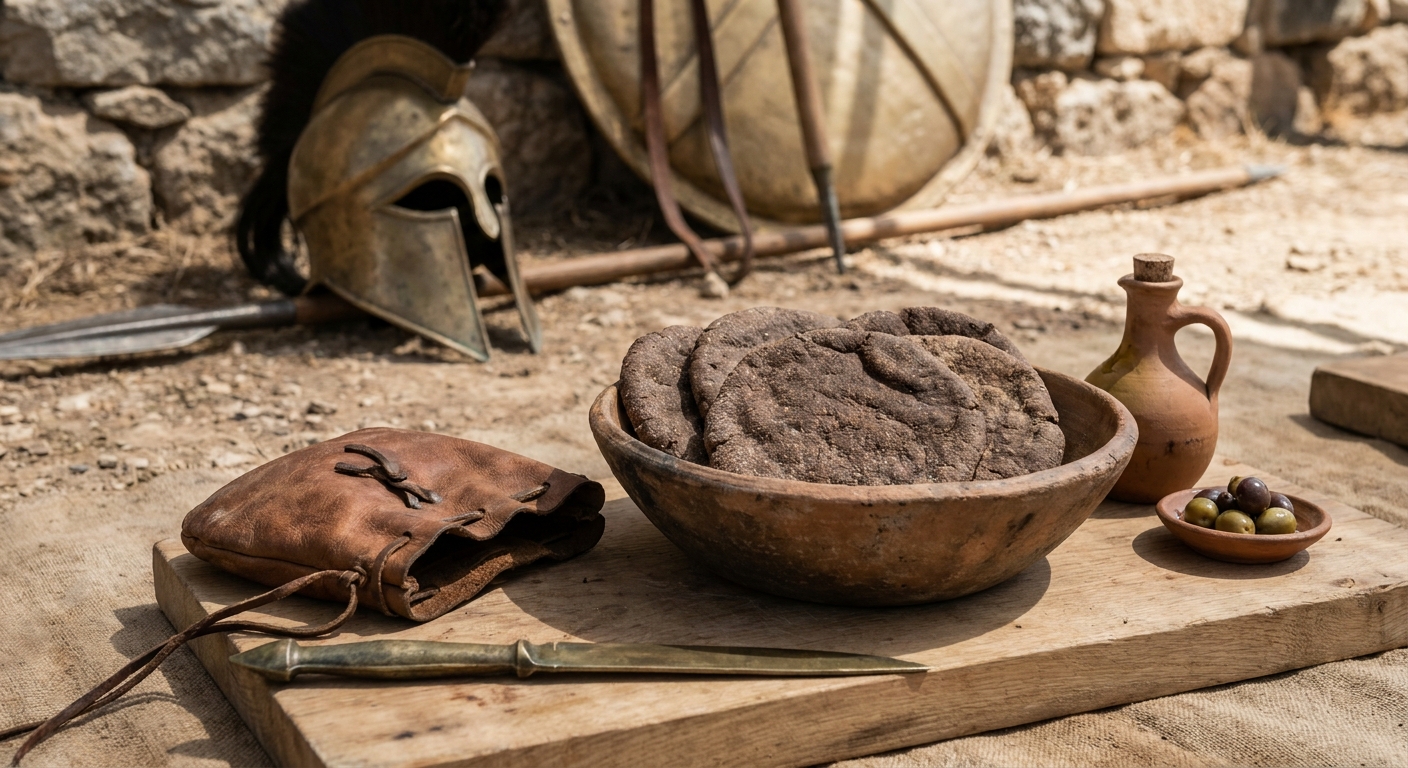
Why this dish? Where Ares marches, armies march, and the Greek army advances to the rhythm of barley. The hoplite carried in his sack his ration of roasted barley flour that he kneaded on the spot: maza, a dense flatbread that does not spoil and sticks to the belly during long stages to the battlefield. More than the wheat bread of the rich, it is this that nourishes the infantry of the god of war.
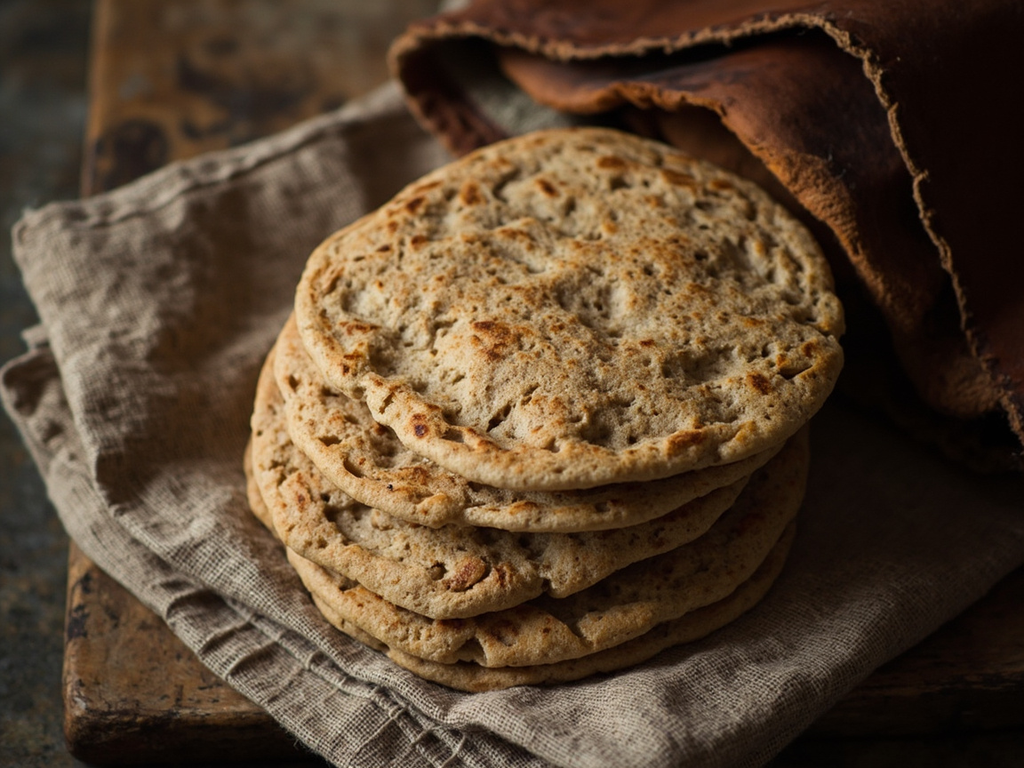
Flat barley flatbread, kneaded with oil and salt, cooked on a hot stone. The nomadic ration of the soldier, robust and unpretentious, perfect for the knapsack.
Look at the soldier's sack before looking at his sword: it is she who decides battles. Take your barley flour, the one that was passed through fire so it would last; moisten it with a little water and oil, salt, knead between your calloused palms. Flatten it, throw it on the hot stone of the bivouacs, and let it color. It does not have the softness of banquet bread — but banquet bread never carried you thirty stades under the helmet. Eat, and march.
- •Roasted barley flour (alphita) — two handfuls (base of the flatbread)
- •Water — as needed (binder)
- •Olive oil — a drizzle (softness and energy)
- •Salt — a pinch (seasoning and preservation)
The hoplite's barley maza on campaign
Flat barley flatbread, kneaded with oil and salt, cooked on a hot stone. The nomadic ration of the soldier, robust and unpretentious, perfect for the knapsack.
Why this dish? Where Ares marches, armies march, and the Greek army advances to the rhythm of barley. The hoplite carried in his sack his ration of roasted barley flour that he kneaded on the spot: maza, a dense flatbread that does not spoil and sticks to the belly during long stages to the battlefield. More than the wheat bread of the rich, it is this that nourishes the infantry of the god of war.
Look at the soldier's sack before looking at his sword: it is she who decides battles. Take your barley flour, the one that was passed through fire so it would last; moisten it with a little water and oil, salt, knead between your calloused palms. Flatten it, throw it on the hot stone of the bivouacs, and let it color. It does not have the softness of banquet bread — but banquet bread never carried you thirty stades under the helmet. Eat, and march.
Ingredients (period version)
- Roasted barley flour (alphita) — two handfuls (base of the flatbread)
- Water — as needed (binder)
- Olive oil — a drizzle (softness and energy)
- Salt — a pinch (seasoning and preservation)
Ingredients
- Barley flour — 250 g (main ingredient)
- Warm water — 15 cl (binder)
- Olive oil — 3 tbsp (dough suppleness)
- Salt — 1 tsp (seasoning)
- Sesame or coriander seeds (optional) — 1 tbsp (period aroma)
Method
- Toast the barley flour dry for 3-4 minutes in a pan, stirring, to develop its roasted flavor.
- Mix the flour, salt and seeds, then incorporate water and oil until a firm dough forms.
- Knead briefly and shape into flat cakes 1 cm thick.
- Cook on a stone or hot pan for 3-4 minutes per side, until golden.
- Let cool slightly: they keep for several days and accompany stews and olives.
How it was made : Maza, made from barley flour (alphita) often previously toasted, was the daily bread of the ordinary Greek, much more common than leavened wheat bread. It was sometimes barely kneaded, almost raw, or cooked on a stone. Its firmness and keeping qualities made it the ideal ration for soldiers and travelers, carried as flour and shaped at mealtime.
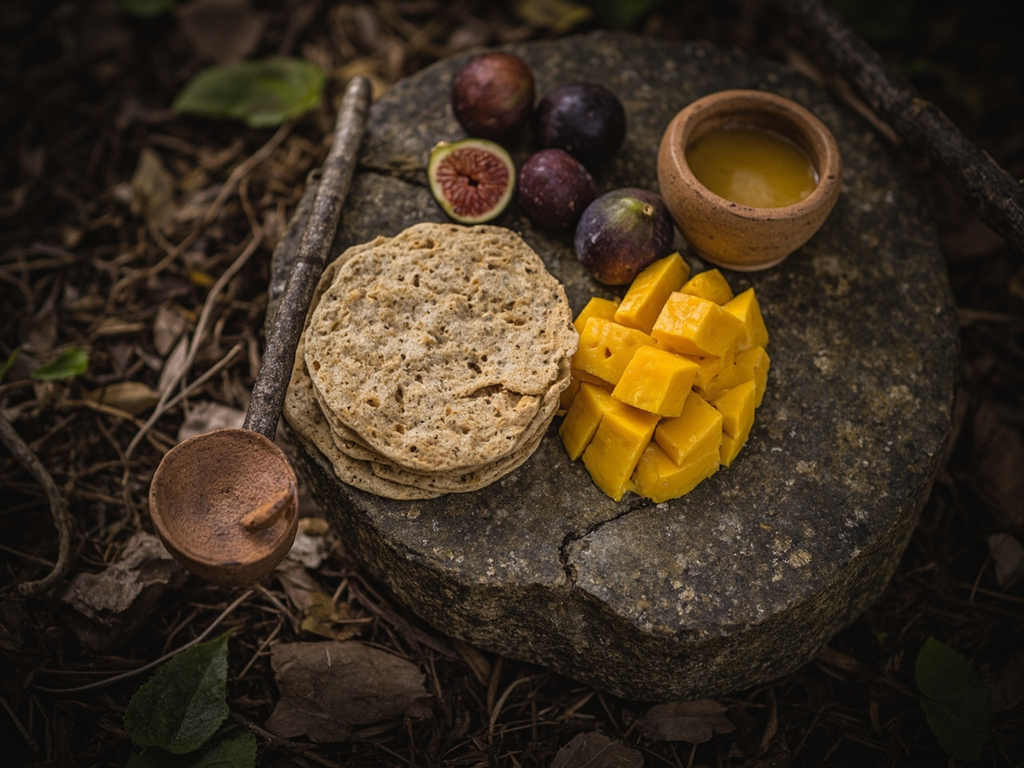
The contemporary twist : Serve as 'hoplite ration': warm flatbread rubbed with garlic, a drizzle of olive oil, olives and a shaving of sheep's cheese, all presented on a rolled cloth like a pack.
Sources : Aristophanes (mentions of maza in comedies) · A. Dalby, Siren Feasts: A History of Food and Gastronomy in Greece (1996)
Ares · Charactorium