 flip
flipBuccellatum, the Legionary's Marching Biscuit
Buccellatum, the Legionary's Marching Biscuit
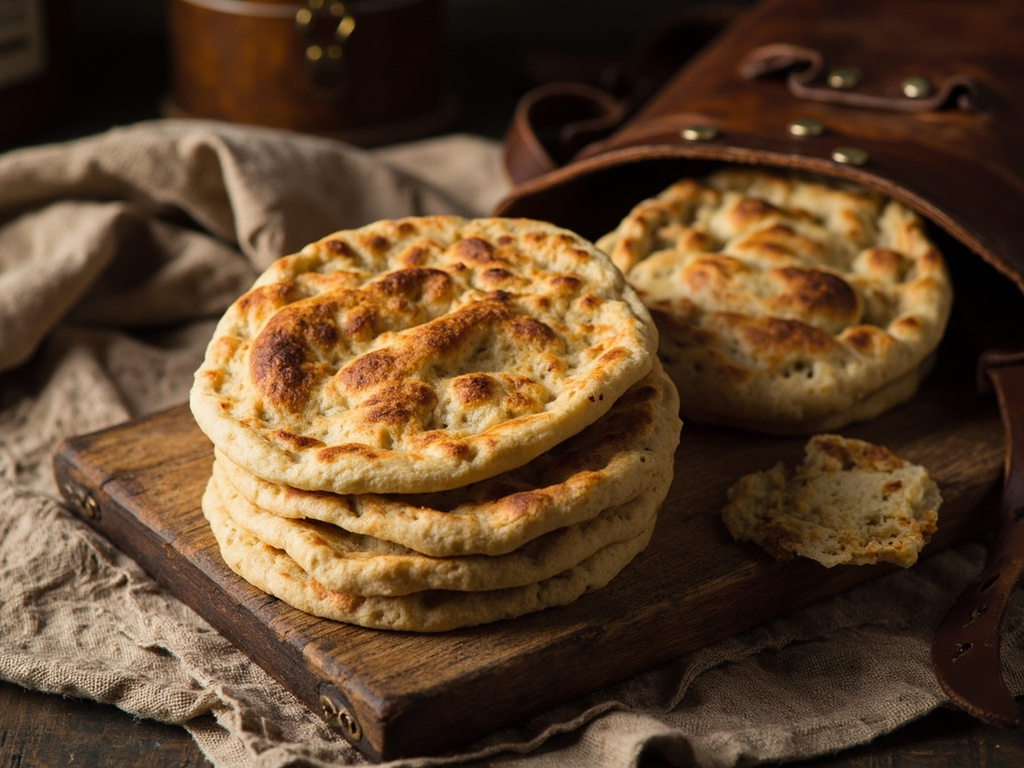
Why this dish? To reach the Catalaunian Plains in time and stop Attila in 451, Aetius's army had to march fast and far. Buccellatum, this twice-baked bread that keeps for weeks, was the food that made these forced marches possible: it was slipped into the saddlebag and off they went.
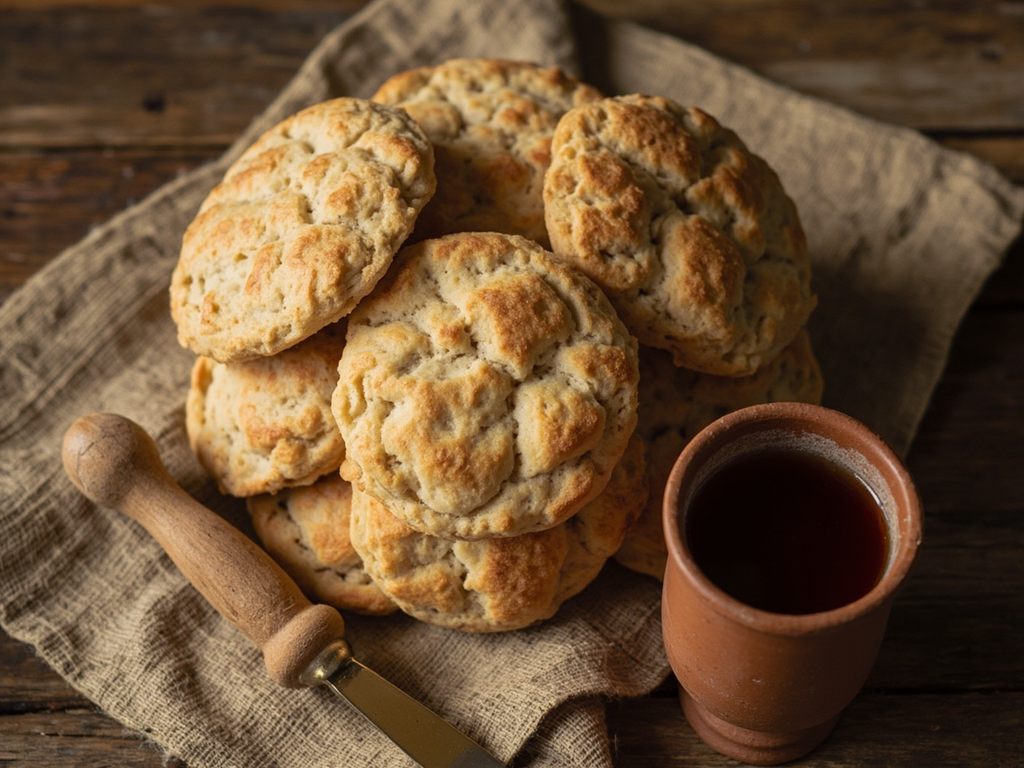
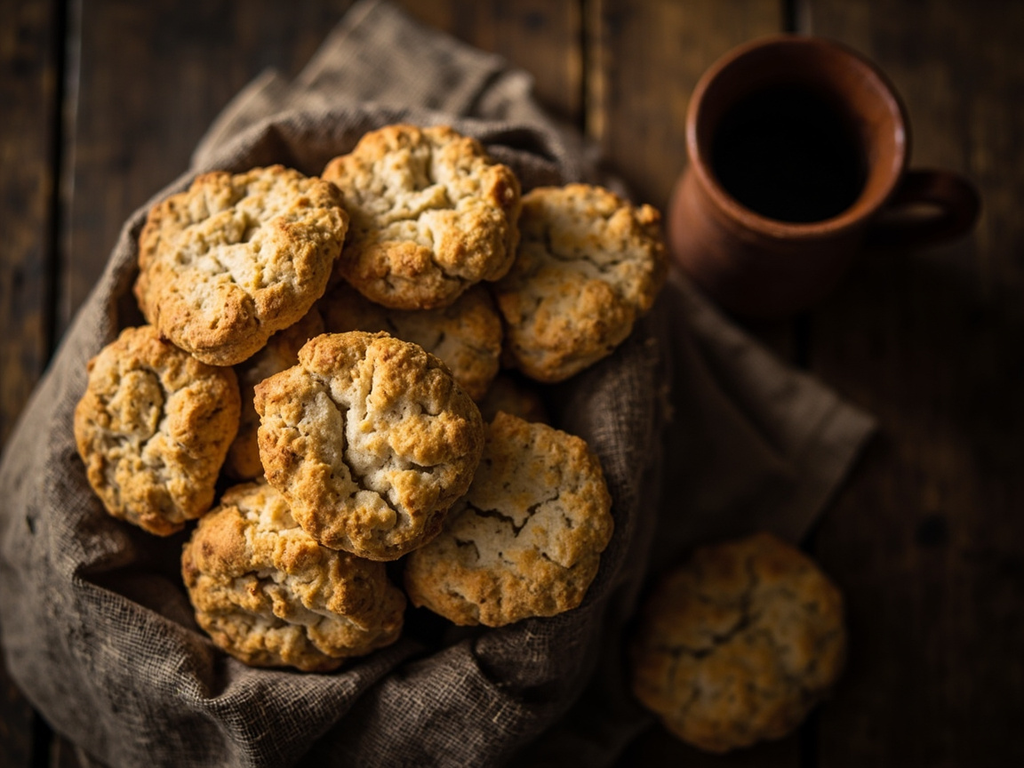
Buccellatum is the ancestor of ship's biscuit and soldier's hardtack: a wheat dough baked, dried, then re-baked until hard as stone. Unalterable, it could be transported without risk and softened in posca, broth, or a little water at mealtime.
An army marches on its stomach, and no stomach is filled with promises. Before racing toward Attila, I had the sacks loaded with buccellatum — that bread which is baked, sliced, and baked again until hard as a river pebble. It does not mold, it weighs little; soak it in your posca come evening and it becomes edible again. It is with this biscuit, not speeches, that you arrive on time to the battlefield.
- •Wheat flour (far) — as needed (base)
- •Water — enough to bind (dough)
- •Salt — a pinch (taste and preservation)
- •Sourdough (optional) — a little (slight rise)
Buccellatum, the Legionary's Marching Biscuit
Buccellatum is the ancestor of ship's biscuit and soldier's hardtack: a wheat dough baked, dried, then re-baked until hard as stone. Unalterable, it could be transported without risk and softened in posca, broth, or a little water at mealtime.
Why this dish? To reach the Catalaunian Plains in time and stop Attila in 451, Aetius's army had to march fast and far. Buccellatum, this twice-baked bread that keeps for weeks, was the food that made these forced marches possible: it was slipped into the saddlebag and off they went.
An army marches on its stomach, and no stomach is filled with promises. Before racing toward Attila, I had the sacks loaded with buccellatum — that bread which is baked, sliced, and baked again until hard as a river pebble. It does not mold, it weighs little; soak it in your posca come evening and it becomes edible again. It is with this biscuit, not speeches, that you arrive on time to the battlefield.
Ingredients (period version)
- Wheat flour (far) — as needed (base)
- Water — enough to bind (dough)
- Salt — a pinch (taste and preservation)
- Sourdough (optional) — a little (slight rise)
Ingredients
- Whole wheat flour (or semi-whole) — 250 g (base)
- Warm water — 130 ml (hydration)
- Salt — 5 g (taste and preservation)
- Olive oil — 1 tablespoon (optional) (structure)
Method
- Mix flour and salt, add water gradually and knead into a firm, homogeneous dough.
- Roll out the dough to 1 cm thickness and cut into rounds or squares.
- Bake at 200°C for about 20 minutes, until the biscuits are firm.
- Lower the oven to 120°C, turn the biscuits and dry for 40–60 minutes until hard and crisp.
- Cool completely: they keep for weeks in a dry cloth.
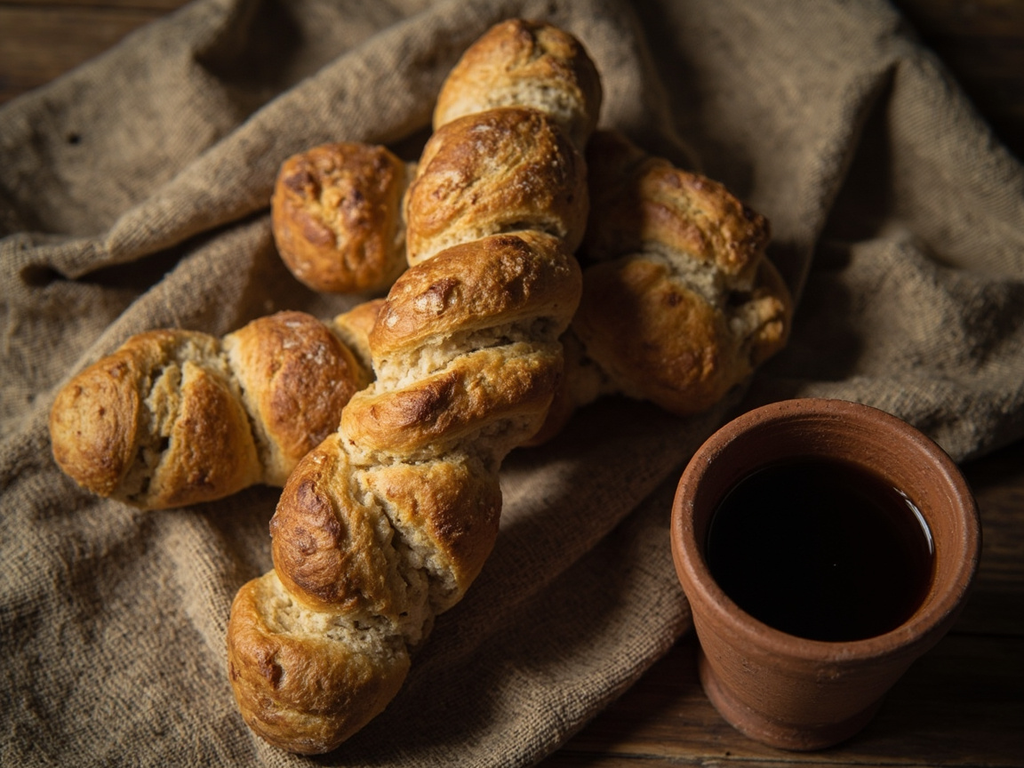
- To eat, soak for a few minutes in posca, hot broth, or water.
How it was made : The term buccellatum derives from buccella, "small mouthful." Late military sources (such as the Historia Augusta mentioning the soldier-emperor) describe the double baking that removes moisture and allows long preservation, essential for marches and sieges. It is the direct ancestor of panis nauticus (ship's biscuit) and the military hardtack that would feed armies into the modern era.
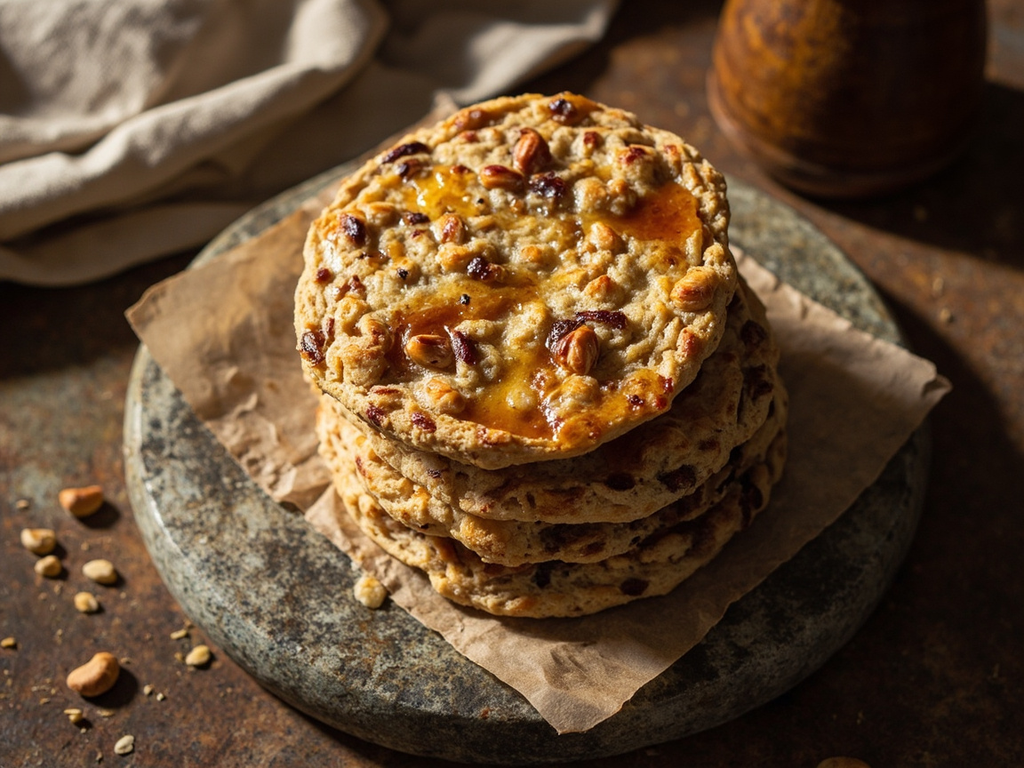
The contemporary twist : Broken into pieces and served as rustic croutons on a barley soup, or dipped in olive oil and garum as an appetizer: the "legionary's cracker."
Sources : Historia Augusta, Life of Pescennius Niger · Vegetius, De Re Militari (logistics and army rations)
Aetius · Charactorium