 flip
flipCheruscan mead (fermented honey)
Cheruscan mead (fermented honey)
Why this dish? During warrior assemblies and oath-taking, mead was drunk from the horn. It was in such gatherings that Arminius rallied the Germanic tribes against Rome: the drink sealed alliances before battle.
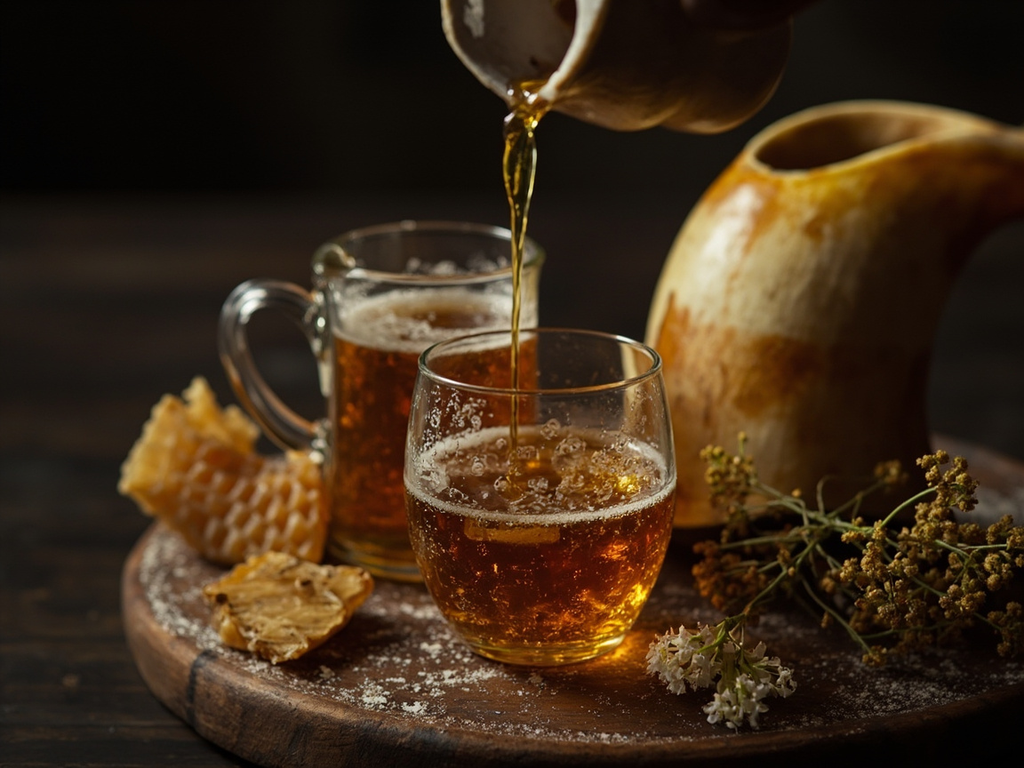
A golden beverage obtained by fermenting honey diluted in water. Sweet, slightly tart and sparkling, flavored with wild herbs. The noble drink of Germanic feasts and oaths.
Here, take this horn — no, you don't set it down, you drain it! It's our honey turned into gentle fire by time, the drink of oaths. The day I swore with the other chiefs to drive the Romans from our land, this is what we drank, all together, until our hearts beat as one. Drink, then, and let your word become as solid as ours.
- •Wild honey — a good share (fermentable sugar)
- •Spring water — three parts (dilution)
- •Aromatic herbs (yarrow, elderflower) — a handful (flavor, wild starter)
Cheruscan mead (fermented honey)
A golden beverage obtained by fermenting honey diluted in water. Sweet, slightly tart and sparkling, flavored with wild herbs. The noble drink of Germanic feasts and oaths.
Why this dish? During warrior assemblies and oath-taking, mead was drunk from the horn. It was in such gatherings that Arminius rallied the Germanic tribes against Rome: the drink sealed alliances before battle.
Here, take this horn — no, you don't set it down, you drain it! It's our honey turned into gentle fire by time, the drink of oaths. The day I swore with the other chiefs to drive the Romans from our land, this is what we drank, all together, until our hearts beat as one. Drink, then, and let your word become as solid as ours.
Ingredients (period version)
- Wild honey — a good share (fermentable sugar)
- Spring water — three parts (dilution)
- Aromatic herbs (yarrow, elderflower) — a handful (flavor, wild starter)
Ingredients
- Honey — 1 kg (fermentable sugar)
- Non-chlorinated water — 3 liters (dilution)
- Yeast (mead or wine yeast) — 1 packet (controlled fermentation)
- Elderflowers or a slice of organic lemon — 1 handful / 1 slice (flavor and acidity)
Method
- Dissolve the honey in warm water (never boiling) until homogeneous.
- Let cool to room temperature, pour into a clean demijohn, add elderflowers or lemon slice.
- Add yeast, fit an airlock, and ferment in a dark place for 3 to 6 weeks.
- When fermentation slows (no more bubbles), rack into clean bottles, leaving sediment behind.
- Age in a cool place for a few weeks before serving well chilled. (Alcoholic beverage: for adults only.)
How it was made : Mead is one of the oldest fermented beverages in Northern Europe, predating barley beer. Among the Germanic peoples, lacking vineyards (wine was a luxury imported from Rome), fermented honey and barley beer were daily and ceremonial drinks. Fermentation occurred naturally thanks to wild yeasts on honey and in the air. The drinking horn, often decorated, was a prestige object.
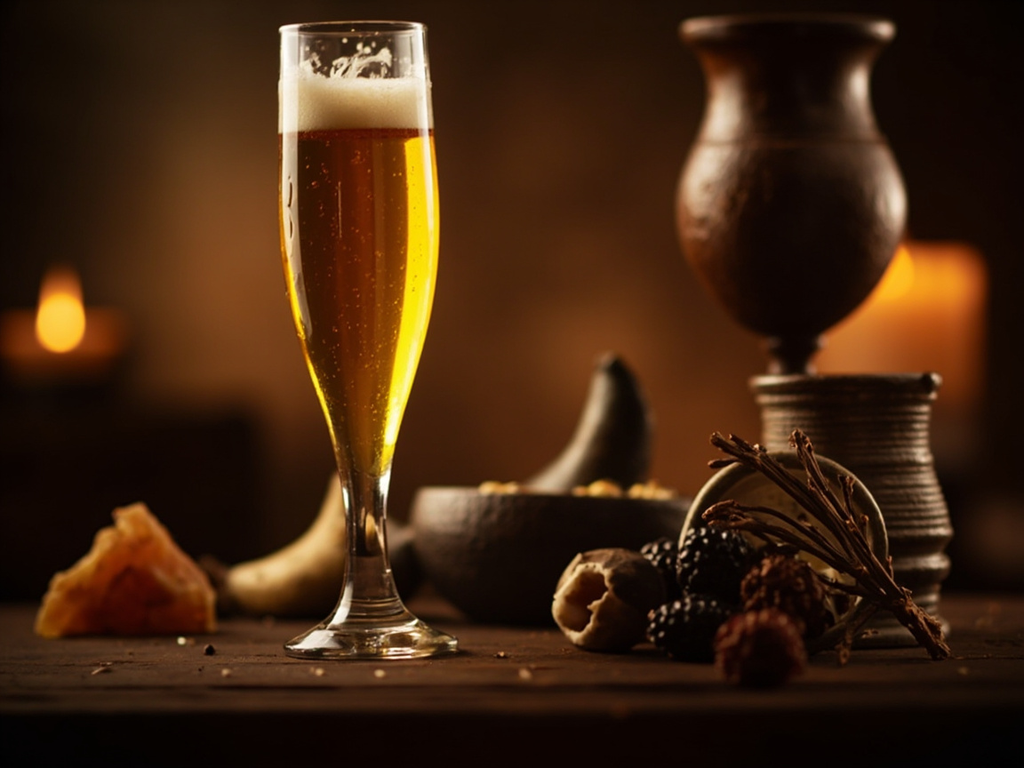
The contemporary twist : Served chilled and slightly sparkling in a horn (or a stemmed glass) with an elderflower: the "mead" making a comeback in craft breweries, rediscovered at its source.
Sources : Tacitus, Germania, ch. 23 · Residue analyses of fermented beverages on Iron Age Nordic vessels
Arminius · Charactorium