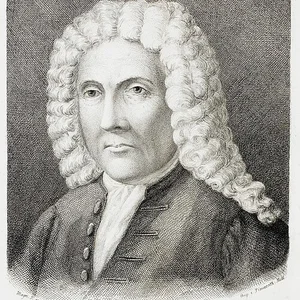

Árni Magnússon was an Icelandic scholar and philologist who devoted his life to gathering and saving Iceland's medieval manuscripts. His collection, bequeathed to the University of Copenhagen, is the principal source of knowledge about the sagas and Old Norse literature.
Árni Magnússon(1663 — 1730)
Árni Magnússon
Islande
5 min read
Frequently asked questions
Key Facts
- Born in 1663 in Kvennabrekka, Iceland
- Became professor of Danish antiquities at the University of Copenhagen in 1701
- Conducted a great census of Iceland's farms with Páll Vídalín between 1702 and 1712
- Assembled the largest collection of medieval Icelandic manuscripts (sagas, Eddas)
- Part of his collection was destroyed in the Copenhagen fire of 1728; he died in 1730
Works & Achievements
A set of several thousand medieval Icelandic manuscripts and fragments, the main source of Old Norse literature, inscribed in UNESCO's Memory of the World Register.
A monumental census of the lands and inhabitants of Iceland, carried out with Páll Vídalín, an invaluable document for the country's economic and social history.
Preservation of the key manuscript containing the Scandinavian mythological poems, without which much of Norse mythology would be unknown.
A bequest and organization intended to preserve and edit his collection for the long term, giving rise to a philological tradition that is still alive today.
Meticulous inventories and critical notes laying the foundations for the modern scholarly study of medieval Scandinavian texts.
Anecdotes
Árni Magnússon traveled across Iceland for ten years (1702-1712), tasked by the King of Denmark with surveying the land and its inhabitants. Everywhere he went, he bought, traded, or copied the old manuscripts he found, sometimes forgotten in the most remote farms.
It is said that Árni discovered sheets of precious parchment being used by peasants to line clothing or make sewing patterns: he patiently recovered them to reconstruct sagas mutilated by time.
In 1728, a terrible fire ravaged Copenhagen. Árni managed to save most of his manuscripts by evacuating them, but part of his printed library and certain documents were lost: this tragedy marked him deeply until his death two years later.
Árni married Mette Fischer, a wealthy Danish widow much older than himself: this marriage gave him a financial ease that allowed him, in part, to fund his consuming passion for collecting old books.
Upon his death in 1730, Árni bequeathed his entire collection to the University of Copenhagen. This body of work, known as the “Arnamagnæan Collection,” is today inscribed on UNESCO's Memory of the World register and remains the principal source of Old Norse literature.
Primary Sources
A 13th-century manuscript containing the Scandinavian mythological and heroic poems, a centerpiece of the collections gathered and studied by Árni Magnússon.
A detailed survey of the farms, lands and inhabitants of Iceland, drawn up by royal order to assess the country's resources.
Letters in which he describes his manuscript acquisitions and his exchanges with other Scandinavian scholars.
Key Places
Region of western Iceland where Árni Magnússon was born in 1663 and spent his childhood in a family of church officials.
Institution where Árni studied, taught as a professor, and to which he bequeathed his collection of manuscripts.
Capital of the Kingdom of Denmark where Árni spent most of his adult life and died in 1730; a city struck by the great fire of 1728.
Former episcopal seat and great intellectual center of Iceland, where Árni gathered ancient documents and manuscripts.
Historic site of the Alþingi, Iceland's national assembly, the heart of a collective memory whose written traces Árni sought to preserve.
Icelandic institute that today holds a large part of the repatriated collection and bears the scholar's name.
Typical Objects

Sheets of calfskin or sheepskin on which medieval sagas and poems were copied. Árni gathered thousands of fragments of them across Iceland.

Copying tools used by scribes and scholars to transcribe ancient texts. Árni and his assistants made constant use of them.

Large handwritten volumes recording the farms, lands, and populations of Iceland. An administrative tool used to assess the island's resources for the Danish crown.

Sturdy crates used to carry and protect the manuscripts during their shipment from Iceland to Copenhagen by boat.

A wax impression authenticating letters and official documents exchanged between Árni, the royal administration, and his scholarly correspondents.

An essential source of light for reading and copying manuscripts during the long Scandinavian winter nights.
School Curriculum
Vocabulary & Tags
Key Vocabulary
Daily Life
Morning
Árni often began his day by reading his correspondence and examining recently acquired manuscripts. In Copenhagen, he would go to the royal archives or to the university where he taught.
Afternoon
The afternoon was devoted to scholarly work: comparing copies, deciphering ancient scripts, organizing his collections and supervising the copyists. During his years in Iceland, he rode from farm to farm to survey lands and manuscripts.
Evening
In the evening, by the light of tallow candles, he continued his reading and the writing of his notes. He also kept up learned exchanges with other antiquarians and collectors throughout the kingdom.
Food
Like the well-off residents of Copenhagen, he ate rye bread, fish, salted meat and beer. In Iceland, the diet relied mainly on dried fish, mutton and dairy products.
Clothing
Árni wore the plain, dark clothes of an early eighteenth-century scholar and civil servant: a woolen coat, a linen shirt, stockings and buckled shoes, and sometimes a wig as the custom of the time required.
Housing
He lived in a middle-class house in Copenhagen that held his vast library. While on assignment, he lodged in Icelandic parsonages and farms of rough comfort, isolated by the harsh winters.
Historical Timeline
Period Vocabulary
Liens externes & ressources
Références
Œuvres
Collection arnamagnéenne (Arnamagnæan Collection)
constituée jusqu'en 1730
Jarðabók (Cadastre d'Islande)
1702-1714
Sauvegarde du Codex Regius des Eddas
début XVIIIe siècle
Fondation de la Commission arnamagnéenne
instituée par testament (1730)
Travaux de catalogage et de philologie
fin XVIIe - début XVIIIe siècle