 flip
flipShukto — bitter vegetable medley with milk
Shukto — bitter vegetable medley with milk
Why this dish? In a Bengali household like Asima's, the midday meal always began with shukto, this bitter dish served first on the rice. The bitterness of the bitter gourd (karela) is considered good for digestion — a principle that the medicinal plant chemist would not have denied.
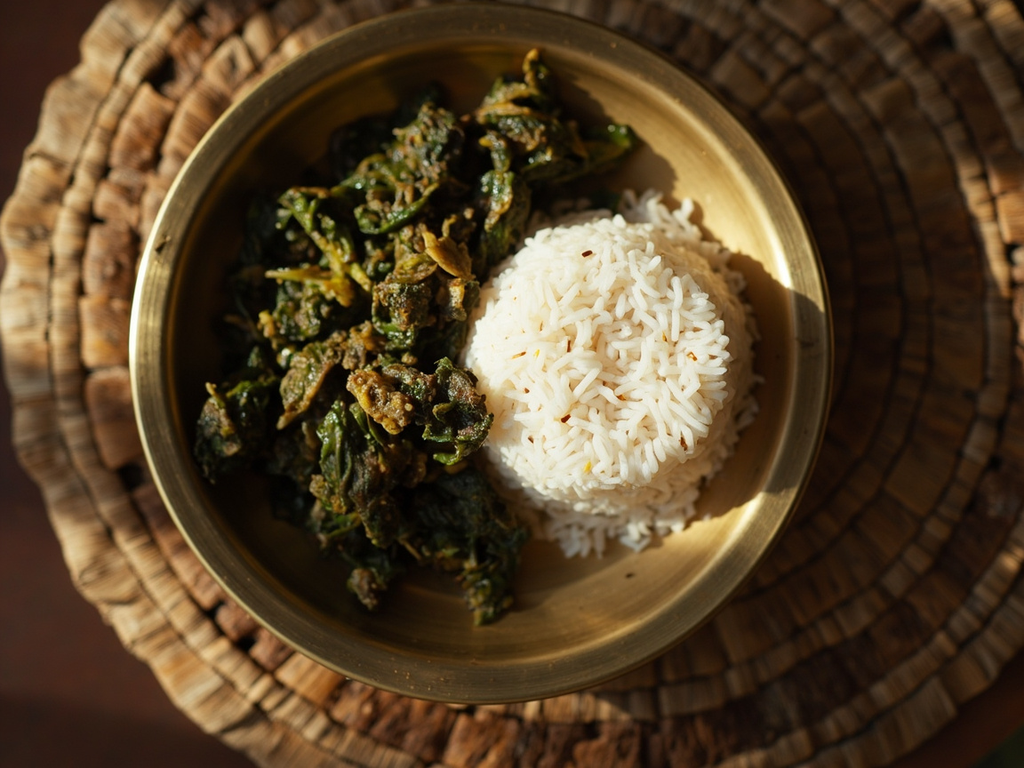
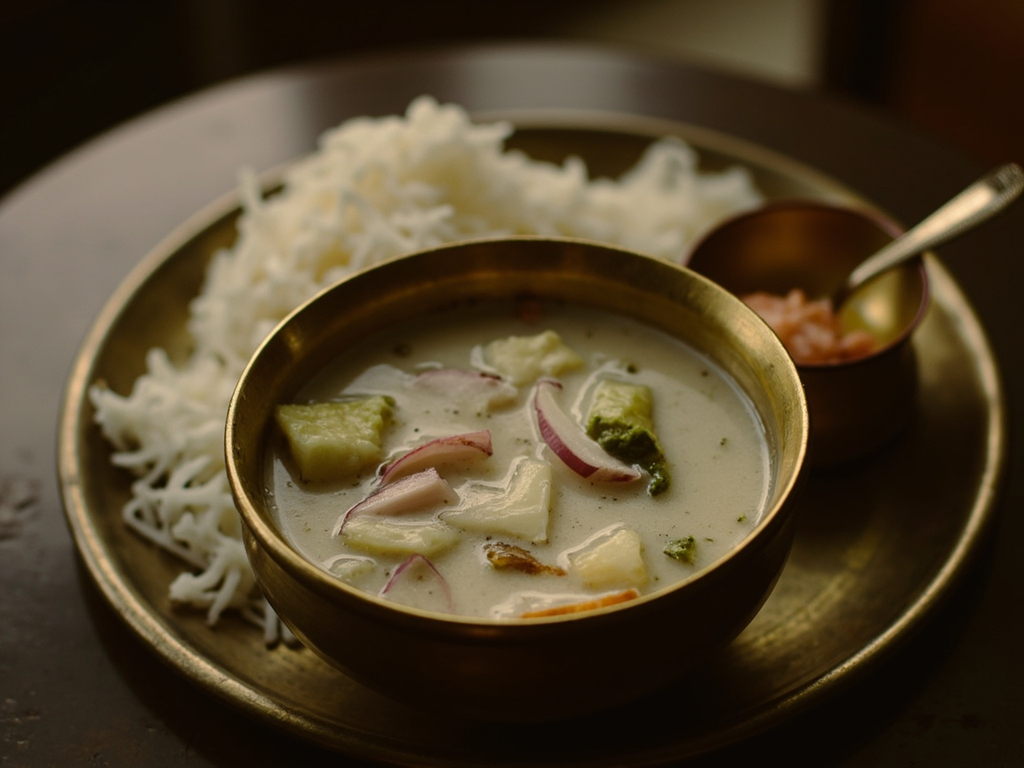
A bittersweet mix of vegetables (bitter gourd, eggplant, plantain, radish) simmered in a light broth bound with milk and perfumed with ginger and panch phoron. It is eaten at the very start of the meal, warm, on white rice.
You see, at home, my mother would not tolerate anyone touching the fish before eating her shukto. One begins with the bitter, she said, for it is what awakens the belly — and I, later in my laboratory, understood that she was right without knowing it: the bitter gourd carries its virtues in its very bitterness. First crackle your five spices in the oil, let the radish and eggplant melt slowly, and add the milk only at the end, over a gentle flame. It is a humble dish, but it is by it that a true Bengali meal must open.
- •Bitter gourd (karela) — one, sliced into rounds (signature bitterness)
- •Eggplant and plantain — a little of each (body of the dish)
- •White radish (mooli) — a few sticks (sweetness)
- •Panch phoron — a pinch (starting spice)
- •Fresh grated ginger — a piece (aromatic warmth)
- •Milk — a ladleful (mild binder)
- •Mustard oil — as needed (fat)
Shukto — bitter vegetable medley with milk
A bittersweet mix of vegetables (bitter gourd, eggplant, plantain, radish) simmered in a light broth bound with milk and perfumed with ginger and panch phoron. It is eaten at the very start of the meal, warm, on white rice.
Why this dish? In a Bengali household like Asima's, the midday meal always began with shukto, this bitter dish served first on the rice. The bitterness of the bitter gourd (karela) is considered good for digestion — a principle that the medicinal plant chemist would not have denied.
You see, at home, my mother would not tolerate anyone touching the fish before eating her shukto. One begins with the bitter, she said, for it is what awakens the belly — and I, later in my laboratory, understood that she was right without knowing it: the bitter gourd carries its virtues in its very bitterness. First crackle your five spices in the oil, let the radish and eggplant melt slowly, and add the milk only at the end, over a gentle flame. It is a humble dish, but it is by it that a true Bengali meal must open.
Ingredients (period version)
- Bitter gourd (karela) — one, sliced into rounds (signature bitterness)
- Eggplant and plantain — a little of each (body of the dish)
- White radish (mooli) — a few sticks (sweetness)
- Panch phoron — a pinch (starting spice)
- Fresh grated ginger — a piece (aromatic warmth)
- Milk — a ladleful (mild binder)
- Mustard oil — as needed (fat)
Ingredients
- Bitter gourd (karela) — 1 medium, thinly sliced into rounds (signature bitterness)
- Eggplant — 1 small, cubed (body of the dish)
- Green plantain — 1/2, cut into chunks (texture)
- White radish — 1/2, cut into sticks (sweetness)
- Panch phoron — 1 tsp (starting spice)
- Fresh ginger — 1 tsp grated (warmth)
- Whole milk — 100 ml (mild binder)
- Mustard oil (or neutral oil) — 2 tbsp (fat)
- Salt — to taste (seasoning)
Method
- Fry the bitter gourd rounds separately in a little oil until golden, then set aside.
- In the same pan, crackle the panch phoron in hot oil for a few seconds.
- Add radish, eggplant, and plantain, salt, and sauté for 5 minutes.
- Pour in a glass of water, cover, and simmer until the vegetables are tender.
- Stir in the grated ginger and reserved bitter gourd.
- Lower the heat, add the milk, and warm gently without boiling. Serve warm over rice.
How it was made : Shukto has long been attested in Bengali cuisine; it was traditionally served first, on the rice, following an Ayurvedic logic where the bitter prepares digestion. Older versions sometimes used a paste of mustard or poppy seeds to thicken, rather than milk.
The contemporary twist : Serve shukto in small warm verrines as an amuse-bouche, to introduce the disconcerting idea of a 'welcome bitter'.
Sources : Chitrita Banerji, *Life and Food in Bengal* · Pranati Sen Gupta, *The Art of Indian Cuisine*
Asima Chatterjee · Charactorium