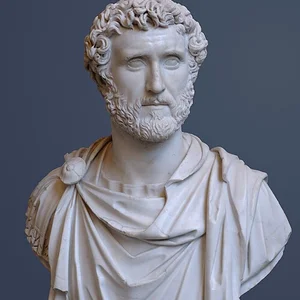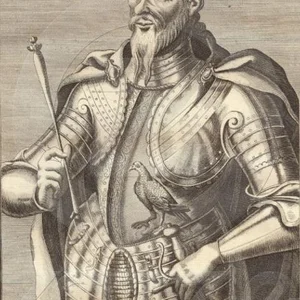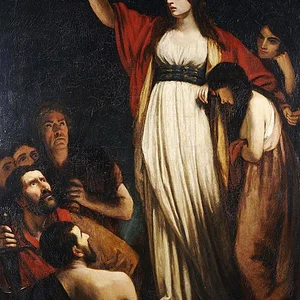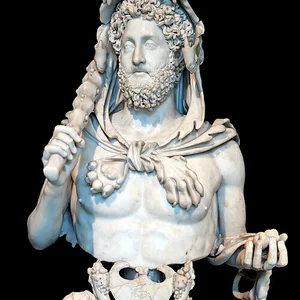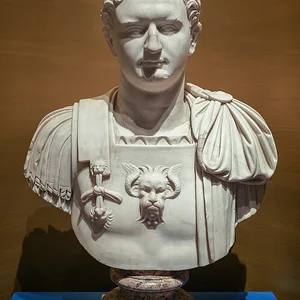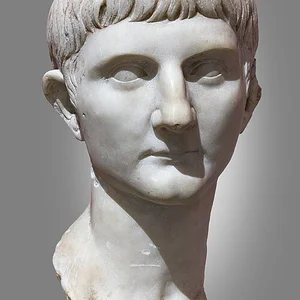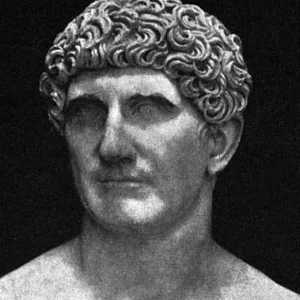

A Roman general of the 1st century BC, Mark Antony was one of the triumvirs who governed Rome after Caesar's assassination. Ally then rival of Octavian, he embodies the civil wars that tore the Roman Republic apart in its final years.
Mark Antony(82 av. J.-C. — 29 av. J.-C.)
Mark Antony
Rome antique
8 min read
Frequently asked questions
Key Facts
- 43 BC: formation of the Second Triumvirate with Octavian and Lepidus
- 42 BC: victory at the Battle of Philippi against Caesar's assassins
- 37–32 BC: alliances and military campaigns in the East, notably against the Parthians
- 31 BC: naval defeat at the Battle of Actium against Octavian
- 29 BC: death in Alexandria following the fall of his ally Cleopatra
Works & Achievements
Speech delivered at the Roman Forum during Caesar's funeral, in which Antony skillfully turned popular opinion against the assassins. This speech, reconstructed by Plutarch and Appian, is one of the most effective political acts of Roman Antiquity.
Diplomatic agreement reached between Antony, Octavian, and Lepidus dividing the Roman world into spheres of influence. This treaty, sealed by Antony's marriage to Octavia, attests to Antony's skills as a negotiator and defined Roman geopolitics for a decade.
Ceremony during which Antony solemnly distributed Roman territories to Cleopatra and their children, proclaiming Caesarion (son of Caesar and Cleopatra) king of kings. This act, presented by Octavian as a betrayal of Rome, was one of the main pretexts for the final civil war.
Antony's military service as Caesar's legate during the Gallic Wars, where he gained his experience as a commander and earned the trust of the great dictator. He proved his qualities as a cavalry commander and military administrator.
Large-scale military expedition led by Antony to avenge the Roman defeat at Carrhae (53 BC). Despite initial successes, the campaign ended in a costly failure, weakening Antony's prestige relative to Octavian.
Anecdotes
During the funeral of Julius Caesar in 44 BC, Mark Antony delivered a speech before the Roman people while brandishing the bloodstained toga of the assassinated dictator. This theatrical gesture triggered a popular riot against the conspirators and shifted public opinion within minutes, forcing Brutus and Cassius to flee Rome.
Mark Antony was notorious for his excesses at the table and with wine. According to Cicero, he once came to the Senate in a state of drunkenness. This reputation for debauchery was skillfully exploited by his political enemies, particularly Octavian, to discredit him in the eyes of Rome's more austere citizens.
The meeting between Mark Antony and Cleopatra VII in 41 BC at Tarsus was staged with extraordinary splendor: the Queen of Egypt arrived on a ship with purple sails and golden oars, accompanied by music and perfumes spread upon the waters. Antony, captivated, invited her to dinner; she accepted, but the following day it was she who invited him — reminding him that she was a sovereign, not a vassal.
At the Battle of Actium in 31 BC, as the fleet of Antony and Cleopatra was in difficulty, Cleopatra ordered her sixty ships to withdraw from the battle and flee toward Egypt. Antony, seeing the queen depart, also abandoned the fight and followed her, leaving his troops without leadership. This act was interpreted by his soldiers as a betrayal and hastened his final defeat.
After Octavian's victory, Mark Antony attempted to take his own life by falling on his sword, believing Cleopatra to be dead. Gravely wounded, he learned she was still alive and was lifted up to her hiding place to die in her arms in 30 BC. Cleopatra took her own life shortly after, refusing to be displayed as a trophy in Octavian's triumph in Rome.
Primary Sources
Antony, above all men, had an extravagant passion for Cleopatra, which awakened and inflamed desires that had long lain hidden and dormant within him, and which smothered and destroyed the last faint traces of good qualities that might still have held out.
What a house you have bought! What a garden! What furnishings! What silverware! And all of it taken from the spoils of those you had put to death!
Antony had Caesar's will read to the people and displayed his blood-stained toga by spreading it on a spear, so that the people, seized with pity and anger, began to search for the murderers.
Antony, having seen Cleopatra take flight, forgot everything, betrayed himself and his soldiers, and rushed off in pursuit of her on a quinquereme.
Often enough have our fields been fattened with Roman blood, and heaven has witnessed our impious crimes.
Key Places
Political and civic center of the Roman Republic, where Antony delivered the famous funeral oration for Caesar that turned public opinion against the conspirators.
Capital of the Ptolemaic kingdom, residence of Cleopatra VII, where Antony spent the last years of his life and where he died by suicide in 30 BC.
Cape on the Greek coast where the decisive naval battle took place in September 31 BC, pitting the fleet of Antony and Cleopatra against that of Octavian commanded by Agrippa.
Site of the double battle (October 42 BC) where Antony and Octavian defeated the republican forces of Brutus and Cassius, thereby avenging the death of Caesar.
City of Cilicia where Antony and Cleopatra met for the first time in 41 BC, a meeting that would seal their shared fate and the destiny of the Roman Republic.
Typical Objects
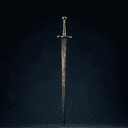
A short, double-edged sword and the primary weapon of Roman legionaries. Mark Antony, a seasoned general, carried the gladius as a symbol of his military authority throughout his many campaigns.
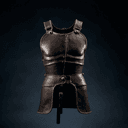
A bronze breastplate cast in the shape of a muscular torso, worn by Roman officers and generals. Antony wore one during military ceremonies and battles to assert his rank as commander.
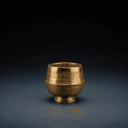
A ritual bowl used for libations to the gods as well as for drinking at banquets. The legendary feasts of Antony and Cleopatra made lavish use of precious tableware, a symbol of their eastern opulence.

A ring engraved with a personal seal used to authenticate official documents. Antony used his seal to sign military orders, diplomatic treaties, and decrees across the eastern provinces.

A common writing surface in Rome, made of small wooden boards coated in wax on which one wrote with a stylus. Antony used them for his military and political correspondence with his allies.
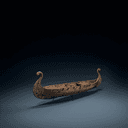
A combat galley with multiple banks of oars, forming the naval backbone of ancient armies. Antony's fleet, crushed at the Battle of Actium, included powerful triremes that nonetheless proved no match for Agrippa's tactics.
School Curriculum
Vocabulary & Tags
Key Vocabulary
Daily Life
Morning
Mark Antony rose early, as Roman military discipline required. He began his day with ablutions, then received his officers and secretaries to issue the day's orders. On campaign, he spent the first hours inspecting the legions and receiving reports from his commanders.
Afternoon
Afternoons were devoted to political and military affairs: audiences with ambassadors, reading and dictating correspondence, administrative decisions for the provinces under his control. In peacetime, he might attend the games or train in fencing and horsemanship, a sport he practiced with great skill.
Evening
Antony's evenings were renowned for their splendor, especially in Alexandria: lavish banquets gathering generals, philosophers, and courtiers, accompanied by Greek and Italian wines. With Cleopatra, he had founded a brotherhood called 'The Inimitables', dedicated to the pursuit of the most refined pleasures.
Food
Like any Roman aristocrat, Antony consumed bread, legumes, olives, cheese, and meat at ordinary meals. During his time in the East, his diet was enriched with Egyptian and Hellenistic dishes: fish from the Nile, oriental spices, exotic fruits, and quality wines, reflecting his taste for luxury.
Clothing
In civilian life, Antony wore the toga praetexta with a purple border, a mark of his dignity as magistrate and triumvir. On campaign, he donned a bronze muscled cuirass, the paludamentum (the crimson red military cloak of generals), and carried his gladius. He was sometimes criticized for wearing overly flamboyant clothing or garments of Eastern inspiration.
Housing
In Rome, Antony resided in a luxurious domus on the Palatine Hill, adorned with frescoes, mosaics, and statues. In Alexandria, he shared with Cleopatra the great royal palace by the sea, whose splendor and gardens were celebrated throughout the Mediterranean world. On campaign, he lodged in a richly appointed general's tent, yet kept it accessible to his soldiers.
Historical Timeline
Period Vocabulary
Visual Style
Un style mêlant le réalisme austère de l'art romain républicain tardif aux fastes colorés de l'art hellénistique et égyptien ptolémaïque, avec des scènes de batailles, de Forum et de banquets somptueux.
Sound Ambience
Un mélange sonore entre la tumultueuse Rome républicaine — foules, soldats, discours — et l'Orient fastueux des cours alexandrines, avec les bruits de la mer et des batailles navales.
Liens externes & ressources
Références
Œuvres
Discours funèbre de Jules César
15 mars 44 av. J.-C.
Traité de Brindes
40 av. J.-C.
Donations d'Alexandrie
34 av. J.-C.
Campagne de Gaule sous César
54-50 av. J.-C.
Campagne contre les Parthes
36 av. J.-C.