 flip
flipQuince paste
Quince paste
Why this dish? Prévost experienced exile and long travels—Holland, wandering, flight. Cotignac, a dense quince paste that keeps for months without spoiling, is exactly the kind of keepable sweet that one carries or holds in an abbey pantry for long seasons. Sweet and fragrant, it endures time.
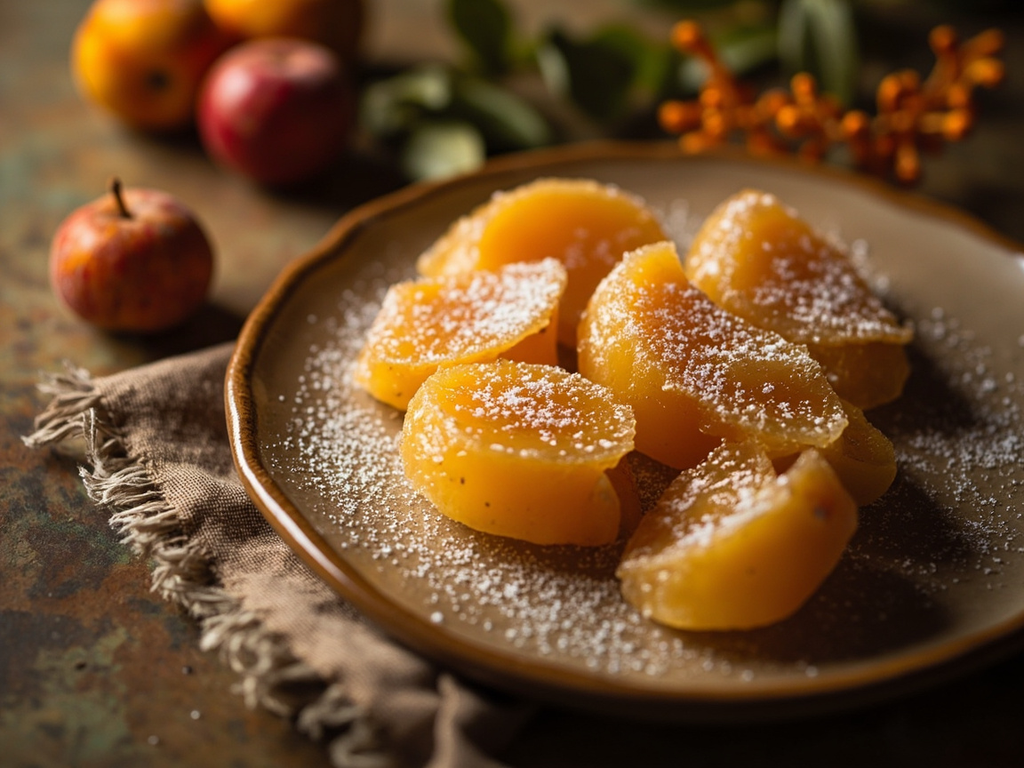
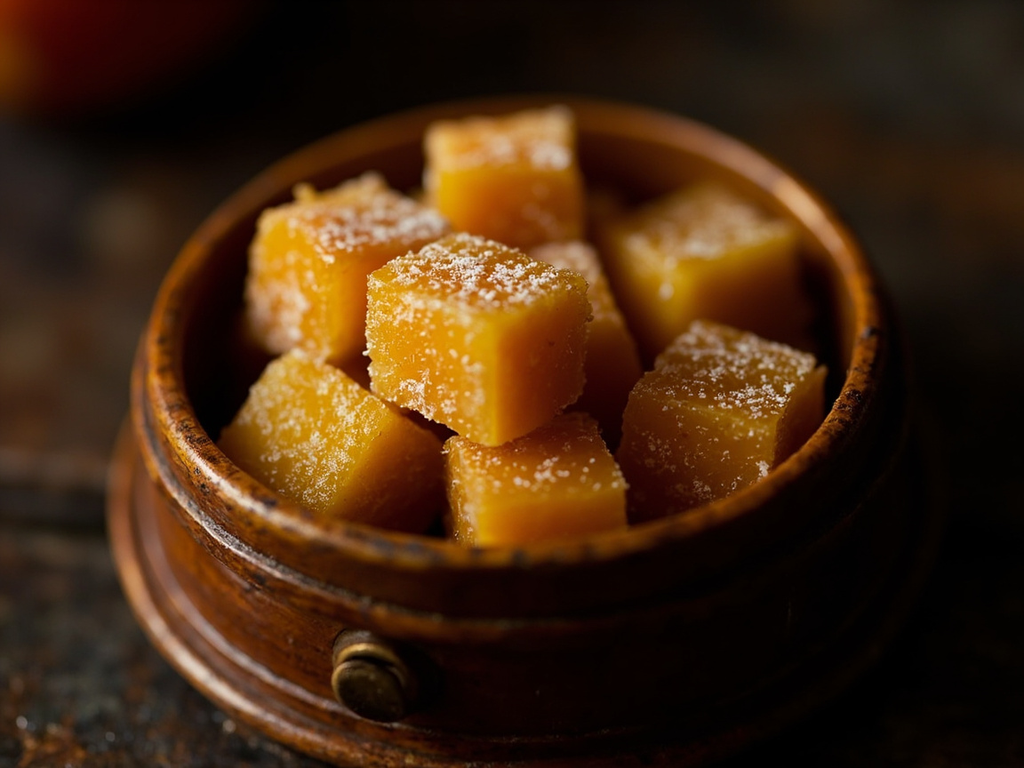
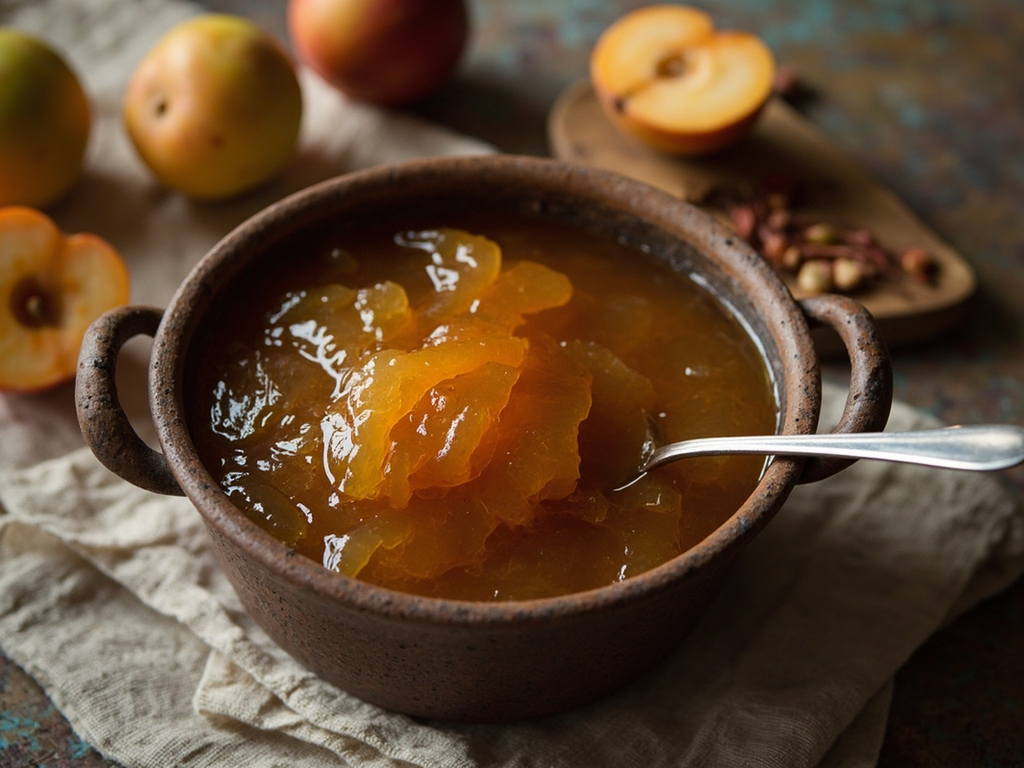
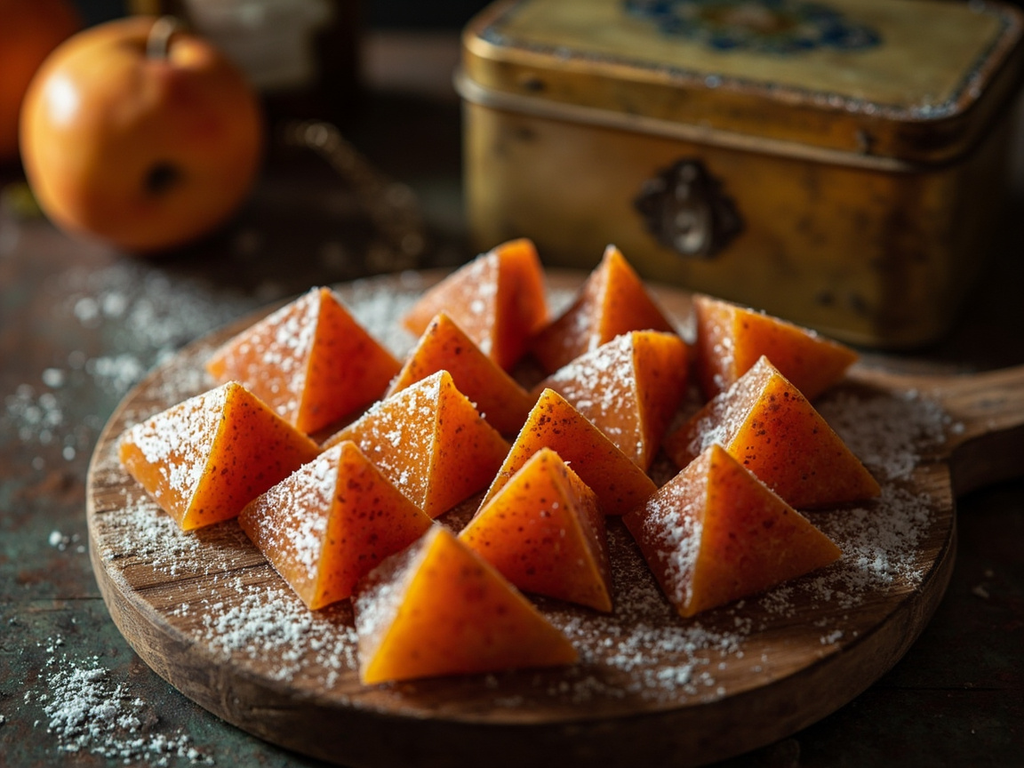
A firm, translucent fruit paste made from quinces, sugar, and a little verjuice, dried in tablets or small pots. It keeps for a long time and is enjoyed in thin slices, sweet and tangy.
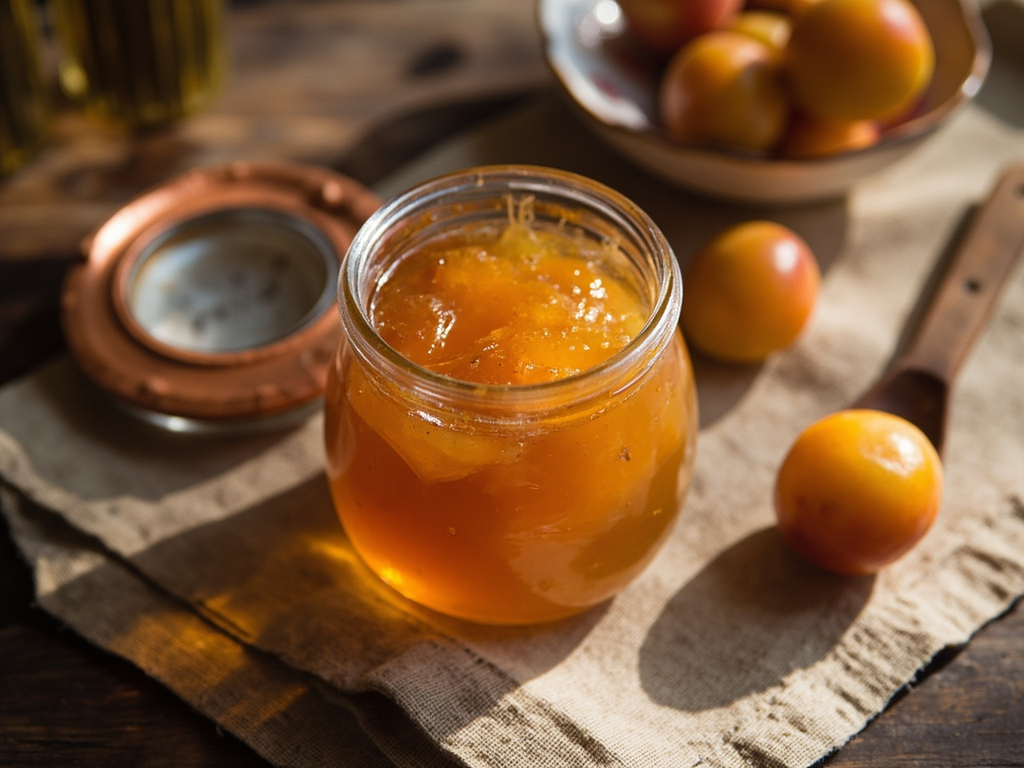
Here is a sweetmeat that fears neither travel nor the long winter months, and I know something of that, I who have roamed so many roads and borders. One cooks the quince with its weight of sugar until the paste pulls away from the bottom of the cauldron and takes on a beautiful glowing amber color; then one pours it into small molds and lets it dry. A dash of verjuice, believe me, lifts its fragrance better than anything. Kept in a dry place, it will wait for you patiently, faithful as an old book.
- •Ripe quinces — a good quantity (base fruit)
- •Sugar — equal weight to pulp (preservation and sweetness)
- •Verjuice — a dash (signature acidity)
- •Water — as needed to cook quinces (cooking)
Quince paste
A firm, translucent fruit paste made from quinces, sugar, and a little verjuice, dried in tablets or small pots. It keeps for a long time and is enjoyed in thin slices, sweet and tangy.
Why this dish? Prévost experienced exile and long travels—Holland, wandering, flight. Cotignac, a dense quince paste that keeps for months without spoiling, is exactly the kind of keepable sweet that one carries or holds in an abbey pantry for long seasons. Sweet and fragrant, it endures time.
Here is a sweetmeat that fears neither travel nor the long winter months, and I know something of that, I who have roamed so many roads and borders. One cooks the quince with its weight of sugar until the paste pulls away from the bottom of the cauldron and takes on a beautiful glowing amber color; then one pours it into small molds and lets it dry. A dash of verjuice, believe me, lifts its fragrance better than anything. Kept in a dry place, it will wait for you patiently, faithful as an old book.
Ingredients (period version)
- Ripe quinces — a good quantity (base fruit)
- Sugar — equal weight to pulp (preservation and sweetness)
- Verjuice — a dash (signature acidity)
- Water — as needed to cook quinces (cooking)
Ingredients
- Quinces — 1 kg (base fruit)
- Sugar — equal weight to cooked pulp (about 600 g) (preservation)
- Verjuice (or lemon juice) — 1 tbsp (acidity)
- Water — to cover quinces (initial cooking)
Method
- Wash the quinces, cut into quarters (with skin and seeds, rich in pectin) and cook in water until tender.
- Drain, remove cores and seeds, pass the flesh through a sieve or blender to obtain a smooth pulp; weigh it.
- Return the pulp with its weight of sugar and the verjuice, cook over low heat, stirring constantly, for 30 to 45 minutes until the paste pulls away from the bottom and darkens.
- Spread the paste 1.5 cm thick in a lined mold or small molds.
- Let dry for several days in a dry place; cut into diamonds or unmold. Keeps for weeks away from humidity.
How it was made : Cotignac (especially the famous one from Orléans, once presented in small round spruce boxes) is an ancient confection, offered to kings and kept in pantries. Cooking the fruit with its weight of sugar ensured long preservation before refrigeration. Quinces, rich in pectin, naturally set into a firm paste.
The contemporary twist : Cut into thin batons to accompany aged goat cheese, nodding to the cheese course—another sweet allowed at the abbot's table.
Abbé Prévost · Charactorium