 flip
flipBarley flatbread from the hearth of Breiðablik
Barley flatbread from the hearth of Breiðablik
Why this dish? Breiðablik, the radiant dwelling of Baldr, is said to be the purest of Asgard's halls. Barley flatbread baked on the hot stone of the central hearth was the staple of every Norse household: it is the daily bread that would have graced the bright table of the god of light.
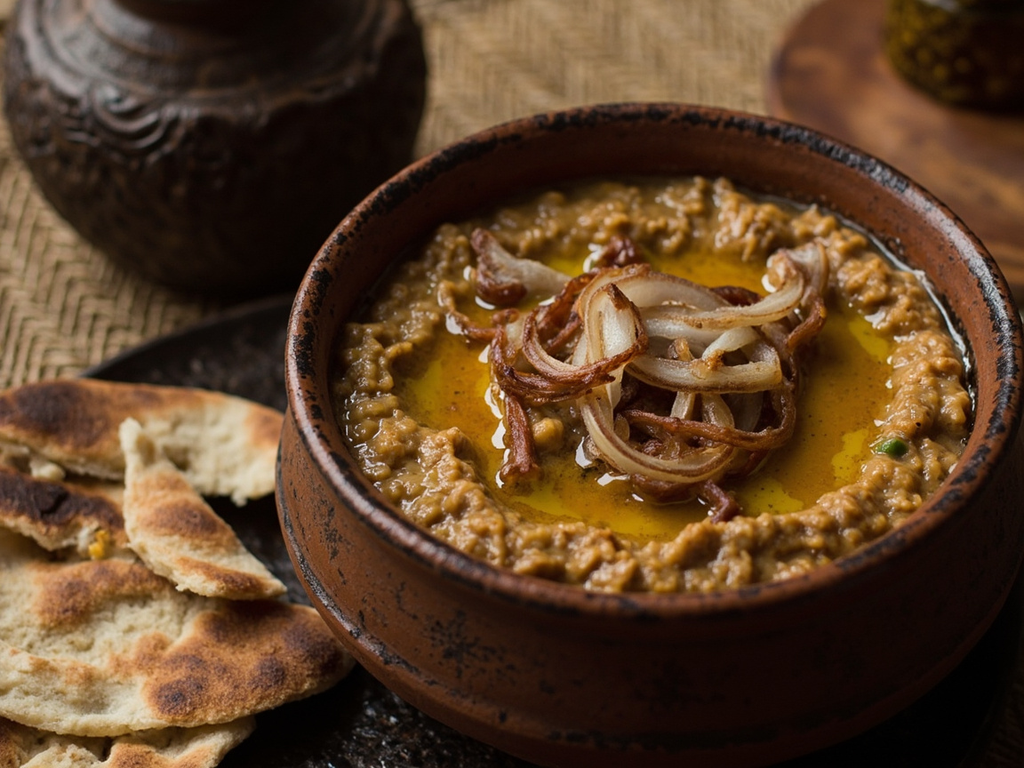
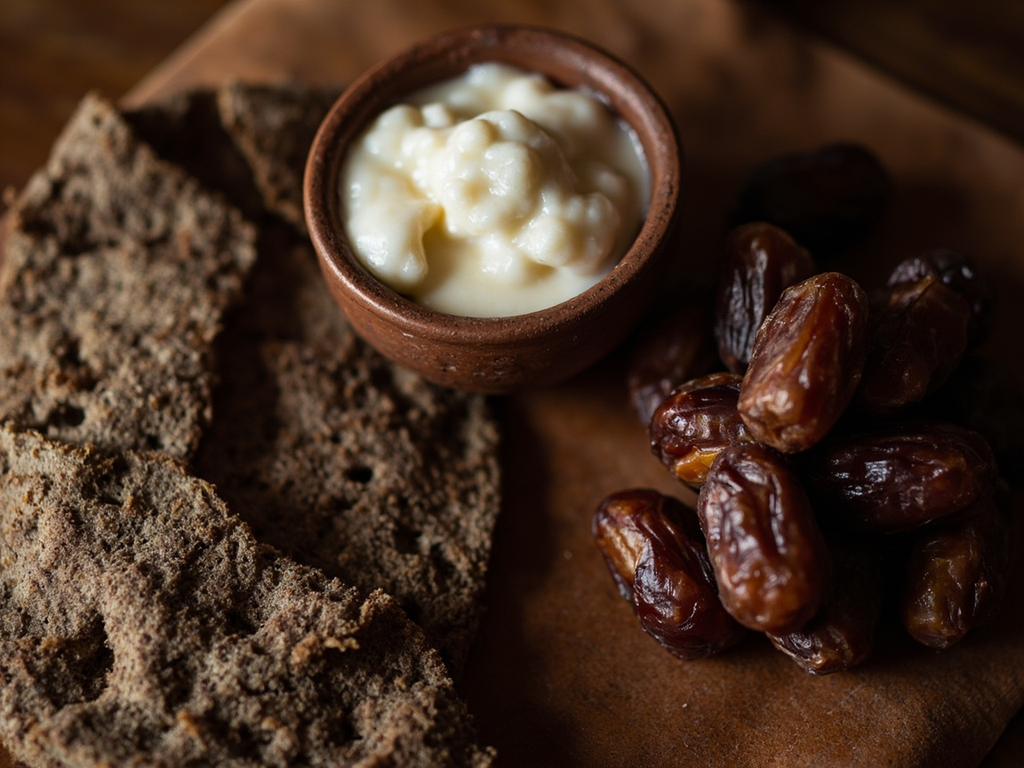
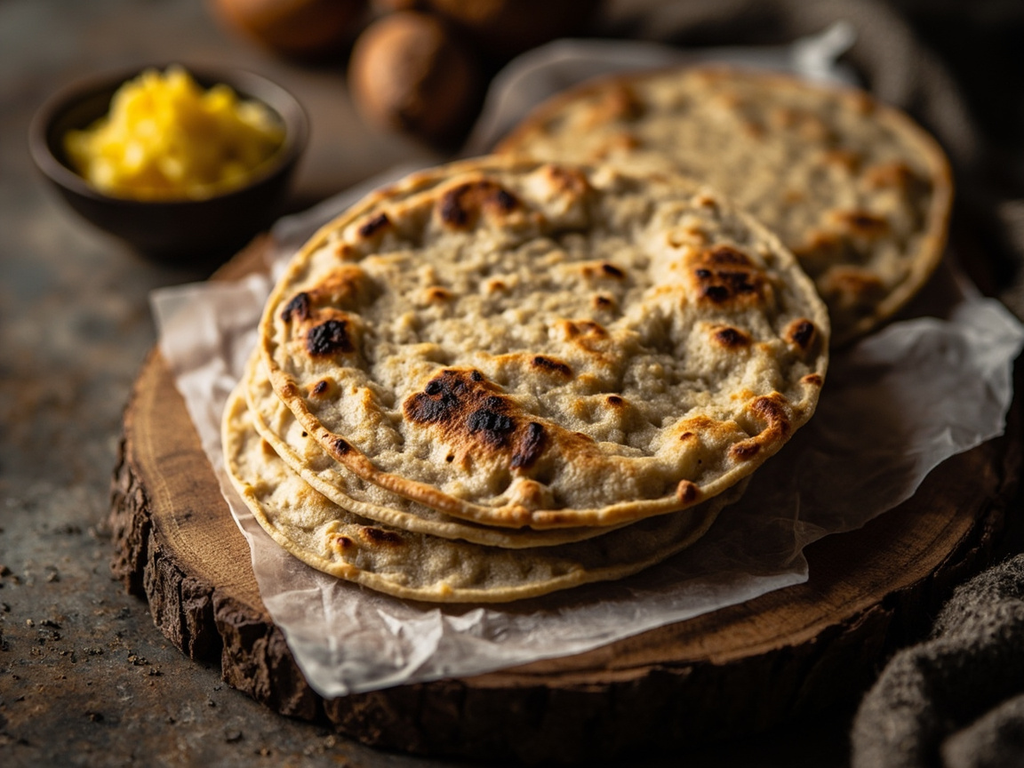
A thin, pliable unleavened barley flatbread, baked directly on a stone or iron griddle over embers. Crispy at the edges, soft in the center, it accompanies meats, butter, and fresh cheeses.
Approach the fire, stranger, and fear nothing under my bright roof. See how the hall-wife grinds the barley between two stones, mixes it with spring water, and kneads with a calm hand. She throws the flatbread onto the hot stone, and already the grain sings and turns golden. At Breiðablik no evil or lie enters, and this bread, broken near the embers, is better than an oath.
- •Barley flour ground on a quern — two handfuls per guest (grain base)
- •Spring water — enough to bind (binder)
- •Sea salt — a pinch (seasoning)
Barley flatbread from the hearth of Breiðablik
A thin, pliable unleavened barley flatbread, baked directly on a stone or iron griddle over embers. Crispy at the edges, soft in the center, it accompanies meats, butter, and fresh cheeses.
Why this dish? Breiðablik, the radiant dwelling of Baldr, is said to be the purest of Asgard's halls. Barley flatbread baked on the hot stone of the central hearth was the staple of every Norse household: it is the daily bread that would have graced the bright table of the god of light.
Approach the fire, stranger, and fear nothing under my bright roof. See how the hall-wife grinds the barley between two stones, mixes it with spring water, and kneads with a calm hand. She throws the flatbread onto the hot stone, and already the grain sings and turns golden. At Breiðablik no evil or lie enters, and this bread, broken near the embers, is better than an oath.
Ingredients (period version)
- Barley flour ground on a quern — two handfuls per guest (grain base)
- Spring water — enough to bind (binder)
- Sea salt — a pinch (seasoning)
Ingredients
- Barley flour — 250 g (grain base)
- Rye flour (for structure) — 50 g (structure)
- Warm water — 180 ml (binder)
- Salt — 1 tsp (seasoning)
- Butter for serving — to taste (garnish)
Method
- Mix the flours and salt in a large bowl.
- Add warm water gradually and knead until a soft, non-sticky dough forms.
- Divide into egg-sized balls and roll out very thinly (2–3 mm).
- Heat a dry cast-iron pan over high heat.
- Cook each flatbread for 1–2 minutes per side, until brown spots appear.
- Stack under a cloth to keep soft and serve warm, spread with butter.
How it was made : Barley was the dominant grain in Scandinavia, better suited to the cold climate than wheat. These unleavened flatbreads were baked on a flat stone (steikarsteinn) or a griddle over the central hearth of the skáli, several times a week as they did not keep well.
The contemporary twist : Serve by cutting the flatbread into 'sun ray' strips arranged in a star around honey-whipped butter, a nod to the god of light.
Baldr · Charactorium