 flip
flipTharīd with Lamb and Murrī
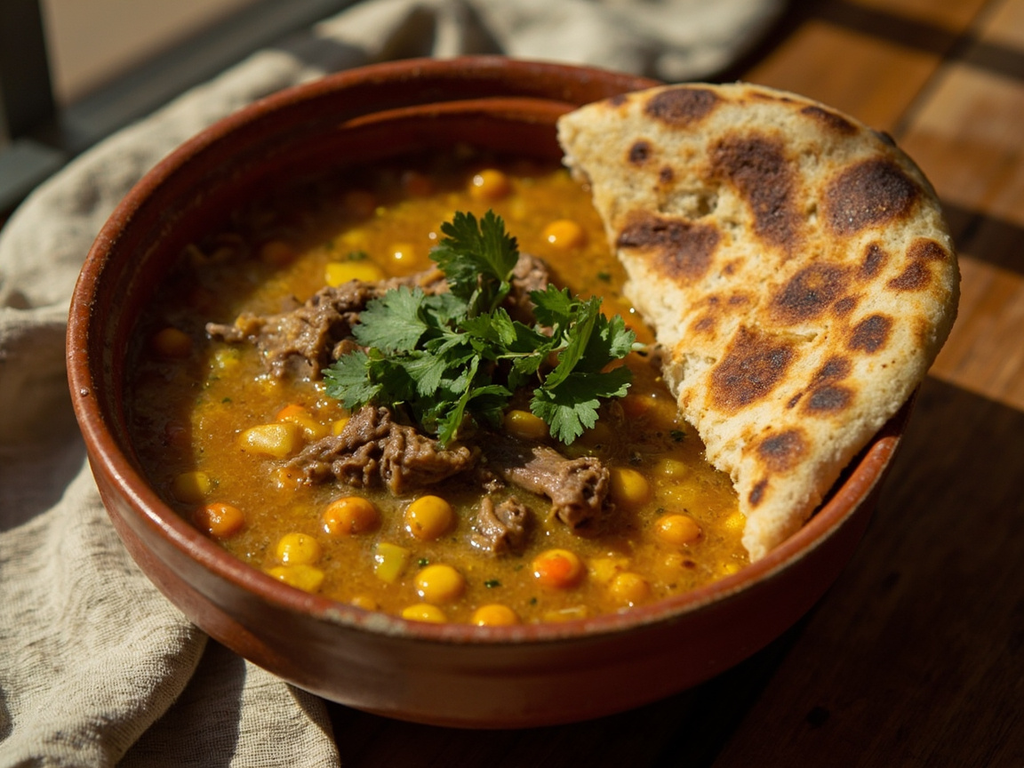
Tharīd with Lamb and Murrī
Why this dish? Tharīd, broken bread drowned in broth, was the humble and blessed dish par excellence of the medieval Muslim world. For an Almohad caliph who wished to be pious and close to the tradition of the Prophet, it was the everyday meal, eaten in Marrakech as in Seville.
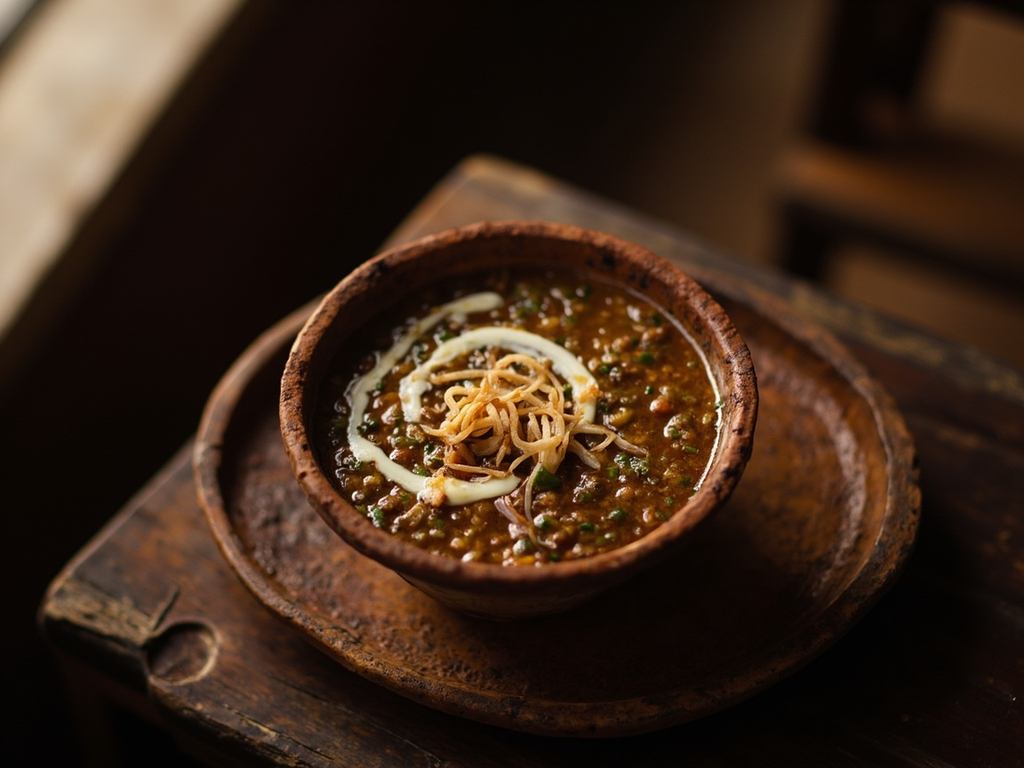
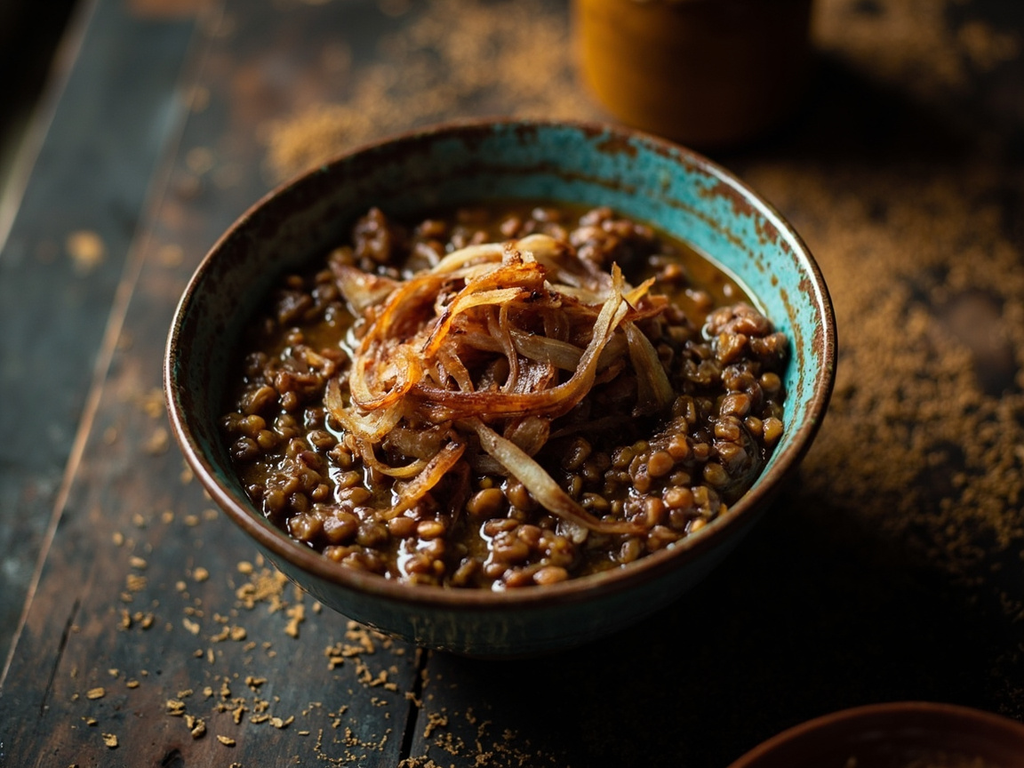
A lamb broth perfumed with coriander and saffron, poured boiling over pieces of stale wheat bread that soak up all the juice. The fermented murrī gives it an almost meaty depth. Comforting, complete, simple.
Know, reader, that no table can begin without tharīd, that dish cherished by the Prophet — peace be upon him. In Marrakech as in our encampments, I had a loaf of pure wheat broken, and over it was poured the broth of lamb, heightened with a few drops of murrī and a pinch of that saffron which is the gold of our gardens. Eat it while it steams, for cooled bread has lost its soul. In this simplicity the great meets the small: a caliph and a shepherd find the same contentment.
- •Lamb shoulder — a fine piece (base of the broth)
- •Stale wheat bread — several flatbreads (base that soaks up the broth)
- •Murrī (fermented barley brine) — a few drops (umami, signature)
- •Saffron — a pinch (color and perfume)
- •Fresh coriander and seeds — a handful (master herb)
- •Onion — one (aromatic base)
- •Chickpeas — a soaked handful (substance)
- •Olive oil — a drizzle (fat)
Tharīd with Lamb and Murrī
A lamb broth perfumed with coriander and saffron, poured boiling over pieces of stale wheat bread that soak up all the juice. The fermented murrī gives it an almost meaty depth. Comforting, complete, simple.
Why this dish? Tharīd, broken bread drowned in broth, was the humble and blessed dish par excellence of the medieval Muslim world. For an Almohad caliph who wished to be pious and close to the tradition of the Prophet, it was the everyday meal, eaten in Marrakech as in Seville.
Know, reader, that no table can begin without tharīd, that dish cherished by the Prophet — peace be upon him. In Marrakech as in our encampments, I had a loaf of pure wheat broken, and over it was poured the broth of lamb, heightened with a few drops of murrī and a pinch of that saffron which is the gold of our gardens. Eat it while it steams, for cooled bread has lost its soul. In this simplicity the great meets the small: a caliph and a shepherd find the same contentment.
Ingredients (period version)
- Lamb shoulder — a fine piece (base of the broth)
- Stale wheat bread — several flatbreads (base that soaks up the broth)
- Murrī (fermented barley brine) — a few drops (umami, signature)
- Saffron — a pinch (color and perfume)
- Fresh coriander and seeds — a handful (master herb)
- Onion — one (aromatic base)
- Chickpeas — a soaked handful (substance)
- Olive oil — a drizzle (fat)
Ingredients
- Lamb shoulder, cut into cubes — 500 g (base of the broth)
- Stale country bread — 4 thick slices (base)
- Soy sauce or miso paste (in place of murrī) — 1 teaspoon (umami, signature)
- Saffron — 1 generous pinch (color and perfume)
- Fresh coriander — 1 small bunch (master herb)
- Sliced onion — 1 (aromatic base)
- Cooked chickpeas — 150 g (substance)
- Olive oil — 2 tablespoons (fat)
- Ground cumin and coriander — 1 teaspoon each (spices)
Method
- Sauté the onion in olive oil, add the lamb and sear.
- Cover with water, add cumin, coriander, saffron, and the miso/soy sauce. Simmer gently for 1.5 hours.
- Add the chickpeas at the end of cooking, adjust seasoning (light salt, the fermented condiment already salts).
- Place the stale bread in deep bowls, break it roughly.
- Pour the boiling broth and meat over the top, sprinkle with fresh coriander and serve immediately.
How it was made : Tharīd appears in all Arabo-Andalusi cookbooks (like the anonymous Kitāb al-ṭabīkh). Bread was not a side but the heart of the dish: a technique of economy and comfort, inherited from the desert and ennobled by the courts.
The contemporary twist : Served in an individual bowl with a soft-boiled egg on top and a drizzle of saffron oil — a «tharīd revisited» without betraying the soul of the dish.
Sources : Anonyme andalou, Kitāb al-ṭabīkh fī l-Maghrib wa-l-Andalus (XIIIe s.) · Lucie Bolens, La cuisine andalouse, un art de vivre (XIe–XIIIe siècle), Albin Michel, 1990
Abu Yaqub Yusuf · Charactorium