 flip
flipBarley Porridge with Milk and Honey
Barley Porridge with Milk and Honey
Why this dish? Before becoming queen, Basine shares the daily life of the Germanic peoples where grain porridge is the belly of each day. Under the roof of Tournai as in the countryside of Thuringia, this is what one eats at dawn, simple and nourishing, from servant to the king's table.
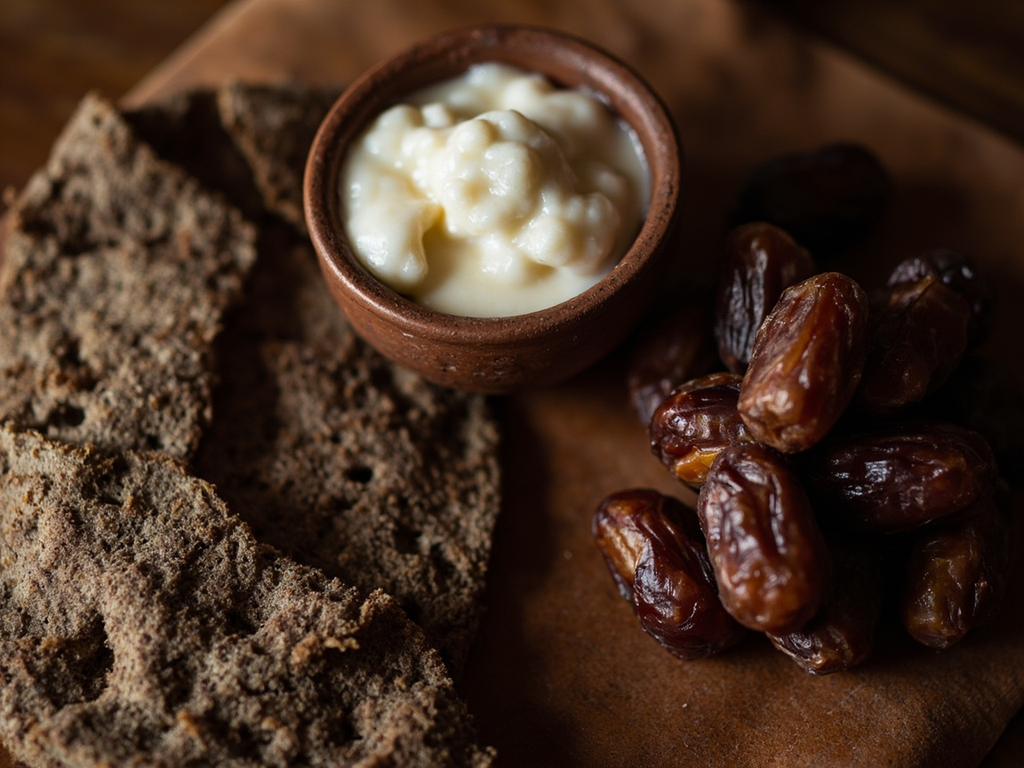
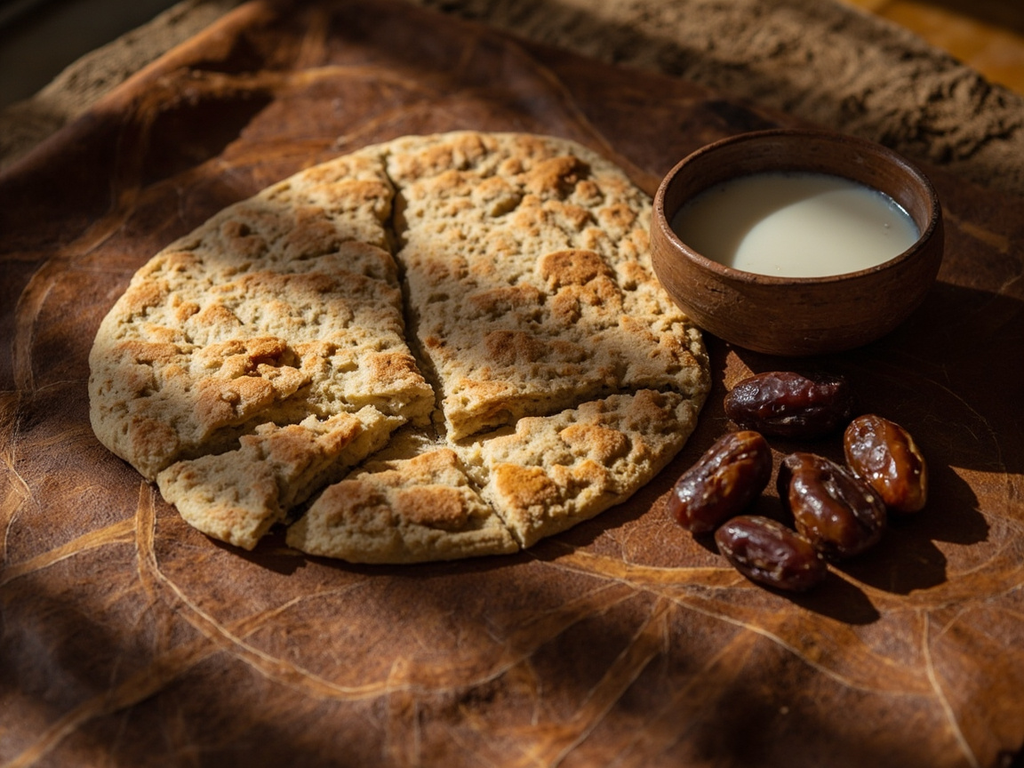
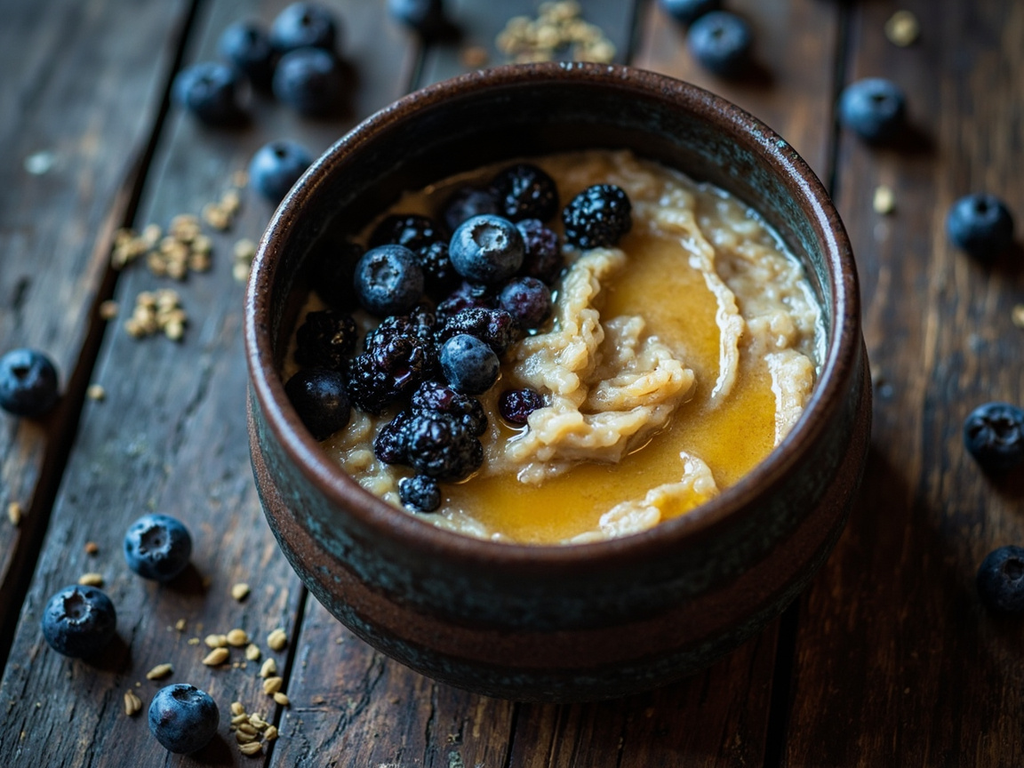
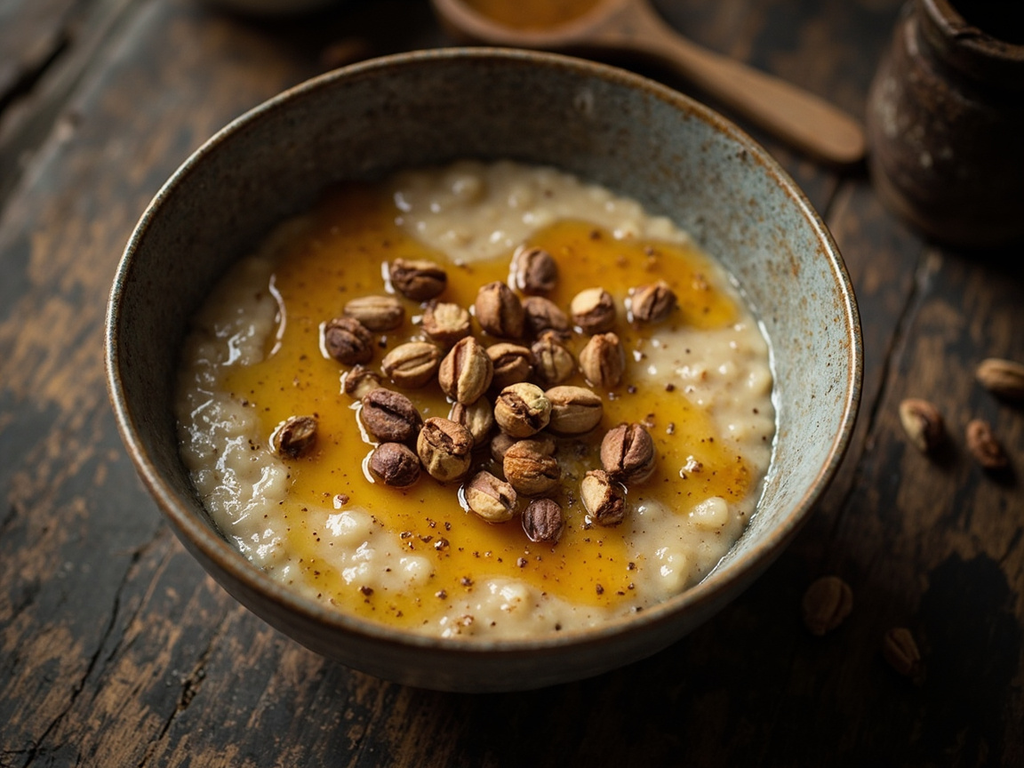
A thick barley porridge cooked long in milk, sweetened with honey and sprinkled with hazelnuts. The humblest and most universal food of the Frankish table, the one that warms before dawn.
Listen to me, you who are hungry at daybreak. Before the roosters awaken Tournai, we throw barley into the milk heating over the embers, and we stir, and we stir again, until the spoon stands upright. I pour in the honey from our hives, a handful of crushed hazelnuts, and there is enough to sustain a man until evening. Kings or shepherds, we have all begun our days with this porridge: it is what makes the strong arms of our sons.
- •Hulled barley grains — a good bowlful (cereal base)
- •Fresh milk — enough to cover (cooking liquid)
- •Honey — by the spoonful, to taste (sweetness)
- •Hazelnuts — a handful (texture)
Barley Porridge with Milk and Honey
A thick barley porridge cooked long in milk, sweetened with honey and sprinkled with hazelnuts. The humblest and most universal food of the Frankish table, the one that warms before dawn.
Why this dish? Before becoming queen, Basine shares the daily life of the Germanic peoples where grain porridge is the belly of each day. Under the roof of Tournai as in the countryside of Thuringia, this is what one eats at dawn, simple and nourishing, from servant to the king's table.
Listen to me, you who are hungry at daybreak. Before the roosters awaken Tournai, we throw barley into the milk heating over the embers, and we stir, and we stir again, until the spoon stands upright. I pour in the honey from our hives, a handful of crushed hazelnuts, and there is enough to sustain a man until evening. Kings or shepherds, we have all begun our days with this porridge: it is what makes the strong arms of our sons.
Ingredients (period version)
- Hulled barley grains — a good bowlful (cereal base)
- Fresh milk — enough to cover (cooking liquid)
- Honey — by the spoonful, to taste (sweetness)
- Hazelnuts — a handful (texture)
Ingredients
- Hulled (or pearl) barley — 150 g (cereal base)
- Whole milk — 600 ml (cooking liquid)
- Water — 200 ml (loosens the cooking)
- Honey — 3 tbsp (sweetness)
- Shelled hazelnuts — 50 g (texture)
- Salt — 1 pinch (enhances flavor)
Method
- Rinse the barley in clear water. Soak it for 1 hour if using hulled barley to shorten cooking time.
- In a heavy-bottomed saucepan, combine the barley, milk, water and pinch of salt.
- Bring gently to a simmer, then lower the heat. Cook for 45 min to 1 hour, stirring often to prevent sticking, until you get a creamy porridge.
- Meanwhile, toast the hazelnuts in a dry pan, then coarsely crush them.
- Off the heat, stir in the honey. Pour into bowls, sprinkle with hazelnuts, and serve hot.
How it was made : Cereal porridges (barley, spelt, millet) cooked in water or milk formed the backbone of Germanic diet long before leavened bread. They were prepared in bronze or earthenware cauldrons suspended over the central hearth of the longhouse. Honey, the only available sweetener, was precious and signaled a household's prosperity.
The contemporary twist : Serve it as a 'Merovingian royal porridge' in a stoneware bowl, with a spiral drizzle of amber honey and a few poached seasonal fruits on the side.
Sources : Massimo Montanari, La faim et l'abondance. Histoire de l'alimentation en Europe · Régine Le Jan, Histoire de la France : origines et premier essor (480-1180)
Basina of Thuringia · Charactorium