 flip
flipKhubz sha'ir — Barley and Date Bread
Khubz sha'ir — Barley and Date Bread
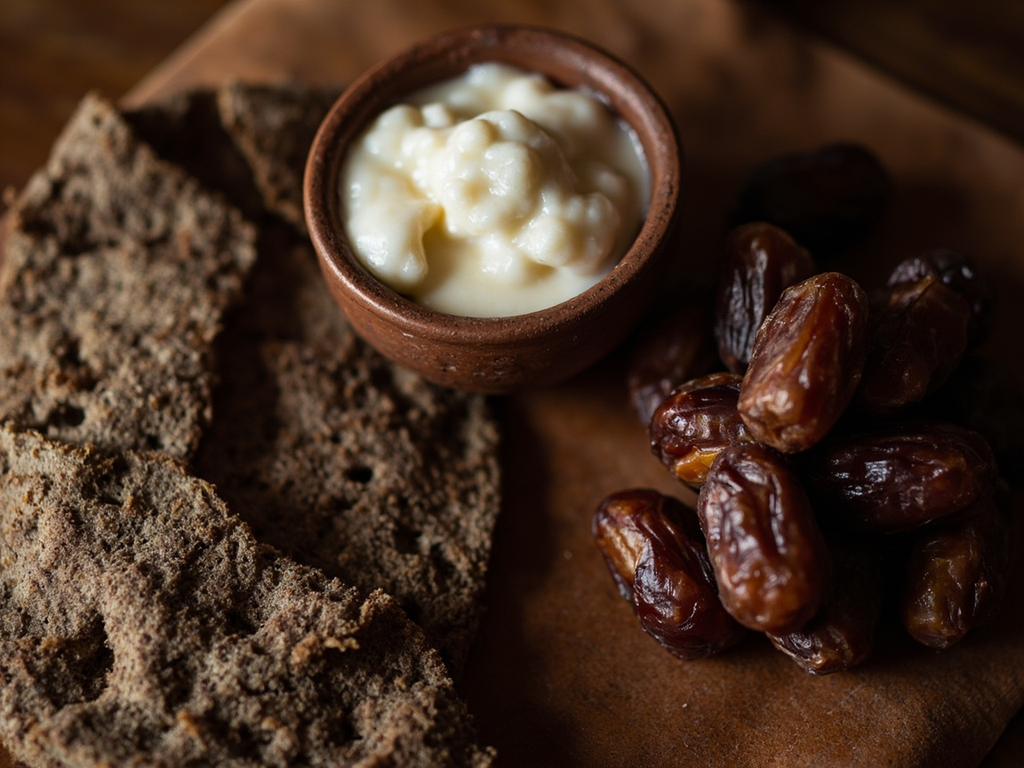
Why this dish? Muslim sources unanimously describe the austerity of Ali's table: dry barley bread, sometimes so hard it was broken against the knee, accompanied by a few dates. This barley-date combination was the daily fare he imposed on himself while he was caliph.
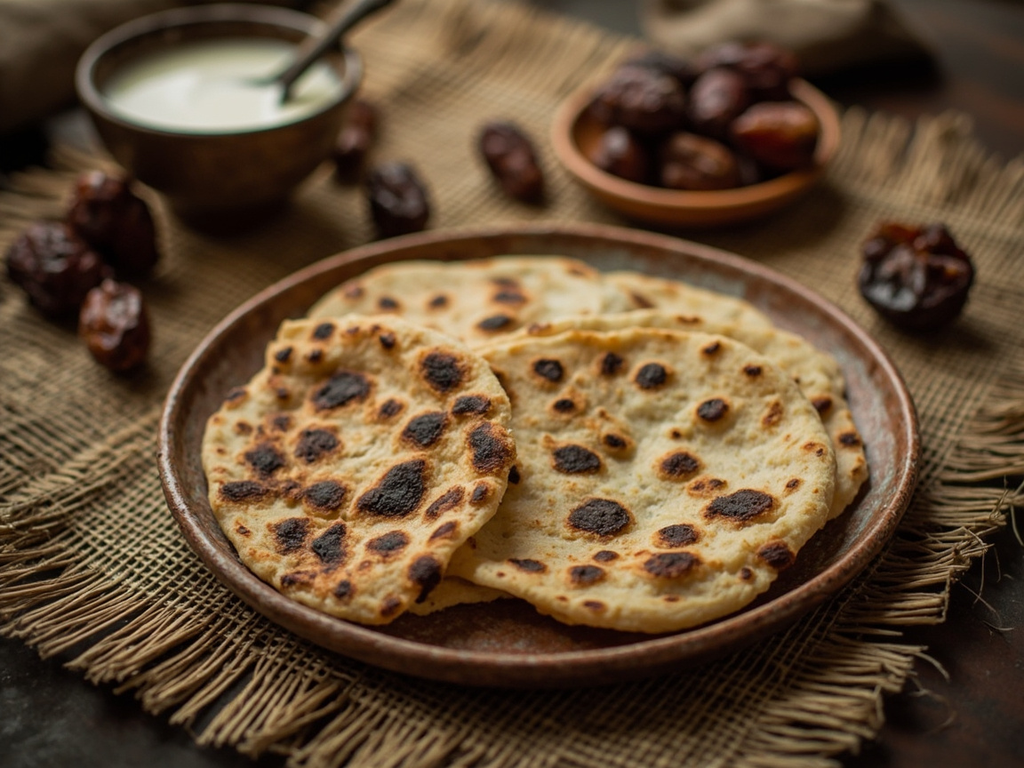
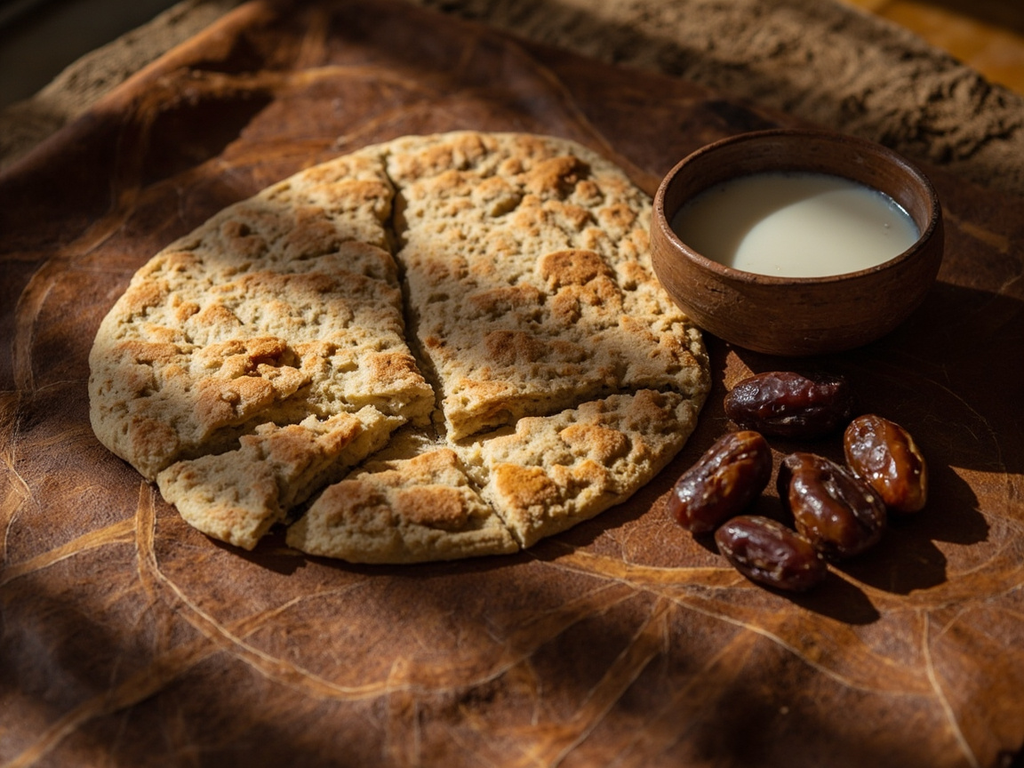
A barley flatbread baked on a hot stone, dense and rustic, broken by hand and eaten with soft dates. The contrast of the simple bread and the sweet fruit sums up an entire ethic: to eat without excess.
Come, and sit down on the mat. Do not seek from me the white wheat bread of palaces: at my table, barley suffices, and I have sometimes broken it hard against my knee. Dip it in a little milk if it resists you, then take a date — God gave it to us as a blessing of the desert. He who masters his belly masters half his soul; eat to your fill, not to your greed.
- •Whole barley flour — two handfuls (base of the bread)
- •Water — as needed (binder)
- •Salt — a pinch (seasoning)
- •Fresh or dried dates — a handful (sweet accompaniment)
Khubz sha'ir — Barley and Date Bread
A barley flatbread baked on a hot stone, dense and rustic, broken by hand and eaten with soft dates. The contrast of the simple bread and the sweet fruit sums up an entire ethic: to eat without excess.
Why this dish? Muslim sources unanimously describe the austerity of Ali's table: dry barley bread, sometimes so hard it was broken against the knee, accompanied by a few dates. This barley-date combination was the daily fare he imposed on himself while he was caliph.
Come, and sit down on the mat. Do not seek from me the white wheat bread of palaces: at my table, barley suffices, and I have sometimes broken it hard against my knee. Dip it in a little milk if it resists you, then take a date — God gave it to us as a blessing of the desert. He who masters his belly masters half his soul; eat to your fill, not to your greed.
Ingredients (period version)
- Whole barley flour — two handfuls (base of the bread)
- Water — as needed (binder)
- Salt — a pinch (seasoning)
- Fresh or dried dates — a handful (sweet accompaniment)
Ingredients
- Barley flour — 250 g (base of the bread)
- Warm water — about 150 ml (binder)
- Salt — 1 tsp (seasoning)
- Medjool or Deglet Nour dates — 8 to 10 (sweet accompaniment)
Method
- Mix the barley flour and salt, then gradually add the water until a soft, non-sticky dough forms.
- Knead for 5 minutes, let rest under a cloth for 20 minutes.
- Divide into balls, flatten into thin rounds about 1 cm thick.
- Cook on a very hot cast-iron pan (or stone) for 3 to 4 minutes per side, until golden spots appear.
- Serve warm, broken by hand, with the dates on the side.
How it was made : Barley (sha'ir) was the grain of the common people and ascetics; wheat, rarer and more expensive, signaled wealth. The bread was baked unleavened on the malla (hot stone or ashes) or the tannur (clay oven). Dates accompanied almost every meal and also served as travel provisions.
The contemporary twist : Present the flatbreads stacked on a linen cloth with the dates split open and stuffed with an almond — a nod to the sharing gesture of the sufra.
Ali ibn Abi Talib · Charactorium