 flip
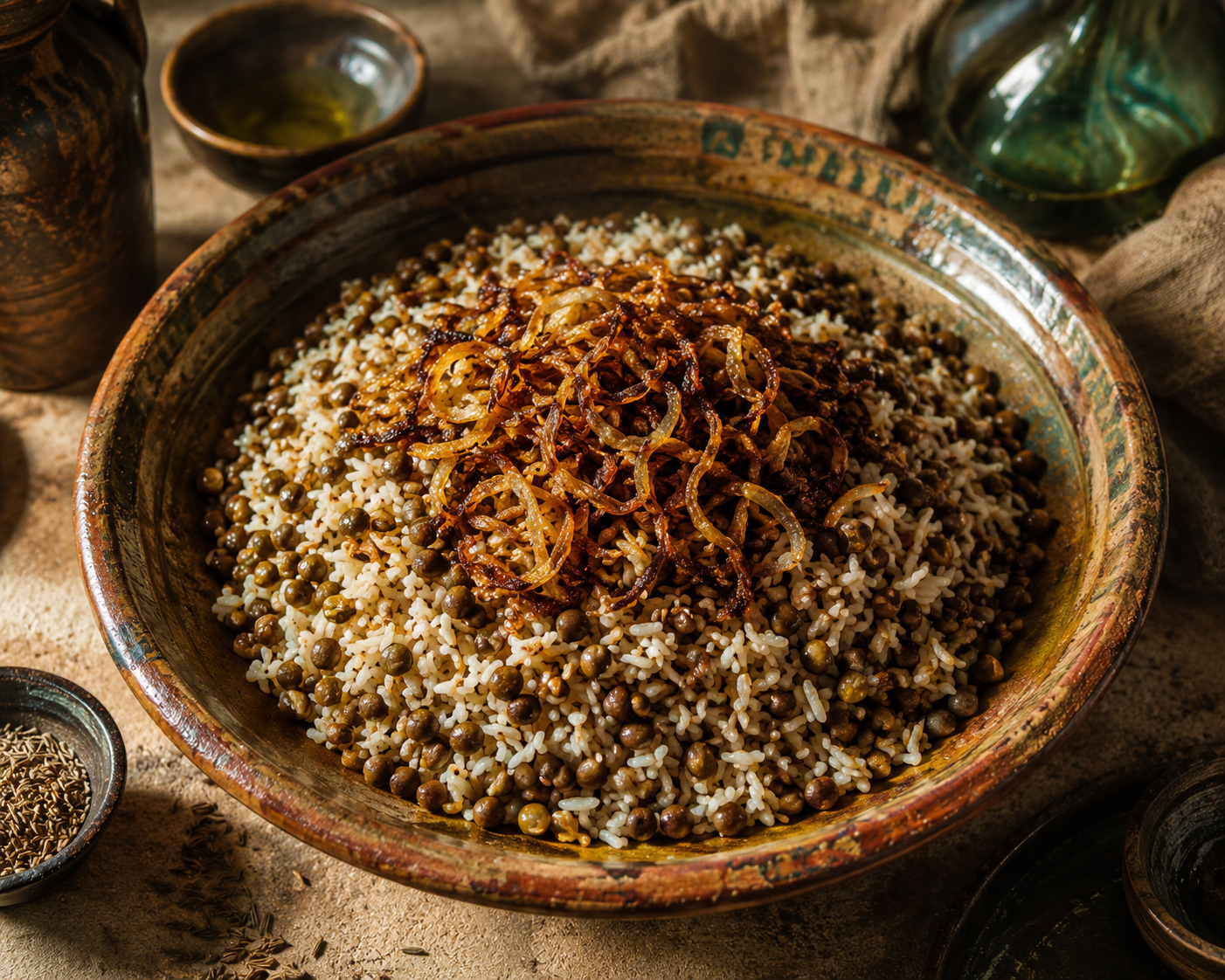
flipMujaddara of Lentils and Rice
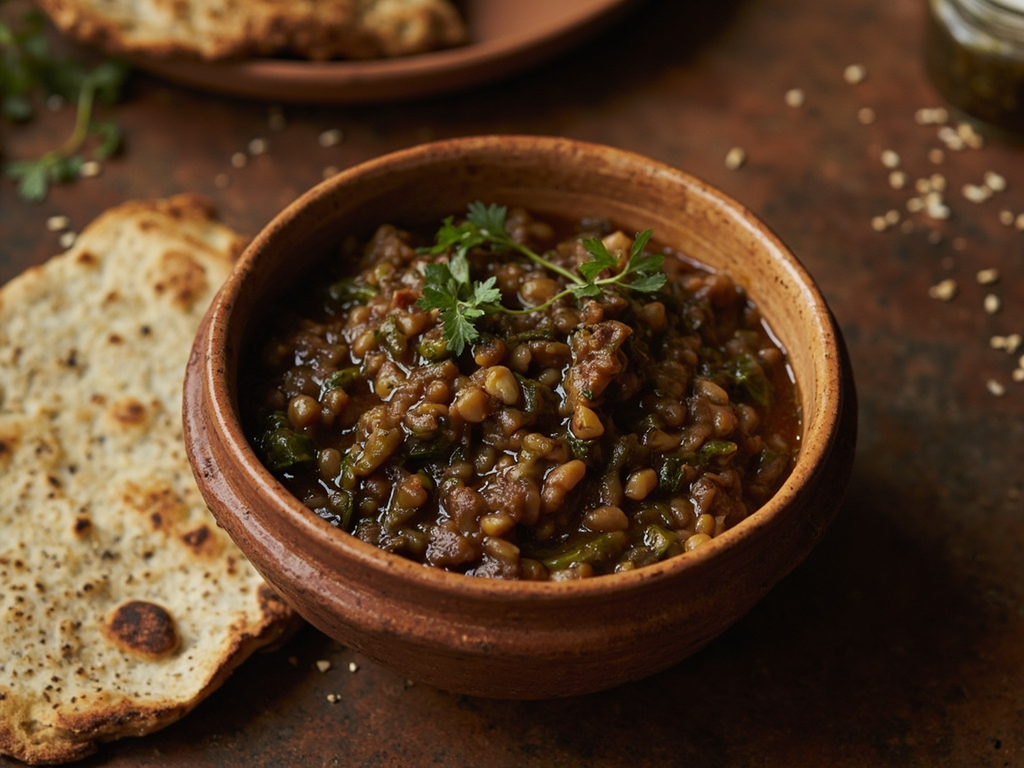
Mujaddara of Lentils and Rice
Why this dish? Frugal and nourishing, this dish of lentils and rice topped with fried onions was the everyday fare of scholars and officials at the House of Wisdom: a scholar bent over his calculation tables was content with it, for it satisfies without weighing down the mind.
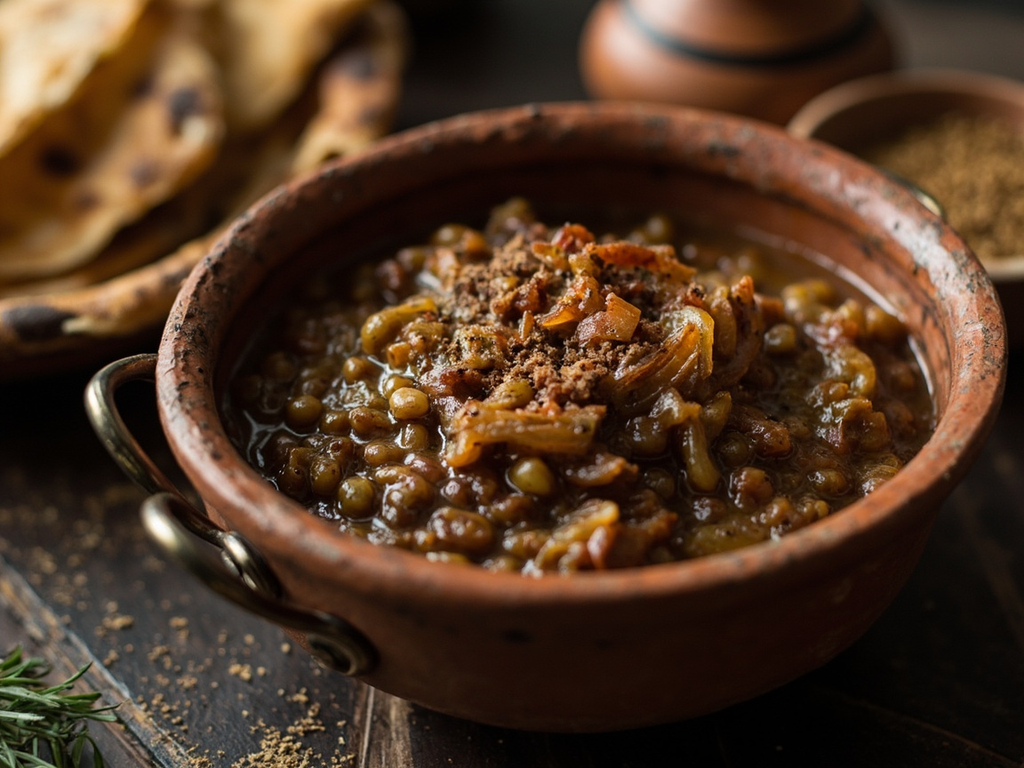
Brown lentils and rice simmered together, crowned with onions slowly browned in oil, all seasoned with a hint of cumin and murrî. A humble, complete, and comforting dish.
See, traveler: God has ordered the world by number and measure, and this dish imitates it. One part lentil to one part rice, neither more nor less, and the salt weighed with a just hand. At my table, near the manuscripts, I fried the onion until it took the color of amber, for that is the whole secret. A drop of murrî, a little cumin, and both the poor and the scholar find their strength. Eat, and may your calculation be clear.
- •Brown lentils — two handfuls (nourishing base)
- •Rice — one handful (cereal)
- •Onions — a few (golden garnish)
- •Olive oil — as needed (fat)
- •Cumin — a pinch (spice)
- •Murrî — a dash (salty umami)
- •Salt — to taste (seasoning)
Mujaddara of Lentils and Rice
Brown lentils and rice simmered together, crowned with onions slowly browned in oil, all seasoned with a hint of cumin and murrî. A humble, complete, and comforting dish.
Why this dish? Frugal and nourishing, this dish of lentils and rice topped with fried onions was the everyday fare of scholars and officials at the House of Wisdom: a scholar bent over his calculation tables was content with it, for it satisfies without weighing down the mind.
See, traveler: God has ordered the world by number and measure, and this dish imitates it. One part lentil to one part rice, neither more nor less, and the salt weighed with a just hand. At my table, near the manuscripts, I fried the onion until it took the color of amber, for that is the whole secret. A drop of murrî, a little cumin, and both the poor and the scholar find their strength. Eat, and may your calculation be clear.
Ingredients (period version)
- Brown lentils — two handfuls (nourishing base)
- Rice — one handful (cereal)
- Onions — a few (golden garnish)
- Olive oil — as needed (fat)
- Cumin — a pinch (spice)
- Murrî — a dash (salty umami)
- Salt — to taste (seasoning)
Ingredients
- Brown or green lentils — 200 g (nourishing base)
- Long-grain rice — 100 g (cereal)
- Large onions — 2 (golden garnish)
- Olive oil — 5 tbsp (fat)
- Ground cumin — 1 tsp (spice)
- Light soy sauce (instead of murrî) — 1 tbsp (salty umami)
- Salt — to taste (seasoning)
Method
- Rinse the lentils and cook them for 15 minutes in twice their volume of salted water.
- Add the rice and cumin, add more water if needed, and simmer for 15 minutes until absorbed.
- Meanwhile, slice the onions and slowly fry them in oil until amber and crispy.
- Stir half the onions and the soy sauce (or murrî) into the lentil-rice mixture.
- Serve topped with the remaining fried onions.
How it was made : Abbasid cookbooks (*Kitâb al-Tabîkh*) are full of legume dishes seasoned with murrî and browned onions. The mujaddara, attested later under this name, descends directly from these popular rice and lentil preparations.
The contemporary twist : Serve mounded, sprinkled with toasted cumin, and name the dish 'al-jabr' — the art of gathering scattered elements into a balanced whole.
Sources : Nawal Nasrallah, Annals of the Caliphs' Kitchens (translation of Ibn Sayyâr al-Warrâq's Kitâb al-Tabîkh), Brill, 2007 · Lilia Zaouali, L'Islam à table. Du Moyen Âge à nos jours, La Découverte, 2004
Al-Khwârizmî · Charactorium