 flip
flipWheat Porridge with Milk and Honey
Wheat Porridge with Milk and Honey
Why this dish? Wheat, milk, and honey were the pillars of the imperial estates described in the Capitulary de Villis. Charles, frugal at table according to Einhard, began his day with this simple food shared even by the humblest in his palace.
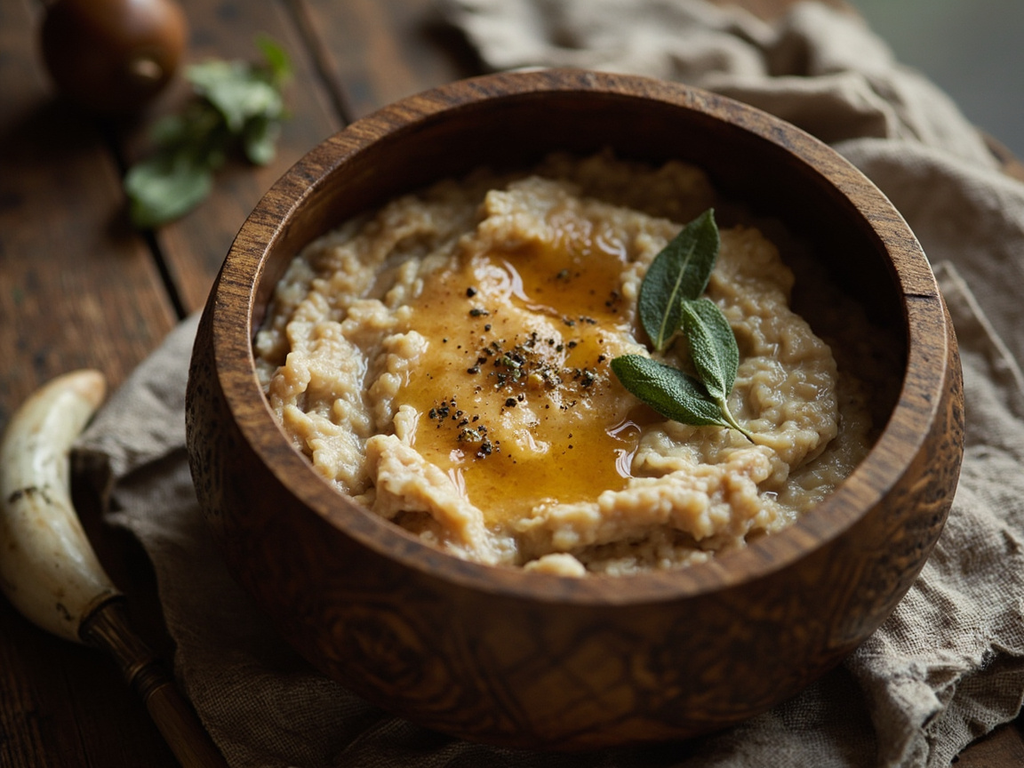
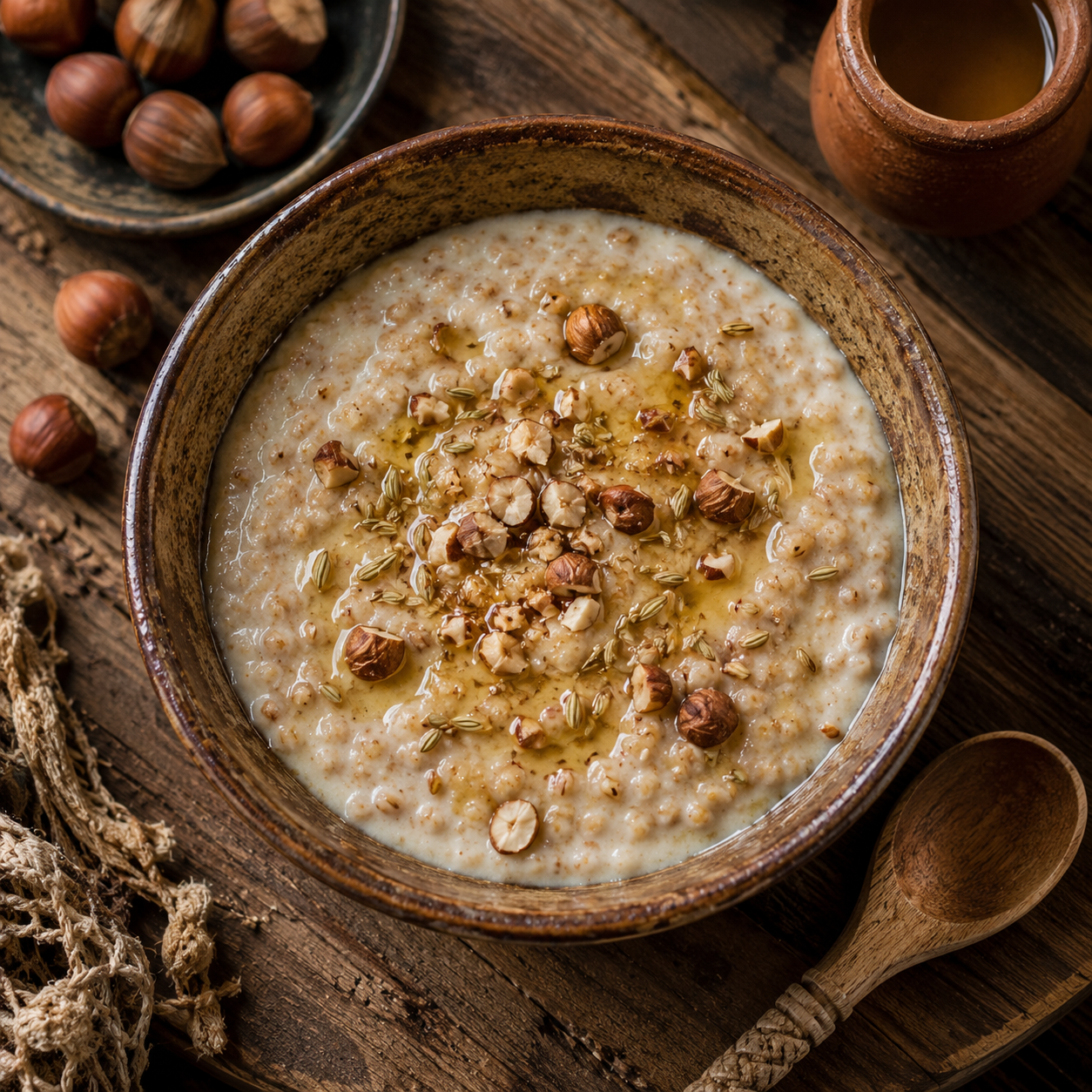
A porridge of cracked wheat cooked long in milk, sweetened with honey from the estate's hives and scented with a little fennel—the sweet, nourishing breakfast of the entire Carolingian household.
Before governing men, one must fill his belly without excess: that is common sense. At dawn, I am served this wheat porridge melted in milk from my cows, sweetened with honey from my bees, stirred until it coats the spoon. I have them throw in a hint of fennel, for this herb grows by my order throughout the Empire. This is the meal of the poor as of the prince: God did not make good grain only for the powerful.
- •Cracked wheat — two handfuls (staple grain)
- •Milk — as needed (cooking liquid)
- •Honey — to taste (sweetness)
- •Fennel seeds — a pinch (Capitulary herb, fragrance)
- •Salt — a grain (balance)
Wheat Porridge with Milk and Honey
A porridge of cracked wheat cooked long in milk, sweetened with honey from the estate's hives and scented with a little fennel—the sweet, nourishing breakfast of the entire Carolingian household.
Why this dish? Wheat, milk, and honey were the pillars of the imperial estates described in the Capitulary de Villis. Charles, frugal at table according to Einhard, began his day with this simple food shared even by the humblest in his palace.
Before governing men, one must fill his belly without excess: that is common sense. At dawn, I am served this wheat porridge melted in milk from my cows, sweetened with honey from my bees, stirred until it coats the spoon. I have them throw in a hint of fennel, for this herb grows by my order throughout the Empire. This is the meal of the poor as of the prince: God did not make good grain only for the powerful.
Ingredients (period version)
- Cracked wheat — two handfuls (staple grain)
- Milk — as needed (cooking liquid)
- Honey — to taste (sweetness)
- Fennel seeds — a pinch (Capitulary herb, fragrance)
- Salt — a grain (balance)
Ingredients
- Cracked wheat (coarse bulgur or spelt groats) — 150 g (grain)
- Whole milk — 750 ml (cooking)
- Multifloral honey — 3 tbsp (sweetness)
- Fennel seeds — 1/2 tsp (fragrance)
- Salt — 1 pinch (balance)
- Crushed hazelnuts — 1 handful (optional) (crunchy garnish)
Method
- Rinse the cracked wheat. Pour it into the cold milk with the pinch of salt and fennel seeds.
- Bring to a gentle simmer and cook for 25-30 minutes, stirring often, until creamy (add more milk if it thickens too much).
- Off the heat, stir in the honey (never at a full boil, to keep its fragrance).
- Pour into bowls, sprinkle with crushed hazelnuts.
- Serve warm, in the morning.
How it was made : Cereal porridges—puls—were the daily staple from Antiquity through the early Middle Ages. They were cooked in a cast-iron cauldron hung from a hook over the fire for hours, and honey replaced sugar, which the West did not yet know.
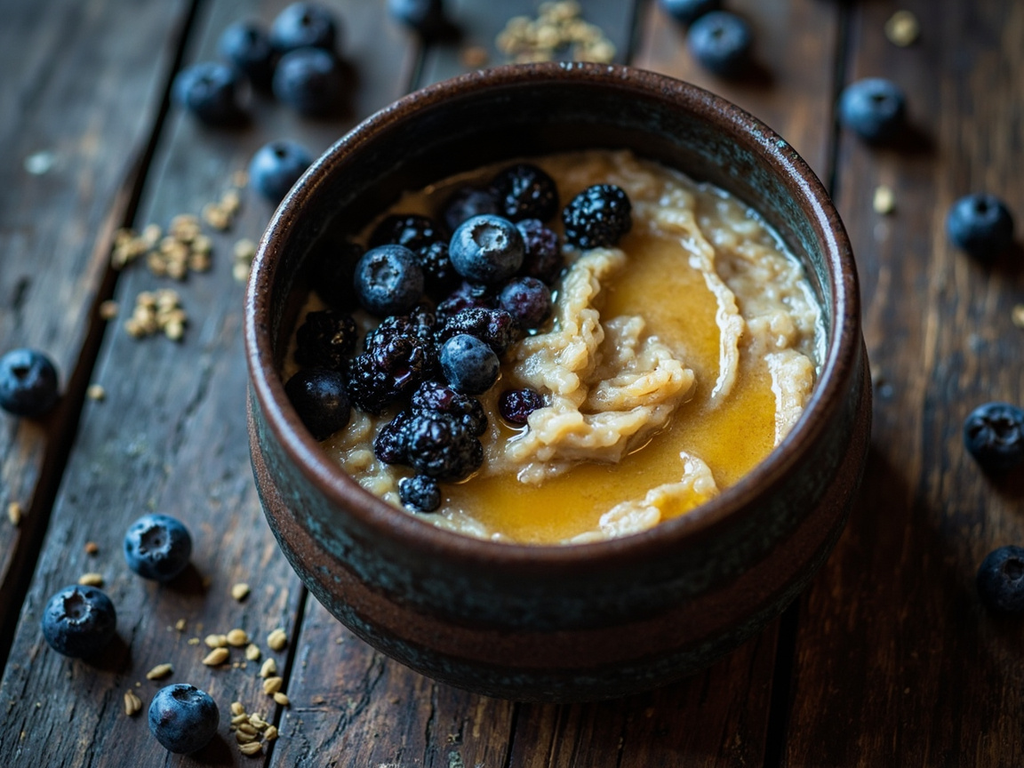
The contemporary twist : Serve in a bowl with a spiral of honey and a few fennel petals: a 'medieval porridge' worthy of a post, faithful to within 1200 years.
Sources : Capitulare de villis (c. 795), estate products: wheat, honey, fennel · Einhard, Vita Karoli Magni, chap. 24 (Charles's frugality at table)
Charlemagne · Charactorium