 flip
flipFrijoles de la olla and Tortillas on the Comal
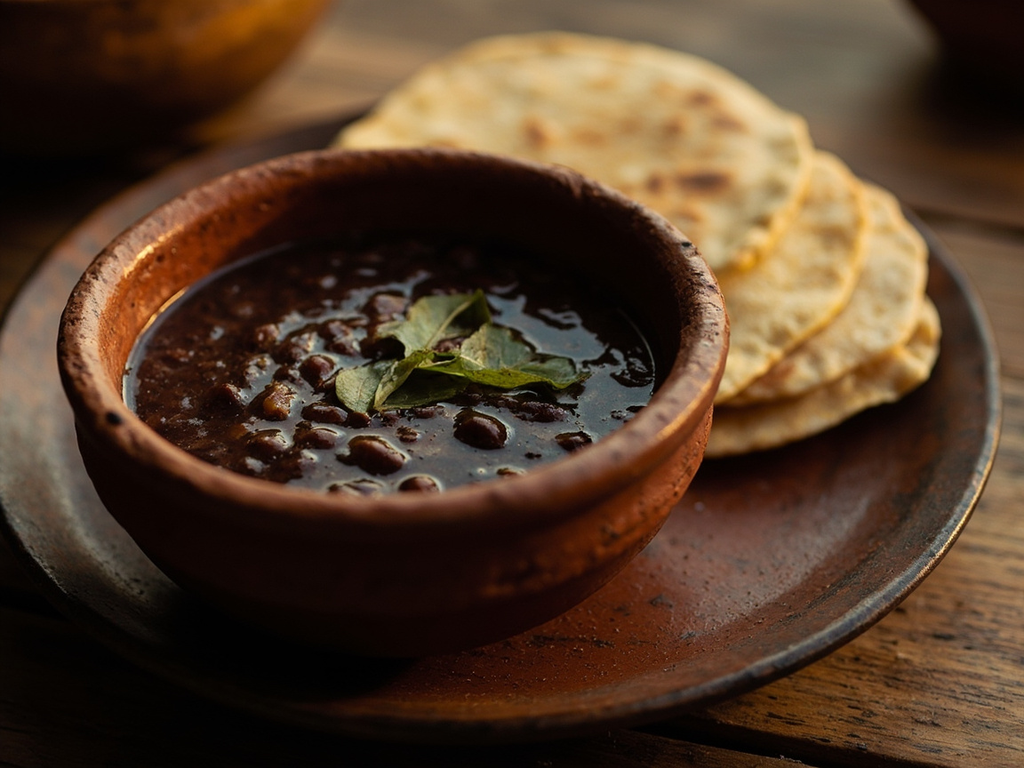
Frijoles de la olla and Tortillas on the Comal
Why this dish? We know from his relatives and biographers that Juárez, born into a very poor Zapotec family in Guelatao and remaining frugal up to the National Palace, kept for his everyday table the simplest dish of Oaxaca: simmered black beans and warm tortillas. Even as president, he shunned the pomp of Maximilian's court.
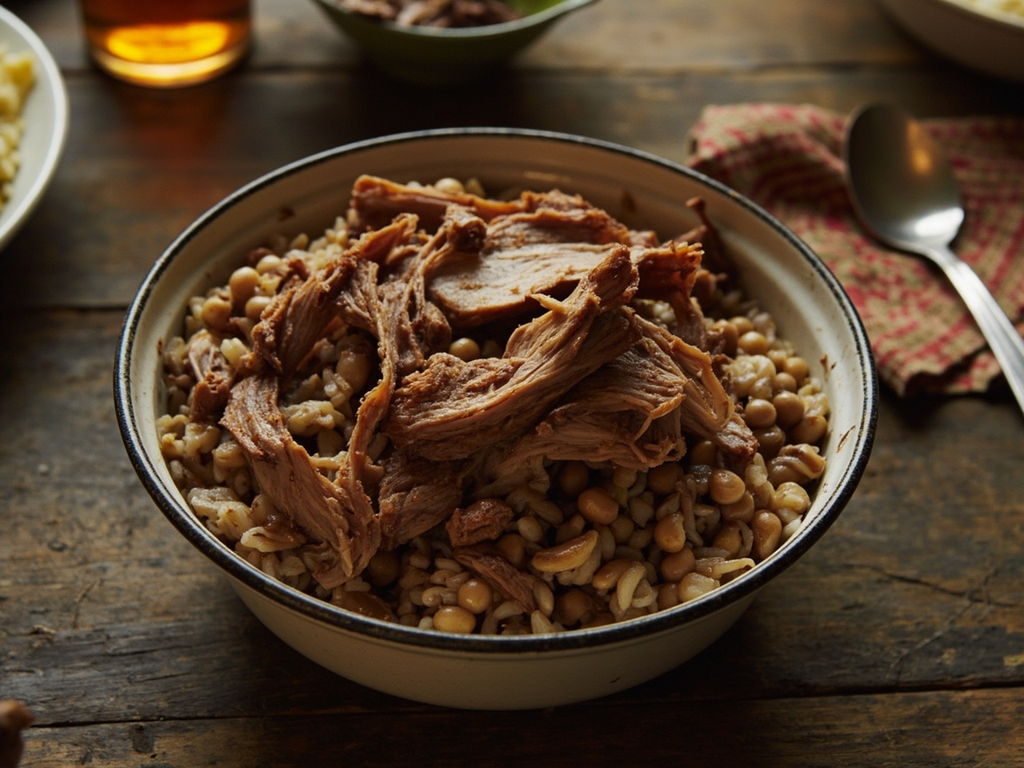
Black beans long-simmered in an earthenware pot, perfumed with epazote and avocado leaf, scooped up with corn tortillas just puffed on the comal. The breakfast of the Oaxacan people, and that of a president who had not forgotten where he came from.
Permit a man from Guelatao to serve you himself. As a child, I tended sheep in the sierra and knew no other meal than the bean from the pot and the tortilla fresh from my aunt's comal. Having become a magistrate, and later called to higher office, I never wanted any other table: sobriety suits one who must serve the Republic. Let the beans darken well in the barro, without haste, and break the tortilla with your fingers — that is how an honest man eats.
- •Black Oaxacan beans — two handfuls per person (base)
- •Fresh epazote — a few sprigs (herb)
- •Dried avocado leaf — one or two (flavoring)
- •Salt — to taste (seasoning)
- •Nixtamalized corn (masa) — for tortillas (corn bread)
Frijoles de la olla and Tortillas on the Comal
Black beans long-simmered in an earthenware pot, perfumed with epazote and avocado leaf, scooped up with corn tortillas just puffed on the comal. The breakfast of the Oaxacan people, and that of a president who had not forgotten where he came from.
Why this dish? We know from his relatives and biographers that Juárez, born into a very poor Zapotec family in Guelatao and remaining frugal up to the National Palace, kept for his everyday table the simplest dish of Oaxaca: simmered black beans and warm tortillas. Even as president, he shunned the pomp of Maximilian's court.
Permit a man from Guelatao to serve you himself. As a child, I tended sheep in the sierra and knew no other meal than the bean from the pot and the tortilla fresh from my aunt's comal. Having become a magistrate, and later called to higher office, I never wanted any other table: sobriety suits one who must serve the Republic. Let the beans darken well in the barro, without haste, and break the tortilla with your fingers — that is how an honest man eats.
Ingredients (period version)
- Black Oaxacan beans — two handfuls per person (base)
- Fresh epazote — a few sprigs (herb)
- Dried avocado leaf — one or two (flavoring)
- Salt — to taste (seasoning)
- Nixtamalized corn (masa) — for tortillas (corn bread)
Ingredients
- Dried black beans — 250 g (base)
- White onion — 1/2 (aromatic)
- Fresh epazote (or dried) — 3 sprigs (or 1 tsp) (herb)
- Dried avocado leaf — 2 (flavoring)
- Salt — 1 tsp (seasoning)
- Corn tortillas (masa harina) — 8 to 10 (accompaniment)
Method
- Rinse the beans and cover them generously with cold water in a pot (ideally earthenware), with the half-onion. Do not salt yet.
- Bring to a simmer and cook covered for 1 1/2 to 2 hours, adding hot water if needed, until the beans are tender.
- Add epazote, avocado leaf, and salt; continue for 15 minutes so the broth thickens and becomes aromatic.
- For tortillas: mix masa harina with warm water and a little salt to form a soft dough, shape into balls, flatten them (between two sheets of plastic or using a press).
- Cook each tortilla on a comal or very hot dry skillet, 30 to 60 seconds per side, until it puffs up.
- Serve the beans piping hot in a clay bowl, with warm tortillas alongside for dipping.
How it was made : In 19th-century Oaxaca, beans were cooked in the olla de barro set on a three-stone hearth, and nixtamalized corn was ground on one's knees on the metate. The tortilla, cooked fresh on the clay comal, served as both bread and spoon.
The contemporary twist : Mash some of the beans into a purée and top with pickled red onion and a little crumbled fresh cheese, for 'frijoles refritos' worthy of an Oaxacan fonda.
Sources : Jeffrey M. Pilcher, ¡Que vivan los tamales! Food and the Making of Mexican Identity (1998) · Diana Kennedy, Oaxaca al Gusto (2010)
Benito Juárez · Charactorium