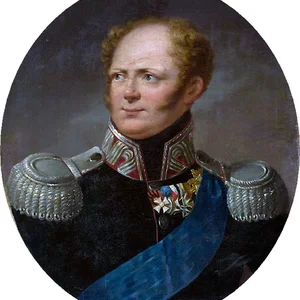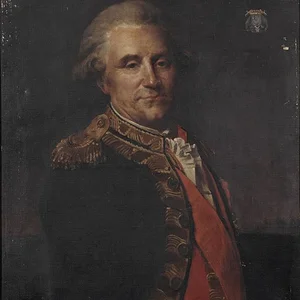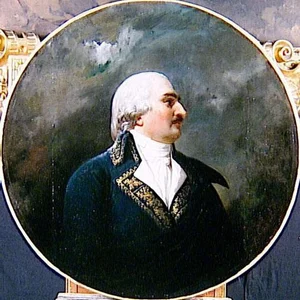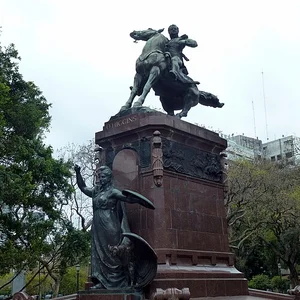

Bernardo O'Higgins was a Chilean soldier and statesman, considered one of the principal liberators of Chile from Spanish rule. As the first leader of the independent Republic, he served as its Supreme Director from 1817 to 1823.
Bernardo O'Higgins(1778 — 1842)
Bernardo O'Higgins
Chili, Pérou, Confédération péruvio-bolivienne
5 min read
Frequently asked questions
Key Facts
- Born in 1778 in Chillán, the son of an Irish-born viceroy of Peru
- Led the armed struggle for Chile's independence beginning in 1810
- With José de San Martín and the Army of the Andes, won the Battle of Chacabuco (1817)
- Proclaimed Chile's independence in 1818 and became Supreme Director
- Forced to abdicate in 1823, he died in exile in Peru in 1842
Works & Achievements
A military triumph alongside San Martín that allowed the recapture of Santiago and the return of the patriots to power.
The founding act that made Chile a sovereign state, the culmination of the struggle against Spain.
A decisive battle that destroyed the royalist army and definitively secured the country's freedom.
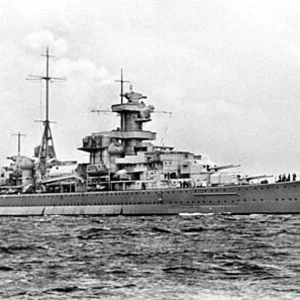
The founding of a navy entrusted to Lord Cochrane, essential for liberating Peru.
The organization, from Chile, of San Martín's expedition that contributed to Peruvian independence.
Attempts to abolish noble titles, create schools, and modernize the state, which provoked the opposition of the aristocracy.
The promotion of public education, the general cemetery, and administrative reforms laying the foundations of the young Republic.
Anecdotes
Bernardo O'Higgins was the illegitimate son of Ambrosio O'Higgins, an Irishman who became Viceroy of Peru in the service of Spain. Father and son never met in person: Bernardo was only officially acknowledged upon his father's death, who bequeathed him a portion of his estate.
In 1814, after the disastrous Battle of Rancagua where his troops were surrounded by the Spanish, O'Higgins had to flee on horseback across the Andes mountain range to take refuge in Argentina. This defeat marked the end of the first period of independence, known as the “Patria Vieja.”
O'Higgins prepared the liberation of Chile alongside the Argentine general José de San Martín. Together, they led an entire army, the Army of the Andes, across the Andes mountain range—a logistical feat compared to Hannibal's crossing of the Alps—to surprise the Spanish from behind.
Having become Supreme Director, O'Higgins carried out reforms the Chilean aristocracy deemed too radical: he tried to abolish noble titles and coats of arms. These measures earned him so many enemies that he was forced to abdicate in 1823 and went into exile in Peru, where he died without ever seeing his country again.
At the Battle of Cancha Rayada in 1818, O'Higgins was wounded in the arm. A few days later, despite his injury, he took part in the decisive Battle of Maipú that definitively sealed Chile's independence.
Primary Sources
The continental territory of Chile and its adjacent islands form, in fact and by right, a free, independent, and sovereign State.
Receive this staff of command as a symbol of the authority you had entrusted to me; I have used it for the good of the homeland.
The union of our forces and the crossing of the Andes will decide the fate of South America.
Key Places
City in central-southern Chile where Bernardo O'Higgins was born in 1778.
Site of the Battle of Rancagua in 1814, a patriot disaster that forced O'Higgins into exile and marked the end of the Patria Vieja.
Site of the victory at Chacabuco in February 1817, which opened the road to Santiago for the patriots.
Plain near Santiago where the Battle of Maipú was fought in April 1818, definitively sealing Chile's independence.
Capital where O'Higgins held power as Supreme Director from 1817 to 1823.
City where O'Higgins spent his exile after his abdication and where he died in 1842.
Typical Objects

Insignia of the Supreme Director's power, a symbol of the civil and military authority that O'Higgins publicly relinquished upon his abdication.

A bladed weapon carried by patriot officers during the wars of independence, used in cavalry charges such as the one at Maipú.

An embroidered military outfit worn by O'Higgins, blending army insignia with symbols of the new Chilean republican power.

The lone-star flag was made official under O'Higgins's government in 1817, becoming the emblem of the young independent nation.

An official document signed in 1818 proclaiming Chile a free and sovereign state; the founding text of the Republic.

A field artillery piece used in the decisive battles of Chacabuco and Maipú against the Spanish royalist forces.
School Curriculum
Vocabulary & Tags
Key Vocabulary
Tags
Daily Life
Morning
On campaign, O'Higgins rose early to review his troops and study maps with his officers. At the palace in Santiago, his mornings were devoted to audiences and signing government decrees.
Afternoon
The afternoon was divided between government meetings, diplomatic correspondence with San Martín or Bolívar, and inspecting military projects such as the building of the fleet.
Evening
In the evening, O'Higgins received advisers and officers for political discussions, or took part in official dinners meant to rally the Chilean elite to the cause of independence.
Food
Meals were based on Chilean criolla cuisine: bread, corn, beans, and beef, accompanied by local wine. On campaign, the soldiers' food was rougher, made up of flatbreads, charqui (dried meat), and dried vegetables.
Clothing
As leader, O'Higgins wore a military uniform adorned with epaulettes and gold embroidery, and plain civilian clothes in private life. The cape and the bicorne hat were typical of officers of that era.
Housing
As Supreme Director, he resided in the government palace in Santiago. Born into a family of landowners, he had grown up on a hacienda in south-central Chile, with its lands and servants.
Historical Timeline
Period Vocabulary
Liens externes & ressources
Références
Œuvres
Victoire de Chacabuco
1817
Proclamation de l'indépendance du Chili
1818
Victoire de Maipú
1818
Création de la première escadre nationale chilienne
1818
Soutien à l'expédition libératrice du Pérou
1820
Réformes républicaines
1817-1823
Fondation de villes et institutions
1817-1823