 flip
flipBohnenkaffee, the Fuel of Writing Nights
Bohnenkaffee, the Fuel of Writing Nights
Why this dish? The anchor card says: 'coffee and tobacco accompanied his long working hours.' Brecht wrote, rewrote, and directed his troupes to the rhythm of coffee and cigars — the Kaffeestunde was his liquid workshop.
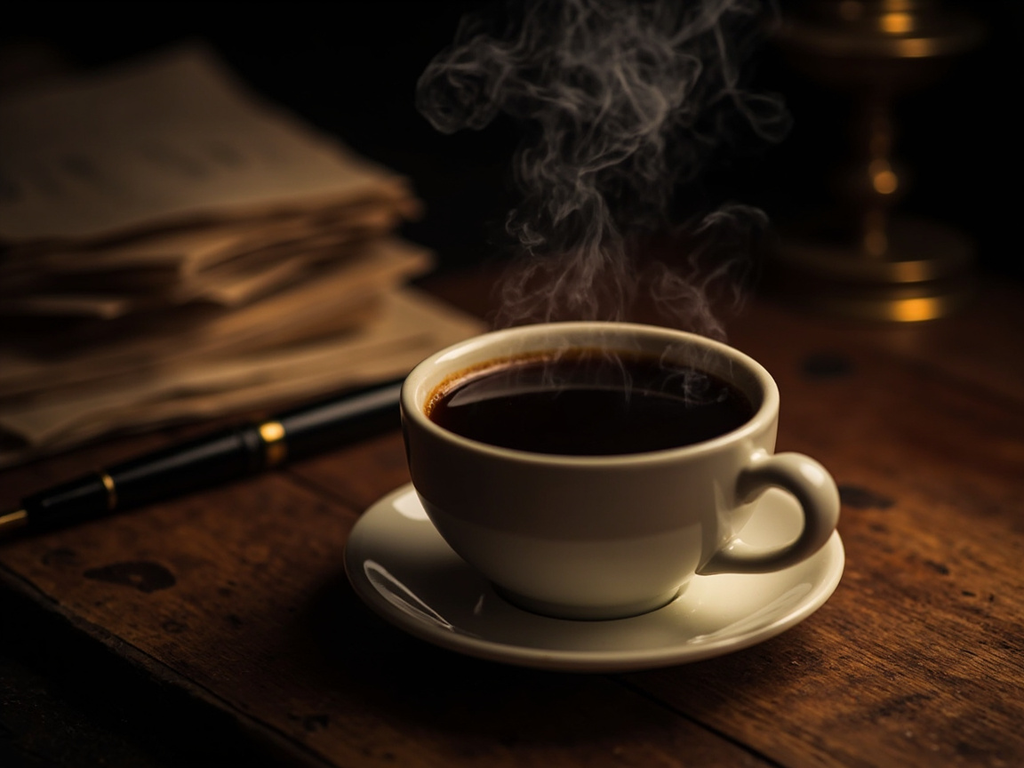
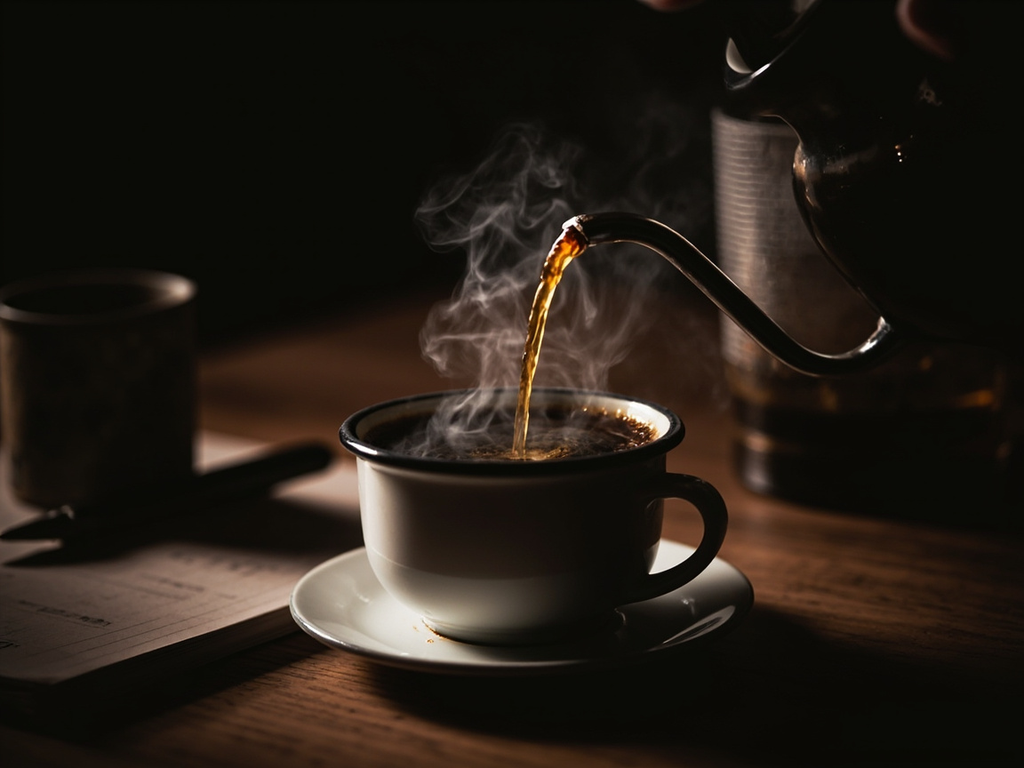
A strong drip coffee, prepared German-style by slow infusion through a paper filter (the Melitta method, born in Dresden in 1908), drunk black and bitter. Not a pleasure but a tool: the fuel for late-night work.
You ask me the secret of my craft? Here it is: black coffee, lots of it, and a cigar that never goes out. I don't like bitterness drowned in milk and sugar — a text is worked with a clear head and a tongue that stings. Pour the water slowly over the grounds, in circles, listen to it drip: that's the time a line needs to find its rhythm. When the night is long and the scene still false, it's this bitter cup that keeps me standing.
- •Dark roast coffee beans — a good dose (base)
- •Simmering water — as many cups as needed (extraction)
Bohnenkaffee, the Fuel of Writing Nights
A strong drip coffee, prepared German-style by slow infusion through a paper filter (the Melitta method, born in Dresden in 1908), drunk black and bitter. Not a pleasure but a tool: the fuel for late-night work.
Why this dish? The anchor card says: 'coffee and tobacco accompanied his long working hours.' Brecht wrote, rewrote, and directed his troupes to the rhythm of coffee and cigars — the Kaffeestunde was his liquid workshop.
You ask me the secret of my craft? Here it is: black coffee, lots of it, and a cigar that never goes out. I don't like bitterness drowned in milk and sugar — a text is worked with a clear head and a tongue that stings. Pour the water slowly over the grounds, in circles, listen to it drip: that's the time a line needs to find its rhythm. When the night is long and the scene still false, it's this bitter cup that keeps me standing.
Ingredients (period version)
- Dark roast coffee beans — a good dose (base)
- Simmering water — as many cups as needed (extraction)
Ingredients
- Ground coffee (dark roast) — 60 g per liter (approx. 12 g per cup) (base)
- Water at 92-96 °C — 1 liter (extraction)
- Paper filter + dripper — 1 (slow infusion)
Method
- Boil the water then let it sit for about 30 seconds (never pour boiling water directly on grounds).
- Place the paper filter in the dripper, add the ground coffee.
- First pour a little water to wet the grounds ('bloom'), wait 30 seconds.
- Continue pouring in slow circles, in several stages, over 3 to 4 minutes.
- Serve immediately, black and hot; accompany, if you wish to respect tradition, with a slice of cake for Kaffeestunde.
How it was made : The paper filter invented by Melitta Bentz (Dresden, 1908) revolutionized German home coffee, making it clearer and less bitter than boiled coffee. Under the Weimar Republic, coffee was the social drink of Berlin literary cafés where artists and intellectuals mingled.
The contemporary twist : Served in an enamel workshop cup, next to a notebook and pencil: the staging of work, dear to Brecht who liked to show the gears rather than hide them.
Bertolt Brecht · Charactorium