 flip
flipRoasted Kid with Bitter Herbs and Oil
Roasted Kid with Bitter Herbs and Oil
Why this dish? At the table of David and then Solomon, roasted kid is the dish of great occasions, served at coronations and court banquets in Jerusalem. Queen Mother seated on her throne at the king's right hand, Bathsheba presided over these feasts where guests were honored with the fat of the flocks.
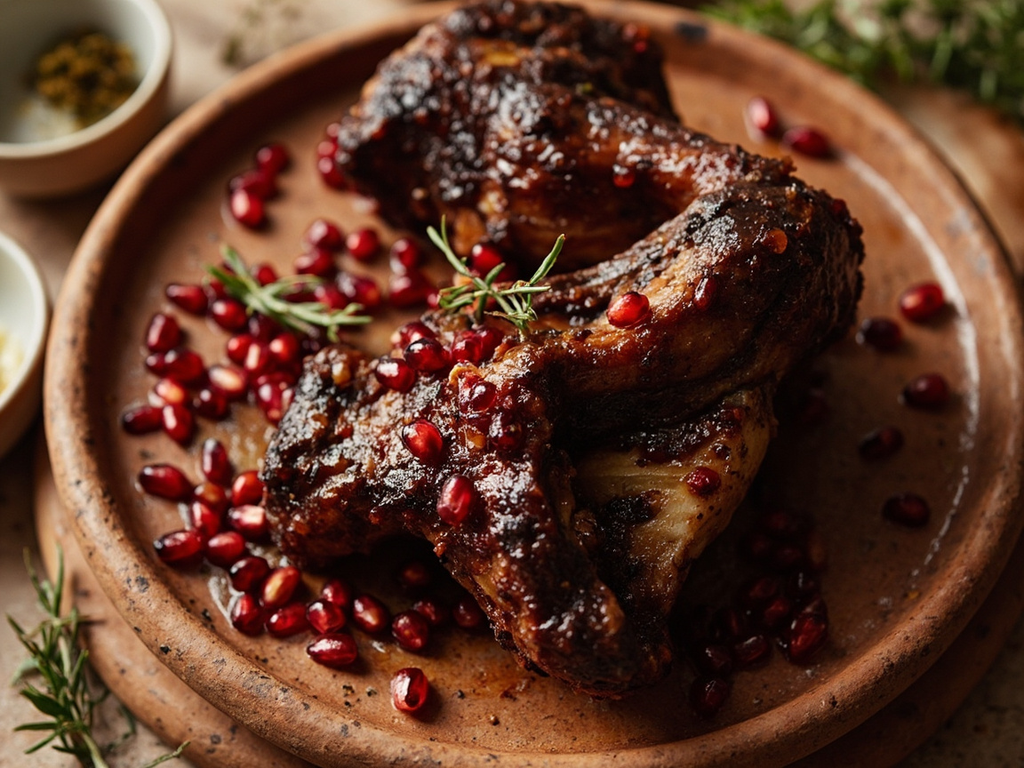
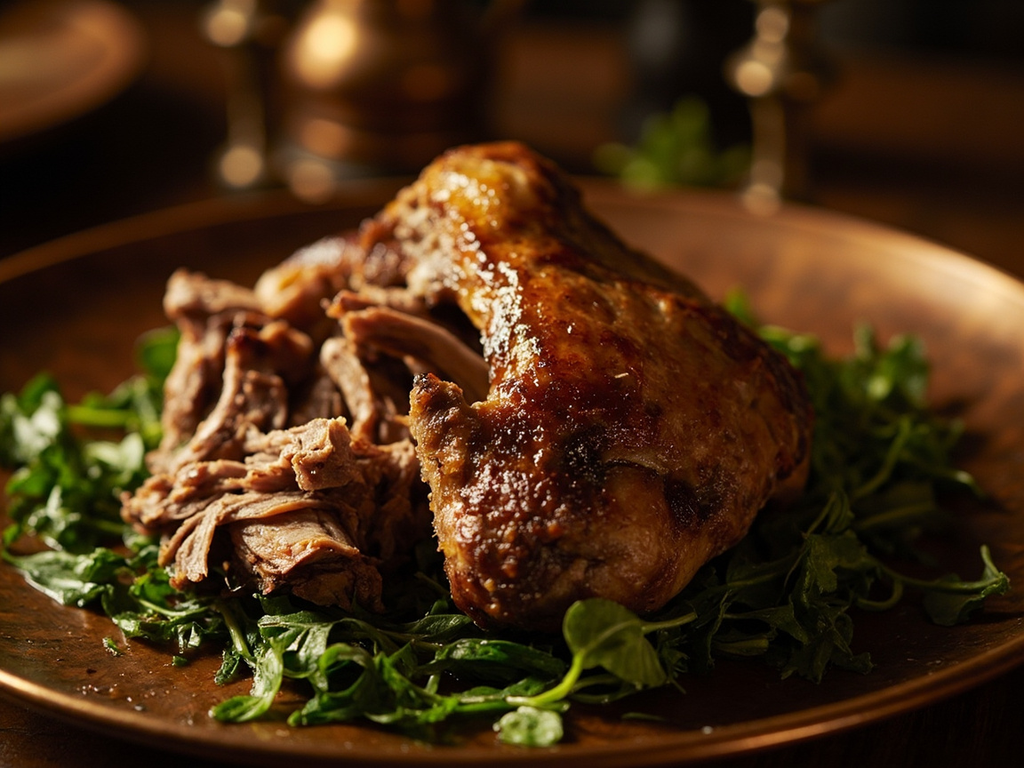
A quarter of kid rubbed with olive oil, salt, and bitter spring herbs, slowly roasted until the meat falls from the bone. Served with flatbreads and fresh herbs, as at weddings and anointings.
Welcome to the table of the house of David. When my son was proclaimed king, the fattened kid was slaughtered and the feast laid out, for meat is the honor one shows to guests. You rub the beast with oil and salt, lay it on the slow embers, and add the bitter herbs of the field to remind that joy often springs from hardship. Eat your fill: at my table, no one leaves with an empty belly.
- •Kid (shoulder or leg) — one quarter (centerpiece)
- •Olive oil — generous (coating and roasting)
- •Bitter herbs (chicory, wild rocket) — one bundle (symbolic accompaniment)
- •Garlic — a few cloves (flavor)
- •Salt — by the handful (seasoning)
Roasted Kid with Bitter Herbs and Oil
A quarter of kid rubbed with olive oil, salt, and bitter spring herbs, slowly roasted until the meat falls from the bone. Served with flatbreads and fresh herbs, as at weddings and anointings.
Why this dish? At the table of David and then Solomon, roasted kid is the dish of great occasions, served at coronations and court banquets in Jerusalem. Queen Mother seated on her throne at the king's right hand, Bathsheba presided over these feasts where guests were honored with the fat of the flocks.
Welcome to the table of the house of David. When my son was proclaimed king, the fattened kid was slaughtered and the feast laid out, for meat is the honor one shows to guests. You rub the beast with oil and salt, lay it on the slow embers, and add the bitter herbs of the field to remind that joy often springs from hardship. Eat your fill: at my table, no one leaves with an empty belly.
Ingredients (period version)
- Kid (shoulder or leg) — one quarter (centerpiece)
- Olive oil — generous (coating and roasting)
- Bitter herbs (chicory, wild rocket) — one bundle (symbolic accompaniment)
- Garlic — a few cloves (flavor)
- Salt — by the handful (seasoning)
Ingredients
- Kid shoulder (or lamb shoulder) — 1.2 kg (centerpiece)
- Olive oil — 4 tbsp (coating and roasting)
- Rocket and curly chicory — 2 generous handfuls (bitter accompaniment)
- Garlic — 4 cloves, crushed (flavor)
- Salt and a little water — 2 tsp salt, 1 glass water (seasoning and cooking)
Method
- Rub the meat with olive oil, crushed garlic, and salt; let rest 1 hour at room temperature.
- Sear the meat on all sides in a hot casserole or roasting pan.
- Add a glass of water to the pan, cover, and roast in the oven at 160°C for 2.5 to 3 hours, basting regularly.
- Uncover for the last 20 minutes to brown the skin.
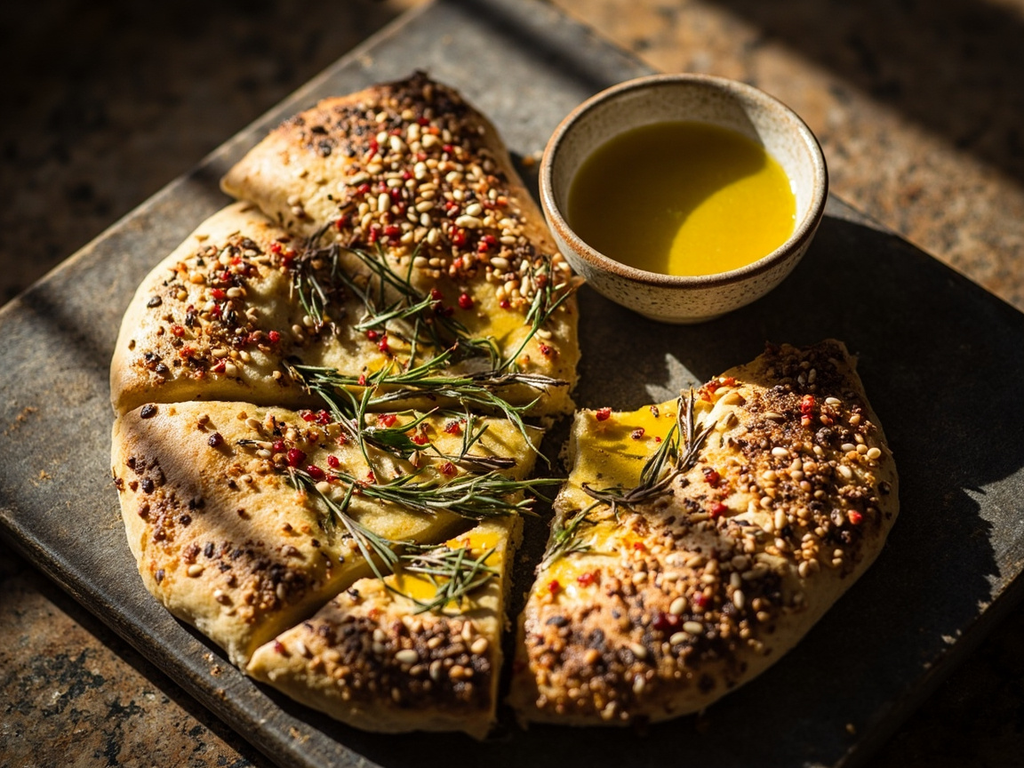
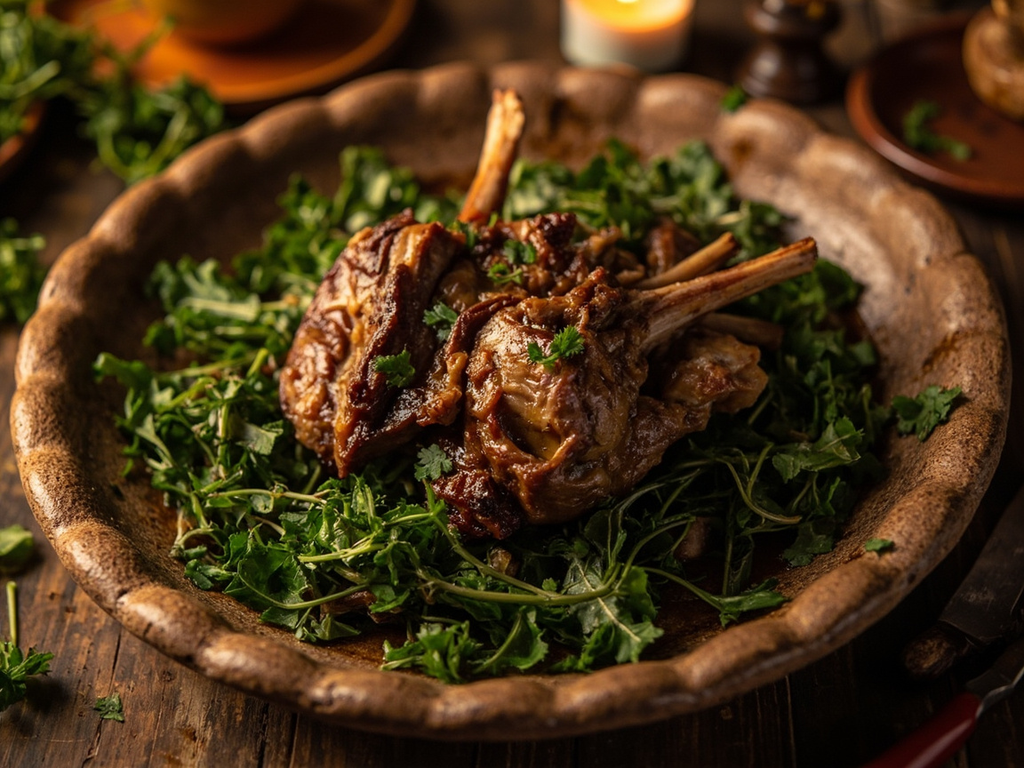
- Serve the pulled meat on a bed of bitter herbs, drizzled with the pan juices, with warm flatbreads.
How it was made : Meat was roasted on a spit over embers or in a clay oven (tabun). Bitter herbs (merorim) accompanied festive meals and carried strong symbolic weight in Israelite tradition. Meat, being expensive, was reserved for feasts and shared sacrifices.
The contemporary twist : Present the pulled meat in a folded flatbread like an ancient wrap, with bitter herbs and a drizzle of oil, for a 'palace street food'.
Sources : 1 Kings 1:9 (Adonijah sacrifices sheep and fattened cattle for a feast) · Nathan MacDonald, *What Did the Ancient Israelites Eat?*, Eerdmans, 2008
Bathsheba · Charactorium