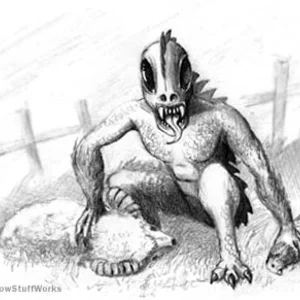

Bigfoot, also known as Sasquatch, is a legendary creature of North American cryptozoology, described as a large, hairy hominid living in the forests. Its existence is not supported by any scientific evidence: it belongs to folklore and popular culture.
Bigfoot
Bigfoot
6 min read
Frequently asked questions
Key Facts
- The term “Bigfoot” appeared in the press in 1958 in California, after the discovery of giant footprints attributed to the creature
- The name “Sasquatch” derives from a word used by the Salish peoples of Canada's west coast and predates the modern legend
- In 1967, the Patterson-Gimlin film claimed to capture a Bigfoot on camera in California: it remains the most famous and most controversial piece of footage
- No physical evidence (bones, conclusive DNA) has ever scientifically confirmed the creature's existence
- Bigfoot became a major figure in American popular culture (film, tourism, marketing) starting in the late 20th century
Works & Achievements
Short film of the silhouette known as “Patty”: the most famous and most analyzed image in the entire Bigfoot legend.
The first serious investigative book, gathering eyewitness accounts and footprints and laying the foundations of Bigfoot cryptozoology.
The creature becomes a popular fictional character on American television, reaching millions of young viewers.
A comprehensive overview regarded as a key reference among enthusiasts of the subject.
A family film that portrays Bigfoot as a gentle and endearing creature, popularizing a positive image of the myth.
A field-research television series that revived worldwide enthusiasm for hunting the Sasquatch.
Humorous commercials for a beef jerky brand that cemented Bigfoot's place in American popular culture.
Anecdotes
In 1958, a bulldozer operator named Jerry Crew discovered enormous footprints around his work site at Bluff Creek, California. The local newspaper, the Humboldt Times, published the story and coined the nickname “Bigfoot.” The name immediately spread across the United States and became famous.
On October 20, 1967, Roger Patterson and Robert Gimlin filmed a hairy figure near Bluff Creek that they nicknamed “Patty.” This short film, less than a minute long, remains the most famous — and most disputed — image of Bigfoot. Even today, experts and skeptics argue over whether it shows a man in a costume.
The word “Sasquatch” was created around 1929 by J.W. Burns, a Canadian schoolteacher who collected the stories of the Sts'Ailes people in British Columbia. It is an English adaptation of the Halkomelem word “sasq'ets,” meaning a wild, hairy man. The term then spread throughout North America.
In 2002, when Ray Wallace died, his family revealed that he was behind the famous footprints of 1958: he had made them using large carved wooden feet, as a prank. This revelation reignited the debate over the authenticity of the many tracks attributed to Bigfoot.
Long before the 1950s, many Native American peoples of the Pacific Northwest told stories of hairy giants living in the forests. Each people had its own name and its own tales. Bigfoot is therefore rooted in a folklore far older than its modern fame.
Primary Sources
The Indians of the Chehalis Valley claim that hairy giants, which they call Sasquatch, dwell in the nearby mountains and shun all contact with humans.
I saw the track of a large animal; it measured about fourteen inches long by eight wide, with four toes — none of us could identify what had made it.
The work crew found enormous bare footprints in the mud; they nicknamed the mysterious walker “Bigfoot.”
I declare that I was carried off in my sleeping bag by a large hairy creature, which kept me for several days with its family before I managed to escape.
Key Places
Site of the 1958 footprints that gave rise to the name “Bigfoot,” and later of the famous 1967 film. It is the birthplace of the modern myth.
A small town nicknamed the “Bigfoot capital,” home to a museum and a festival devoted to the creature. A large wooden statue welcomes visitors there.
A gorge near Mount St. Helens where miners claimed in 1924 to have been attacked by “ape-men.” One of the oldest modern accounts.
A region in the Fraser Valley where J.W. Burns gathered the sasq'ets stories and popularized the word Sasquatch. The creature has become a local symbol there.
Vast coniferous forests stretching from California to Alaska, presented as Bigfoot's natural habitat. Their density fuels the idea that a creature could be hiding there.
Typical Objects

Casts of giant footprints poured in plaster by researchers and the curious. They are the most widely collected “proof,” but also the easiest to fake.

A 16 mm camera used to film “Patty” in 1967. The footage it produced is the most analyzed image in the entire history of cryptozoology.

Large feet carved from wood, used by pranksters like Ray Wallace to leave fake footprints. They symbolize the element of hoax in the legend.

A device placed in forests that triggers when an animal passes by. Bigfoot hunters set up dozens of them hoping to capture an image.

A tape recorder or microphone used to capture howls attributed to Bigfoot, sometimes by knocking two sticks together to provoke a response.
School Curriculum
Vocabulary & Tags
Key Vocabulary
Tags
Daily Life
Morning
According to eyewitness accounts, Bigfoot is said to be most active at dawn and dusk. It is described foraging for food along rivers and clearings, taking advantage of the still-faint light to remain unseen.
Afternoon
In folklore, the creature is said to spend the heart of the day hidden deep within the forest, shielded from human eyes. Its legendary elusiveness is said to explain the absence of evidence.
Evening
Sightings are often placed at nightfall, accompanied by howls or the sound of wood knocking together. Bigfoot is thus portrayed as a rather nocturnal being.
Food
Folklore makes it an omnivore that would feed on berries, roots, fish, and small animals. Some accounts claim it rummages through campsites in search of leftovers.
Clothing
Bigfoot is always described as naked, entirely covered in thick brown or reddish fur. This coat, believed to protect it from the cold, is part of its classic portrait.
Housing
The creature is said to have neither home nor tools: it is imagined living out in the open, in the caves or thickets of the great forests of the Northwest. This wild existence reinforces its image as an elusive wild man of the woods.
Historical Timeline
Period Vocabulary
Liens externes & ressources
Références
Œuvres
Film Patterson-Gimlin
1967
On the Track of the Sasquatch (John Green)
1968
L'Homme qui valait trois milliards (épisodes Bigfoot)
1976
Sasquatch: The Apes Among Us (John Green)
1978
Finding Bigfoot (Animal Planet)
2011-2018
Campagne publicitaire « Messin' with Sasquatch »
années 2000