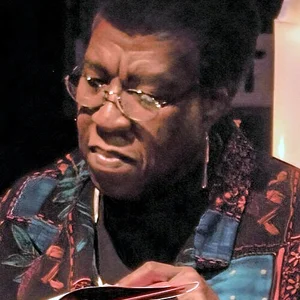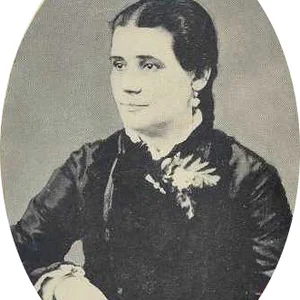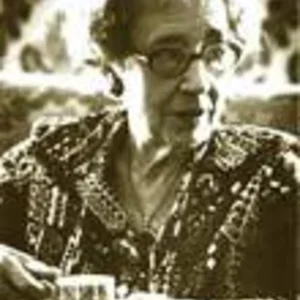

Lydia Cabrera (1899-1991) was a Cuban writer and anthropologist, a pioneer in the study of Afro-Cuban cultures. Her major work, El Monte, is a reference on the religions and traditions of African origin in Cuba.
Lydia Cabrera(1899 — 1991)
Lydia Cabrera
Cuba
5 min read
Frequently asked questions
Key Facts
- Born in 1899 in Havana into a well-off Cuban family
- Published Afro-Cuban Tales in 1936, a collection of Afro-Cuban stories
- Released El Monte in 1954, a reference work on Afro-Cuban religions (Santería, Palo Monte)
- Went into exile in the United States after the Cuban Revolution of 1959, continuing her work in Miami
- Died in 1991 in Miami, leaving behind a major work of ethnography
Works & Achievements
A collection of Afro-Cuban folktales, first published in French in Paris; it revealed to the public the imaginative world of the descendants of slaves.
A second collection of etiological tales (“why things are the way they are”), continuing her work of gathering oral traditions.
Her major, foundational work: an encyclopedia of Afro-Cuban religions, plants, and knowledge, an essential reference in Afro-American studies.
A dictionary of the ritual Lucumí language spoken in Cuba, derived from Yoruba; a key tool for understanding Santería.
A pioneering study of the all-male Abakuá secret society, based on the accounts of elderly initiates.
A collection of proverbs from the old Black communities of Cuba, a testament to Afro-Cuban folk wisdom.
Anecdotes
As a little girl in Havana, Lydia Cabrera grew up surrounded by the household's Afro-Cuban nannies and servants. Listening to them tell folktales and legends, she discovered — without yet realizing it — the world she would spend her life studying.
In Paris in the 1920s, she became passionate about the African art on display in European museums. This detour through Europe paradoxically led her to rediscover the Africa present at home in Cuba, and made her decide to become an ethnographer of her own island.
To write El Monte, her major book published in 1954, she spent years earning the trust of priests and initiates of Santería and the Abakuá cult, who confided secrets to her that were rarely shared with outsiders.
In 1960, after the Castro revolution, Lydia Cabrera left Cuba for exile. She settled in Miami, where she kept writing for more than thirty years, becoming a major figure of Cuban culture in the diaspora.
Her Cuentos negros de Cuba (Black Tales from Cuba) was first published in French in Paris in 1936, before appearing in Spanish: a Cuban book that traveled the world backwards.
Primary Sources
The black Cuban descended from slaves never stopped believing in the power of the forest, El Monte, where the spirits and deities that govern the lives of men dwell.
A collection of tales gathered from the descendants of African slaves, faithfully transcribing the Afro-Cuban popular voice and imagination.
A compilation of the Lucumí vocabulary, a ritual language derived from Yoruba preserved by the practitioners of Santería in Cuba.
Testimonies from old initiates about the male Abakuá secret society, collected and reported by the author.
Key Places
Birthplace of Lydia Cabrera, where she grew up in a well-off family and discovered Afro-Cuban culture through contact with the household servants.
Cabrera studied here in the 1920s and published her first tales here; the city revealed African art to her and shaped her calling.
An estate near Havana where Cabrera lived and conducted many of her ethnographic investigations before going into exile.
Cabrera's host city after 1960, where she continued her work within the Cuban diaspora until her death.
Typical Objects

Notebook in which Lydia Cabrera recorded, word for word, the testimonies of initiates, tales, and ritual formulas. It is the basic tool of her fieldwork.

Sacred two-headed drum used in Santería ceremonies to call upon the orishas. Cabrera studied and described its ritual role.

Beaded necklace in the colors specific to each Santería deity, worn by initiates. It signals one's belonging to and protection by an orisha.

Sacred cauldron of the Palo Monte cult containing earth, herbs, and objects charged with spiritual force. Cabrera described its making and its uses.

Emblematic tool of the Afro-Cuban rural worker, inherited from the world of the sugar plantations. It appears in the tales and rites studied by Cabrera.

Plants of the forest and the bush regarded as endowed with powers of healing or protection. Cabrera compiled a veritable catalog of them in El Monte.
School Curriculum
Vocabulary & Tags
Key Vocabulary
Tags
Daily Life
Morning
In her house in Marianao, near Havana, Lydia Cabrera often began the day by reading and writing up her notes. She would reread the accounts she had gathered the day before from her Afro-Cuban informants.
Afternoon
The afternoon was devoted to fieldwork: she would visit priests, healers, and old initiates, patiently listening to their stories. She scrupulously noted down every word, every formula, every plant name.
Evening
In the evening, she sorted and organized her documentation, comparing the versions of a single tale or a single rite. It was through this meticulous nocturnal work that her books gradually came into being.
Food
The Cuban cooking of her daily life combined rice, black beans, plantains, and pork, a crossed heritage of Spain and Africa. Strong coffee accompanied her long hours of work.
Clothing
A woman of the Havana bourgeoisie of the early 20th century, she wore light dresses suited to the tropical climate. Understated and elegant, she favored a discreet appearance, away from social affairs.
Housing
Before exile, she lived in a large residence on the outskirts of Havana, surrounded by greenery. After 1960, her life was reorganized in a more modest home in Miami, at the heart of the exiled Cuban community.
Historical Timeline
Period Vocabulary
Liens externes & ressources
Références
Œuvres
Cuentos negros de Cuba
1936
Por qué… Cuentos negros de Cuba
1948
El Monte
1954
Anagó, vocabulario lucumí
1957
La sociedad secreta Abakuá
1958
Refranes de negros viejos
1955