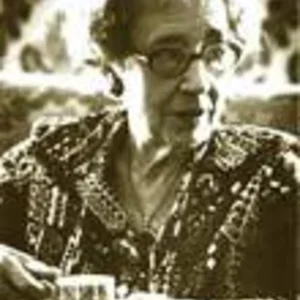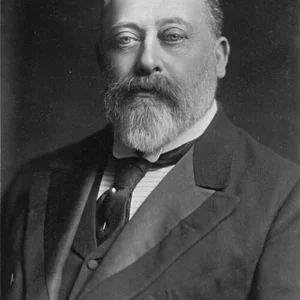

Martha Warren Beckwith was an American folklorist and ethnographer, a pioneer of folklore studies in the United States. She is best known for her work on Hawaiian mythology and Jamaican folklore.
Martha Beckwith
Martha Warren Beckwith
6 min read
Frequently asked questions
Key Facts
- Born in 1871 in Connecticut, she grew up partly in Hawaii, which fueled her interest in Pacific cultures.
- In 1920, she became the first holder of a chair in folklore at an American university, at Vassar College.
- She published 'Hawaiian Mythology' in 1940, a landmark work on Hawaiian traditions.
- She translated and annotated the 'Kumulipo', the Hawaiian creation chant, published in 1951.
- She died in 1959, also leaving behind important studies of Jamaican and Native American folklore.
Works & Achievements
Translation of a Hawaiian tale collected in the 19th century, one of her first major works showcasing the oral literature of Hawaii.
A pioneering collection of Jamaican folktales that preserves the tradition of Anansi the spider, inherited from West Africa.
An ethnographic study of the daily life, beliefs, and festivals of Jamaica's rural communities.
A landmark synthesis that organizes and compares the whole body of Hawaiian myths, still consulted by scholars today.
A scholarly translation and commentary on the great Hawaiian creation chant, the culmination of decades of work.
The first American university body dedicated to folklore, which she directed and which made her a pioneer of the discipline.
Anecdotes
Born in Massachusetts in 1871, Martha Beckwith spent part of her childhood on the island of Maui, in Hawaii, where her family settled. It was there, surrounded by Hawaiian tales and chants, that the passion which would guide her entire life took root: to understand and preserve the oral traditions of peoples.
In 1923, she became the first person in the United States to hold a university position devoted entirely to folklore, thanks to the Folklore Foundation created for her at Vassar College. No one before her had made folklore a true discipline of higher education in the country.
Her lifelong companion, the naturalist and paleontologist Annie Montague Alexander, quietly funded the foundation that allowed Martha to carry out her research. This friendship and support made possible a body of work that the institutions of the time rarely financed for a woman.
At Columbia, she studied under Franz Boas, regarded as the father of American anthropology, who championed the idea that each culture should be understood according to its own values and not judged as “inferior.”
She devoted years to translating and annotating the Kumulipo, an immense Hawaiian creation chant of more than two thousand verses that tells of the birth of the world. Her landmark edition appeared in 1951, when she was already 80 years old.
Primary Sources
A monumental study that gathers and compares the narratives, genealogies, and deities of the Hawaiian archipelago, presented as a coherent system of beliefs rather than as a scattering of isolated legends.
An account of the customs, beliefs, festivals, and everyday practices of Jamaica's rural communities, the fruit of several stretches of fieldwork on the island.
A collection of tales from the Jamaican tradition featuring Anansi the spider, the cunning hero inherited from West African traditions, transcribed as faithfully as possible to the storytellers' own words.
A translation and commentary on the great Hawaiian cosmogonic chant, which describes the gradual birth of the world—from sea creatures to gods and chiefs—out of the original darkness (“pō”).
Key Places
Birthplace of Martha Beckwith, in the Boston area, United States.
Island where she spends part of her childhood and discovers Hawaiian culture, which would become the central subject of her research.
Women's college in Massachusetts where she earned her first degree in 1893.
University where she earned her doctorate in 1918, in the tradition of Franz Boas's anthropology.
College where the Folklore Foundation was created for her in 1923: the heart of her academic career.
Caribbean island where she conducted several fieldwork studies on Anansi tales and folk life.
Liens externes & ressources
Références
Œuvres
The Hawaiian Romance of Laieikawai
1919
Jamaica Anansi Stories
1924
Black Roadways: A Study of Jamaican Folk Life
1929
Hawaiian Mythology
1940
The Kumulipo: A Hawaiian Creation Chant
1951
Fondation de la Folklore Foundation (Vassar College)
1923