 flip
flipKhasi ko masu — festive goat curry
Khasi ko masu — festive goat curry
Why this dish? Goat meat was the festive dish at the palace, especially during Dashain, the biggest Hindu festival of Nepal, when the king presided over sacrifices and banquets. A high-caste Hindu, Birendra never touched beef, but mutton and goat crowned royal celebrations.
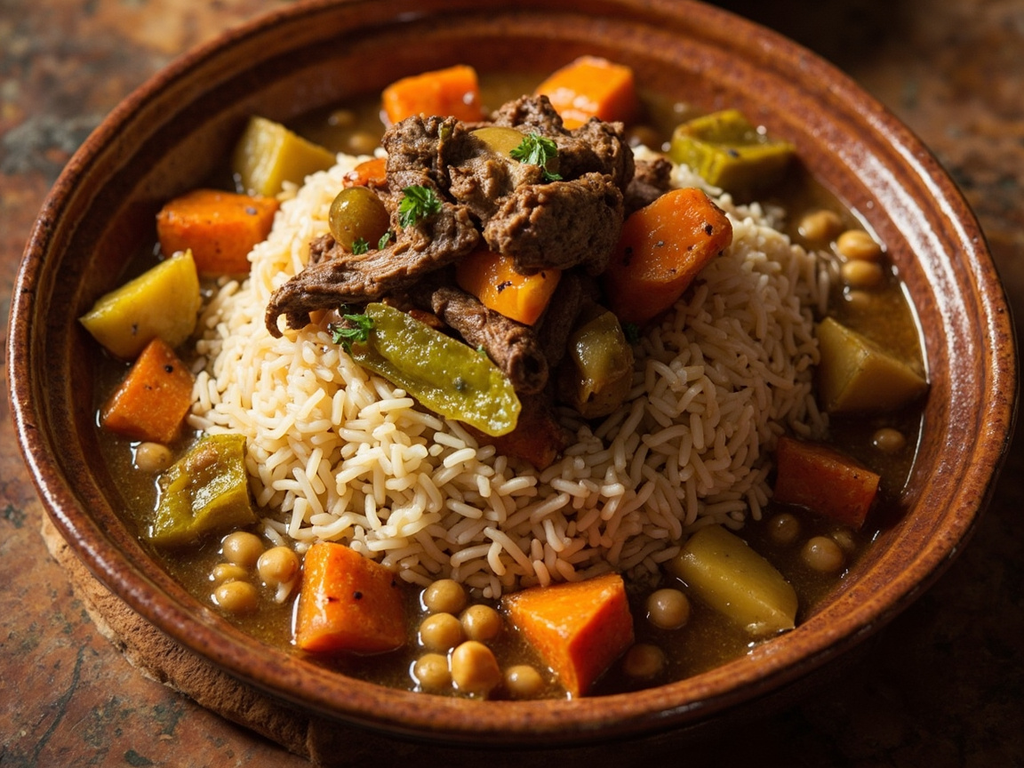
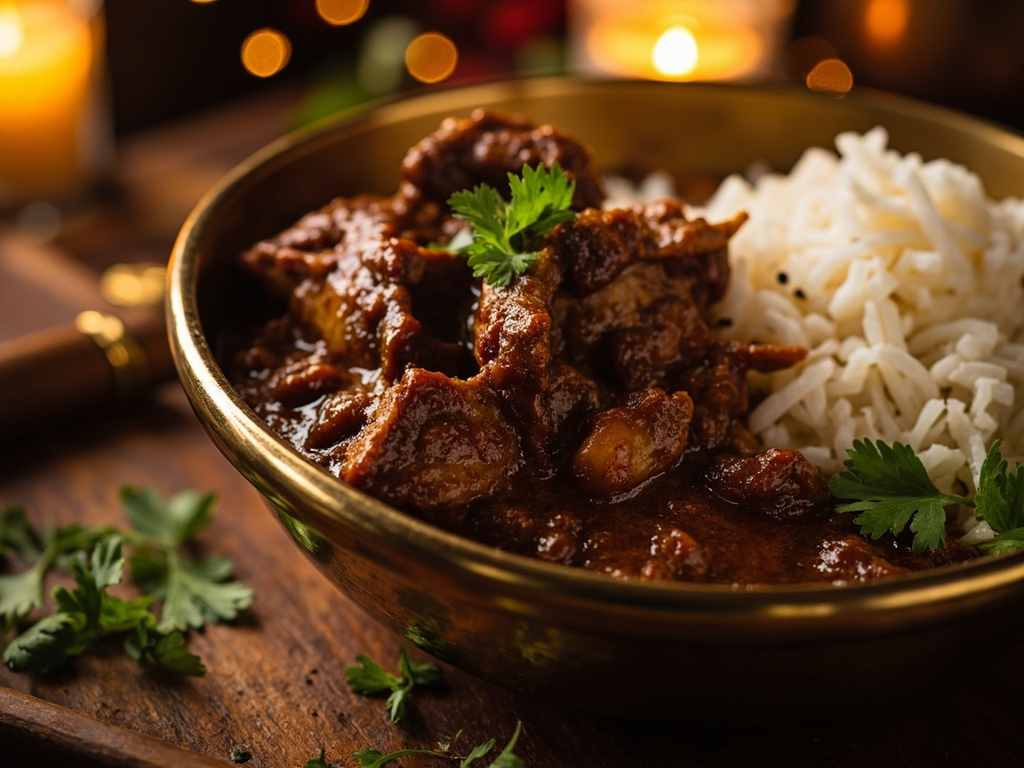
Goat curry long-simmered in mustard oil, ginger, garlic, and Himalayan spices. The meat dish of festive days, rich and deeply spiced.
When Dashain came, all Nepal smelled of khasi ko masu rising from the courtyards. At my table, it was simmered for hours in mustard oil, until the flesh fell from the bone and the sauce became thick and dark. The trick? First brown the meat on high heat with ginger and garlic, without haste — patience is the first spice. It is a dish of sharing, prayer, and victory; it is not served on just any day.
- •Goat meat on the bone — a fine piece (heart of the dish)
- •Mustard oil — to taste (signature fat)
- •Ginger and garlic — abundant (aromatic base)
- •Turmeric, cumin, coriander, cinnamon, cardamom, cloves — to taste (masala)
- •Onions — several (sauce binder)
Khasi ko masu — festive goat curry
Goat curry long-simmered in mustard oil, ginger, garlic, and Himalayan spices. The meat dish of festive days, rich and deeply spiced.
Why this dish? Goat meat was the festive dish at the palace, especially during Dashain, the biggest Hindu festival of Nepal, when the king presided over sacrifices and banquets. A high-caste Hindu, Birendra never touched beef, but mutton and goat crowned royal celebrations.
When Dashain came, all Nepal smelled of khasi ko masu rising from the courtyards. At my table, it was simmered for hours in mustard oil, until the flesh fell from the bone and the sauce became thick and dark. The trick? First brown the meat on high heat with ginger and garlic, without haste — patience is the first spice. It is a dish of sharing, prayer, and victory; it is not served on just any day.
Ingredients (period version)
- Goat meat on the bone — a fine piece (heart of the dish)
- Mustard oil — to taste (signature fat)
- Ginger and garlic — abundant (aromatic base)
- Turmeric, cumin, coriander, cinnamon, cardamom, cloves — to taste (masala)
- Onions — several (sauce binder)
Ingredients
- Goat shoulder or leg (or mutton) on the bone — 1 kg (heart of the dish)
- Mustard oil — 4 tablespoons (signature fat)
- Ginger + garlic paste — 3 tablespoons (aromatic base)
- Onions — 3 large, sliced (sauce binder)
- Ground turmeric, cumin, coriander — 1 teaspoon each (base masala)
- Cinnamon stick, cardamom pods, cloves — 1 stick + 4 pods + 4 cloves (whole spices)
- Salt — to taste (seasoning)
Method
- Heat the mustard oil until it just begins to smoke, then let it cool slightly (this mellows its pungency).
- Fry the whole spices, then the onions until they brown.
- Add the ginger-garlic paste and ground spices; sauté until fragrant.
- Add the goat and sear on high heat on all sides.
- Cover with hot water, season with salt, and simmer covered for 1.5 to 2 hours until the meat is tender and the sauce thick.
- Serve over rice, in the place of honor of the thali.
How it was made : At Dashain, the goat was sacrificed according to rite, then its meat was cooked over wood in large iron pots. Mustard oil, heated to smoking point before cooking, was (and remains) the indispensable cooking fat of Nepali cuisine — clarified butter, ghee, being reserved for more delicate or ritual preparations.
The contemporary twist : Finish with a pinch of timur (Himalayan Sichuan pepper) crushed in a mortar just before serving: its lemony freshness and slight tingle mark a high-altitude curry.
Birendra · Charactorium