 flip
flipCouscous with Mutton and Seven Vegetables
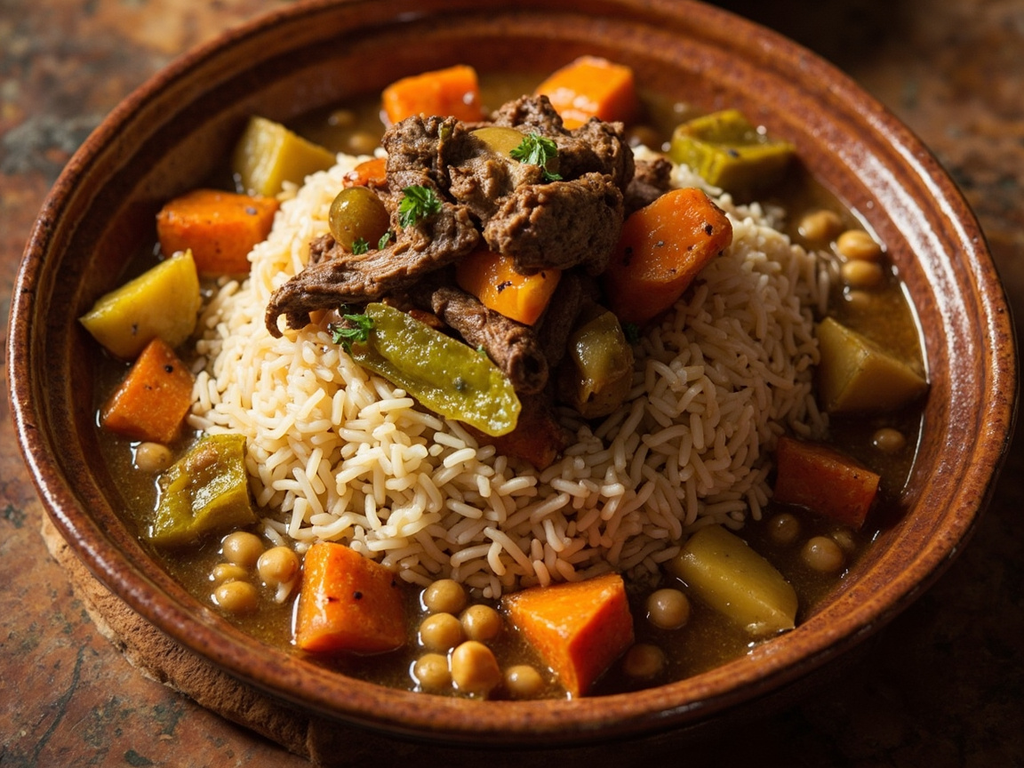
Couscous with Mutton and Seven Vegetables
Why this dish? Couscous is THE Friday and special occasion dish in the Algeria where Ben Bella grew up, and the profile notes that his diet relied on couscous and mutton dishes. A dish of family and community gathering, it suits the man of sharing and collective cause.
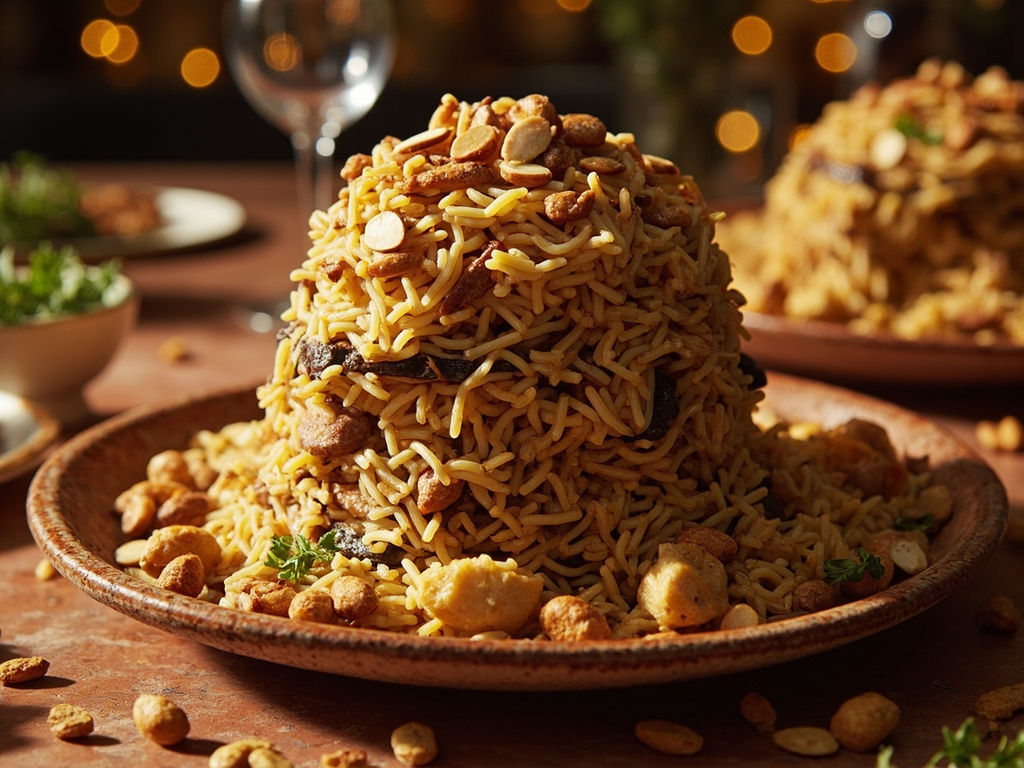
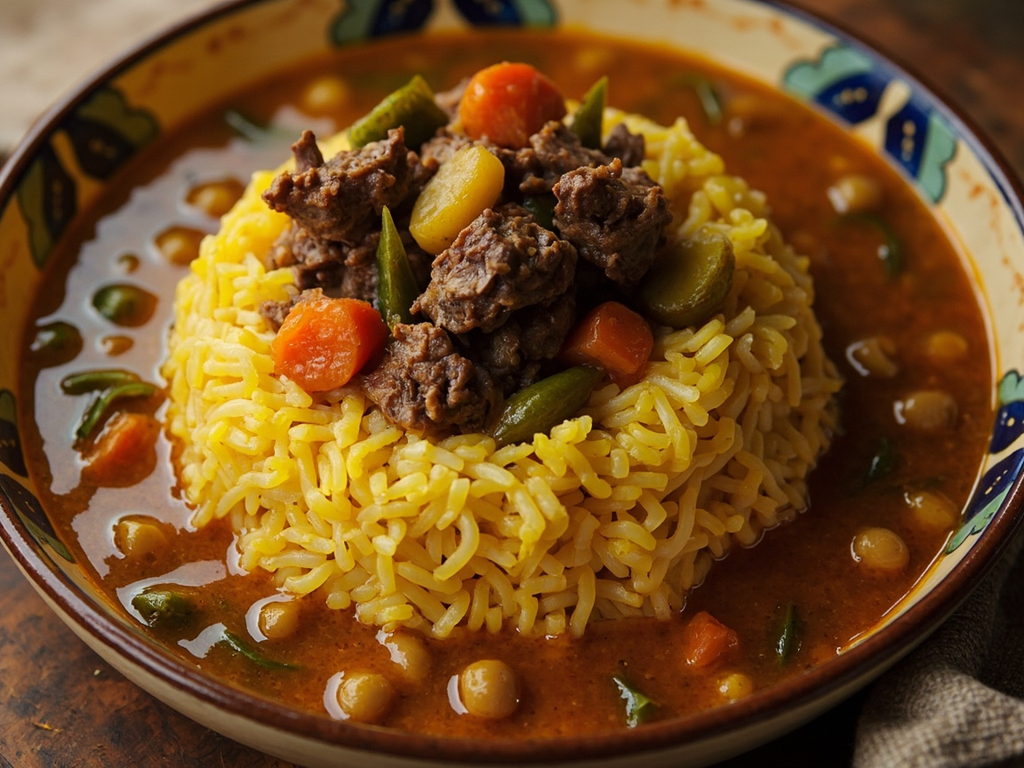
A mountain of hand-rolled semolina, golden with smen, crowned with a saffron broth of mutton and seasonal vegetables. The dish is eaten from the center of the table, each person taking from in front of them.
Listen to me, my son. In our home in Maghnia, couscous is not a dish, it's a vow: on Friday, the whole household gathers around the same dish, rich and poor eat from the same semolina. My mother rolled the grain in her palm, patiently, and steamed it three times over the broth — never water, never! The mutton was left to melt with the smen and ras el-hanout, and the scent filled the whole street. Believe me, a people who know how to share a couscous will one day know how to share their freedom.
- •Durum wheat semolina — a large platter (base, hand-rolled)
- •Mutton shoulder — a nice piece (braised meat)
- •Smen (fermented butter) — a generous spoonful (signature fat flavor)
- •Soaked chickpeas — a handful (legume)
- •Zucchini, turnips, carrots, cardoons — seasonal (broth vegetables)
- •Ras el-hanout, saffron, mild harissa — to taste (spices)
Couscous with Mutton and Seven Vegetables
A mountain of hand-rolled semolina, golden with smen, crowned with a saffron broth of mutton and seasonal vegetables. The dish is eaten from the center of the table, each person taking from in front of them.
Why this dish? Couscous is THE Friday and special occasion dish in the Algeria where Ben Bella grew up, and the profile notes that his diet relied on couscous and mutton dishes. A dish of family and community gathering, it suits the man of sharing and collective cause.
Listen to me, my son. In our home in Maghnia, couscous is not a dish, it's a vow: on Friday, the whole household gathers around the same dish, rich and poor eat from the same semolina. My mother rolled the grain in her palm, patiently, and steamed it three times over the broth — never water, never! The mutton was left to melt with the smen and ras el-hanout, and the scent filled the whole street. Believe me, a people who know how to share a couscous will one day know how to share their freedom.
Ingredients (period version)
- Durum wheat semolina — a large platter (base, hand-rolled)
- Mutton shoulder — a nice piece (braised meat)
- Smen (fermented butter) — a generous spoonful (signature fat flavor)
- Soaked chickpeas — a handful (legume)
- Zucchini, turnips, carrots, cardoons — seasonal (broth vegetables)
- Ras el-hanout, saffron, mild harissa — to taste (spices)
Ingredients
- Medium couscous semolina — 500 g (base)
- Mutton or lamb shoulder — 800 g, cut into pieces (meat)
- Smen (or butter + 1 tsp fermented yogurt) — 2 tbsp (flavored fat)
- Canned chickpeas — 1 can, drained (legume)
- Zucchini, turnips, carrots — 3 of each (vegetables)
- Onion — 2 (base)
- Ras el-hanout — 1 tbsp (signature spice)
- Saffron / turmeric — 1 pinch (color and flavor)
- Olive oil, salt, pepper — to taste (seasoning)
Method
- Sauté onions and mutton pieces in oil at the bottom of the couscoussier, add ras el-hanout, saffron, salt, and pepper.
- Cover with hot water, add chickpeas, simmer for 45 min.
- Meanwhile, moisten the semolina, rub it with your hands, and steam it over the broth in three passes, aerating and adding a little oil between each.
- Add the vegetables to the broth (carrots and turnips first, then zucchini) and cook another 25 min.
- Fold the smen into the hot semolina to perfume it.
- Mound the semolina in a dome, make a well, arrange meat and vegetables, drizzle with broth. Serve the remaining broth on the side.
How it was made : In the old days, all the semolina was hand-rolled, grain by grain, by the women of the house — a skill passed from mother to daughter. Steaming in several passes over the broth (never boiling water) was the absolute rule to achieve light, fragrant grains. Smen, stored in a jar, could ferment for months and was a marker of family wealth.
The contemporary twist : Serve in individual deep tagine bowls, with a spoonful of melted smen poured at the table in front of the guest, like a ritual.
Sources : Fatéma Hal, Les saveurs et les gestes — cuisines et traditions du Maroc et du Maghreb · UNESCO, Inscription des savoir-faire et pratiques liés au couscous au patrimoine culturel immatériel (2020)
Ahmed Ben Bella · Charactorium