 flip
flipHippocras with Wine and Honey
Hippocras with Wine and Honey
Why this dish? Hippocras, a sweet spiced wine served at the end of banquets, accompanied festivities and visits among the high society that Pascal frequented in his Parisian and Rouen youth. It was the hospitality drink of the Grand Siècle, offered to distinguished guests.
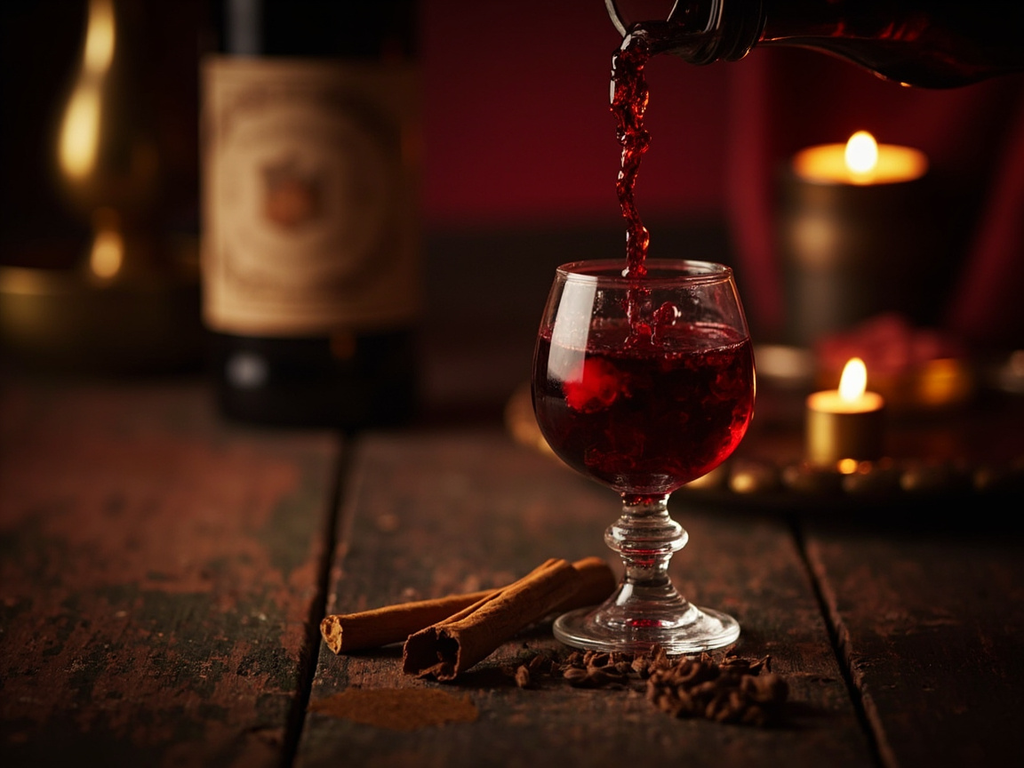
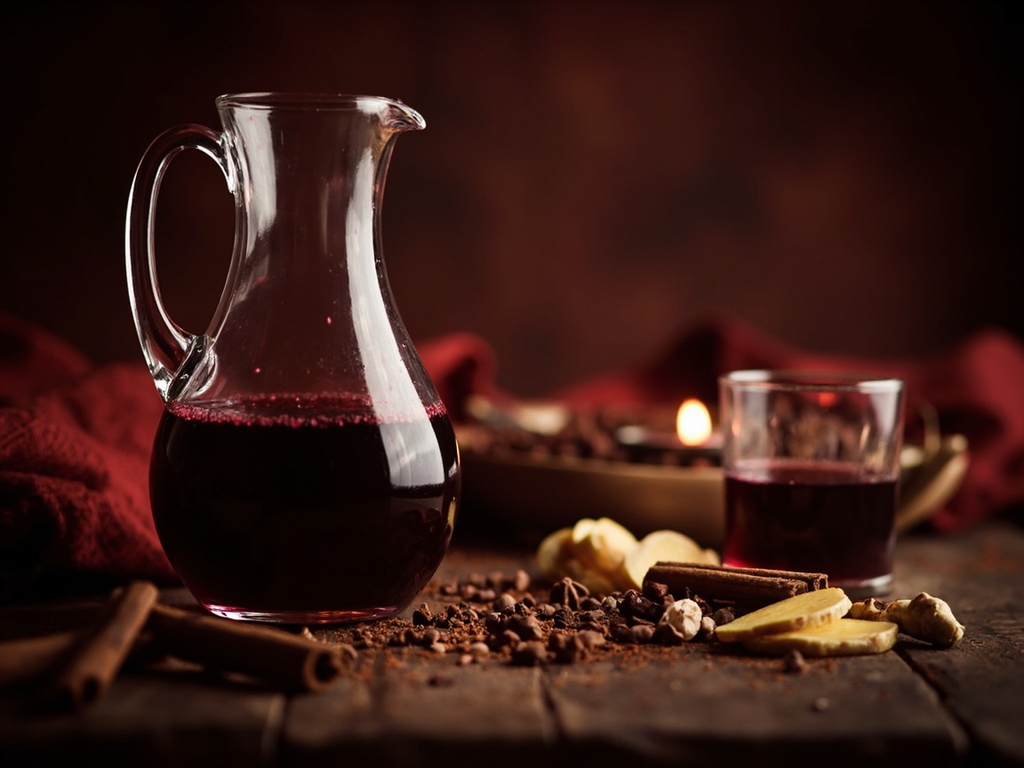
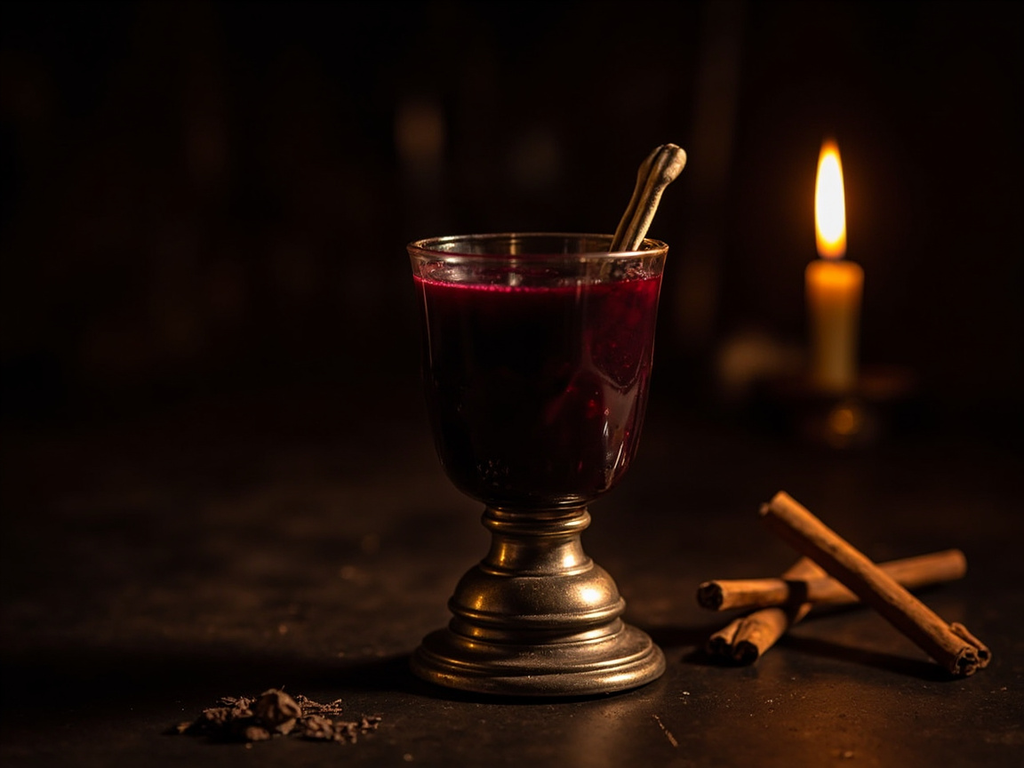
A red or white wine sweetened with honey and long infused with cinnamon, ginger, and other spices, then clarified through a 'hippocras bag'. Served cool, at the end of the meal, as a sign of celebration.
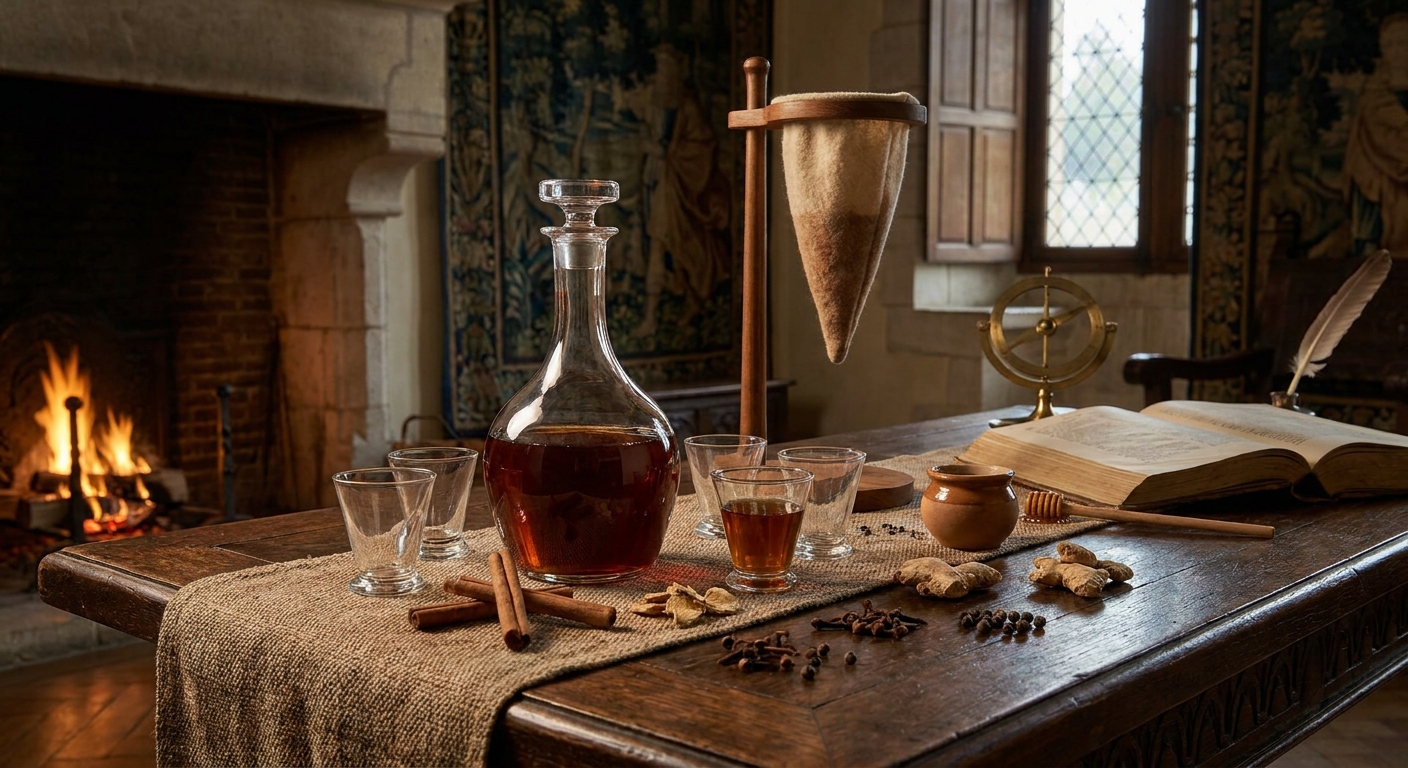
Here is the liquor that was offered to guests when the hour was for rejoicing rather than reflection. Take a good wine, dissolve honey in it, and throw in your spices — cinnamon, ginger, a grain of long pepper — then let it rest a whole night. In the morning, strain it through a woolen bag until it is as clear as a well-conducted argument. Serve it sparingly, and with measure: for wine gladdens the heart, but it is sobriety that keeps the mind.
- •Good wine (red or white) — a pint (base)
- •Honey — to taste (sweetness)
- •Cinnamon — a stick (master spice)
- •Ginger — a piece (warmth)
- •Clove and long pepper — a few (lift)
- •Mace or nutmeg — a pinch (flavor)
Hippocras with Wine and Honey
A red or white wine sweetened with honey and long infused with cinnamon, ginger, and other spices, then clarified through a 'hippocras bag'. Served cool, at the end of the meal, as a sign of celebration.
Why this dish? Hippocras, a sweet spiced wine served at the end of banquets, accompanied festivities and visits among the high society that Pascal frequented in his Parisian and Rouen youth. It was the hospitality drink of the Grand Siècle, offered to distinguished guests.
Here is the liquor that was offered to guests when the hour was for rejoicing rather than reflection. Take a good wine, dissolve honey in it, and throw in your spices — cinnamon, ginger, a grain of long pepper — then let it rest a whole night. In the morning, strain it through a woolen bag until it is as clear as a well-conducted argument. Serve it sparingly, and with measure: for wine gladdens the heart, but it is sobriety that keeps the mind.
Ingredients (period version)
- Good wine (red or white) — a pint (base)
- Honey — to taste (sweetness)
- Cinnamon — a stick (master spice)
- Ginger — a piece (warmth)
- Clove and long pepper — a few (lift)
- Mace or nutmeg — a pinch (flavor)
Ingredients
- Fruity red wine (or off-dry white) — 75 cl (base)
- Honey — 80 to 120 g, to taste (sweetness)
- Cinnamon stick — 1 (master spice)
- Fresh ginger — 3 slices (warmth)
- Cloves — 3 (lift)
- Grated nutmeg — 1 pinch (flavor)
Method
- Gently warm (do not boil) the wine with the honey until fully dissolved.
- Remove from heat, add all spices, and cover.
- Let infuse cold for 12 hours (overnight) to develop the aromas.
- Filter carefully through a fine cloth or coffee filter until the liquid is clear.
- Serve cool, in small quantities, at the end of the meal.
How it was made : Hippocras takes its name from the physician Hippocrates, alluding to the 'Hippocratic sleeve', the conical cloth bag used to filter it. A drink inherited from the Middle Ages, it remained in vogue throughout the 17th century as a festive end-of-meal beverage, before declining in the Age of Enlightenment. Sugar gradually replaced honey among the wealthiest.
The contemporary twist : An iced version in the style of an 'Ancien Régime spritz': very cold hippocras topped with a little sparkling water and a strip of bitter orange zest.
Sources : François Pierre de La Varenne, Le Cuisinier françois, 1651 · Tradition de l'hypocras, recueils de cuisine français XVe–XVIIe s.
Blaise Pascal · Charactorium