 flip
flipHypocras — vin épicé et sucré
Hypocras — vin épicé et sucré
Why this dish? Hypocras is drunk at the "issue de table," at the time of preserves and fruits, when people are still chatting after supper. For Racine, a courtly man of letters who frequented salons and the court, it is the drink of refined sociability—the one that accompanies conversations about theater and poetry.
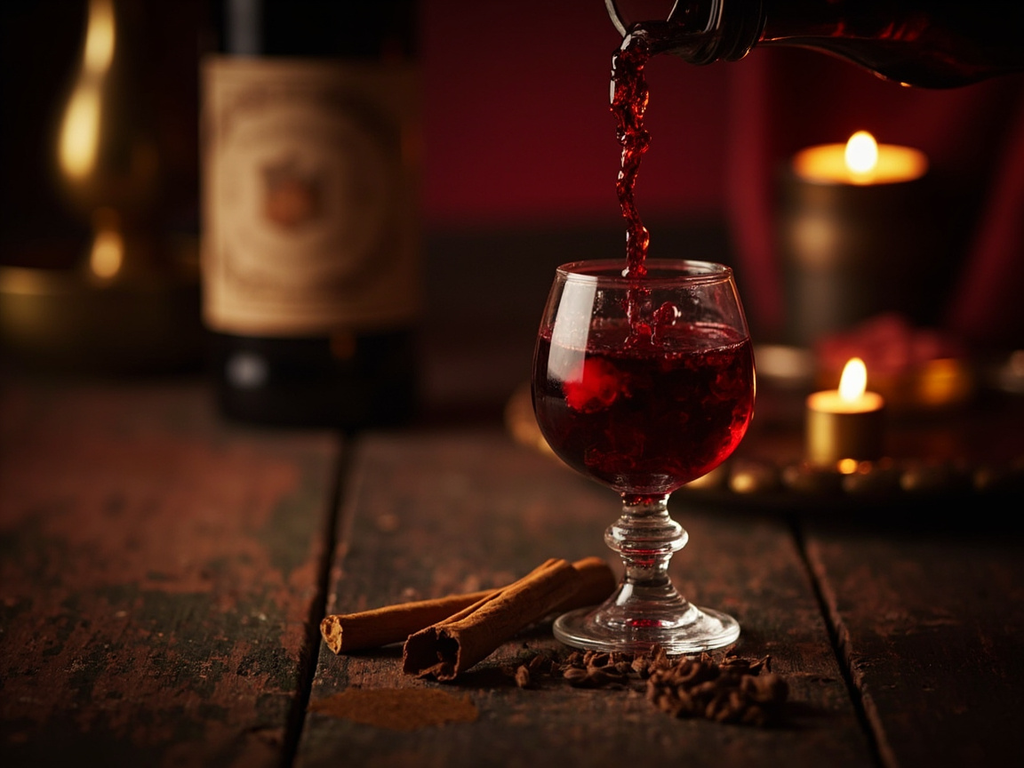
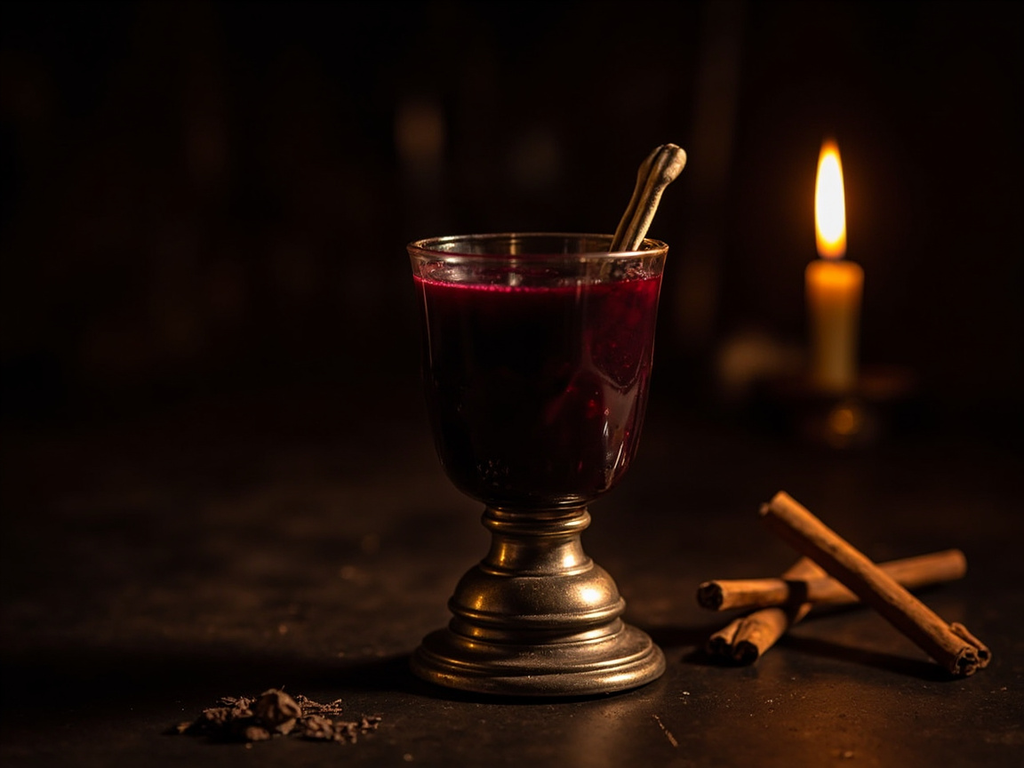
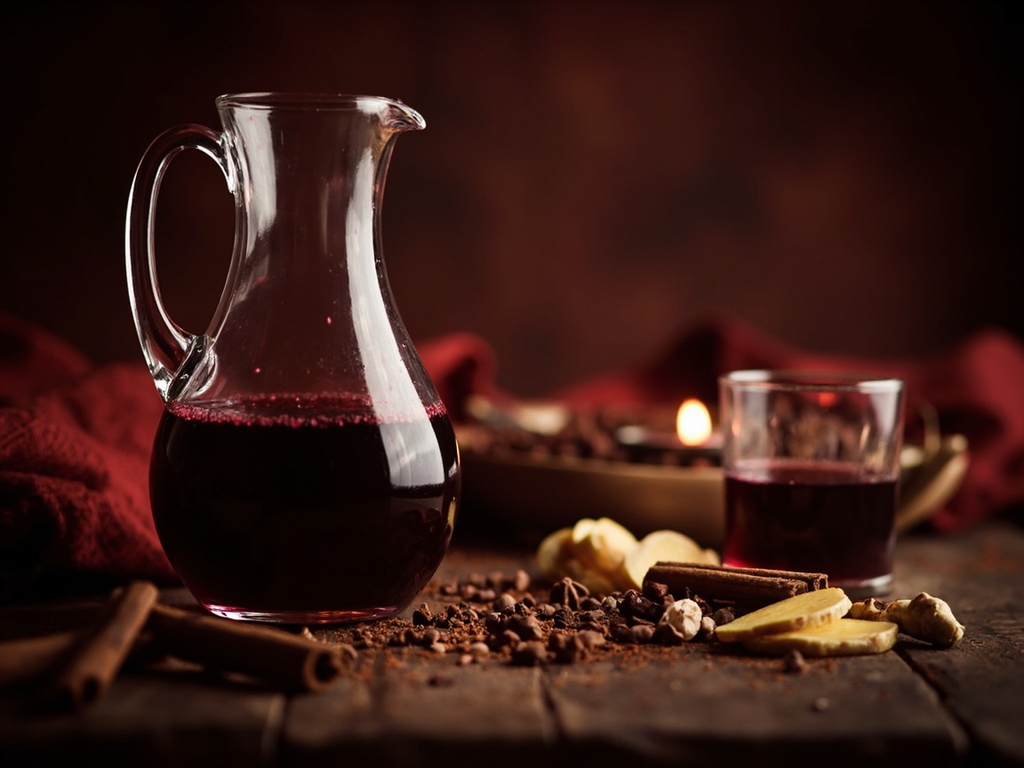
A red wine sweetened with honey or sugar, perfumed with cinnamon, ginger, and clove, left to infuse then clarified. Served in small quantities at the end of the meal, it is an elegant digestif from the Middle Ages still in favor in the Grand Siècle.
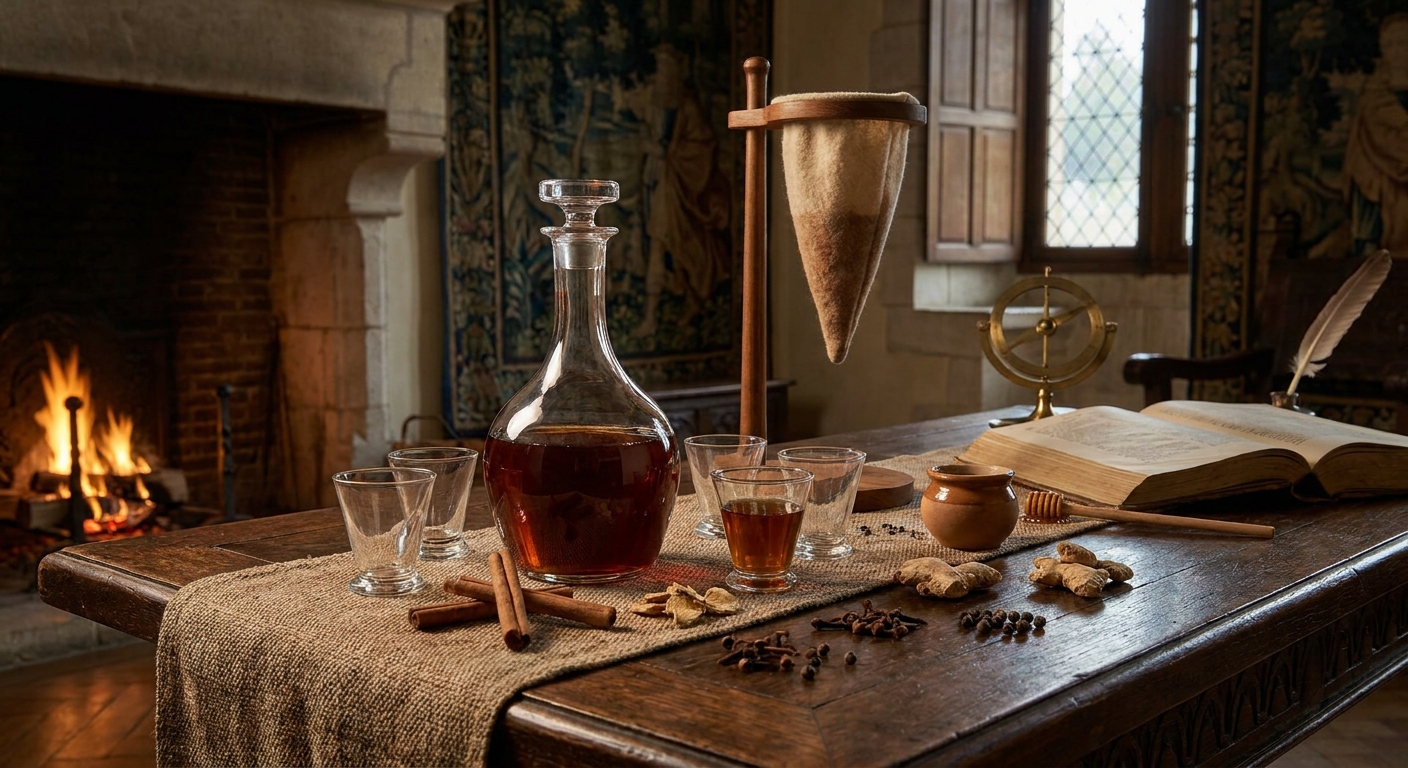
When the dishes are cleared and the preserves are brought, it is time for hypocras, my friend. You take a good wine, dissolve sugar in it, then add cinnamon, a little ginger, and a few cloves. You let it all embrace overnight, then pass and repass it through a cloth—the famous "sleeve of Hippocrates," from which it takes its name—until it is clear as a ruby. Pour but little: it is a wine for conversation, not for drunkenness. Many a fine wit has delighted in it while disputing verses and tragedy.
- •Vin rouge — une bouteille (base de la boisson)
- •Sucre ou miel — une bonne dose (douceur)
- •Cannelle — un bâton (épice dominante)
- •Gingembre — un morceau (chaleur épicée)
- •Clou de girofle — quelques-uns (parfum profond)
- •Muscade — une râpée (note chaude complémentaire)
Hypocras — vin épicé et sucré
A red wine sweetened with honey or sugar, perfumed with cinnamon, ginger, and clove, left to infuse then clarified. Served in small quantities at the end of the meal, it is an elegant digestif from the Middle Ages still in favor in the Grand Siècle.
Why this dish? Hypocras is drunk at the "issue de table," at the time of preserves and fruits, when people are still chatting after supper. For Racine, a courtly man of letters who frequented salons and the court, it is the drink of refined sociability—the one that accompanies conversations about theater and poetry.
When the dishes are cleared and the preserves are brought, it is time for hypocras, my friend. You take a good wine, dissolve sugar in it, then add cinnamon, a little ginger, and a few cloves. You let it all embrace overnight, then pass and repass it through a cloth—the famous "sleeve of Hippocrates," from which it takes its name—until it is clear as a ruby. Pour but little: it is a wine for conversation, not for drunkenness. Many a fine wit has delighted in it while disputing verses and tragedy.
Ingredients (period version)
- Vin rouge — une bouteille (base de la boisson)
- Sucre ou miel — une bonne dose (douceur)
- Cannelle — un bâton (épice dominante)
- Gingembre — un morceau (chaleur épicée)
- Clou de girofle — quelques-uns (parfum profond)
- Muscade — une râpée (note chaude complémentaire)
Ingredients
- Full-bodied red wine — 750 ml (base)
- Sugar (or honey) — 100 g (sweetness)
- Cinnamon stick — 1 (main spice)
- Fresh ginger — 2-3 slices (warm heat)
- Cloves — 3 (flavor)
- Nutmeg — 1 pinch grated (warm note)
Method
- Pour the wine into a container, add the sugar and stir until dissolved.
- Add the cinnamon, ginger, cloves, and nutmeg.
- Cover and let infuse cold for 12 hours (overnight), to respect the period method without cooking the wine.
- Strain carefully through a fine cloth or coffee filter, repeating if necessary until the liquid is clear.
- Bottle and serve chilled, in small amounts, at the end of the meal. (Alcoholic beverage for adults only—for a family version, replace the wine with red grape juice.)
How it was made : Hypocras takes its name from the "sleeve of Hippocrates," the conical cloth bag through which it was filtered. Inherited from the Middle Ages, it remained in the 17th century the quintessential spiced end-of-meal drink, before coffee, tea, and chocolate from abroad gradually dethroned it in the following decades.
The contemporary twist : For family and school gatherings, prepare a non-alcoholic version with red grape juice warmed then cooled with the spices: all the aroma, and everyone can toast.
Sources : Le Ménagier de Paris, vers 1393 (recette d'hypocras de référence) · Jean-Louis Flandrin & Massimo Montanari (dir.), Histoire de l'alimentation, 1996
Jean Racine · Charactorium