 flip
flipGreen tea of awakening
Green tea of awakening
Why this dish? Chan tradition attributes the legendary origin of tea to Bodhidharma: to no longer succumb to sleep during his meditation on Mount Song, he is said to have cut off his eyelids, from which the first tea plant grew. Bitter tea thus becomes the direct ally of his practice of awakening — the monk's beverage par excellence.
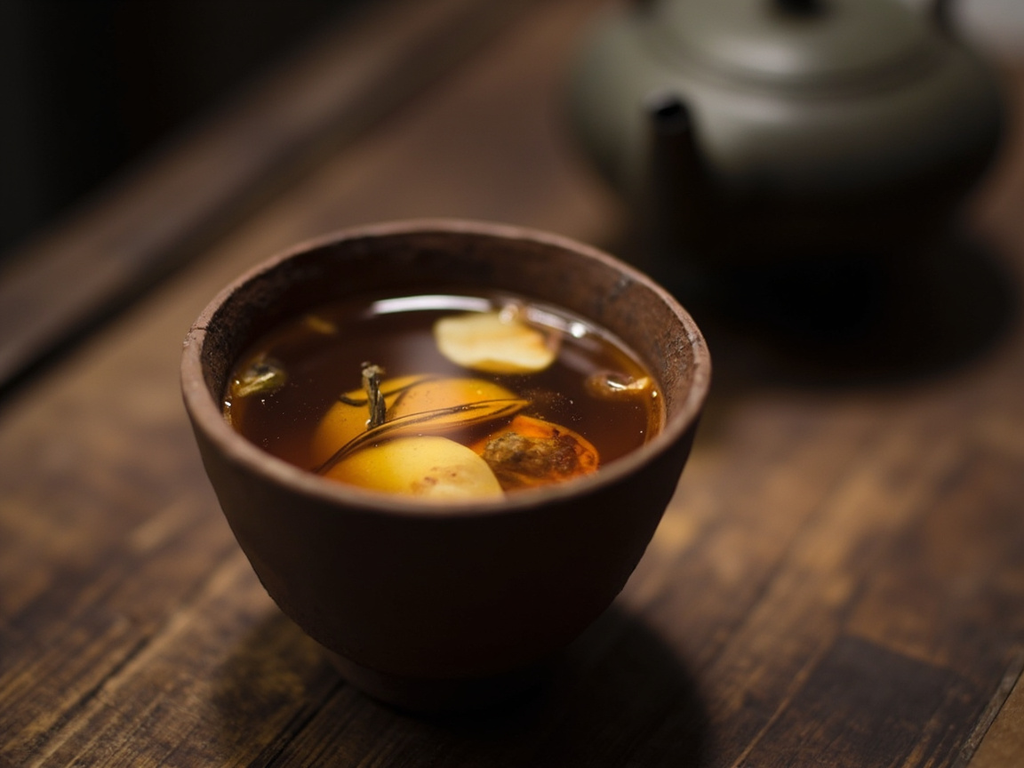
A few green tea leaves infused in simmering water, without sugar or milk: a frank bitterness that awakens the body and clarifies the mind. The most emblematic drink of the figure.
Sleep came to take me while I faced the wall. So I removed what closed over my eyes, and from the earth this leaf sprang. Drink it without honey: its bitterness is not a flaw, it is a master. As long as the tongue remembers this taste, the mind does not sleep.
- •Fresh or dried tea leaves — a pinch (awakening principle, bitterness)
- •Simmering spring water — one bowl (infusion)
Green tea of awakening
A few green tea leaves infused in simmering water, without sugar or milk: a frank bitterness that awakens the body and clarifies the mind. The most emblematic drink of the figure.
Why this dish? Chan tradition attributes the legendary origin of tea to Bodhidharma: to no longer succumb to sleep during his meditation on Mount Song, he is said to have cut off his eyelids, from which the first tea plant grew. Bitter tea thus becomes the direct ally of his practice of awakening — the monk's beverage par excellence.
Sleep came to take me while I faced the wall. So I removed what closed over my eyes, and from the earth this leaf sprang. Drink it without honey: its bitterness is not a flaw, it is a master. As long as the tongue remembers this taste, the mind does not sleep.
Ingredients (period version)
- Fresh or dried tea leaves — a pinch (awakening principle, bitterness)
- Simmering spring water — one bowl (infusion)
Ingredients
- Green tea leaves (sencha, longjing, or bancha) — 2 to 3 g (1 tsp) (bitter infusion)
- Water — 200 ml (base, at 75-80 °C)
Method
- Heat the water without bringing it to a rolling boil (small bubbles, about 75-80 °C, so as not to burn the leaves).
- Place the tea leaves in the bottom of a bowl or teapot.
- Pour the water over them and steep for 1 to 2 minutes, no longer.
- Drink hot, without sugar or milk, being aware of each sip.
- The same leaves can be re-infused two or three times.
How it was made : The use of tea as an aid to meditation is solidly attested in Chinese Buddhist monasteries, where it combated drowsiness during long vigils. The legend of Bodhidharma's eyelids, later and symbolic, poetically recounts this real link between tea and the practice of awakening. At the time, tea was often consumed as compressed cakes, crumbled and boiled.
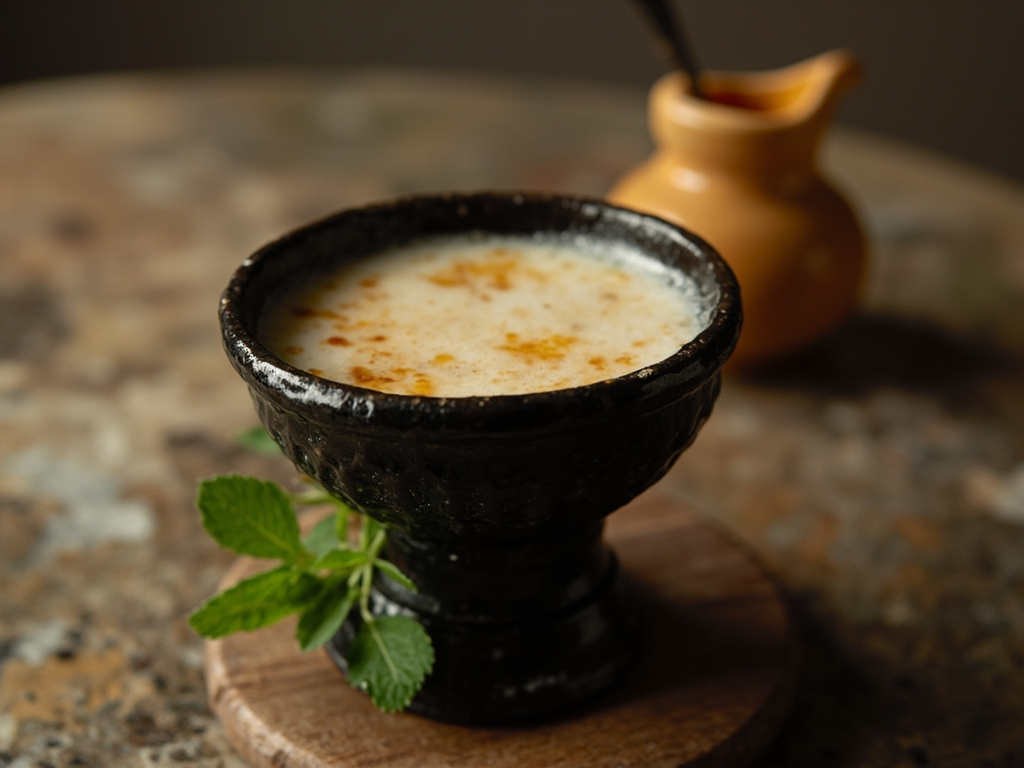
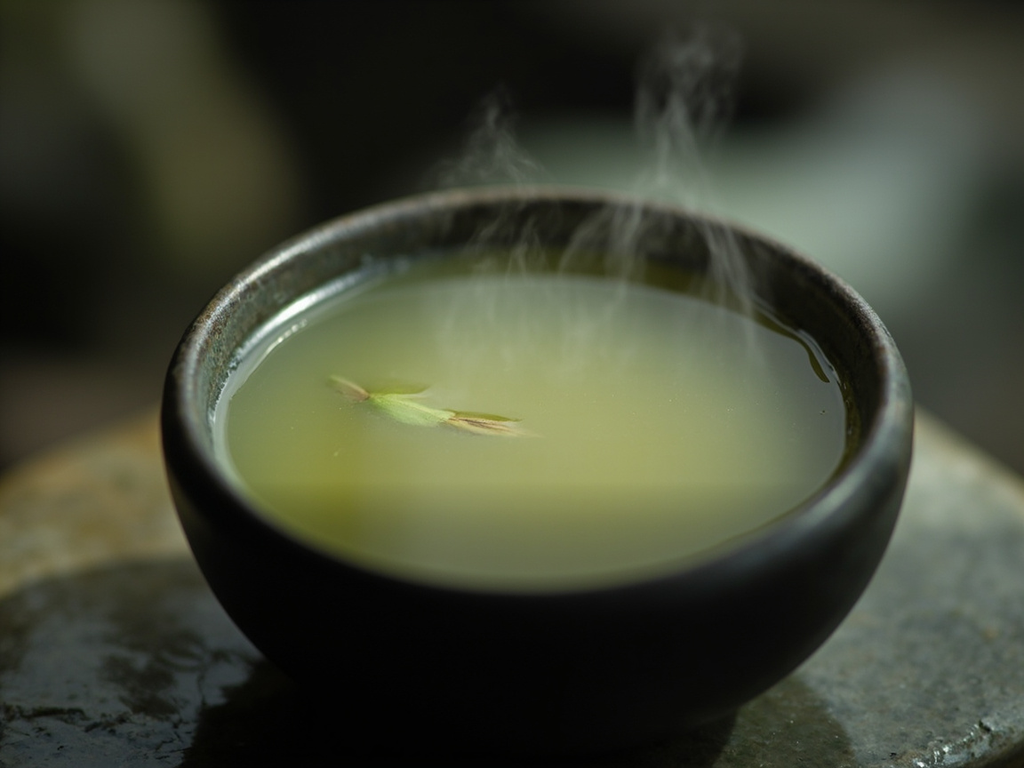
The contemporary twist : Served in a small dark handleless bowl, placed on a river stone: it is called 'the tea that never sleeps.'
Bodhidharma · Charactorium