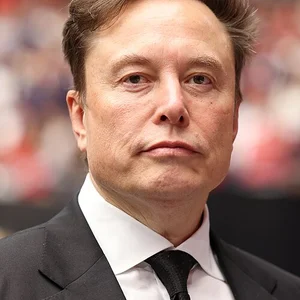

American-South African entrepreneur and businessman, Elon Musk is co-founder of Tesla and founder of SpaceX. He embodies the archetype of the 21st-century tech entrepreneur, with a sweeping influence on the automotive industry, private space exploration, and social media.
Elon Musk(1971 — ?)
Elon Musk
Canada, États-Unis, Afrique du Sud
9 min read
Frequently asked questions
Famous Quotes
« When something is important enough, you do it even if the odds are not in your favor.»
« I think it's very important to have a feedback loop, where you're constantly thinking about what you've done and how you could be doing it better.»
Key Facts
- 1971: Born in Pretoria, South Africa
- 2002: Founded SpaceX with the goal of colonizing Mars
- 2003: Co-founded Tesla Motors, a pioneer in mass-market electric vehicles
- 2015: Co-founded OpenAI, an artificial intelligence research company
- 2022: Acquired Twitter (rebranded as X) for $44 billion
Works & Achievements
Online payment platform born from the merger of X.com and Confinity, which revolutionized financial transactions on the internet. Acquired by eBay in 2002, its sale funded Musk's subsequent ventures in space and automotive industries.
The first rocket developed entirely by a private company to reach Earth orbit, on its fourth attempt. This achievement opened the New Space era and proved that a startup could compete with national space agencies.
Luxury electric sedan that set new benchmarks for performance and range in electric vehicles. It transformed public perception and accelerated global awareness of the need for an energy transition.
First successful docking of a commercial spacecraft with the International Space Station. This event marked the definitive entry of the private sector into space logistics, previously the exclusive domain of government agencies.
A network of thousands of satellites in low Earth orbit designed to provide high-speed internet worldwide, particularly in rural and remote areas. Starlink also became a strategic tool used in armed conflict contexts, notably in Ukraine in 2022.
The first commercial crewed mission to transport astronauts to the ISS, ending American dependence on Russian Soyuz rockets since the retirement of the Space Shuttle in 2011. A historic milestone in the privatization of space exploration.
The largest rocket ever built, fully reusable, designed to carry humans to the Moon and then to Mars. It embodies Musk's long-term vision: making humanity a multi-planetary species capable of establishing itself on other worlds.
Anecdotes
At age 12, Elon Musk single-handedly programmed a video game called Blastar on his Commodore computer. He sold the source code to *PC and Office Technology* magazine for around $500 — a considerable sum for a child — an early sign of an uncommonly entrepreneurial mind.
In 2008, SpaceX nearly went bankrupt after three consecutive Falcon 1 failures. Musk poured his last personal savings into funding a fourth launch: it succeeded, making SpaceX the first private company to place a rocket into Earth orbit. Without that ultimate gamble, the story of New Space might have ended there.
On May 25, 2012, SpaceX's Dragon capsule docked with the International Space Station, becoming the first commercial spacecraft in history to achieve this feat. The event marked the entry of private industry into space exploration, a domain until then reserved exclusively for government agencies.
At a TED conference in 2013, Musk revealed that he had never planned to become a rocket builder: after selling PayPal, he simply wanted to send a greenhouse to Mars to spark public interest in space. But launch costs were so prohibitive that he decided to build his own rockets instead.
In October 2021, Elon Musk briefly became the richest person in the world according to Forbes, with an estimated fortune of over $300 billion, driven largely by the stock market value of Tesla and SpaceX — an unprecedented accumulation of wealth in the history of modern capitalism.
Primary Sources
The secret is that Tesla's true purpose is to help expedite the move from a mine-and-burn hydrocarbon economy towards a solar electric economy, which I believe to be the primary, but not exclusive, sustainable solution.
By definition, we must at some point achieve a sustainable energy economy or we will run out of fossil fuels to burn and civilization will collapse. The point of all this was, and remains, accelerating the advent of sustainable energy.
I didn't really think Tesla would be successful. I thought we would most likely fail. But I thought that we at least could address the false perception that electric cars had to be ugly and slow and boring.
I feel this is one of the greatest days for the United States. I think it's going to be one of the great turning points, hopefully, for humanity's future in space.
Key Places
Elon Musk's hometown, where he grew up in a wealthy family and developed his passion for science and programming from an early age. He emigrated to Canada and then to the United States at the age of 17.
The heart of Silicon Valley, where Musk settled in 1995 after dropping out of his PhD program at Stanford. There he founded Zip2 and then X.com, embedding himself in the world's most dynamic entrepreneurial and technology ecosystem.
The historic headquarters of SpaceX, founded in 2002 in a former warehouse. This is where the Falcon rockets and the Dragon capsule — which revolutionized access to space — are designed and assembled.
NASA's historic launch site, from which Falcon 9 rockets and Crew Dragon capsules lift off toward Earth orbit. It was from this iconic location that SpaceX's first crewed commercial mission launched in May 2020.
SpaceX's launch site, renamed Starbase, where the Starship — the largest rocket ever built — is being developed. This is the operational hub of Musk's long-term vision: making humanity a multiplanetary species.
Tesla's current headquarters since 2021 and home to Gigafactory Texas. Musk relocated here from California, symbolizing the shift of part of America's tech innovation toward Texas.
Typical Objects

A partially reusable rocket developed by SpaceX, whose first stage autonomously lands itself after launch. It symbolizes the New Space revolution driven by Musk, drastically reducing the cost of reaching orbit.
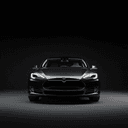
A high-end electric sedan launched in 2012, which proved that an electric car could be powerful, safe, and desirable. It helped reshape the image of electric vehicles and accelerated the energy transition in the global automotive industry.

A low-Earth orbit minisatellite forming part of SpaceX's Starlink constellation, designed to provide high-speed internet access in remote areas of the world. Several thousand of these satellites have been launched since 2019, permanently reshaping the telecommunications landscape.

A pressurized suit worn by astronauts aboard the Crew Dragon capsule, designed entirely by SpaceX. Its sleek look stands in sharp contrast to NASA's traditional suits and embodies the company's futuristic aesthetic.

An electric pickup truck with an angular, futuristic design unveiled in 2019 by Tesla, built from ultra-hard stainless steel. It reflects Musk's drive to upend the aesthetic and technical conventions of the American automotive market.

The first computer Elon Musk used as a child, on which he taught himself to program at age 10. This starting point symbolizes the generation of digital pioneers who were self-taught during the 1980s.
School Curriculum
Vocabulary & Tags
Key Vocabulary
Tags
Daily Life
Morning
Elon Musk starts his day by checking his messages and production metrics as soon as he wakes up, often before 8 a.m. In several interviews, he has said he prefers a quick breakfast — sometimes just a hard-boiled egg — before joining his engineering teams. His mornings are generally devoted to technical reviews at SpaceX or Tesla.
Afternoon
His afternoons are filled with technical design sessions, strategic decisions, and back-and-forth trips between his various companies. Musk can go from a meeting on rocket aerodynamics to a discussion on electric battery chemistry within the same day. He claims to work between 80 and 100 hours a week during periods of industrial crisis.
Evening
Musk's evenings are often spent late at the office or exchanging messages on social media, particularly X (formerly Twitter). He is known for sleeping very little, sometimes on a couch in his factories during critical production phases — a habit he himself described during the Model 3 manufacturing crisis in 2018.
Food
Musk is not known for a particularly careful diet; he has mentioned enjoying barbecues and simple American food. During periods of overwork, he consumes more caffeine and grabs quick snacks between meetings. He has no signature diet, unlike other Silicon Valley figures who favor fasting or specific eating regimens.
Clothing
Elon Musk favors a simple, functional wardrobe: black or gray T-shirts, understated jackets, jeans or casual trousers. This minimal dress code, shared by other figures in the tech world, symbolizes a rejection of traditional social conventions in favor of focusing on work. At formal events, he may wear a dark suit.
Housing
Musk long resided in luxury properties in California, which he publicly sold in 2020, declaring his refusal to accumulate material possessions. He claims to live in a prefabricated modular home in Boca Chica, Texas, near the SpaceX launch site, valued at around $50,000. This choice is as much symbolic as practical, rooting his daily life at the heart of his space projects.
Historical Timeline
Period Vocabulary
Liens externes & ressources
Références
Œuvres
Falcon 1 — premier lancement orbital privé réussi (SpaceX)
2008
Tesla Model S
2012
Amarrage de Dragon à l'ISS (SpaceX)
2012
Constellation Starlink
2019
Crew Dragon Demo-2 — premier vol habité commercial (SpaceX)
2020
Starship — super-fusée réutilisable (SpaceX)
2023