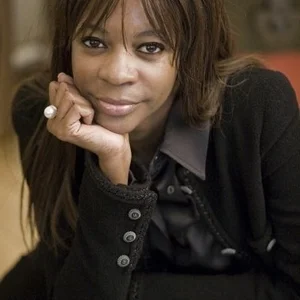

Dambisa Moyo is a Zambian economist specializing in macroeconomics and development. She is famous worldwide for her radical critique of international aid to Africa, which she considers counterproductive.
Dambisa Moyo(1969 — ?)
Dambisa Moyo
Zambie
6 min read
Frequently asked questions
Key Facts
- Born in 1969 in Lusaka, Zambia
- Doctorate in economics from the University of Oxford (2002) after studying at Harvard
- Economist at the World Bank and then at the bank Goldman Sachs
- Published 'Dead Aid' in 2009, an essay denouncing Western aid to Africa
- Named one of the 100 most influential people in the world by Time magazine in 2009
Works & Achievements
Her most famous book: she denounces international aid to Africa as counterproductive and proposes other paths (trade, investment, markets). A global bestseller that sparked a lively debate.
Analyzes the economic mistakes of the West that, according to her, accelerated the shift of power toward emerging countries.
Examines China's strategy for securing the world's raw materials and its geopolitical consequences.
A reflection on the difficulties democracies face in producing growth, along with proposals for political and economic reforms.
International recognition of her intellectual influence, establishing Moyo as a major voice in the debate on development.
Anecdotes
Dambisa Moyo first studied chemistry at the University of Zambia, but the country's political instability pushed her to leave for the United States to continue her studies. That detour eventually led her to economics, the field that would make her famous worldwide.
In 2009, her book *Dead Aid* sparked a thunderclap of debate: in it, Moyo argues that the billions of euros in aid given to Africa have done more harm than good. Billionaire **Bill Gates**, whose foundation pours huge sums into development, sharply criticized her ideas, which turned the young economist into a global figure of controversy.
Before writing her bestselling essays, Moyo worked two years at the World Bank and then nearly eight years at **Goldman Sachs**, one of the most powerful investment banks on the planet. This double experience — in both development aid and high finance — feeds her very distinctive view of money and Africa.
The same year *Dead Aid* came out, the American magazine *Time* ranked her among the 100 most influential people in the world. A rare honor for an economist born in **Lusaka** and still little known to the general public just a few months earlier.
Moyo earned a doctorate (DPhil) in economics from the **University of Oxford**, after a master's degree at Harvard's prestigious Kennedy School. She thus embodies the path of an African intellectual trained at the greatest Western universities — the very ones she often criticizes in her books.
Primary Sources
Aid has been, and continues to be, an unmitigated political, economic, and humanitarian disaster for most parts of the developing world.
Over the past fifty years, more than one trillion dollars in development aid has been transferred from rich countries to Africa. Has this aid improved the lives of Africans? No.
In it, Moyo argues that Western countries made a series of major economic mistakes that undermined their dominance and benefited the emerging powers.
Here the author analyzes China's race to secure control over the world's raw materials and the consequences for the global economy.
Key Places
Capital of Zambia where Dambisa Moyo was born in 1969 and where she spent her childhood. The city symbolizes the Africa whose development she would go on to analyze.
Moyo earned her doctorate (DPhil) in economics here, at St Antony's College. This is where her rigor as an economist was forged.
She earned a Master of Public Administration here, at one of the most prestigious schools of policy in the world.
Moyo worked here for about two years, discovering from the inside the mechanisms of international aid that she would later criticize.
She spent nearly eight years at this major investment bank, where she worked on financial markets and the debt of emerging countries.
Typical Objects

The book that made Moyo world-famous by attacking international aid to Africa. Translated into many languages, it became a key reference in the development debate.

Growth curves, debt ratios and GDP statistics are the economist's everyday tools. Moyo uses them to back up her analyses of Africa and global finance.

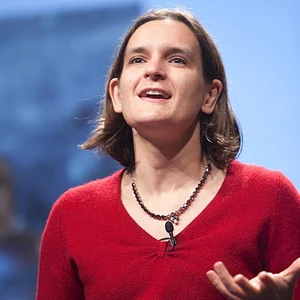
Moyo is a sought-after speaker who champions her ideas at international conferences such as TED. The microphone and the stage are key instruments of her influence.

Newspapers like the Financial Times regularly publish her op-eds and analyses. Reading and writing in the economic press is part of her work as an expert.

An essential tool for writing books and reports, analyzing databases and joining board meetings remotely.

Moyo has sat on the boards of major global companies, where strategic decisions worth billions are made. It is the symbolic seat of her power in the business world.
School Curriculum
Vocabulary & Tags
Key Vocabulary
Daily Life
Morning
Like many economists and high-level businesswomen, Moyo often begins her day by reading the international financial press and following the markets. Mornings may be devoted to writing books, reports, or op-eds.
Afternoon
Afternoons are split between board meetings of major corporations, analysis of economic data, and preparation for public appearances. Flights between continents set the pace of her schedule.
Evening
Evenings are frequently filled with conferences, public debates, or professional dinners where contacts and ideas are forged. It is also the time to respond to requests from media around the world.
Food
As an international businesswoman, she divides her meals between business lunches, the cuisine of the world's great capitals, and quick dishes that fit a busy schedule. Her diet reflects a cosmopolitan life, far from any fixed routine.
Clothing
In the world of finance and corporate boards, the usual attire is a tailored suit or a polished professional outfit. At conferences, Moyo appears in elegant, formal outfits suited to the media.
Housing
She lives in major global cities such as London and New York, hubs of international finance. Her living environment is that of a globalized intellectual, divided between several cities.
Historical Timeline
Period Vocabulary
Liens externes & ressources
Références
Œuvres
Dead Aid: Why Aid Is Not Working and How There Is a Better Way for Africa
2009
How the West Was Lost: Fifty Years of Economic Folly and the Stark Choices Ahead
2011
Winner Take All: China's Race for Resources and What It Means for the World
2012
Edge of Chaos: Why Democracy Is Failing to Deliver Economic Growth—and How to Fix It
2018
Mandat parmi les 100 personnes les plus influentes (Time)
2009