 flip
flipAjvar (grilled red pepper caviar)
Ajvar (grilled red pepper caviar)
Why this dish? Ajvar is the autumn ritual of Serbian families: transforming the abundant pepper harvest into winter provisions. It is domestic economy in action — exactly what the household surveys that Milanović scrutinizes to understand living standards measure.
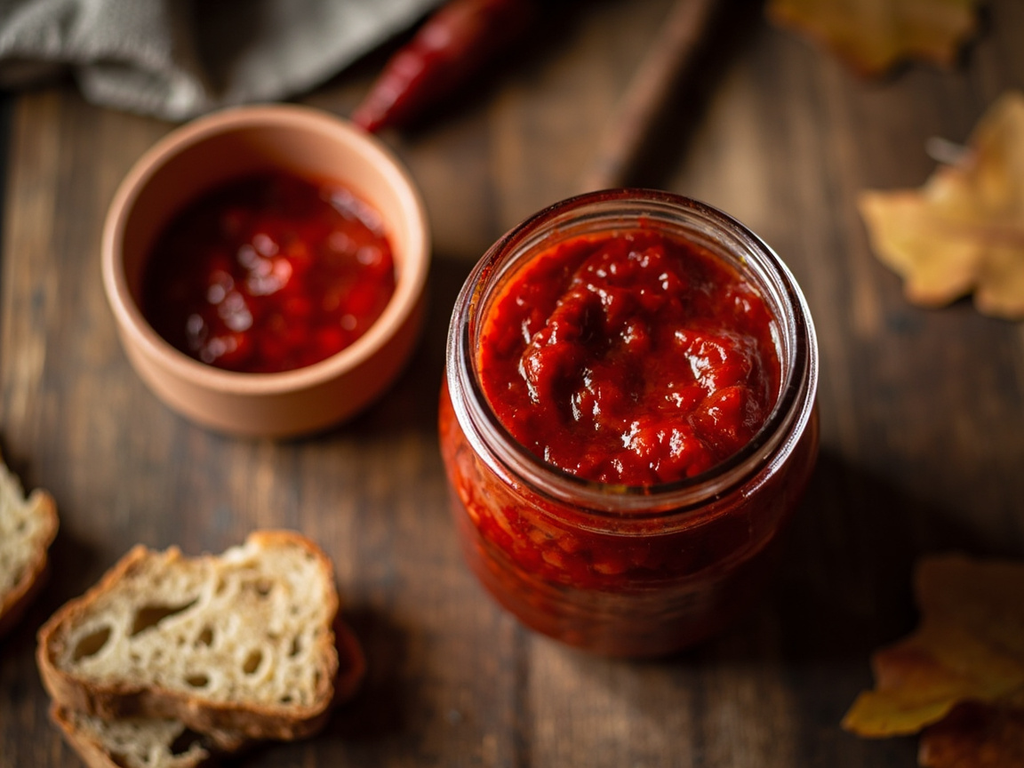
A savory jam of grilled red peppers, peeled and long simmered with oil and a splash of vinegar, until a dense, smoky, velvety paste. It fills jars that last all winter and accompanies bread, cheese, and grilled meats.
At home, autumn was measured in kilos of peppers. When the markets overflowed and prices hit rock bottom, the whole family got to work: we'd grill the peppers on the stovetop until the skin blackened, peel them with burning fingers, and let them melt for hours in oil. A jar of ajvar is savings — you stock September to eat in February. An economist would say it's smoothing consumption over time; my grandmother simply said you don't waste anything.
- •Fleshy red peppers — in large quantity (base)
- •Eggplant — a little (optional) (velvety binder)
- •Sunflower oil — generous (cooking and preservation)
- •Garlic — a few cloves (flavor)
- •Vinegar — a splash (acidity and preservation)
- •Salt — to taste (seasoning and preservation)
Ajvar (grilled red pepper caviar)
A savory jam of grilled red peppers, peeled and long simmered with oil and a splash of vinegar, until a dense, smoky, velvety paste. It fills jars that last all winter and accompanies bread, cheese, and grilled meats.
Why this dish? Ajvar is the autumn ritual of Serbian families: transforming the abundant pepper harvest into winter provisions. It is domestic economy in action — exactly what the household surveys that Milanović scrutinizes to understand living standards measure.
At home, autumn was measured in kilos of peppers. When the markets overflowed and prices hit rock bottom, the whole family got to work: we'd grill the peppers on the stovetop until the skin blackened, peel them with burning fingers, and let them melt for hours in oil. A jar of ajvar is savings — you stock September to eat in February. An economist would say it's smoothing consumption over time; my grandmother simply said you don't waste anything.
Ingredients (period version)
- Fleshy red peppers — in large quantity (base)
- Eggplant — a little (optional) (velvety binder)
- Sunflower oil — generous (cooking and preservation)
- Garlic — a few cloves (flavor)
- Vinegar — a splash (acidity and preservation)
- Salt — to taste (seasoning and preservation)
Ingredients
- Red peppers (kapija type) — 2 kg (base)
- Eggplant — 1 medium (optional) (binder)
- Sunflower oil — 150 ml (cooking and preservation)
- Garlic — 3 cloves, crushed (flavor)
- Wine vinegar — 2 tbsp (acidity)
- Salt — 1.5 tsp (seasoning)
Method
- Grill the peppers (and eggplant) in a very hot oven or over a flame until the skin blackens and blisters.
- Seal them in a covered bowl for 15 minutes to ease peeling, then peel and seed.
- Finely chop the flesh (by knife or food processor, not to a liquid puree).
- Sauté the garlic in oil, add the pepper flesh, salt, and vinegar.
- Simmer on low heat for 45 min to 1 hour, stirring often, until the water evaporates and the paste thickens and shines.
- Pack into hot sterilized jars, cover with a film of oil, seal, and store in a cool place.
How it was made : Ajvar is part of "zimnica", the set of preserves prepared in autumn in the Balkans (pickles, cabbage, ajvar). Before freezers, these jars were the only way to keep the taste of summer; collective family production remains a living tradition in Serbia, North Macedonia, and Croatia.
The contemporary twist : Presented in a small jar labeled "Harvest 2026, Gini index: 0" — an ajvar where everyone gets the same share.
Branko Milanović · Charactorium