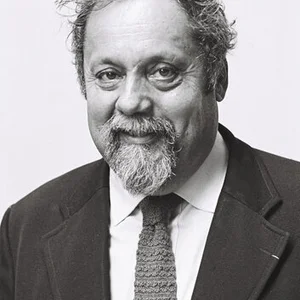

Bruce Heezen was an American marine geologist. Together with Marie Tharp, he mapped the floor of the Atlantic Ocean, revealing the Mid-Atlantic Ridge and its central rift valley — major contributions to the theory of plate tectonics.
Bruce Heezen
Bruce Charles Heezen
6 min read
Frequently asked questions
Key Facts
- Born on April 11, 1924, in Vinton (Iowa), died on June 21, 1977, off the coast of Iceland
- Worked at the Lamont-Doherty Geological Observatory of Columbia University
- With Marie Tharp, published the physiographic maps of the ocean floor starting in the 1950s
- Revealed the Mid-Atlantic Ridge and its central rift valley, decisive support for continental drift
- Co-author of the great world map of the ocean floor (1977), painted with Heinrich Berann
Works & Achievements
First detailed mapping of the central rift, a key clue to the mobility of the ocean floor.
Landmark monograph (with Tharp and Ewing) describing the structure of the North Atlantic and its rift system.
Popular-science article that introduced the general public to the great fissure of the ocean floor.
Pioneering photographic atlas showing what the deep ocean floor actually looks like.
Painted world map of the seafloor (with Tharp and the artist Heinrich Berann), the culmination of their work.
Revealing an underwater chain of more than 60,000 km encircling the globe, a major argument for plate tectonics.
Anecdotes
In the 1950s, Marie Tharp noticed a deep notch running down the middle of the Atlantic ridge on her maps. Bruce Heezen initially dismissed her idea as “girl talk,” because a central rift supported the controversial theory of continental drift. After checking, he had to admit she was right.
Since women were not allowed aboard oceanographic vessels at the time, Marie Tharp stayed on land while Heezen went to sea to collect the depth soundings. He brought back the data, and she turned it into maps: a two-decade collaboration in which neither could move forward without the other.
To locate underwater earthquakes, Heezen and Tharp overlaid the map of earthquake epicenters onto that of the ocean floor. To their surprise, the earthquakes lined up exactly along the central rift of the ridge. This coincidence became a major piece of evidence for plate tectonics.
For a long time, their seafloor maps could not be published as raw soundings, because the U.S. Navy regarded these data on ocean depths as military secrets in the midst of the Cold War. Heezen and Tharp got around the obstacle by producing painted “panoramas,” more artistic than technical.
Bruce Heezen died in 1977 aboard a research submarine, the NR-1, during a dive near Iceland, at the very heart of the ridge he had spent his life exploring.
Primary Sources
A continuous rift valley follows the crest of the Mid-Atlantic Ridge and coincides with the belt of seismic epicenters in the Atlantic.
A giant crack runs the entire length of the crest of the mid-ocean ridge, perhaps marking the place where the seafloor is spreading apart.
When I showed Bruce the rift I had traced, he dismissed it as “girl talk”; it took a year for him to accept it.
A physiographic depiction of the world's seafloor relief, revealing the continuous system of mid-ocean ridges.
Key Places
Small Midwestern town where Bruce Heezen was born in 1924, far from any ocean.
Columbia University laboratory where Heezen and Tharp worked for nearly thirty years to map the ocean floor.
Immense underwater mountain chain split by a central rift, the heart of Heezen and Tharp's discoveries.
University where Heezen pursued his doctoral studies and built most of his scientific career.
Region of the ridge, which emerges in Iceland, where Heezen died in 1977 aboard the submersible NR-1.
Typical Objects

A device that emits a sound wave toward the seabed and measures the echo's return time to deduce the depth. It is the instrument that provided the thousands of readings mapped by Tharp.

A cross-sectional trace representing the relief of the ocean floor along a ship's path. Heezen collected miles of them, which Tharp assembled into maps.

A painted perspective rendering of the underwater relief, as if it were seen on dry land. The 1977 “World Ocean Floor Panorama” is its culmination.

A weighted tube driven into the sediment to collect long columns of mud from the seabed. These cores revealed the geological history of the oceans.

Lamont's research schooner that crisscrossed the oceans to collect readings and cores. Heezen sailed aboard her on the sea campaigns.

A small US Navy nuclear submarine used for deep-water research. Heezen died aboard it in 1977 near the Iceland ridge.
School Curriculum
Vocabulary & Tags
Key Vocabulary
Tags
Daily Life
Morning
On land, Heezen would reach the Lamont laboratory early, perched on the cliffs above the Hudson. There he pored over the rolls of paper from the echo sounders brought back from voyages at sea.
Afternoon
He spent the afternoon bent over large drafting tables with Marie Tharp, comparing depth profiles and earthquake maps. The discussions could be heated, but that was where the discoveries were born.
Evening
In the evening, Heezen read articles and reports, prepared publications, and planned the next oceanographic expeditions. The science of the seafloor was in its infancy, and everything still remained to be invented.
Food
His life alternated between the dining hall of a 1950s American campus and the plain fare of a research vessel: canned food, coffee, and meals shared in the ship's mess during long crossings.
Clothing
In the laboratory, he wore the sober attire of the researcher of his day, shirt and tie. At sea, he switched to warm, waterproof clothing suited to the often frigid North Atlantic.
Housing
He lived in the New York area, close to the Lamont campus. But a significant part of his life unfolded at sea, in the cramped cabins of oceanographic ships.
Historical Timeline
Period Vocabulary
Liens externes & ressources
Références
Œuvres
Carte de la dorsale médio-atlantique et de son rift
1957
« The Floors of the Oceans: I. The North Atlantic »
1959
« The Rift in the Ocean Floor » (Scientific American)
1960
« The Face of the Deep » (avec Charles Hollister)
1971
« World Ocean Floor Panorama »
1977
Démonstration de la continuité du système des dorsales médio-océaniques
années 1960