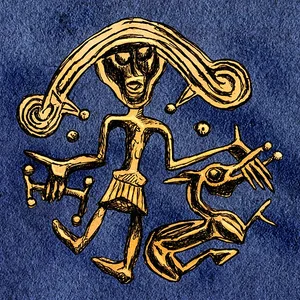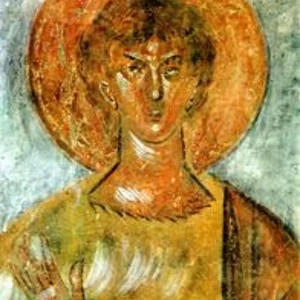

A Valkyrie from Norse mythology, Brynhildr is a central heroic figure in the Völsunga saga and the Nibelung cycle. An invincible warrior punished by Odin for disobeying his orders, she is imprisoned in a castle surrounded by flames until Sigurd frees her. Her tragic fate — woven from love, betrayal, and revenge — makes her one of the most complex heroines in the Germanic and Scandinavian traditions.
Brynhildr
Brynhildr
8 min read
Frequently asked questions
Famous Quotes
« "I am Brynhildr, daughter of Budli, and no man may possess me unless he has ridden through my flames." (attributed by the tradition of the Völsunga saga)»
Key Facts
- Mythological character attested in the Icelandic Völsunga saga (composed around the 13th century) and the Poetic Edda
- Also appears in the German Nibelungenlied (c. 1200) in a partially different form
- Punished by Odin for granting victory to the wrong warrior, she is cast into an enchanted sleep surrounded by a wall of flames
- Freed by the hero Sigurd (Siegfried in the Germanic tradition), with whom she exchanges vows of love
- Her rivalry with Gudrun (Kriemhild) and Sigurd's betrayal lead to her vengeance and the downfall of the heroes
Works & Achievements
Icelandic saga that constitutes the most complete source on Brynhildr: her awakening by Sigurd, their love, the betrayal, the quarrel of the queens, and her immolation on Sigurd's funeral pyre.
Eddic poem in which Brynhildr, under the name Sigrdrífa, is awakened by Sigurd and imparts deep runic wisdom to him — one of the richest texts in the Poetic Edda.
Short Eddic poem in which Brynhildr, after her suicide, justifies herself before a giantess by recounting her entire life — a poetic testament and self-defense of a tragic heroine.
Medieval Germanic epic in Middle High German in which Brynhildr becomes Brunhild, warrior queen of Isenstein. The work adapts the Norse myth into a Christian chivalric setting.
Handbook of Norse mythology written by the Icelander Snorri Sturluson, which summarizes the legends of Brynhildr within the heroic cycle of the Völsungs.
Cycle of four operas by Richard Wagner directly inspired by the myth of Brynhildr (Brünnhilde): her punishment by Wotan (Odin), her awakening by Siegfried, her betrayal, and her final immolation.
Anecdotes
Brynhildr was punished by Odin for granting victory to the wrong warrior: she had chosen Agnar over Hjalmgunnar, the god's favored champion. As punishment, Odin cast her into a magical sleep and surrounded her with an impassable wall of flames, condemning the invincible valkyrie to await a hero worthy of her.
When Sigurd crossed the flames to wake Brynhildr, he found a woman clad in armor so tight it seemed to have grown into her skin. He had to cut through the metal with his sword Gram to free her — a scene that symbolizes in the sagas the unveiling of a warrior made vulnerable by love.
The quarrel of the queens is one of the most celebrated scenes in the Norse sagas: Brynhildr and Gudrun dispute precedence while wading across a river, each claiming her husband is the greatest hero. Brynhildr then reveals that Sigurd had won her while disguised as Gunnar, which sets off a chain of betrayals and murders.
After Sigurd's death, Brynhildr chose to die on his funeral pyre rather than outlive him. She prophesied the fate of every character before throwing herself into the flames, thus reuniting in death the man she loved and from whom she had been torn away by treachery.
Primary Sources
Sigurd climbed the mountain and saw a great light, like a fire, whose flames leapt toward the sky. He drew near and found a castle surrounded by a shield of flames. Inside slept a woman in full armor.
Then Sigurd cut the armor from the neck downward, then on both sides. He lifted the helmet from her head: he saw a woman sleeping, fully armed.
I never held a shield before a king's gate without granting victory according to my own judgment. Odin struck me with the sleep-thorn for it.
Brunhild sat in her castle on the island of Isenstein, surrounded by a wall of fire. Only one who surpassed her in strength and valor could hope to win her hand.
Brynhildr is the greatest of the valkyries. Odin put her to sleep because she had slain the warrior he was protecting. She was locked within a fortress of flames until a fearless man could set her free.
Key Places
Mythological mountain where Odin put Brynhildr to sleep and surrounded her with the ring of fire known as Vafrlogi. It is here that Sigurd found her sleeping in armor and woke her by cutting through her helmet.
In the Nibelungenlied, Brunhild's island fortress where the invincible warrior queen holds court. Gunther/Gunnar must prove his worth there to win her hand in marriage — a feat secretly accomplished on his behalf by Sigurd.
Odin's hall where valkyries like Brynhildr led fallen warriors slain in battle. It is from here that Brynhildr was banished after defying Odin by granting victory against his will.
In the Nibelungenlied, the Rhine city where Brunhild settles as queen of the Burgundians after her marriage to Gunther. This is where the queens' quarrel with Kriemhild takes place.
Typical Objects
Brynhildr wears full plate armor so tightly fitted it seems to be part of her body — Sigurd had to cut it open to wake her. This armor symbolizes both her warrior nature and her state of magical slumber.

The distinctive headgear of valkyries in Norse iconography. The moment Sigurd removes Brynhildr's helmet marks her discovery and her restored vulnerability.
Sigurd's legendary sword, with which he crossed the flames surrounding Brynhildr and cut through her armor. Gram is also the sword Sigurd lays between them as a boundary of honor during their first night together.
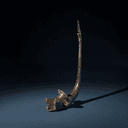
A cursed magic ring that Sigurd gives Brynhildr as a betrothal pledge upon her awakening, then reclaims under the influence of a potion of forgetfulness. This ring lies at the heart of the queens' quarrel and the tragedy that follows.
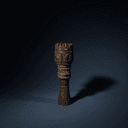
A magical wall of fire erected by Odin around the castle where Brynhildr sleeps. Only a fearless hero can pass through it — it represents the initiatory trial reserved for a man worthy of a valkyrie.
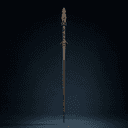
The emblematic weapon of the valkyries in the Poetic Edda, with which they designate the warriors fated for death and Valhöll. Brynhildr used it to grant victory to Agnar, an act of disobedience that caused her downfall.
School Curriculum
Vocabulary & Tags
Key Vocabulary
Tags
Daily Life
Morning
In mythological accounts, Brynhildr begins her day at the summit of Hindarfjall, in a castle bathed in cold light and ringed by eternal flames. As a valkyrie, she was said to ride across battlefields at dawn to choose the warriors destined for Valhöll.
Afternoon
Brynhildr trains in the warrior arts: wielding the spear, riding her valkyrie steed, and mastering the runes and combat magic passed down by Odin. After her marriage to Gunnar, she presides over the Burgundian royal court and oversees the kingdom's military affairs.
Evening
In Norse tradition, evenings were spent in the mead-hall by torchlight, amid heroic tales, feasting, and song. Brynhildr, queen among warriors, held the place of honor — until her quarrel with Gudrun shattered the harmony of the court.
Food
The diet of a medieval Norse queen consisted of roasted meats (boar, lamb), dried fish, barley bread, cheese, and fermented milk. The ritual drink of heroic feasts was mead, a symbol of alliance and victory in Germanic culture.
Clothing
Brynhildr is described in the sources wearing full armor — chainmail, helmet, shield — a symbol of her warrior identity. As queen, she also wore richly embroidered robes in vivid colors, gold bracelets, and silver brooches typical of Norse aristocracy.
Housing
In the myth, Brynhildr dwells in a stone fortress atop a mountain, surrounded by a wall of magical flames. After her marriage, she lives in a royal mead-hall: a great wooden hall with carved beams, a central hearth, tapestried walls, and stone benches covered with furs.
Historical Timeline
Period Vocabulary
Visual Style
Un style épique mêlant enluminure nordique et peinture romantique du XIXe siècle : armure de fer gravée, flammes magiques dorées, ciel de fjord sombre et or antique.
Sound Ambience
Un paysage sonore nordique entre deux mondes : le silence enchanteur du château cerné de flammes et la violence des champs de bataille parcourus par les valkyries.
Liens externes & ressources
Références
Œuvres
Völsunga saga
vers 1270
Sigrdrífumál (Chant de Sigrdrífa)
XIIe–XIIIe siècle
Helreið Brynhildar (Le voyage de Brynhildr vers le royaume des morts)
XIIIe siècle
Nibelungenlied (Chant des Nibelungen)
vers 1200
Edda en prose de Snorri Sturluson
vers 1220